Skënduli House: hospitality in stone and timber
- Local name
- Skënduli House
- Type
- Historic urban residence and house museum
- Continent
- Europe
- Country
- Albania
- Region
- Gjirokastra
- Regional subdivision
- Gjirokastër municipality
- Historical record
- 1823 according to the Gjirokastra Foundation; later use and conservation
- UNESCO
- Within Gjirokastra’s historic urban context, inscribed 2005; extended to Berat in 2008; no separate house inscription · UNESCO
- Date
- August 2024
- Photographer
- Héctor Godes
- Published
- August 6, 2025
- Reviewed
- November 7, 2026
- Coordinates
- 40.0754, 20.1355
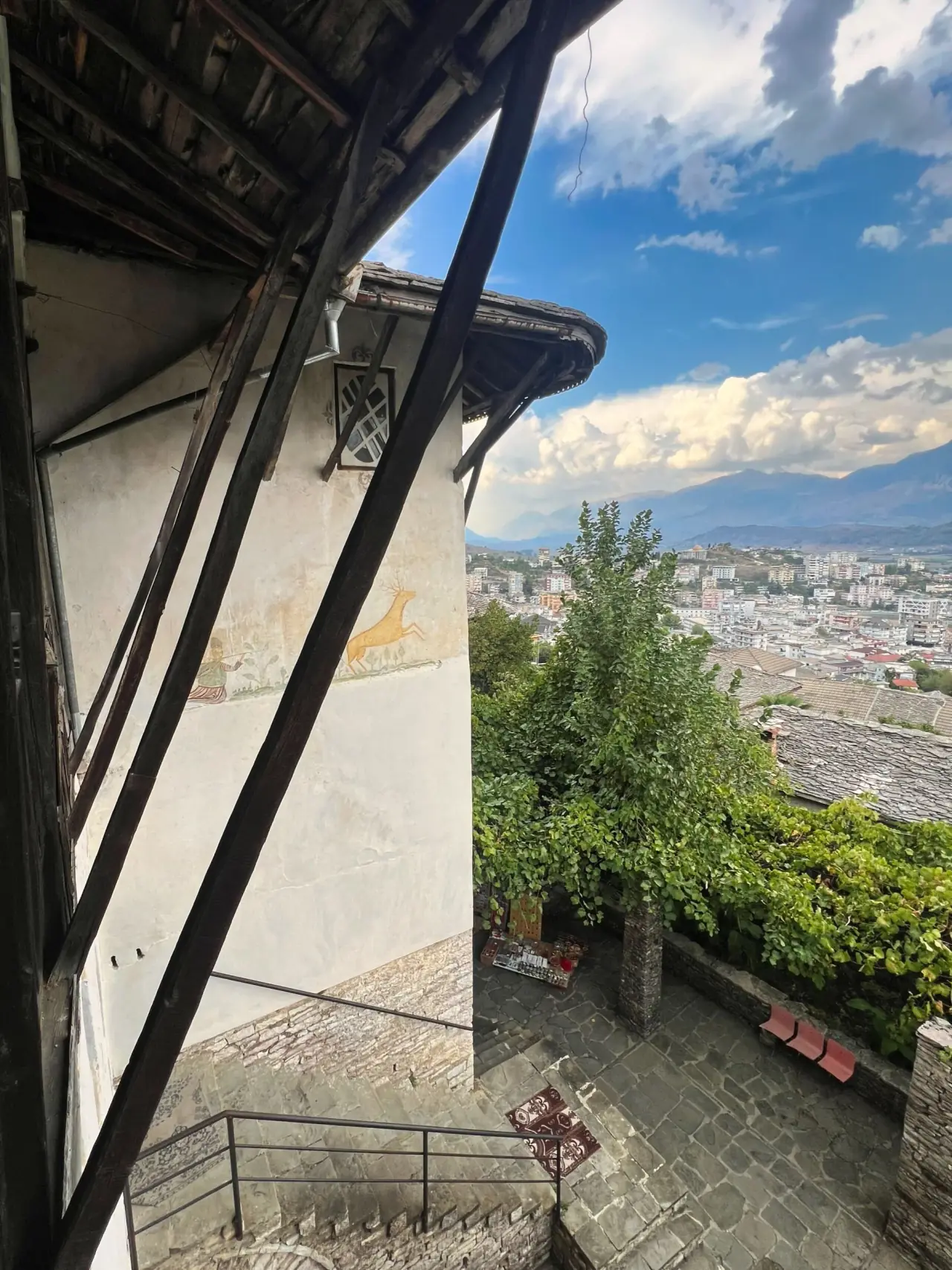
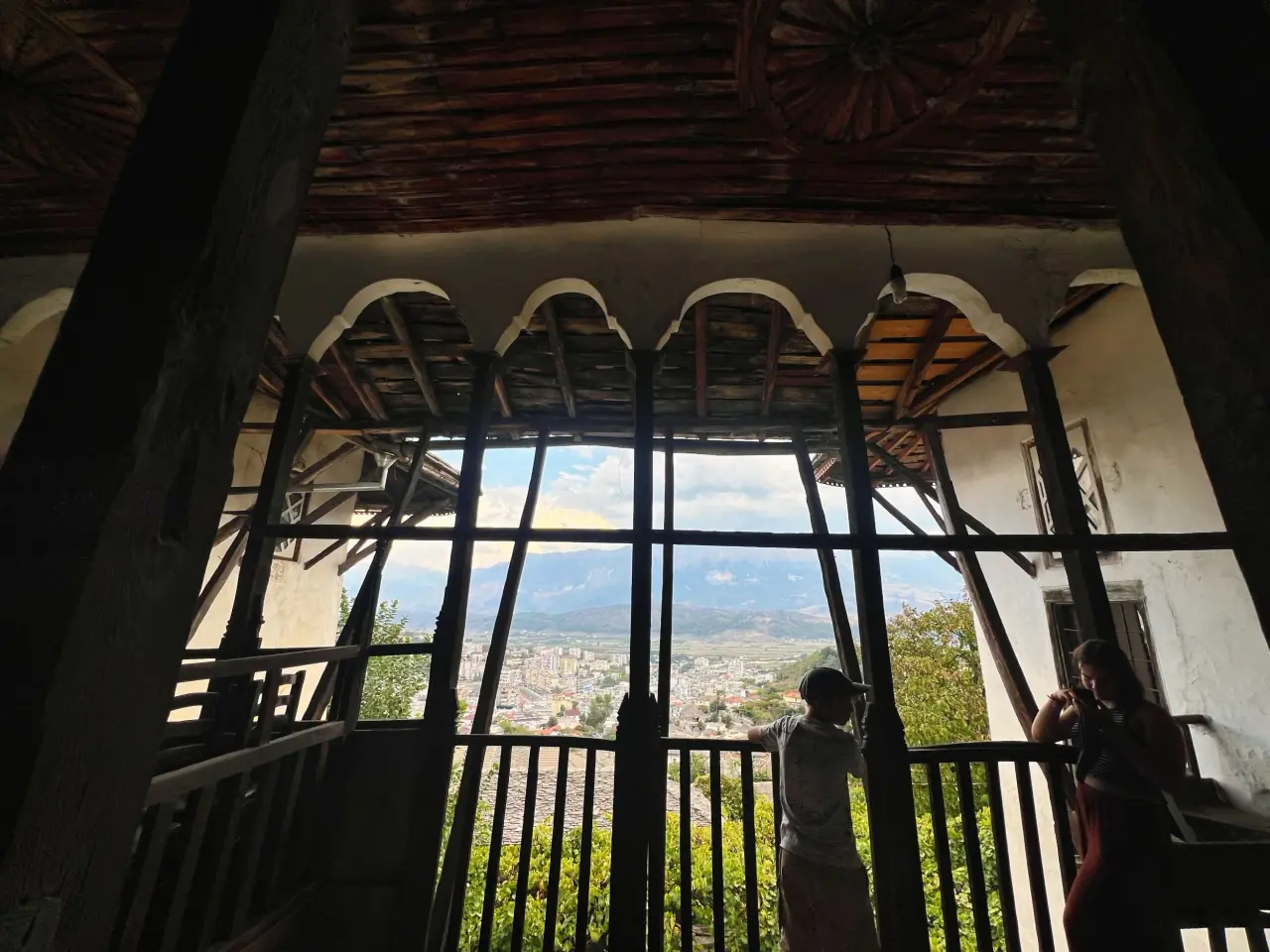
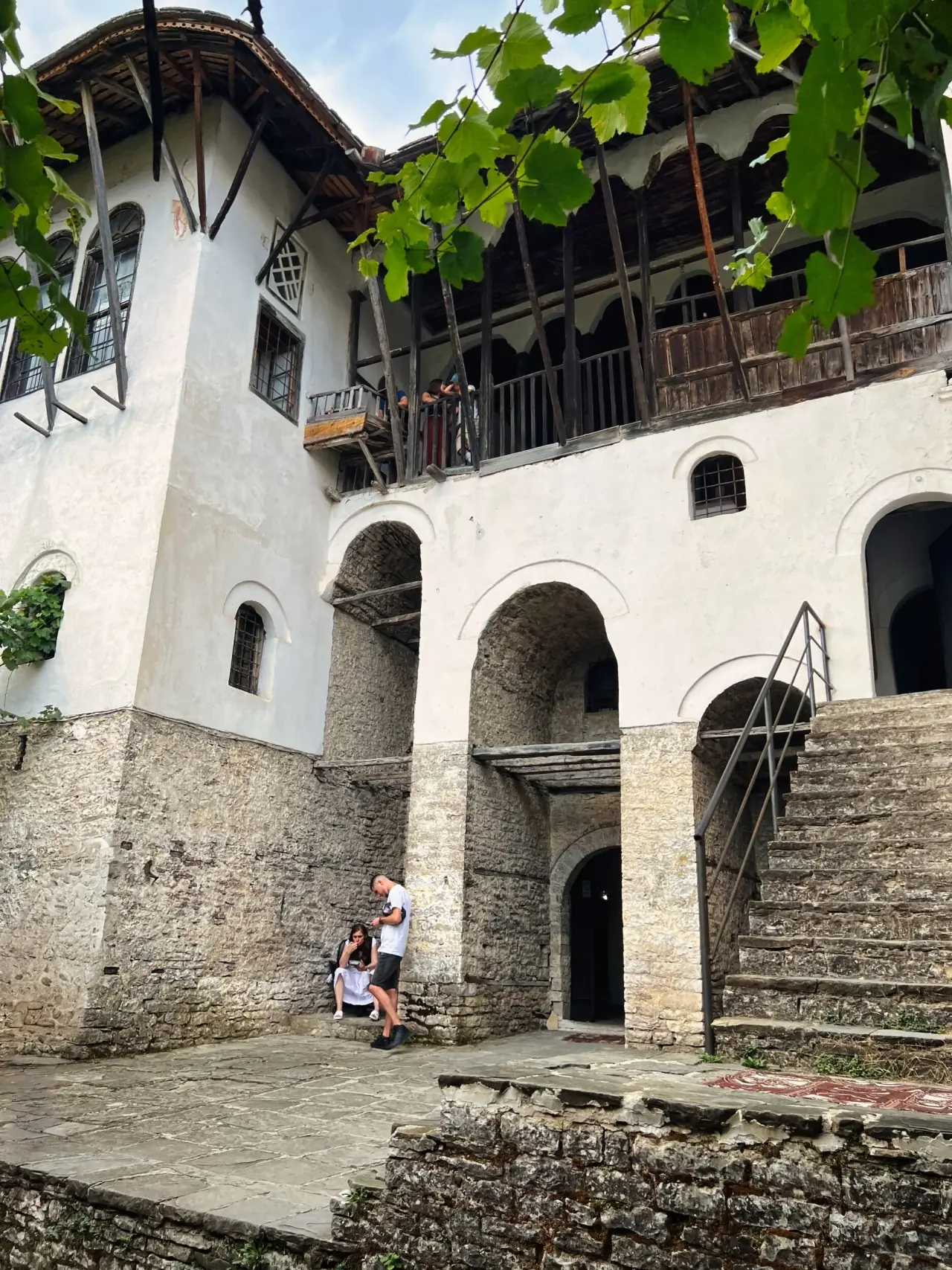
Skënduli House stands in Gjirokastra, southern Albania. Its heavy stone lower structure supports lighter timber elements above, combining protection with bright rooms and covered views over the city.
A prosperous household
The Gjirokastra Foundation dates the house to 1823 and associates it with the wealthy landowner Skender Skënduli. It belongs to the city’s tradition of substantial urban residences, where family wealth shaped both the scale of the building and its decoration. S1
Two courtyards and internal and external stairs organise access. Loopholes and elaborate locks provided security, while the arrangement of levels separated different domestic activities.
The reception room
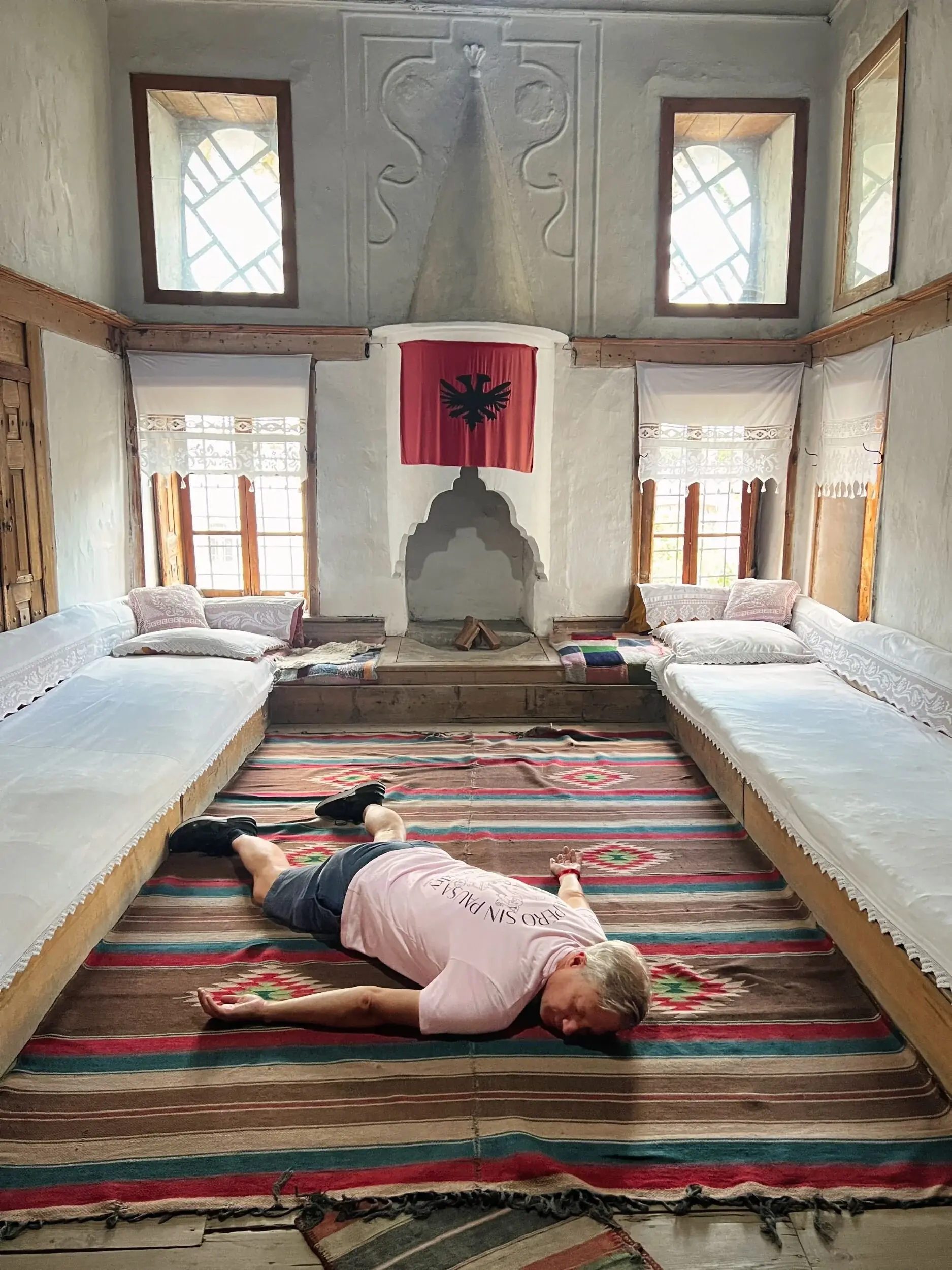
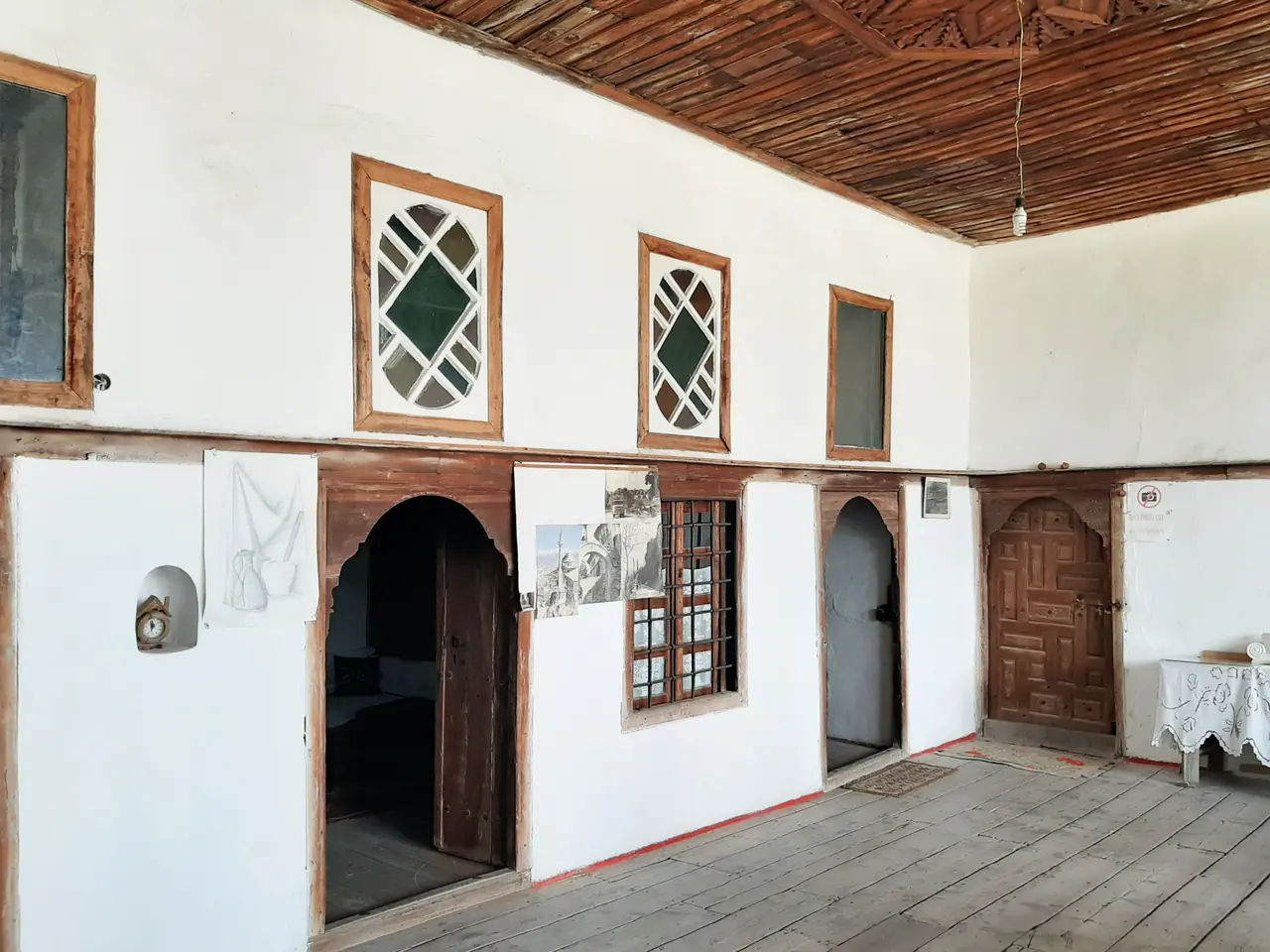
The oda, the principal guest room, gives hospitality an architectural setting. Seating around the room brings visitors together; windows provide light, while a decorated ceiling and carved timber details express the importance of the space. S1
The contrast with stairs and passages reveals a hierarchy within the house. Not every room received the same finish or served the same social purpose.

Timber and the city
Covered upper spaces open towards Gjirokastra. Posts frame the view and the roof provides shade. Stone and timber create different degrees of enclosure within one residence, linking sheltered family life with the surrounding urban landscape.
Frequently asked questions
What is an oda?
The main reception room, where guests were welcomed and decorative craftsmanship was concentrated.
Is this an ordinary small house?
No. It is a substantial residence associated with a prosperous landowning family.
Do all the furnishings date from construction?
No. The present interior combines older fabric with later furnishings and conservation work.
Sources
More in Albania