Knossos: The Minoan Palace Behind the Myth of the Labyrinth
- Local name
- Κνωσός (Knosós)
- Type
- Minoan palace and archaeological site
- Continent
- Europe
- Country
- Greece
- Region
- Crete
- Regional unit
- Heraklion
- Location
- Kephala hill, south-east of Heraklion
- Occupation
- From around 7000 BC
- Palaces
- First palace c. 1900 BC · New palace c. 1700 BC
- Excavations
- Minos Kalokairinos (1878) · Arthur Evans (from 1900)
- Area
- About 20,000 square metres
- UNESCO
- Minoan Palatial Centres (2025) · My World Heritage list
- Date
- August 2021
- Photographer
- Héctor Godes
- Published
- May 2, 2023
- Reviewed
- November 13, 2026
- Coordinates
- 35.2978, 25.1631
- More
- Wikipedia
Knossos is the largest of the Bronze Age palatial centres of Crete, on Kephala hill a few kilometres from Heraklion S3 S7. Since July 2025 it has been part of the UNESCO World Heritage site Minoan Palatial Centres, together with Phaistos, Malia, Zakros, Zominthos and Kydonia S1 S2.
The World Heritage Committee inscribed the six sites on the basis of four criteria, recognising them as the most representative expression of Minoan civilization S1. The British School at Athens, which has been linked to the site since Evans’s first excavations, celebrated the decision as Knossos joined the list S3 S10.
Few archaeological sites mix so many layers. At Knossos the remains of one of Europe’s first great civilizations, the Greek myths of Minos and the Minotaur, and an ambitious reconstruction from the twentieth century all coexist on the same hill.
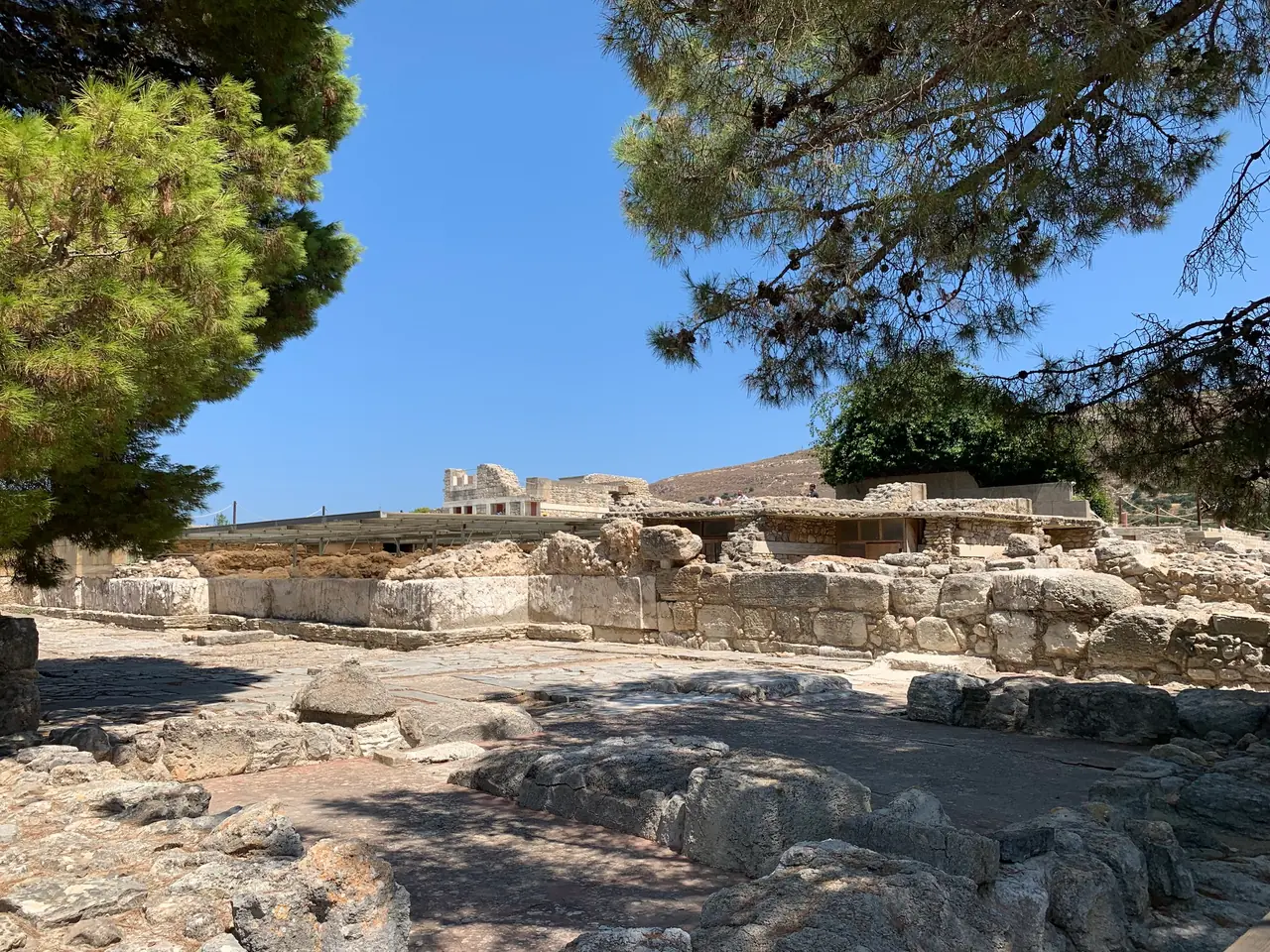
Nine thousand years on a hill
The site was occupied from around 7000 BC, at the beginning of the Neolithic S3. The Neolithic levels excavated there are among the deepest known in Europe, a sign of thousands of years of continuous settlement before any palace was built S5.
The first palace was built around 1900 BC, after earlier buildings on the hill had been levelled to create a platform S3 S4. It was the expression of a society that was becoming more complex, with centralised storage, administration and ritual.
This first palace was destroyed around 1700 BC, and a new palace was built in its place S4. It is this second palace, with a few later additions, that survives today, and it reached its greatest prosperity between about 1700 and 1450 BC S3 S4.
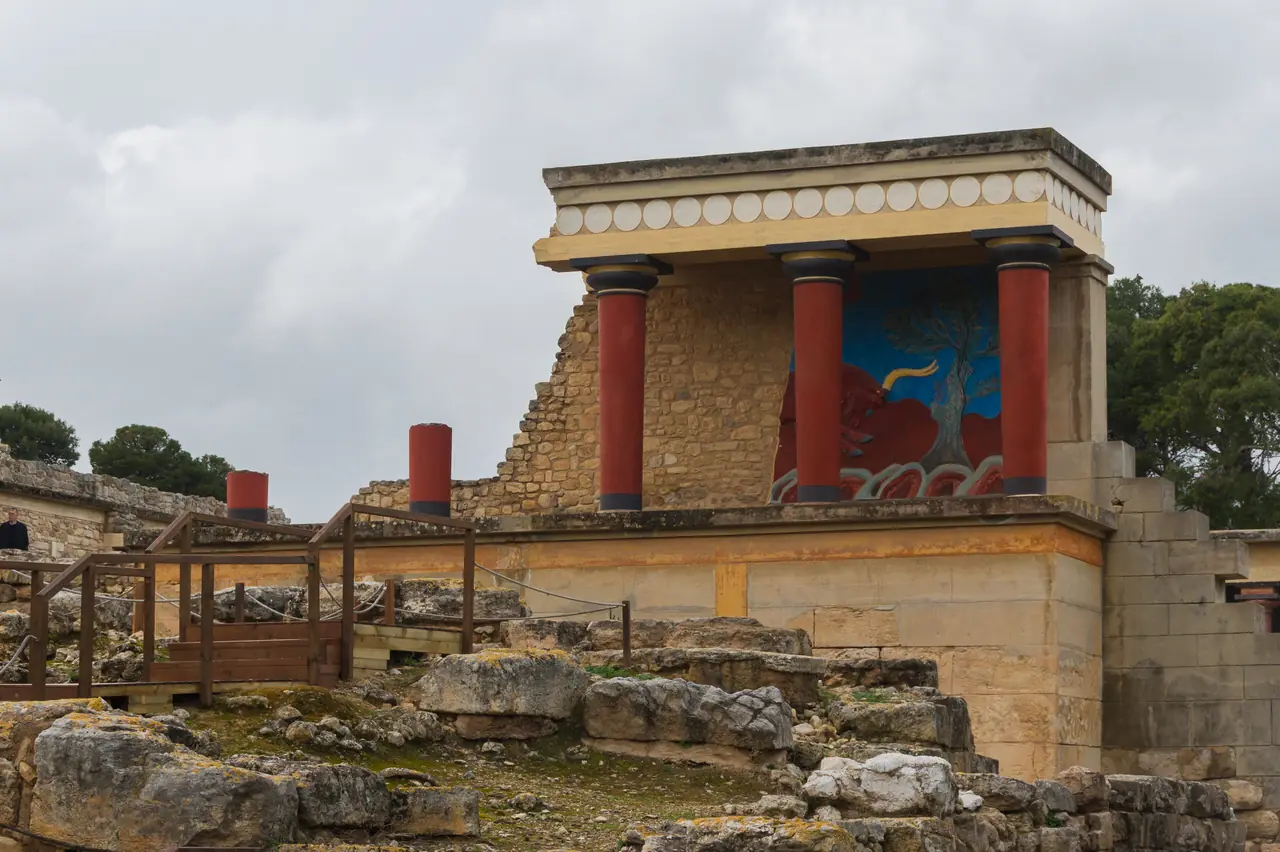

A palace around a central court
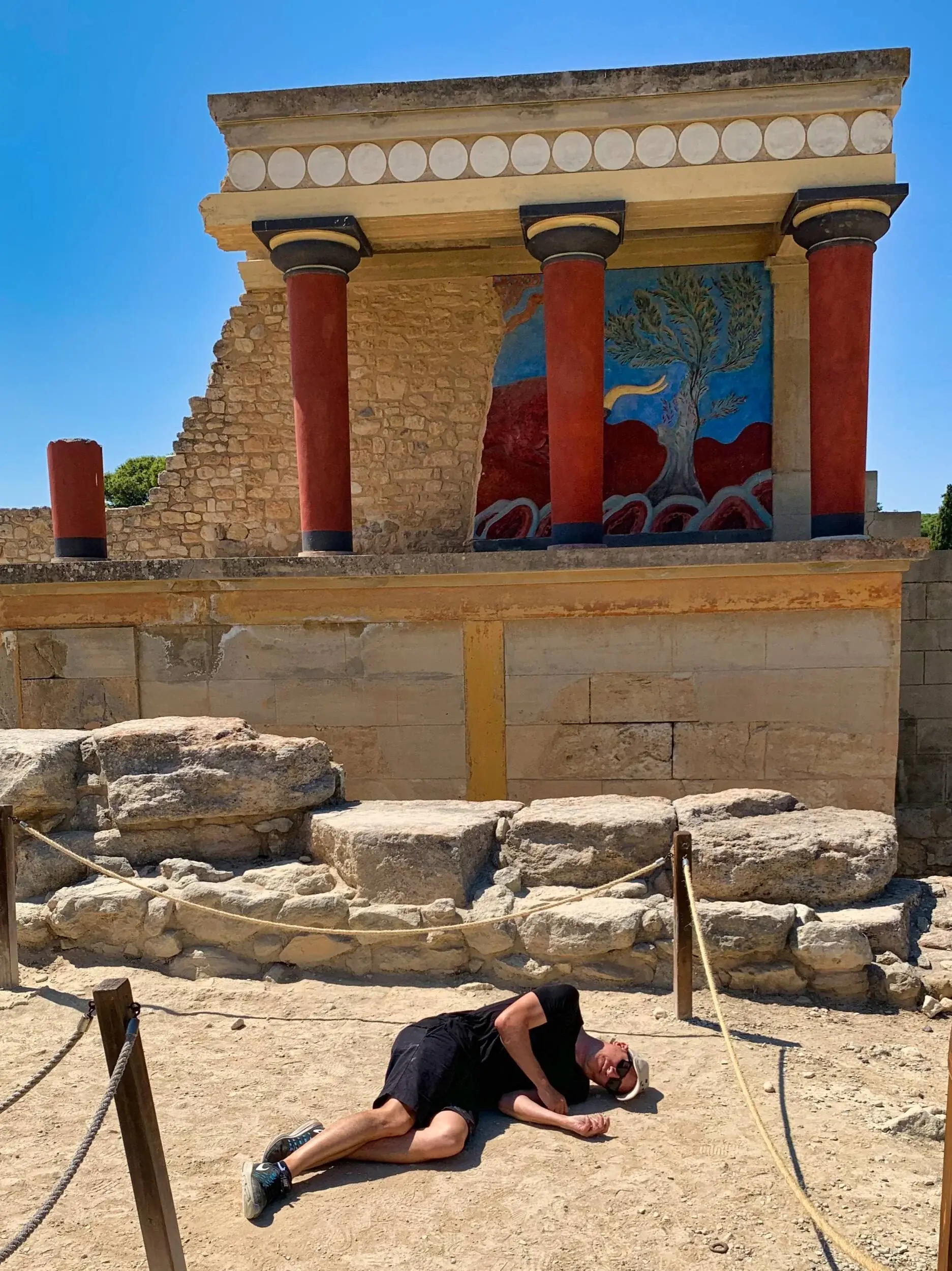
The palace appears as a maze of workrooms, living spaces and storerooms arranged around a large central court S7. The complex covers some 20,000 square metres S8.
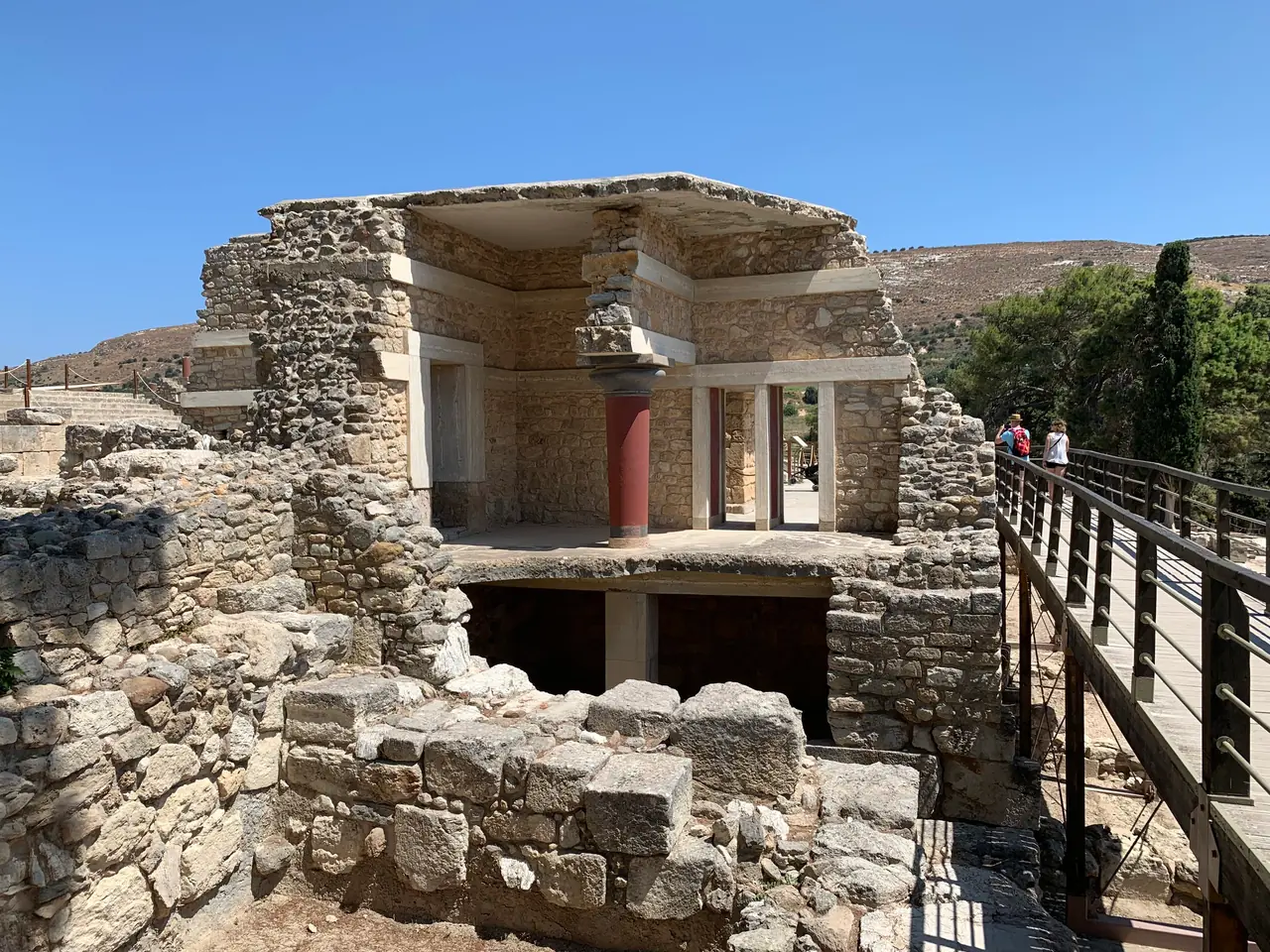
During the new palace period, the West Court was enlarged and the South Propylaeum and the Grand Staircase were built S8. The Grand Staircase, with its light wells, shows the Minoan mastery of multi-storey architecture.
Knossos probably became the leading city-state of Crete and may have served as its main religious and political centre S3. Around the palace stretched a town whose houses and roads surrounded the hill, so the palace was the heart of a real city rather than an isolated residence S7.
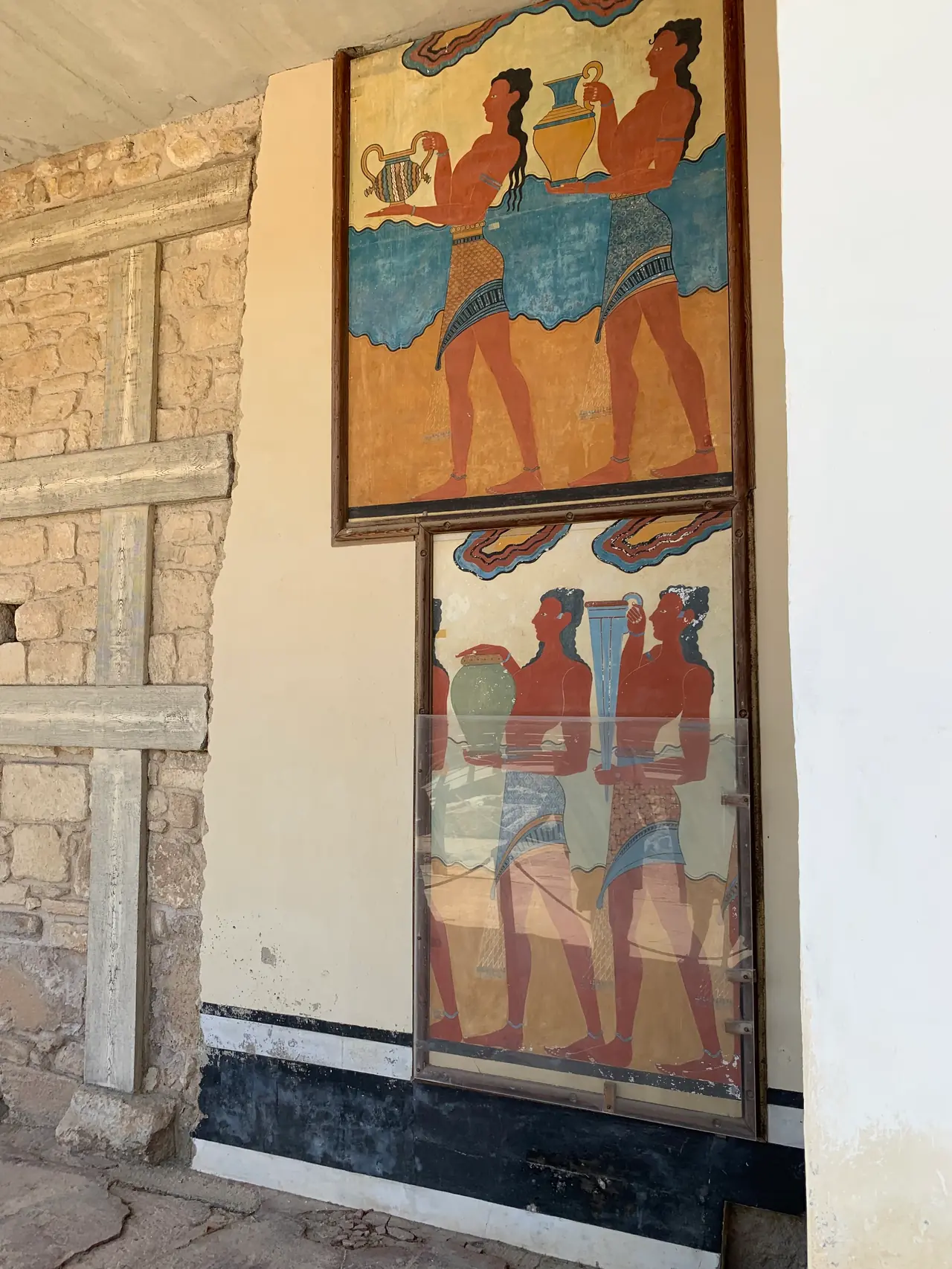
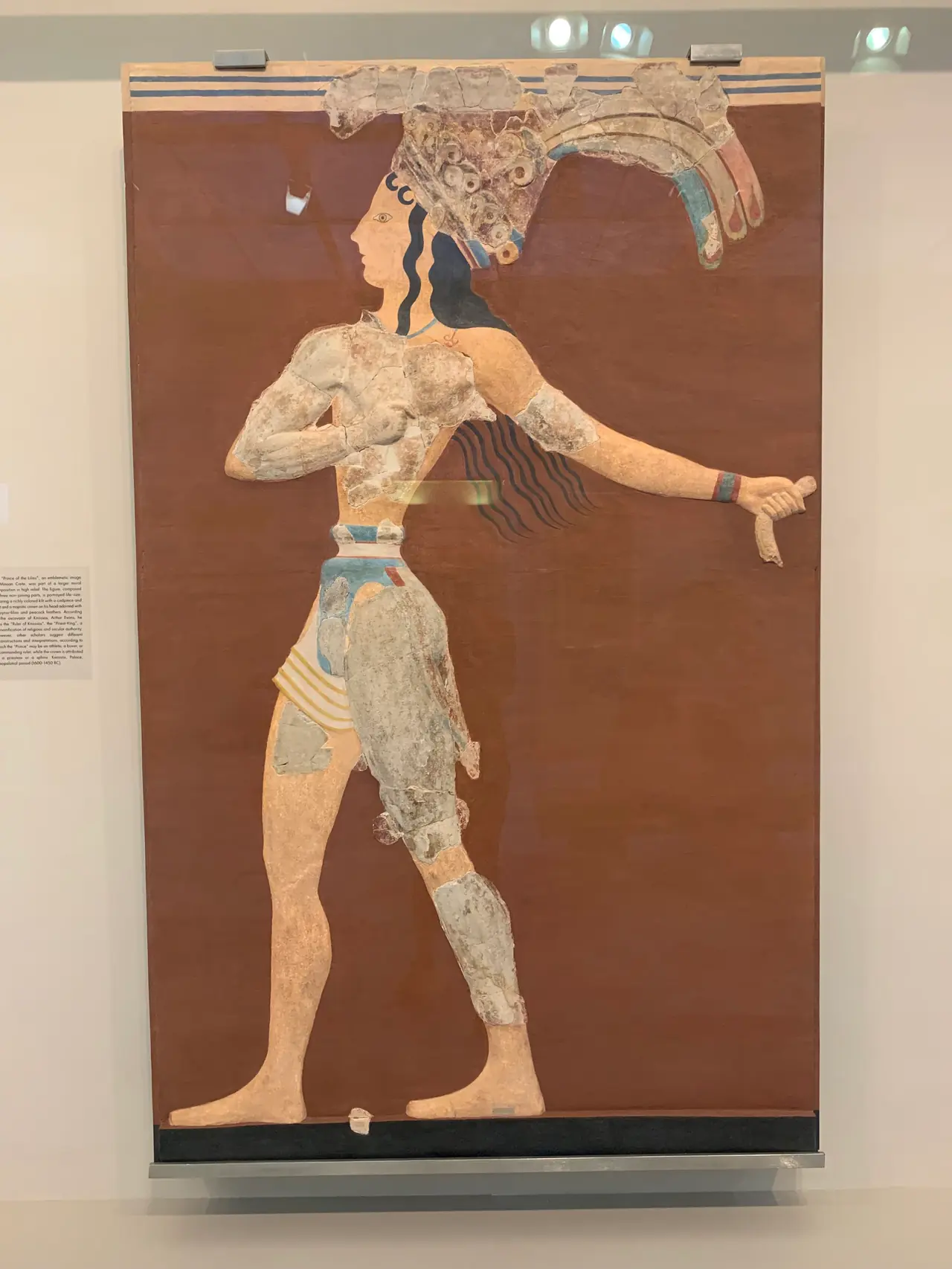
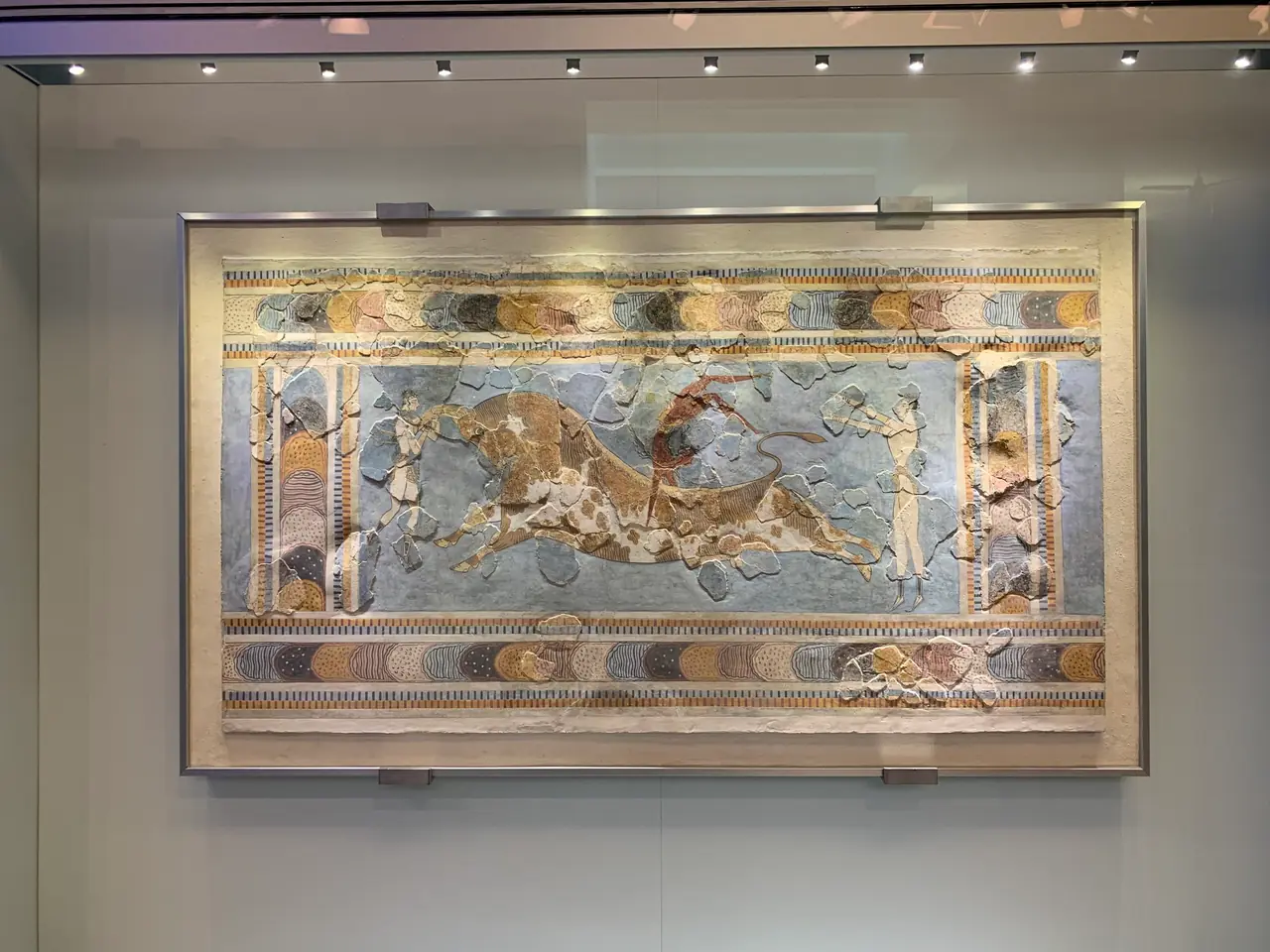
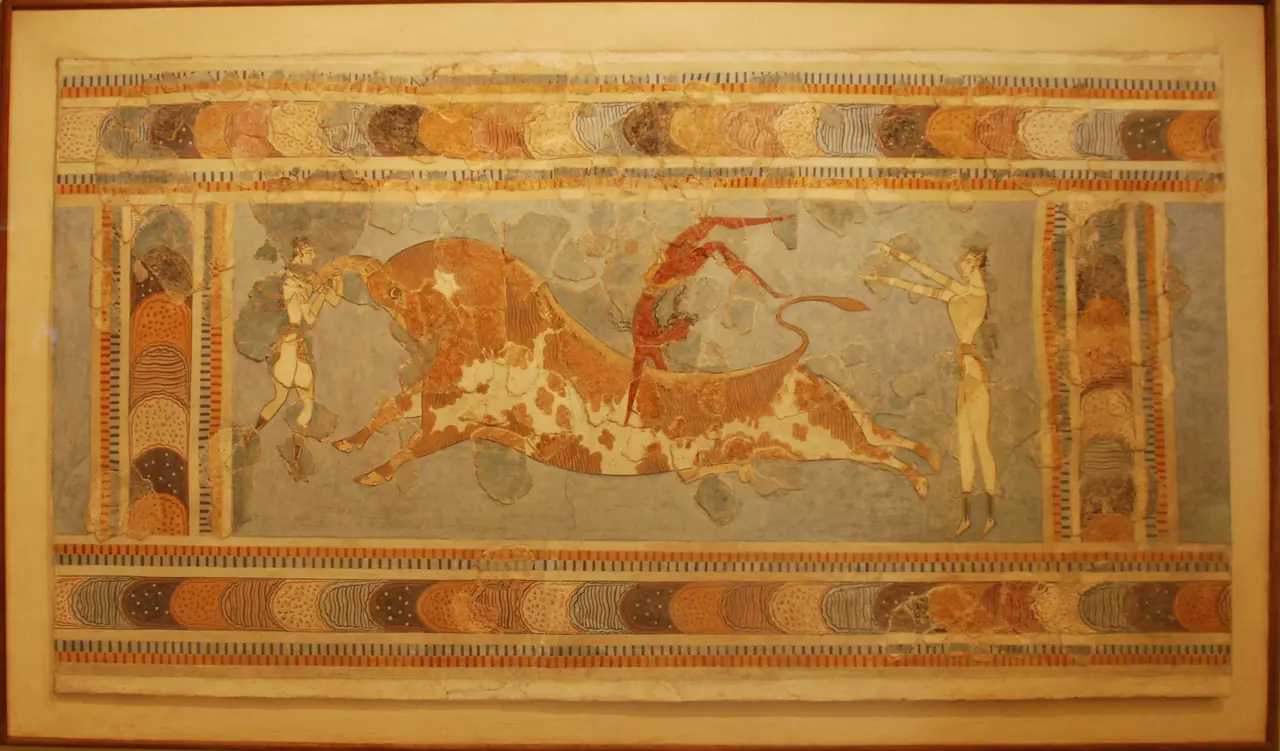
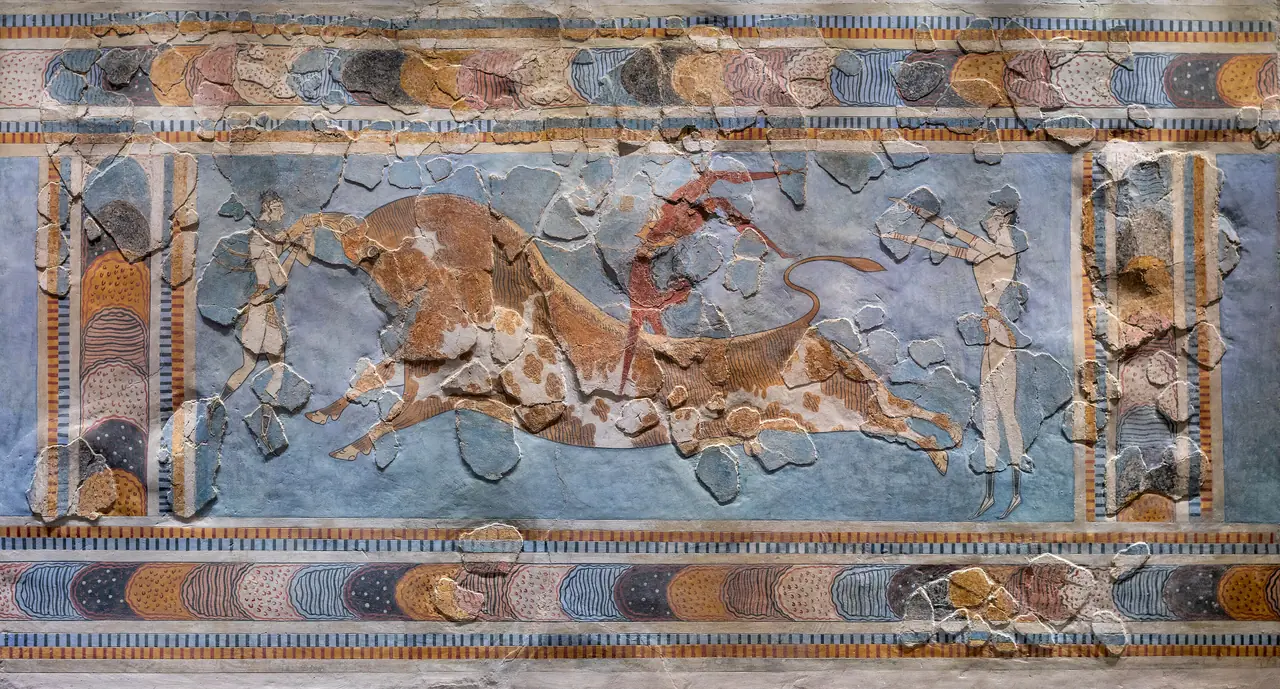
The walls were decorated with painted plaster. The best known example, the Bull-Leaping Fresco, comes from stucco panels on an upper storey of the east wing and shows acrobats leaping over a charging bull S9.

The Mycenaeans and the end of the palace
Around 1450 BC a wave of destruction struck Minoan sites across Crete S3. Knossos was the only palace that remained in use afterwards, under growing Mycenaean influence, as the Greek-speaking mainland settled on the island S3 S4.
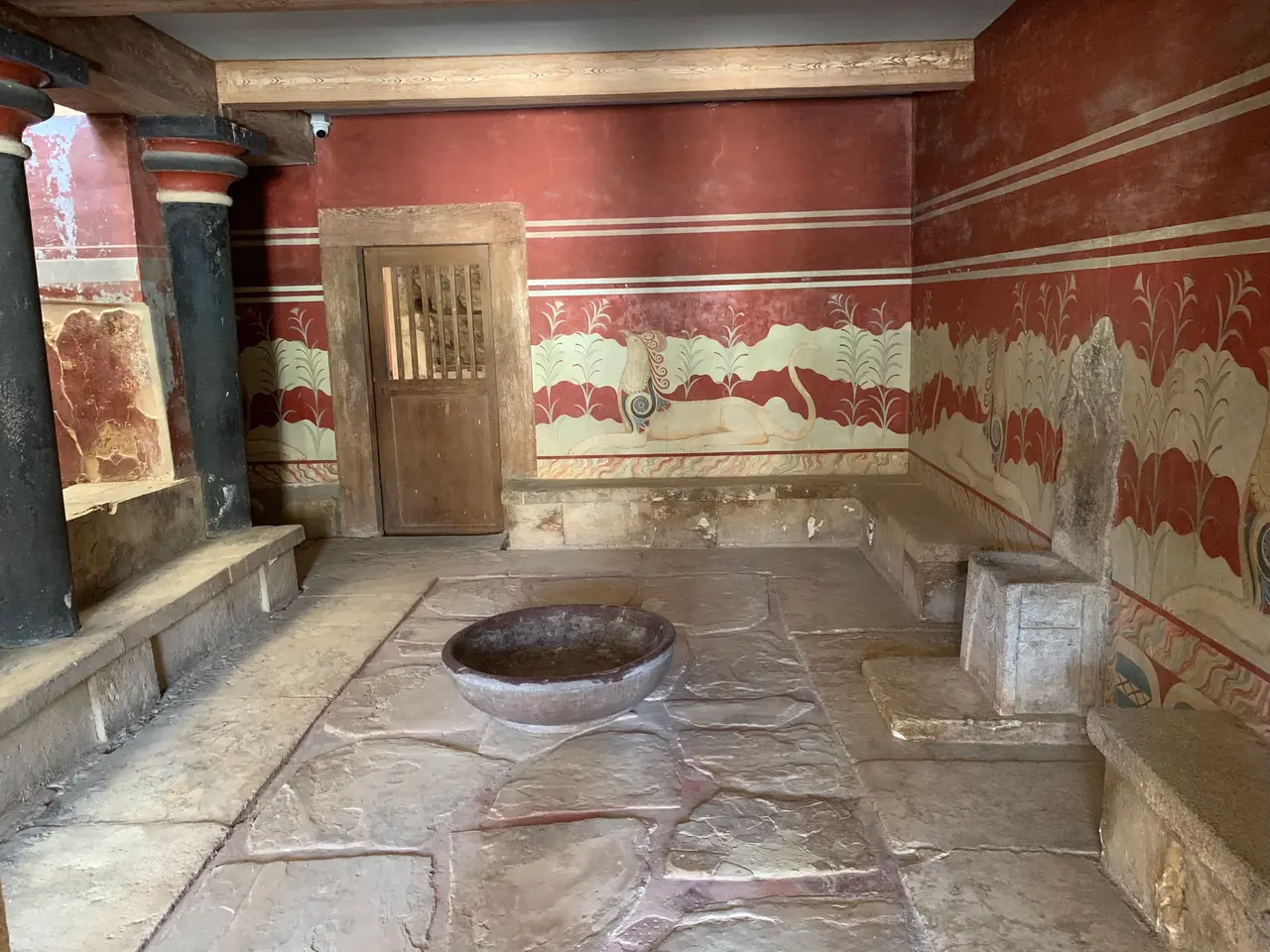
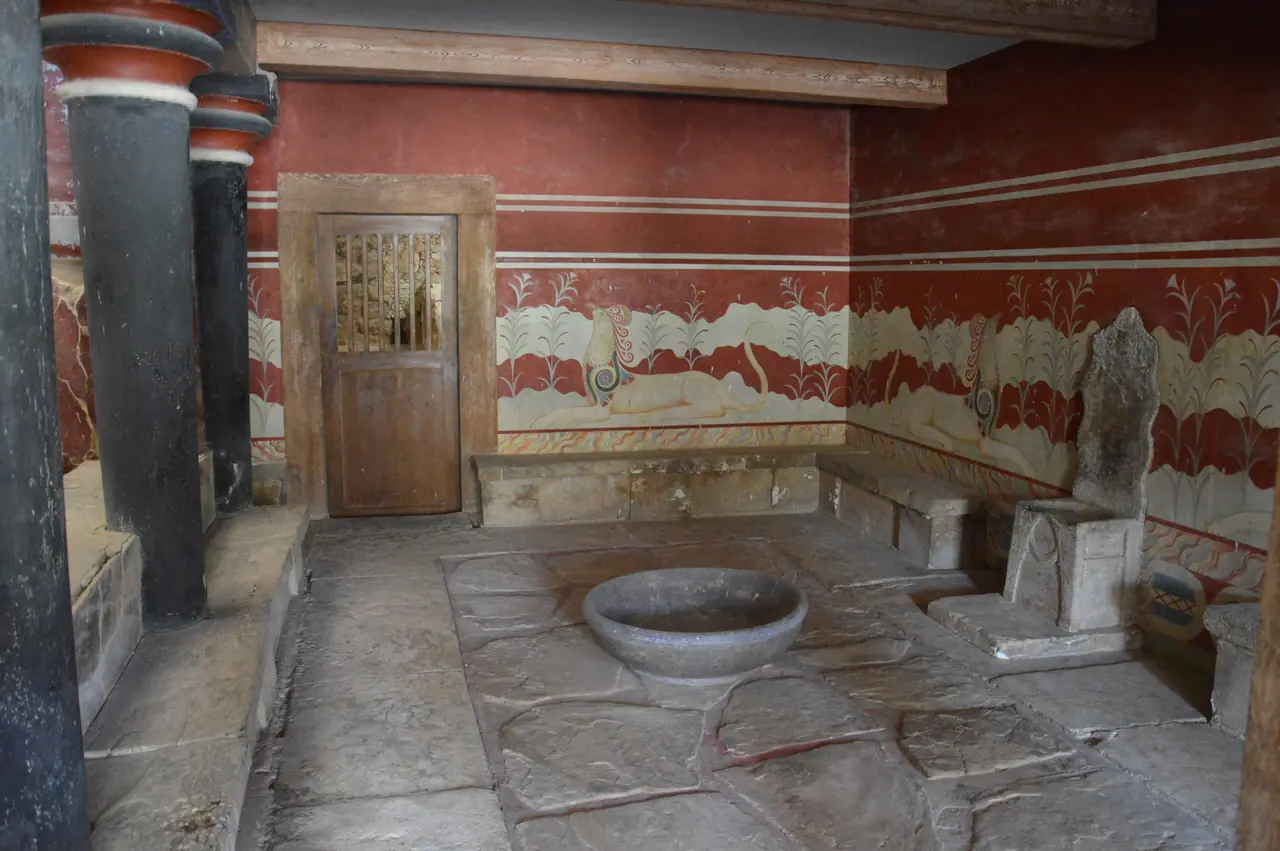
This later period is visible in its administration, which used Linear B, a script that records an early form of Greek S3. The so-called Throne Room and the apartments around it also date from this phase S4.
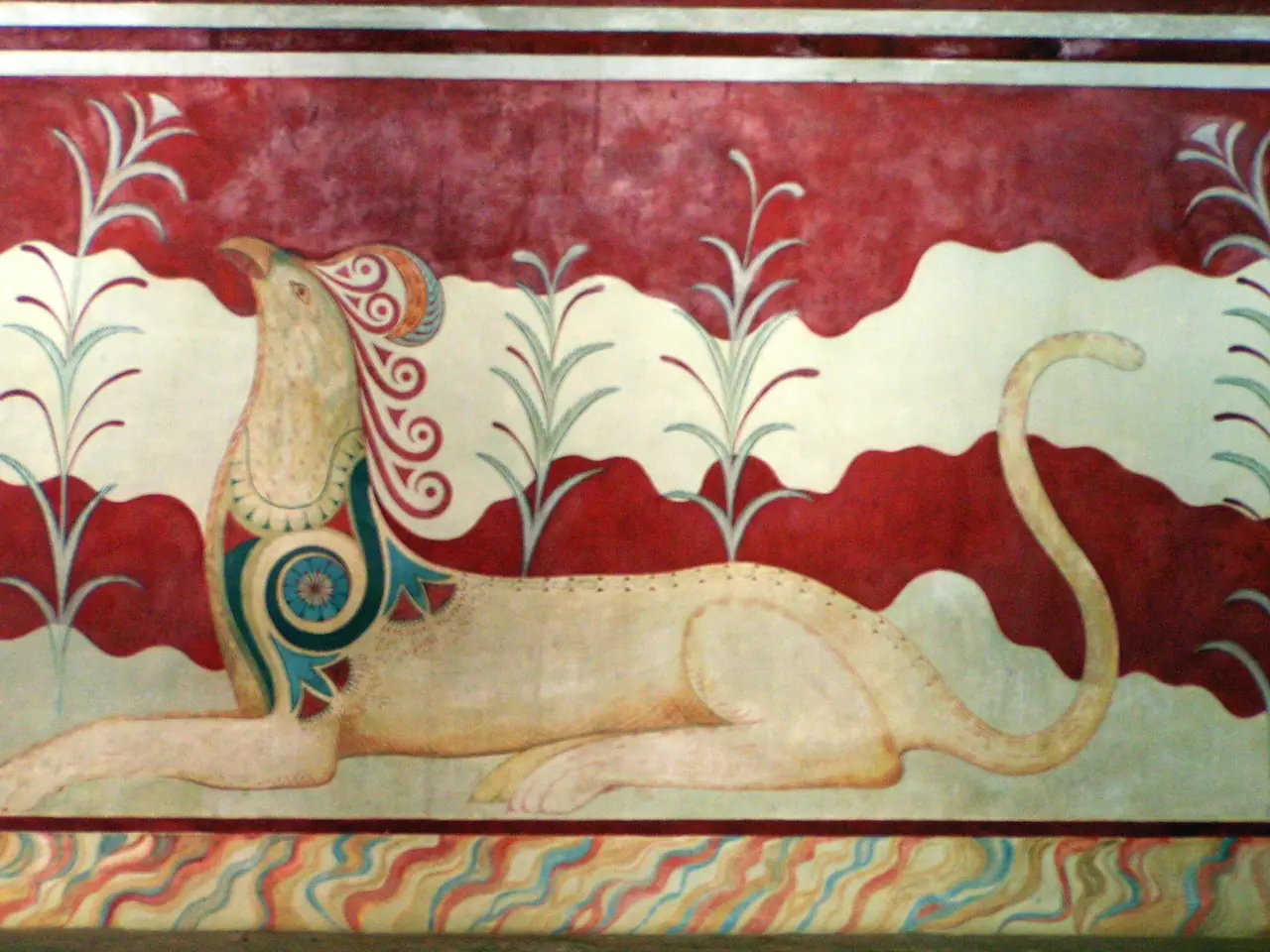
Evans identified the alabaster seat in that room as the throne of a priest-king or perhaps of a goddess, and interpreted the painted griffins on its walls as symbols of divine rule S6. The function of the room is still debated.
After a final destruction around 1380 BC, large parts of the palace were reoccupied and remodelled, mainly as private houses S4. One room in the south-east wing became a small sanctuary known as the Shrine of the Double Axes S4.


Minos, the Minotaur and the labyrinth
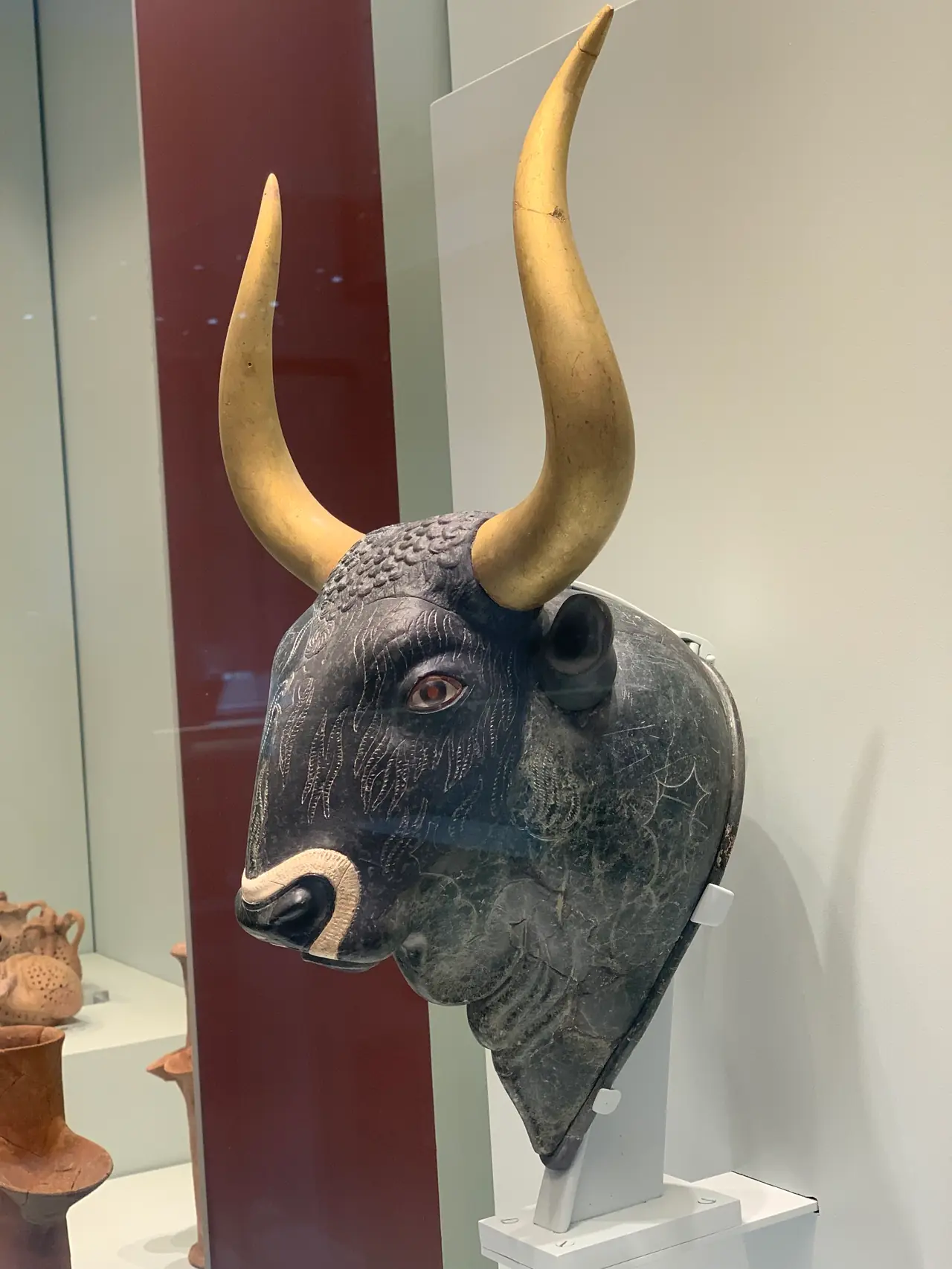
In Greek mythology, King Minos lived in a palace at Knossos and ordered Daedalus to build a labyrinth to hold the Minotaur S7. According to the Iliad, Daedalus also built a dancing floor for Ariadne S7.
In the best-known version of the story, Athens had to send young men and women as tribute to be devoured by the Minotaur, until the Athenian prince Theseus killed the creature and escaped from the labyrinth thanks to the thread given to him by Ariadne, Minos’s daughter. He later abandoned her on the island of Naxos.
The connection with myth also appears in ancient writing. A Linear B tablet from Knossos records an offering to a mistress of the labyrinth, and the city itself appears in the tablets under the name ko-no-so S7.
Some scholars connect the word labyrinth with the labrys, the double-bladed axe that appears often in Minoan religious imagery S7. Whatever its origin, the maze of corridors at Knossos made the link with the legend almost inevitable for its excavators.
From Kalokairinos to Evans
The first excavations were carried out in 1878 and 1879 by Minos Kalokairinos, a merchant and antiquarian from Heraklion, who exposed part of the west wing, including two storerooms with large jars S3. The political conditions of Ottoman Crete prevented a larger dig S3.
The British archaeologist Arthur Evans, curator of the Ashmolean Museum in Oxford, bought the land and began systematic excavations on 23 March 1900 S4 S6. Within two years the excavation of the palace was almost complete S4. His work at Knossos continued for some thirty-five years S7.
Evans identified several writing systems at Knossos, including the scripts he called Linear A and Linear B S6. Linear B was later deciphered as Greek, while Linear A, used by the earlier Minoans, remains undeciphered S5 S6.

Concrete and controversy
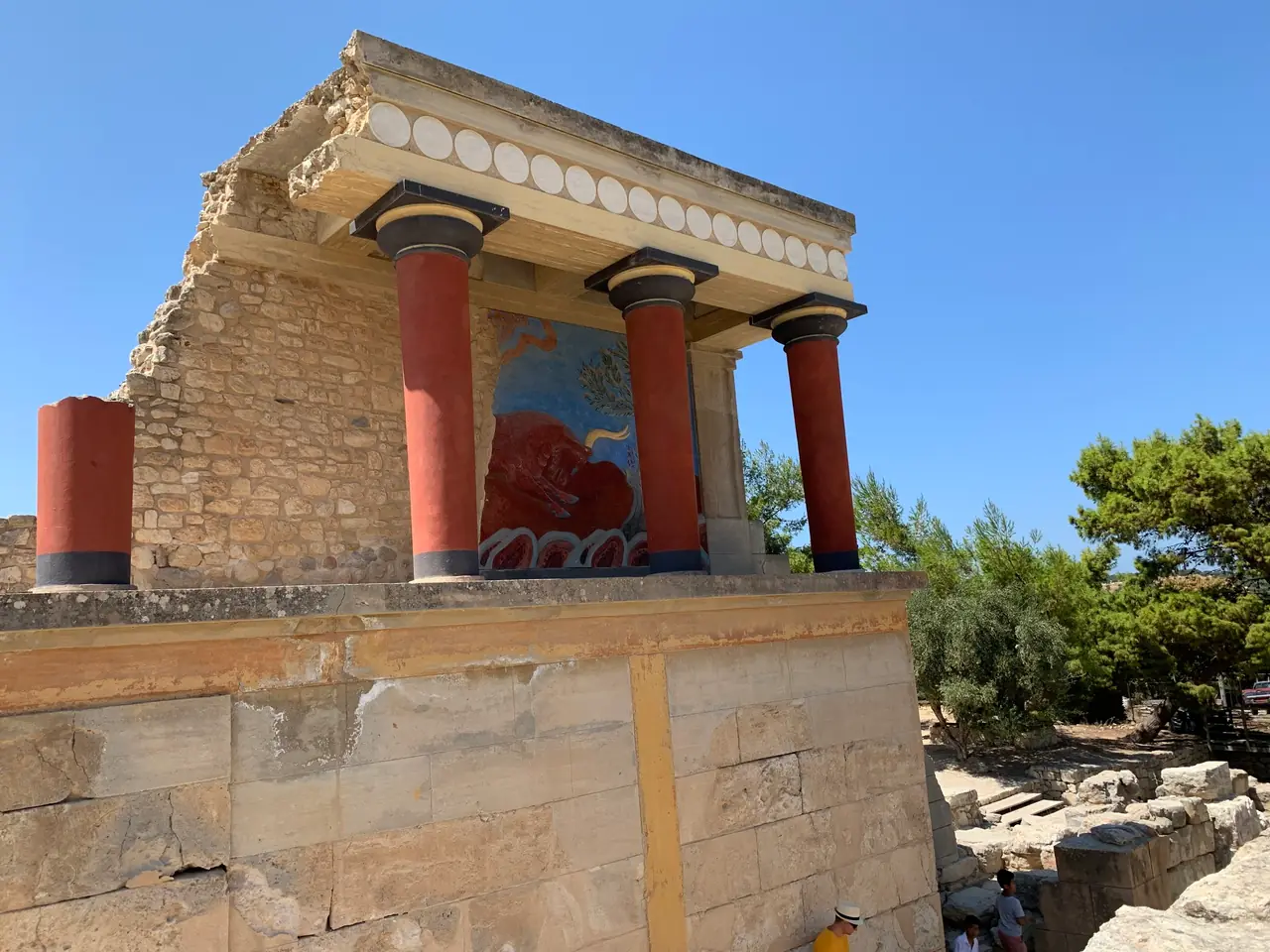
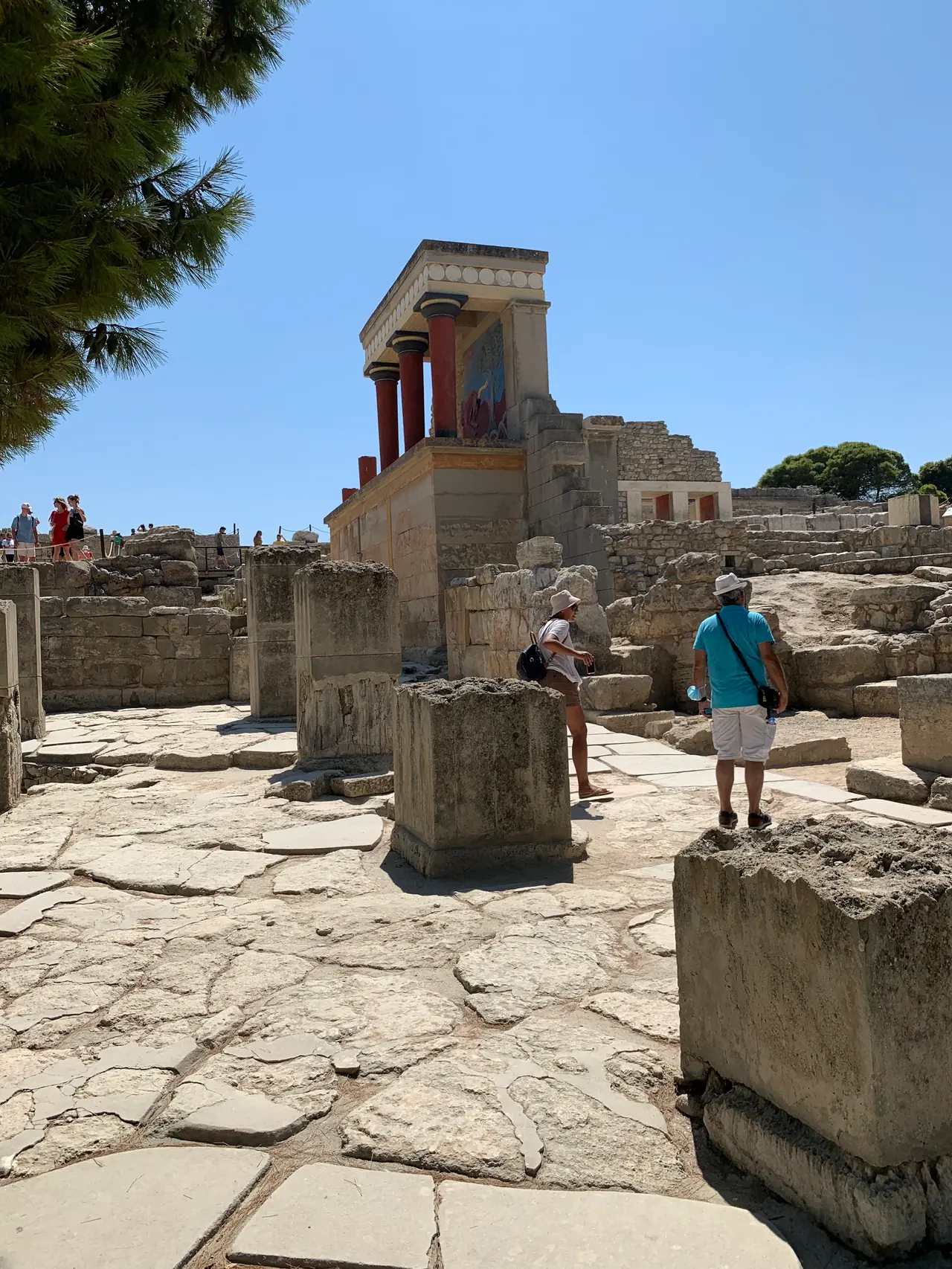
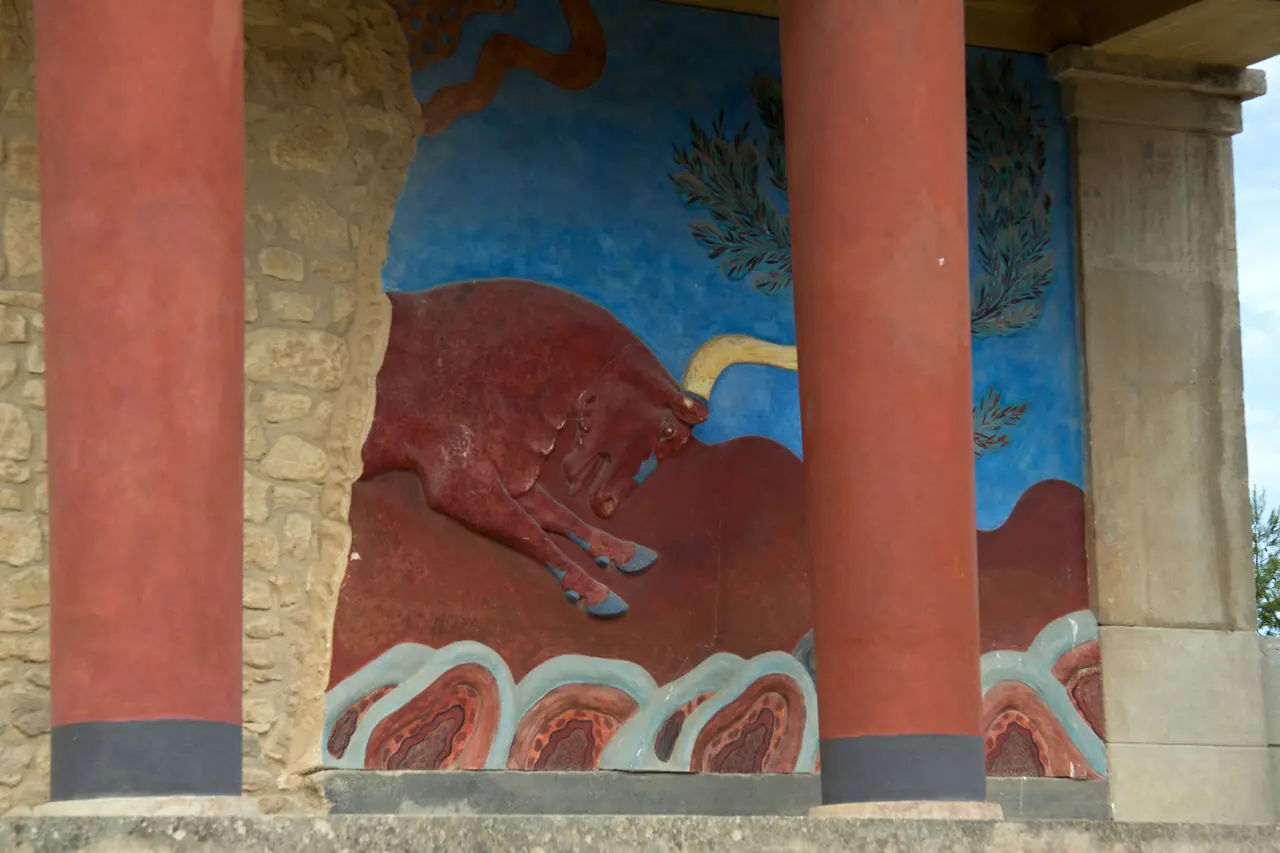
After 1925 Evans undertook a radical reconstruction of the palace, using reinforced concrete on a large scale S4. Upper storeys were rebuilt, the wooden Minoan columns were recreated in painted concrete, and copies of frescoes were placed in different parts of the palace S4 S6.
These interventions have been widely criticised, as have room names such as the Throne Room or the Queen’s Bathroom, which suggest more certainty about their function than the evidence supports S3. Yet Evans’s reconstruction is now part of the monument and its history, and in the 1990s his concrete itself was conserved S4.
Knossos therefore shows two things at once: the sophistication of the Minoan world and the way the twentieth century chose to imagine it. Visiting it means walking both through a Bronze Age palace and through the history of archaeology.
Its recent inscription on the World Heritage List adds a new chapter to that story. The challenge now is to protect an authentic Bronze Age site and, at the same time, a twentieth-century reconstruction that has itself become historic.

Frequently asked questions
How old is Knossos?
The site was occupied from around 7000 BC, and the first palace was built around 1900 BC S3.
Who excavated Knossos?
Is the Throne Room Minoan?
It dates from the later phase of the palace, after 1450 BC, under Mycenaean influence S4.
Why is Knossos linked to the labyrinth?
Greek myth placed Minos’s labyrinth at Knossos, and a Linear B tablet mentions a mistress of the labyrinth S7.
Sources
- S1 UNESCO World Heritage Committee: Decision on the Minoan Palatial Centres.
- S2 Proto Thema: The Minoan palace centres included in UNESCO’s World Heritage List.
- S3 Ancient History Sites: Knossos, a Minoan urban and palatial centre.
- S4 Knossos Documenta: The Palace of Knossos.
- S5 Encyclopedia.com: The Palace at Knossos.
- S6 History Skills: Arthur Evans and the rediscovery of the Minoan civilization.
- S7 Wikipedia: Knossos.
- S8 Geotour: Knossos Minoan palace.
- S9 Wikipedia: Bull-Leaping Fresco.
- S10 British School at Athens: Knossos, a new UNESCO World Heritage site.
More in Greece
 UNESCO WH