Tower of the Winds: The Ancient Clock of Athens
- Local name
- Αέρηδες (Aerides) / Ωρολόγιο του Κυρρήστου
- Type
- Ancient clock tower
- Continent
- Europe
- Country
- Greece
- City
- Athens
- Location
- Roman Agora, Plaka
- Builder
- Andronikos of Kyrrhos
- Date
- Second–first century BC (completed by about 50 BC)
- Height
- About 12 metres (sources vary up to 13.5 m)
- Material
- Pentelic marble
- Date
- January 2017
- Photographer
- Selfie
- Published
- October 12, 2022
- Reviewed
- November 15, 2026
- Coordinates
- 37.9742, 23.7270
- More
- Wikipedia
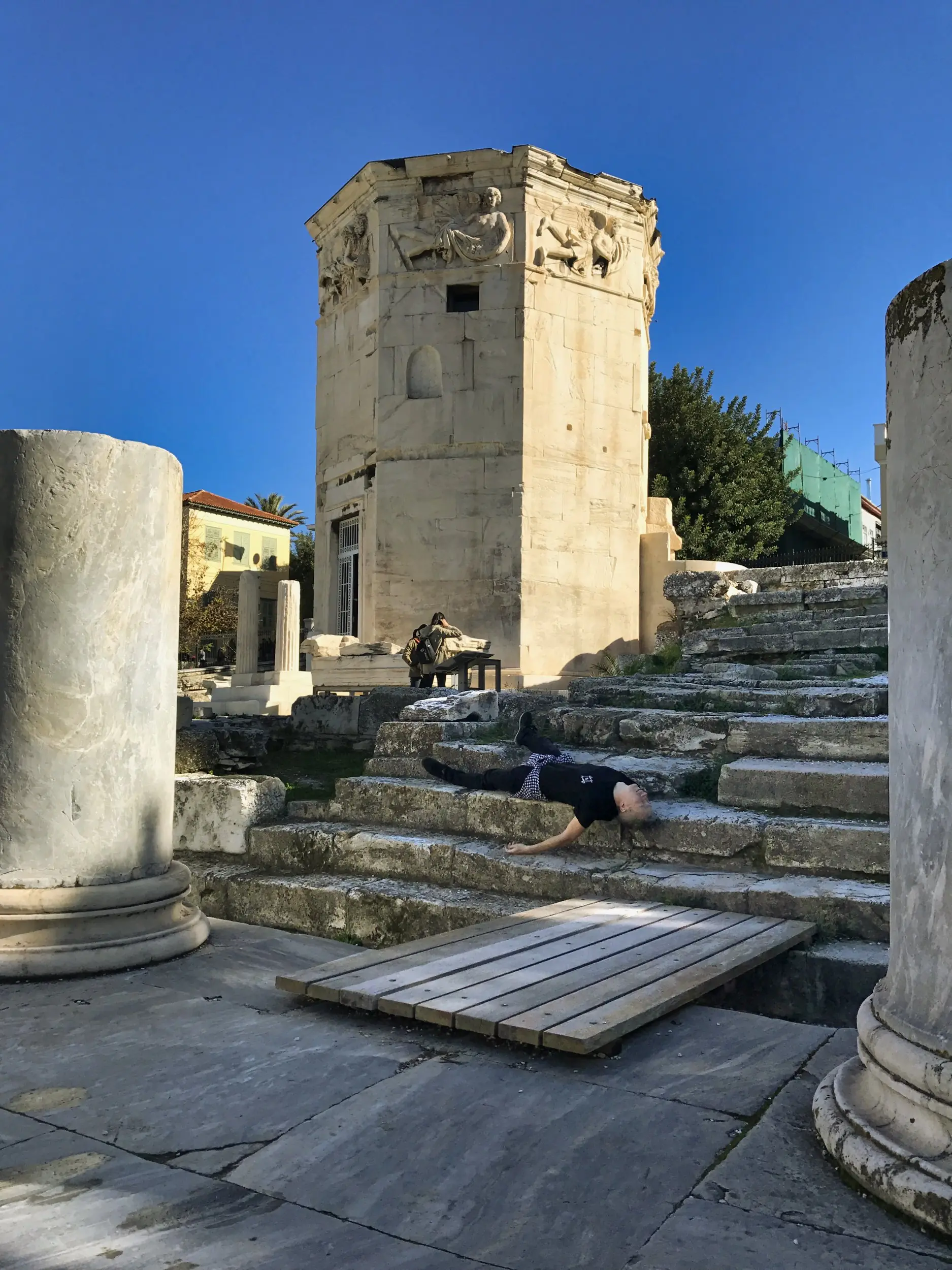
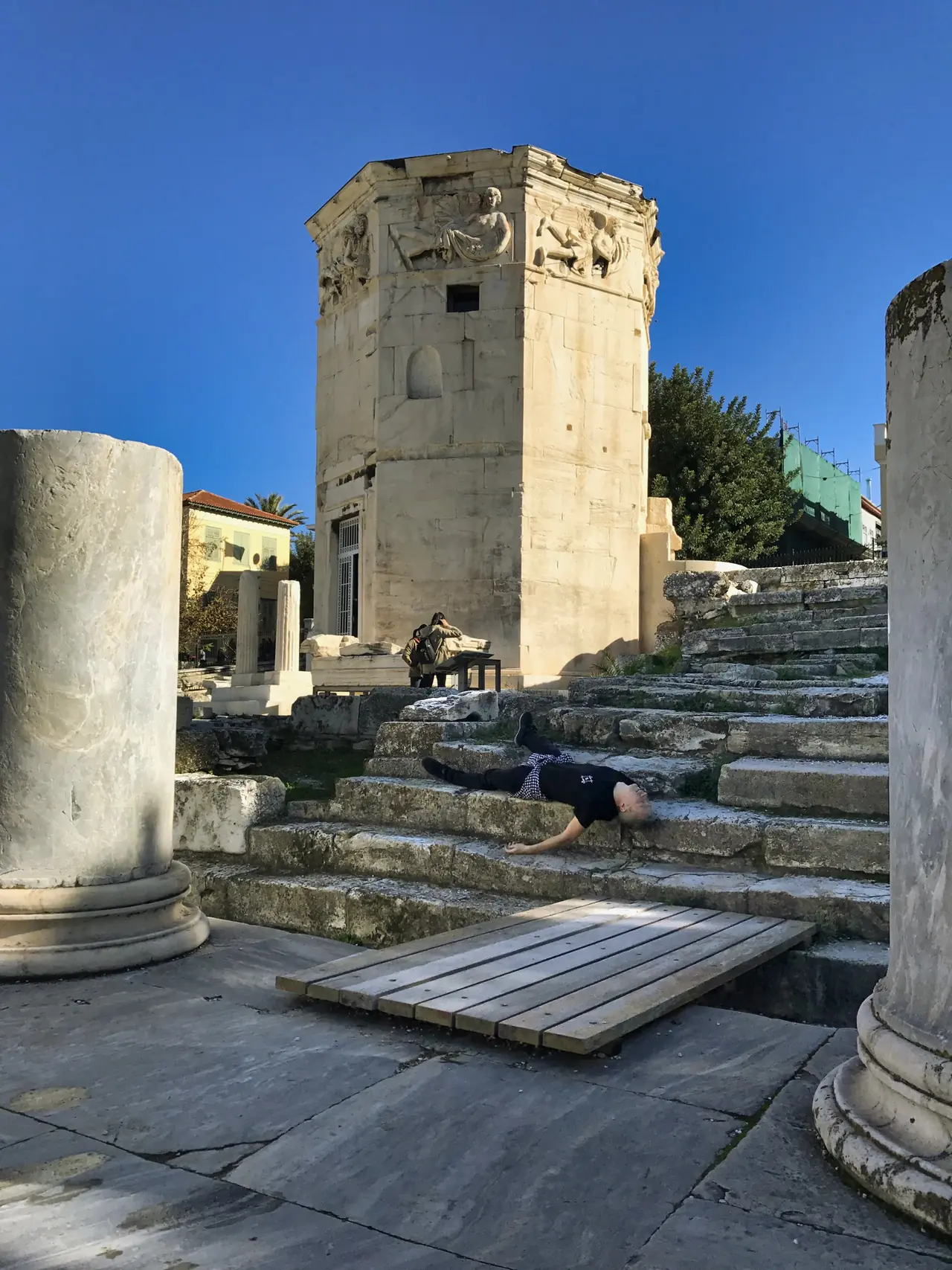
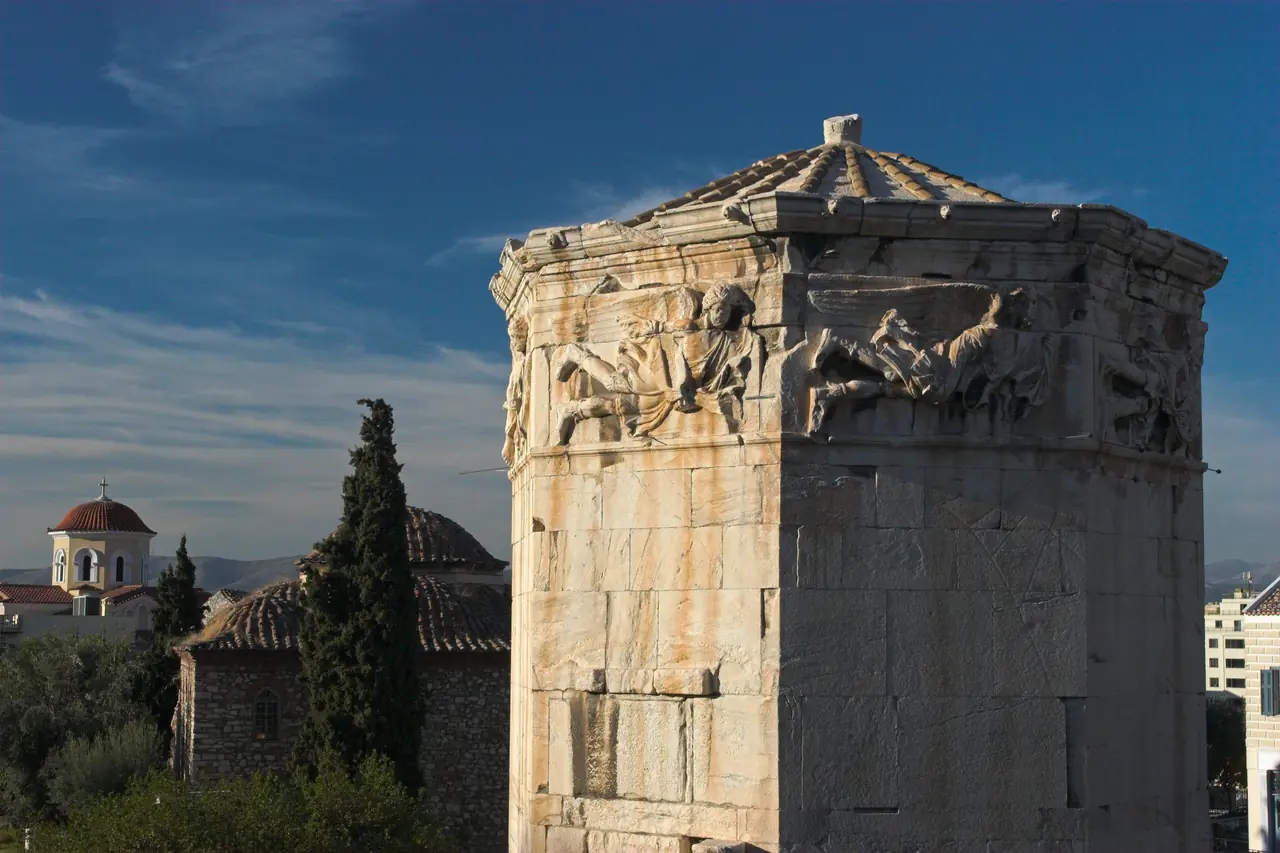
The Tower of the Winds is an octagonal tower of Pentelic marble in the Roman Agora of Athens S1. It takes its name from the eight large reliefs of wind gods carved around its top S1. It stands below the northern slope of the Acropolis, a short walk from the busy streets of the Plaka.
It is the only surviving horologium, or clock tower, from classical antiquity S1. It is also one of the very few buildings of the ancient world that still stand almost intact. Its compact shape and solid marble have helped it resist time.
An octagon of marble
An inscription on one of the sundials records that the tower was built by the astronomer Andronikos, son of Hermias, from Kyrrhos S2. For that reason it is also known as the Horologion of Andronikos Kyrrhestes S2.
Its exact date is not recorded. Britannica places its construction around 100 to 50 BC, while World History Encyclopedia notes that most historians favour the second century BC on stylistic grounds S3 S2. The uncertainty shows how much of its story still depends on interpretation.
What is certain is that it was finished by about 50 BC at the latest, because Varro mentions it in a work written around 37 BC S1. Today Athenians call it simply the Aerides, the Winds S1.
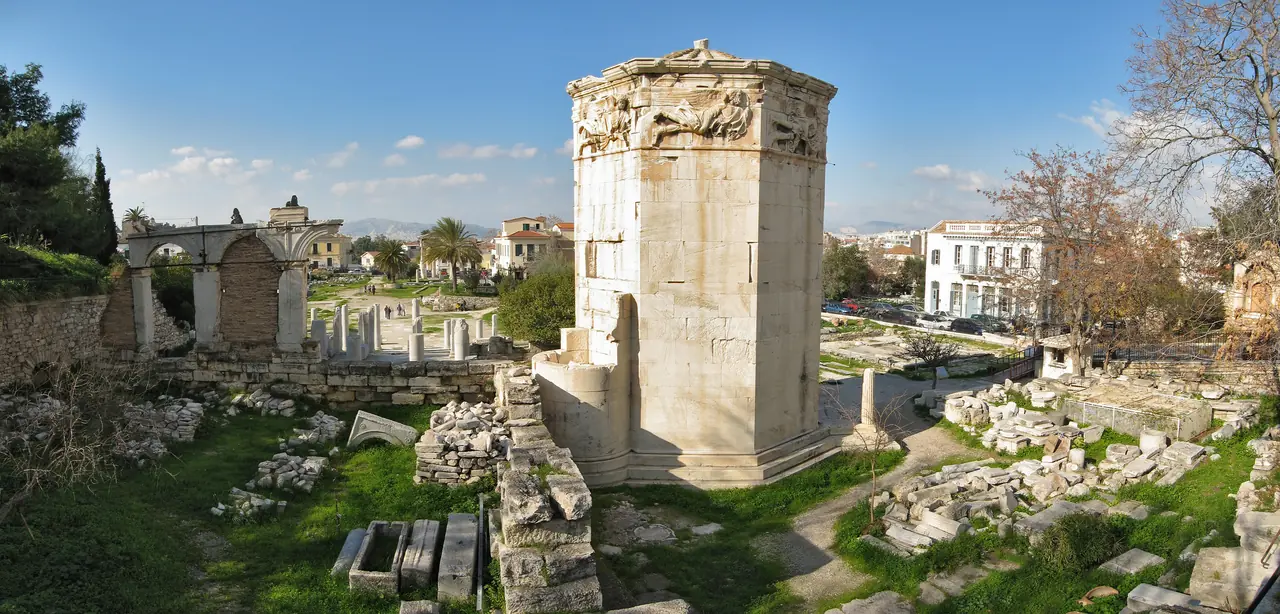
The tower stands on three steps and is about 12 metres high, with a diameter of about 8 metres S1. Other measurements give 12.8 or even 13.5 metres, depending on how the height is taken S3 S2. Whatever the exact figure, it rose clearly above the market around it.
Eight winds in stone
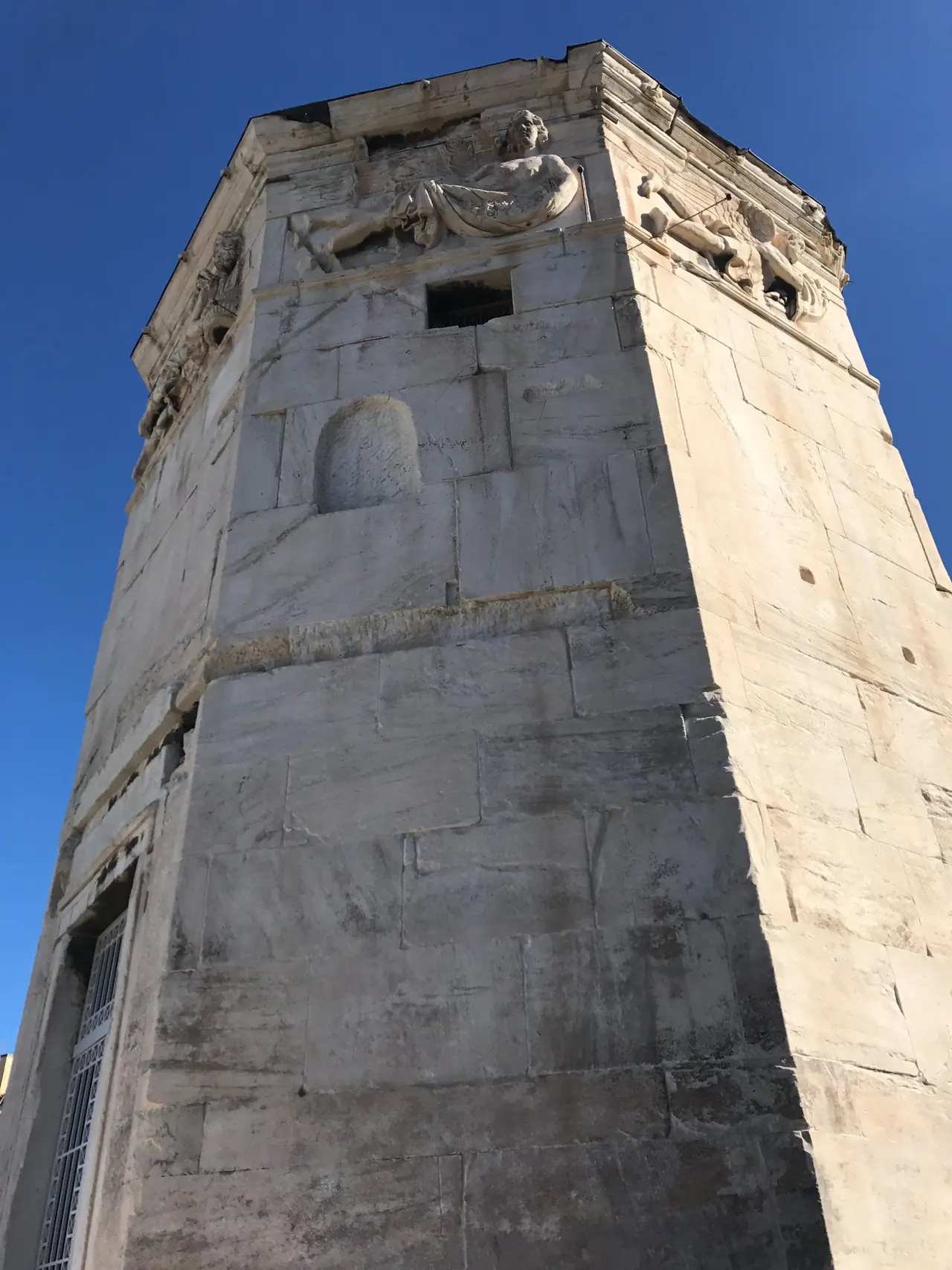
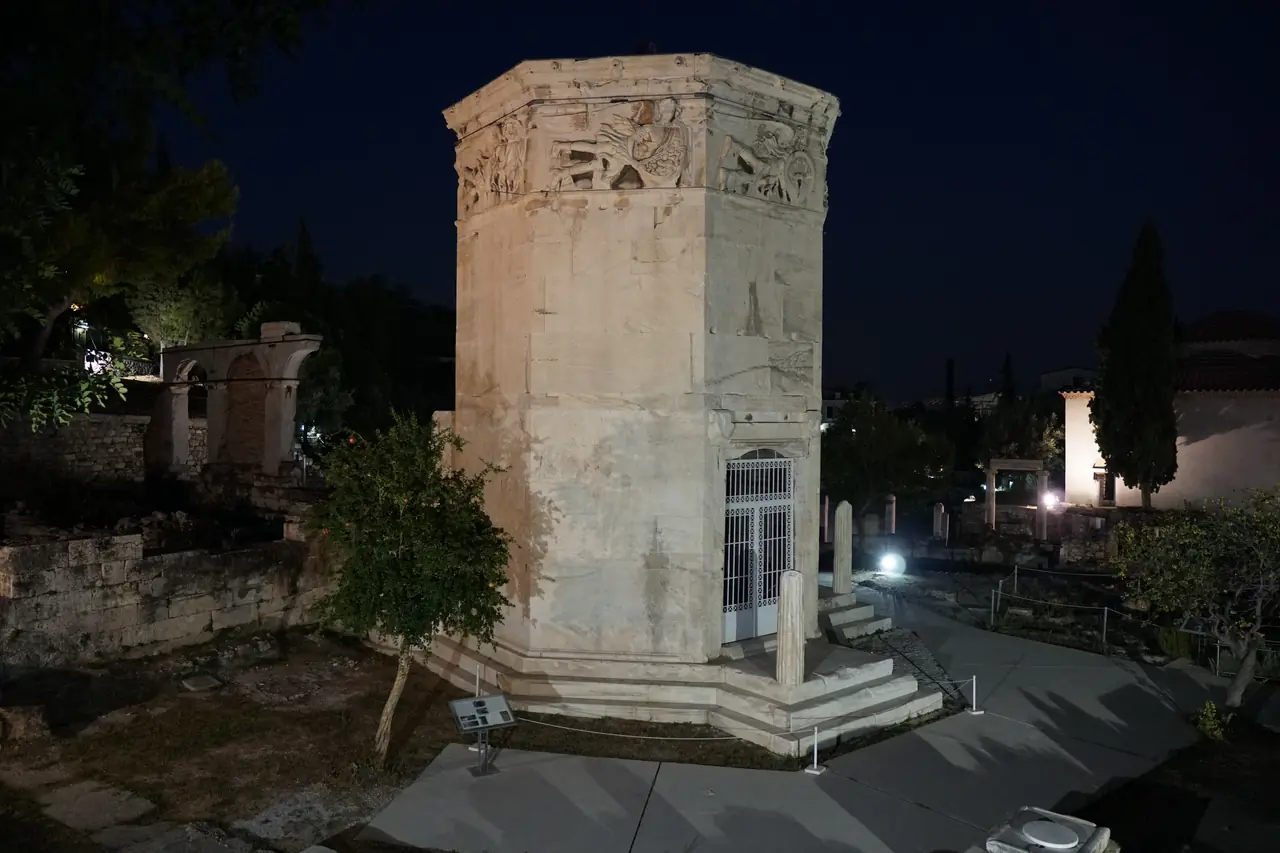
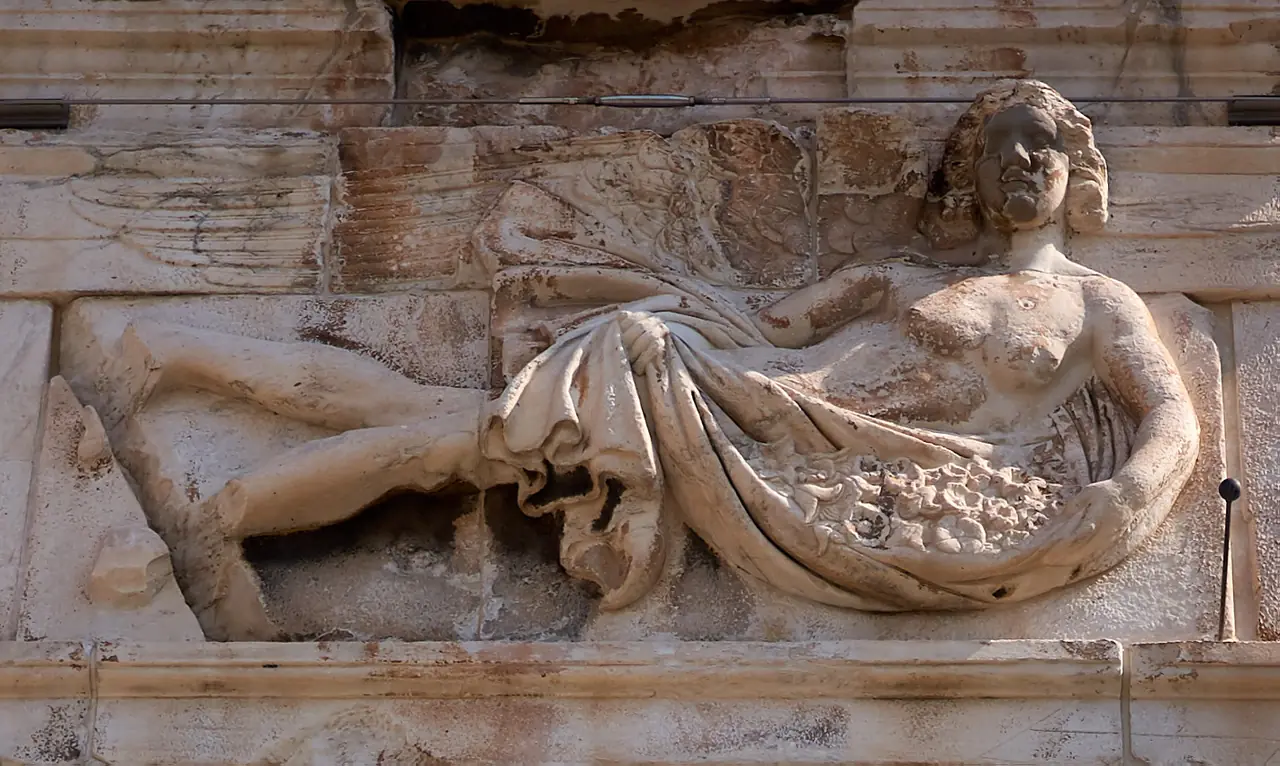
Each of the eight sides faces a point of the compass S3. Above, the frieze shows the eight wind gods, a little over life size: Boreas to the north, Kaikias to the north-east, Apeliotes to the east, Euros to the south-east, Notos to the south, Lips to the south-west, Zephyros to the west and Skiron to the north-west S1.
Each wind carries a symbol that identifies it S2. Boreas, the cold north wind, is a bearded man blowing a shell trumpet, while Zephyros, the gentle west wind, is a young man whose cloak is full of flowers S2. Old winds tend to be bearded, while milder ones appear as young men.
Notos, the south wind that brings rain, empties an amphora of water, and Skiron tips over a vase full of hot coals S2. The images form a small catalogue of the weather that Athenians knew.
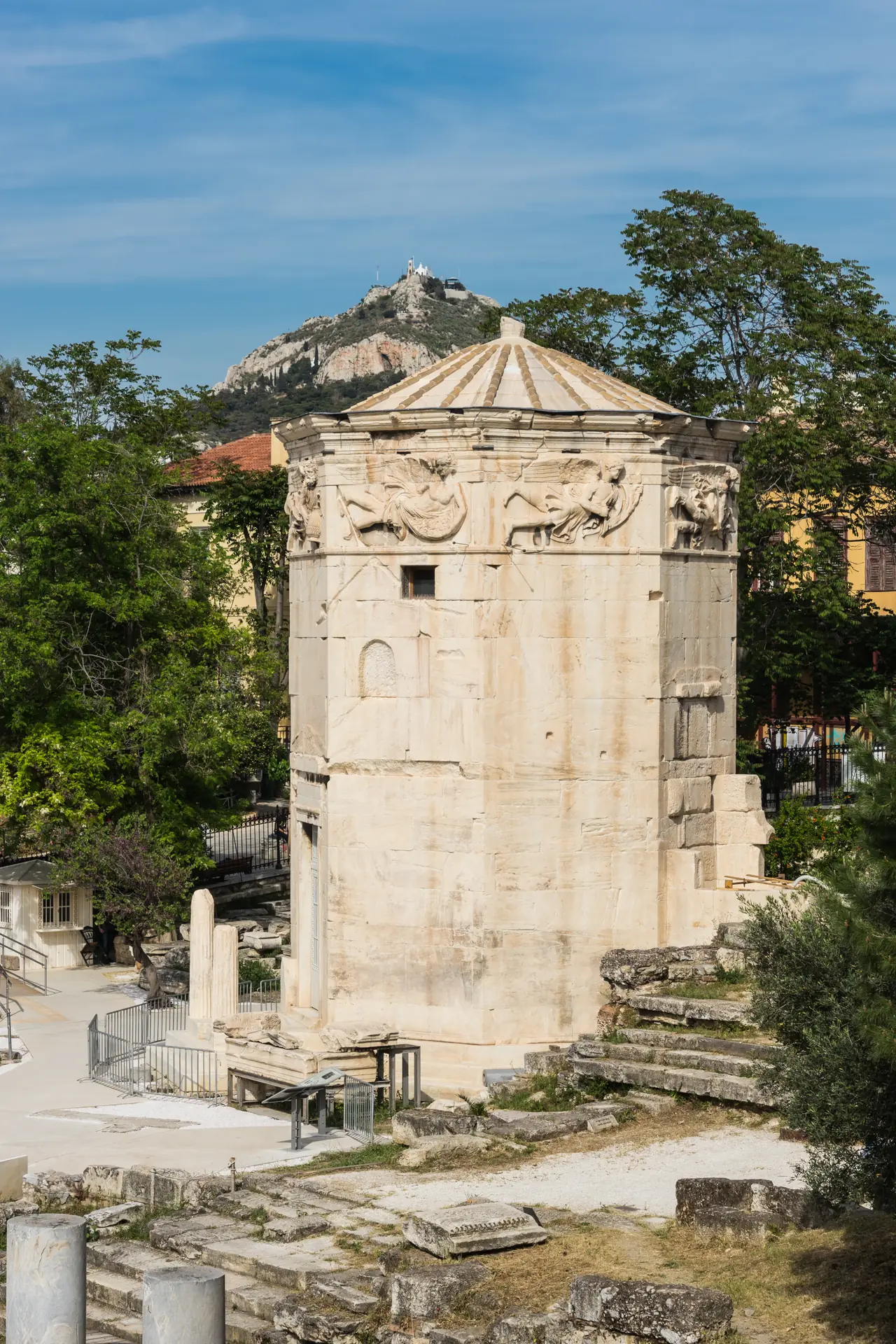
On top of the conical marble roof stood a bronze weather vane in the form of Triton S3. His rod pointed down to the relief of whichever wind was blowing at the time S2. Seen from the Acropolis, the shape of the roof recalls Mount Lycabettus S2.
A clock without hands
Below the reliefs, on the sides facing the sun, are the lines of sundials S3. World History Encyclopedia counts nine sundials in all, including one on the cylindrical annexe at the back S2.
The sundials were adapted to each face, because each side receives direct sunlight at different times of day S1. The ancient Greeks divided daylight into twelve equal hours, so the east and west faces have only four hour lines, while the south face has eight S1.
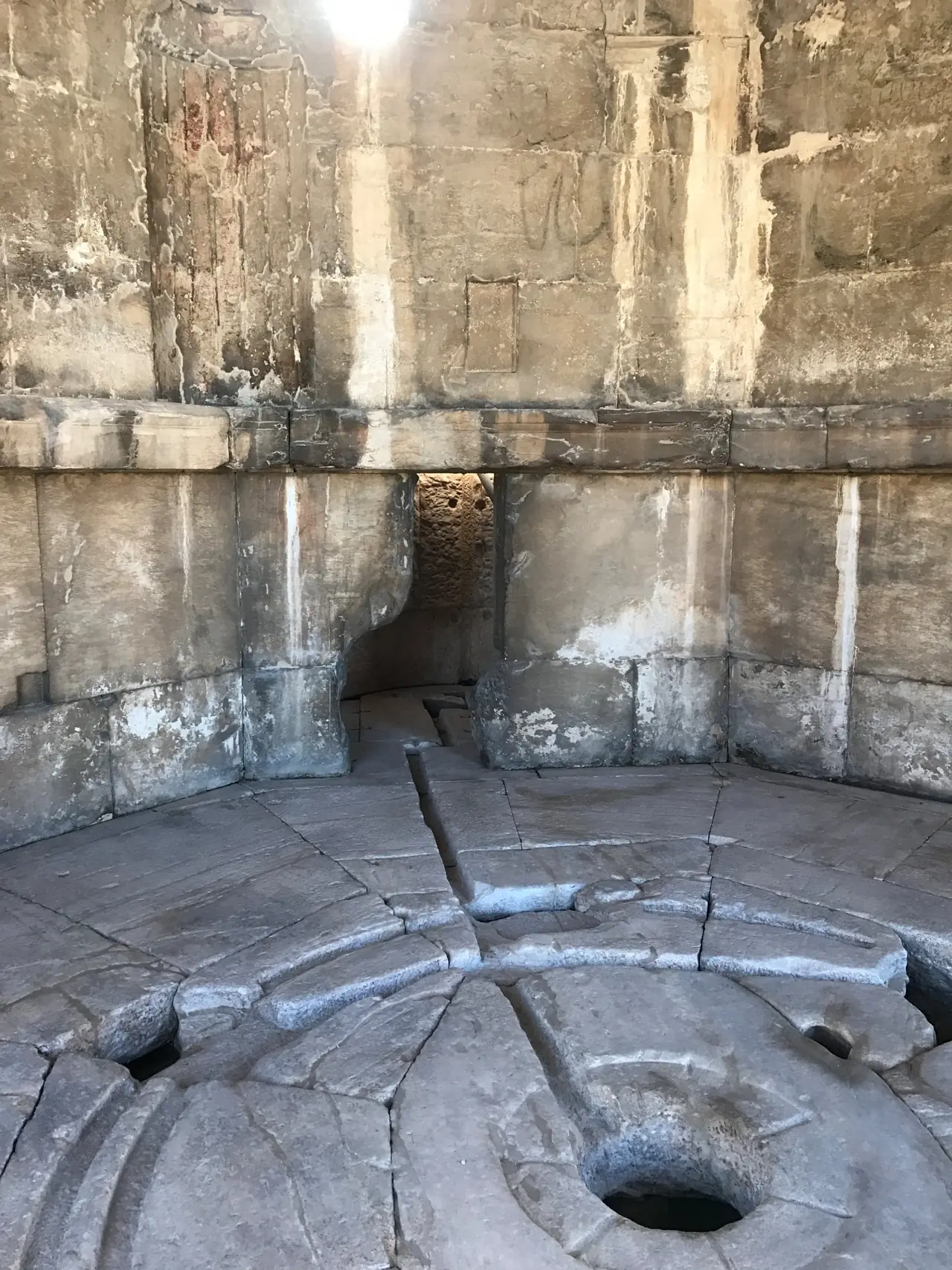
When the sun was not shining, time was kept by a water clock inside S3. It was driven by water coming down from a spring on the Acropolis, stored in the turret at the back S1. The water flowed into the mechanism through a channel cut into the floor S1.
Only the channels and holes in the floor survive, so the clock has been lost S2. Several attempts have been made to reconstruct how it worked, but the mechanism remains uncertain, and it may even have been an astronomical clock S1.
Research suggests that the tower was built so tall in order to place the sundials and the weather vane where they could be seen from the Agora S1. Merchants in the nearby market could thus follow the time and the wind, useful for knowing when goods might arrive by sea S2.
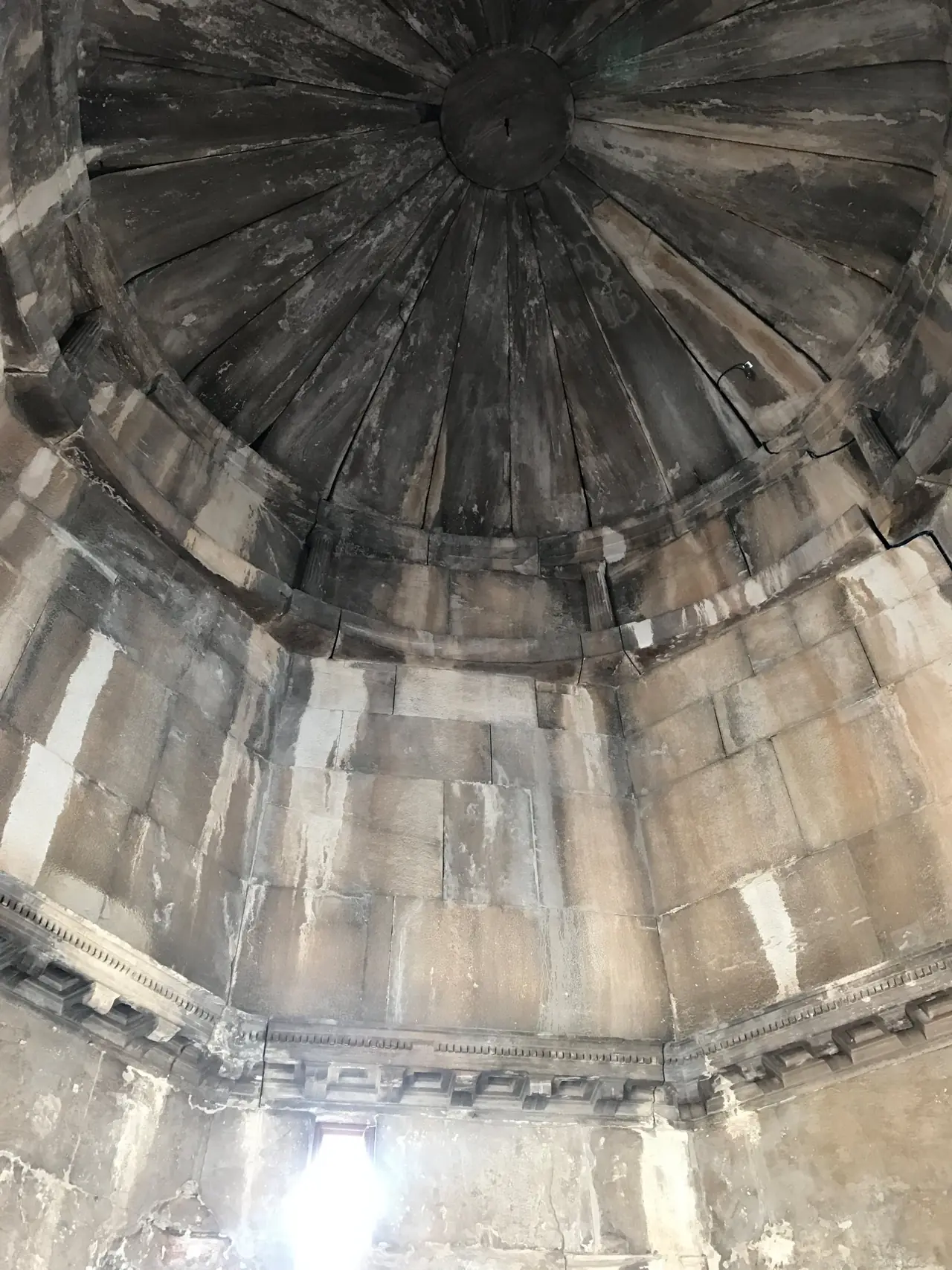
The tower had two doorways with small porches, on the north-east and north-west sides S2. Inside there is a single room, with eight small columns at the corners of the octagon S1. These columns are less than 1.2 metres high but richly carved S1.
From church to tekke
In the early Christian period, the tower was converted into a church or baptistery S2. Its sturdy construction and its single interior space made it easy to adapt to new uses. Christian worship kept the building in use when many ancient monuments were abandoned.
In the mid-eighteenth century, during the Ottoman period, it became a tekke, a place of worship for dervishes S2. These successive uses help explain why the building has survived so well. Travellers of the time described ceremonies held inside by the dervishes.
Over the centuries, the ground level of the area rose and buried the base of the tower. Excavations in modern times uncovered the old Roman market around it again. Today visitors see the tower from the level of the ancient market, below the modern streets.
Restored and open
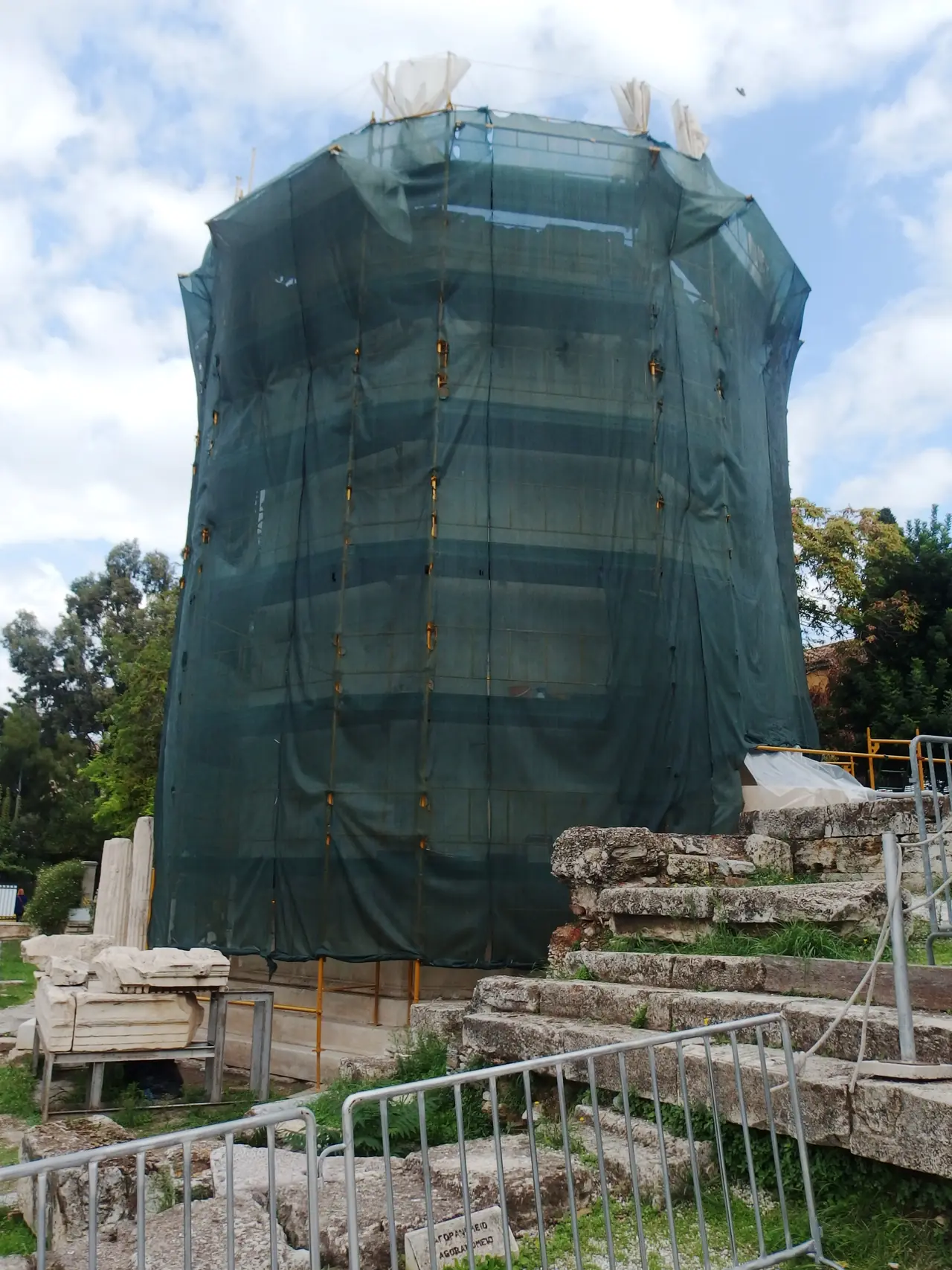
After many years closed to the public, restoration work on the tower was completed in 2016 S2. Since then, visitors can once again enter it as part of the visit to the Roman Agora S2.
The cleaned marble now shows the reliefs and sundial lines more clearly. Inside, visitors can see the holes in the floor that once held the water clock. A small part of the later aqueduct that supplied it also survives next to the tower S1.
A model for later architects
The Roman architect Vitruvius described the tower and drew on it for his idea of a city whose streets were oriented to the winds S2 S1. Andronikos himself seems to have written a book on the winds that Vitruvius used S1. In this way, the tower influenced ideas about town planning for centuries.
Accurate drawings of the tower were first published in 1762 by James Stuart and Nicholas Revett in The Antiquities of Athens S3. They inspired copies in the Greek Revival style, such as those at Shugborough in England and Mount Stewart in Ireland, and the Radcliffe Observatory in Oxford S3.
Today the Tower of the Winds stands at the edge of the Plaka, below the Acropolis. More than two thousand years after it was built, it still tells the time of a city that has never stopped changing. Few monuments allow visitors to stand so close to the daily life of ancient Athens.
Frequently asked questions
Who built the Tower of the Winds?
The astronomer Andronikos of Kyrrhos, according to an inscription on one of the sundials S2.
When was it built?
What was the tower used for?
Which winds are shown on the tower?
Boreas, Kaikias, Apeliotes, Euros, Notos, Lips, Zephyros and Skiron S1.
Can you go inside?
Yes, since the restoration completed in 2016 the interior can be visited as part of the Roman Agora S2.
Sources
More in Greece