Dalí Theatre and Museum: The World’s Largest Surrealist Object
- Local name
- Teatre-Museu Dalí
- Type
- Art museum
- Continent
- Europe
- Country
- Spain
- Region
- Catalonia
- City
- Figueres
- Opened
- 28 September 1974
- Former building
- Municipal Theatre of Figueres (1849–1850)
- Dome
- Emilio Pérez Piñero
- Visitors
- 1,368,755 (2016)
- Date
- June 2022
- Photographer
- Sin confirmar
- Published
- October 15, 2022
- Reviewed
- November 15, 2026
- Coordinates
- 42.2680, 2.9597
- More
- Wikipedia
The Dalí Theatre-Museum is a museum dedicated to the artist Salvador Dalí in his home town of Figueres, in Catalonia S1. It is considered the last great work of the painter, who conceived the building itself as part of his art S2. Every corner of it was planned to surprise, amuse or unsettle the visitor.
The Gala-Salvador Dalí Foundation describes it as the world’s largest surrealist object S3. In 2016 it received 1,368,755 visitors S1. That makes it one of the most visited museums in Spain.
A theatre in ruins
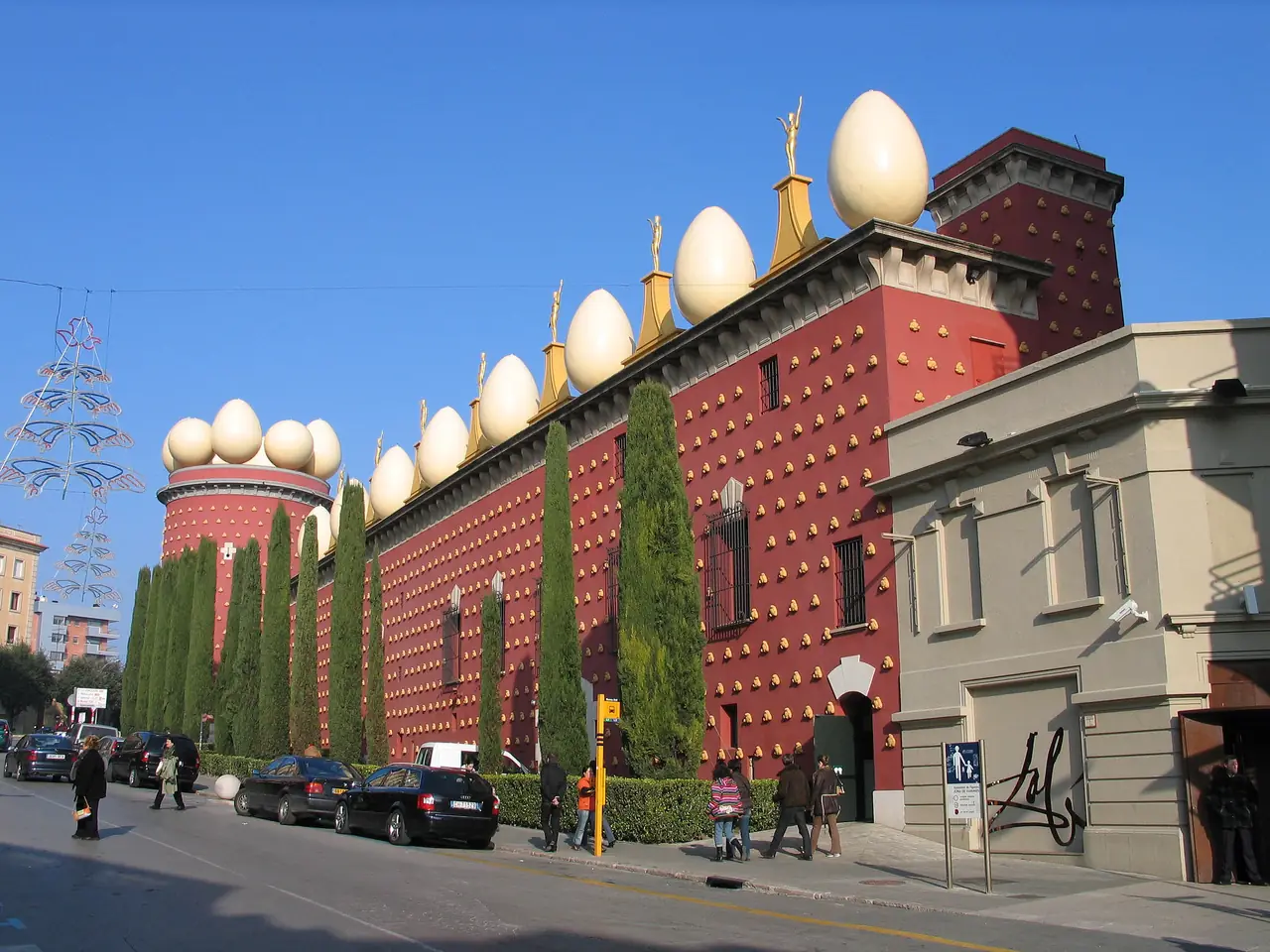
The museum stands on the remains of the former Municipal Theatre of Figueres, a mid-nineteenth-century neoclassical building S3. It was designed by the architect Roca i Bros and built between 1849 and 1850 S9. For almost a century it was the centre of cultural life in the town.
This was the theatre Dalí knew as a child S1. It also hosted one of the first public exhibitions of the young painter’s work S1. The link between the building and the artist therefore goes back to his youth.
At the end of the Spanish Civil War, in 1939, the theatre was destroyed by fire S9. For decades, only the walls and burnt beams remained standing S5. The ruin stood in the centre of Figueres as a reminder of the war.
The building stands next to the parish church where Dalí was baptised in 1904 S6. Choosing the ruined theatre for his museum meant returning to the place where his public life as an artist had begun.

Dalí’s last great work
Dalí presented the plans for the museum to the press in 1961 S3. The restructuring of the building began on 13 October 1970 S5. Almost a decade passed between the announcement and the start of the works.
From the 1970s onwards, Dalí devoted his entire attention to the project, taking part in it and designing even its smallest details S2. The architects in charge of the restoration were Joaquim de Ros i Ramis and Alexandre Bonaterra S1. They kept the outline of the old theatre and adapted it to the painter’s ideas.
A pre-inauguration event was held in 1973, on the occasion of an exhibition of the jewels designed by Dalí S3. The museum was officially inaugurated by Dalí and Gala on 28 September 1974 S3.
The museum was never really finished. It was still under construction and being redesigned when the painter died in 1989, because Dalí kept proposing new ideas and changes until the very end S4. In that sense, the building is less a finished museum than a work in progress frozen in time.

The dome and the eggs
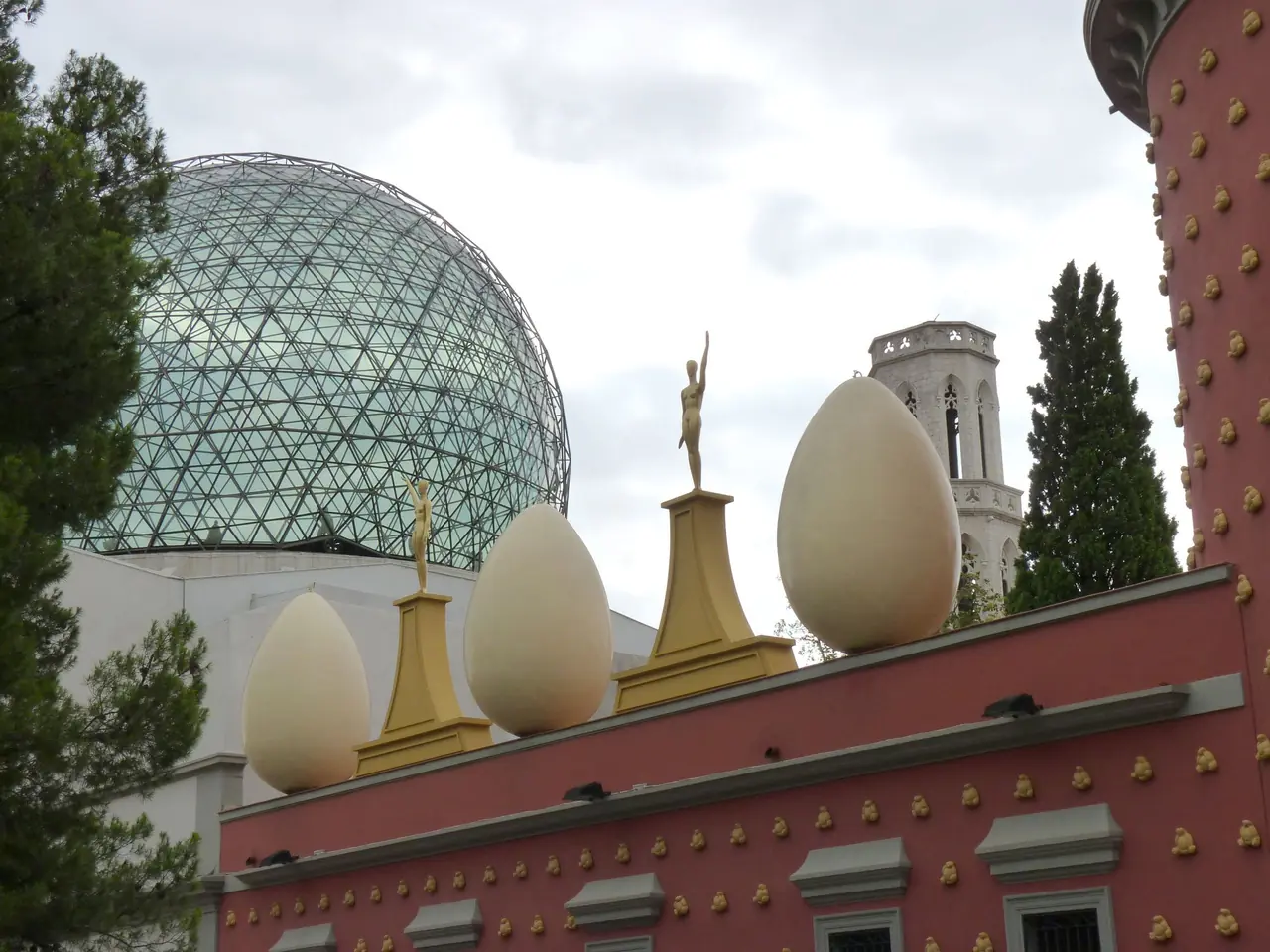
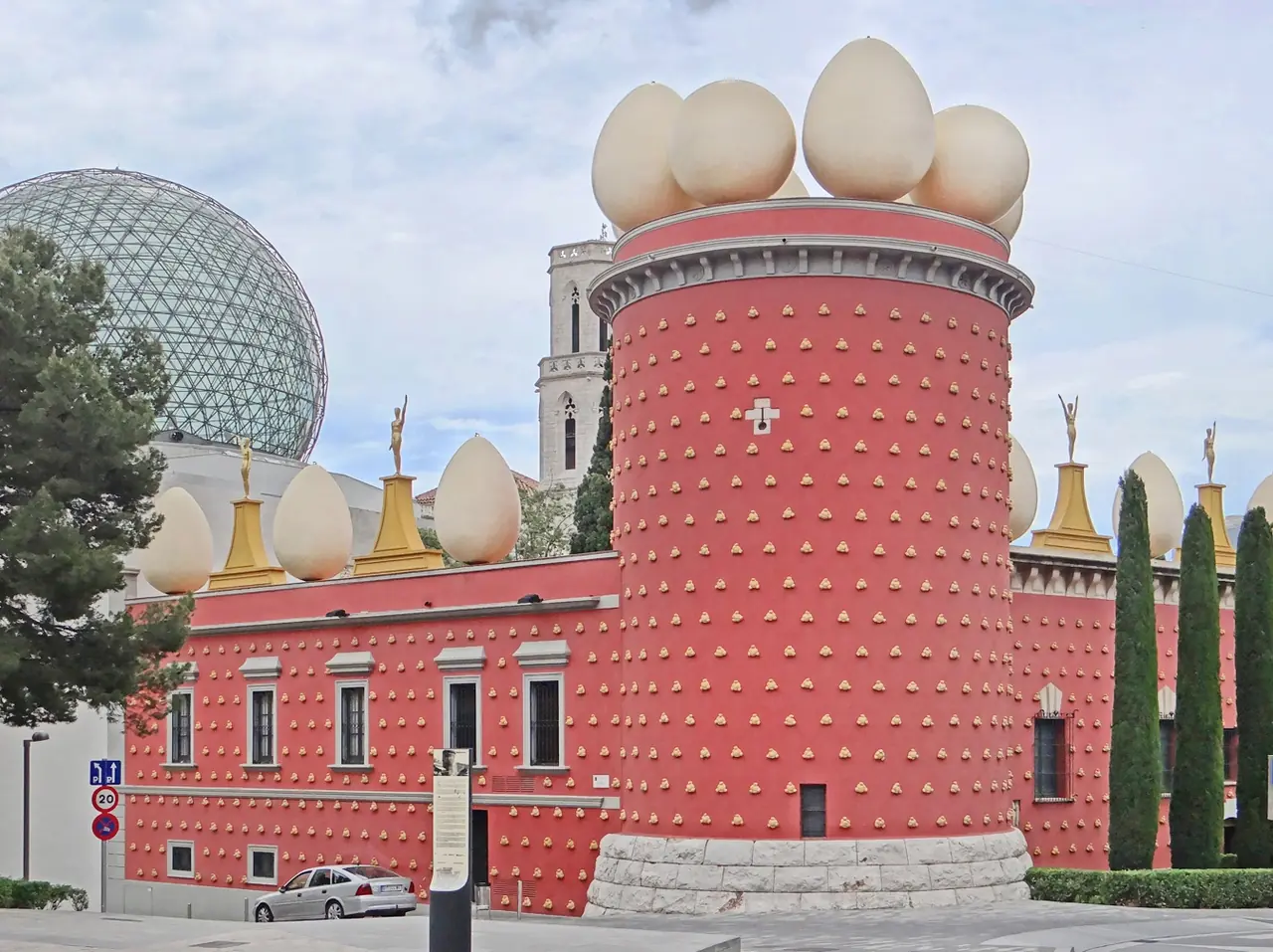
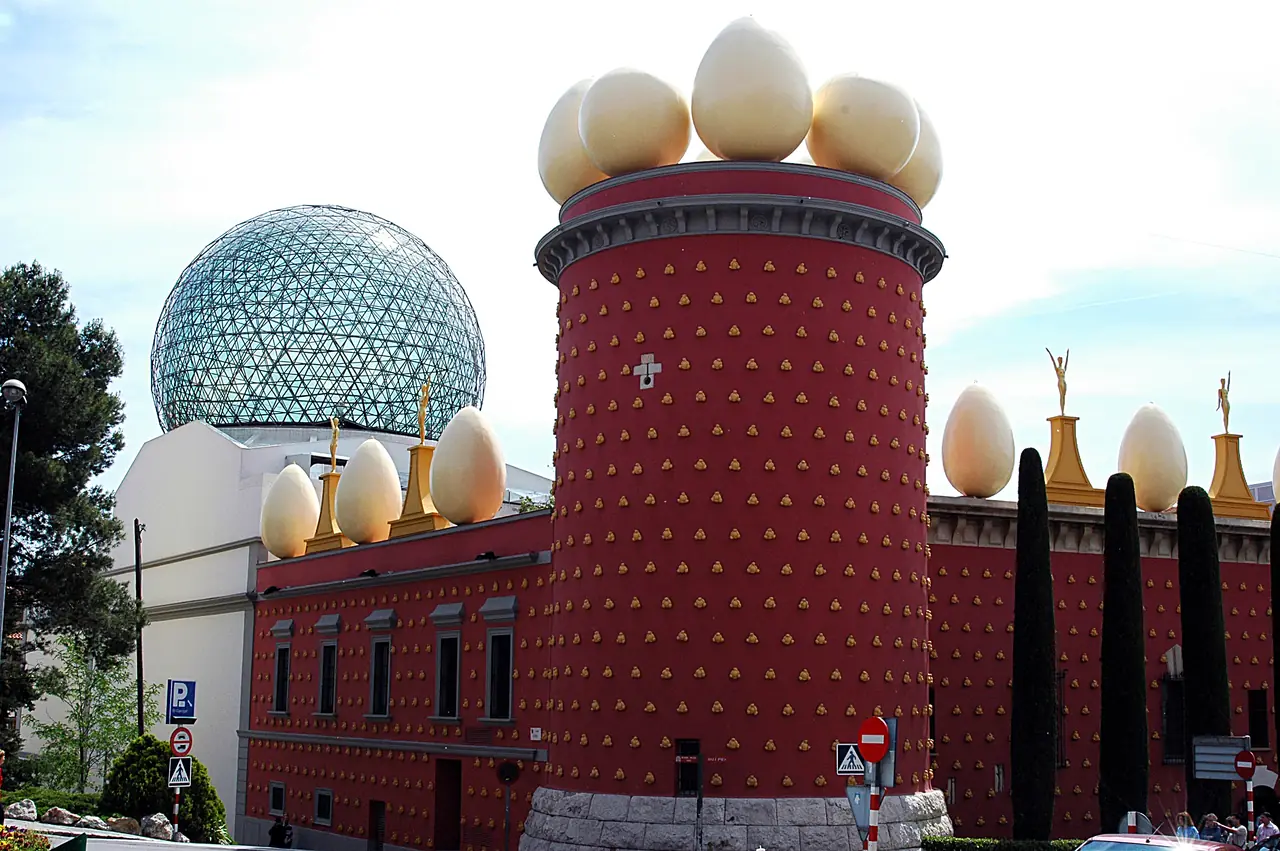
The most recognisable feature of the museum is the transparent geodesic dome that crowns the old stage S2. Dalí had been struck by the geodesic structures of the American architect Buckminster Fuller S3. The dome can be seen from many points of the town.
The dome itself was entrusted to the Murcian architect Emilio Pérez Piñero, who lived from 1935 to 1972 S2. Over time it has come to be seen as a symbol of the town of Figueres. Light enters through it and falls on the old stage, where Dalí’s crypt lies.
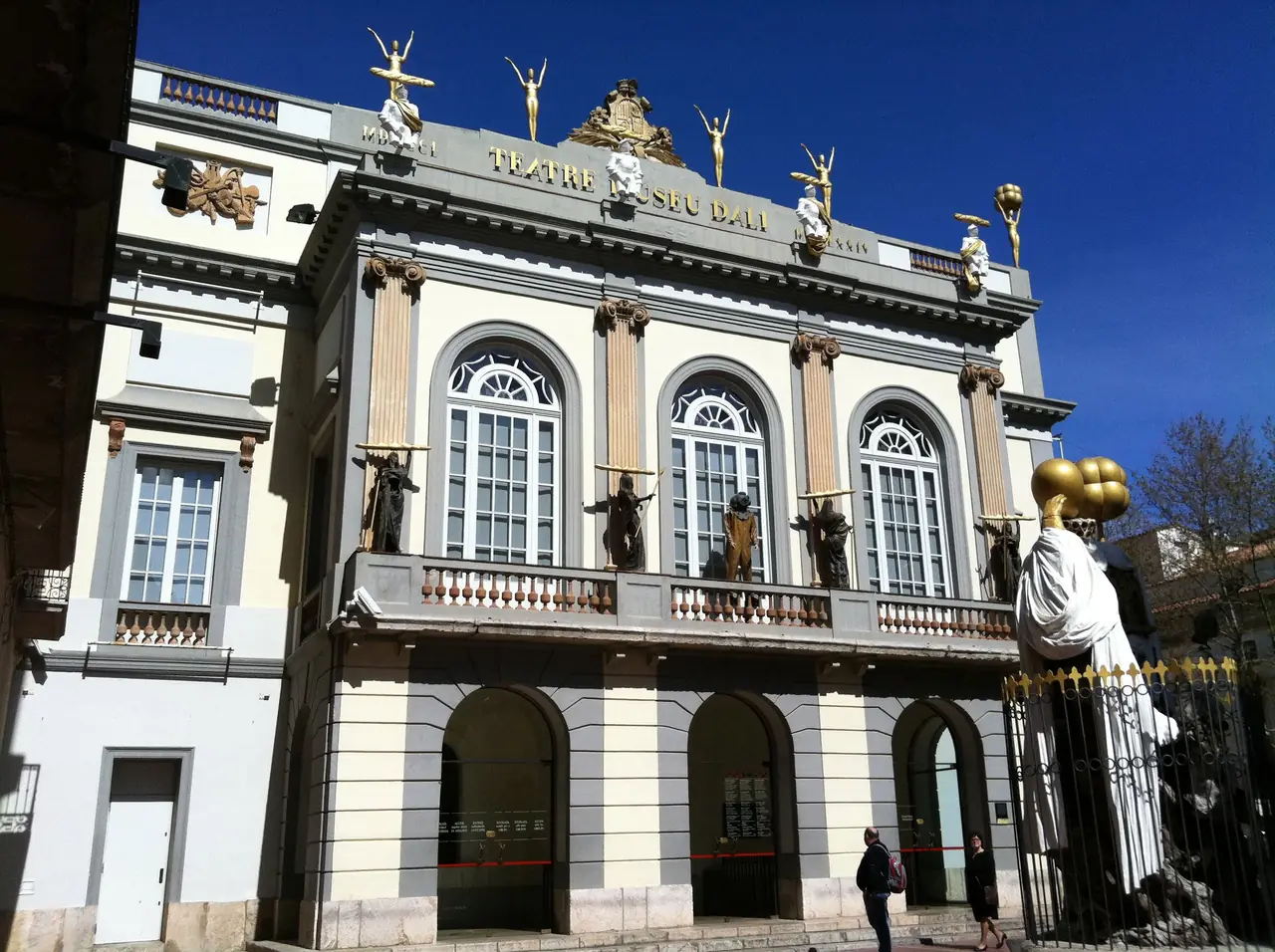
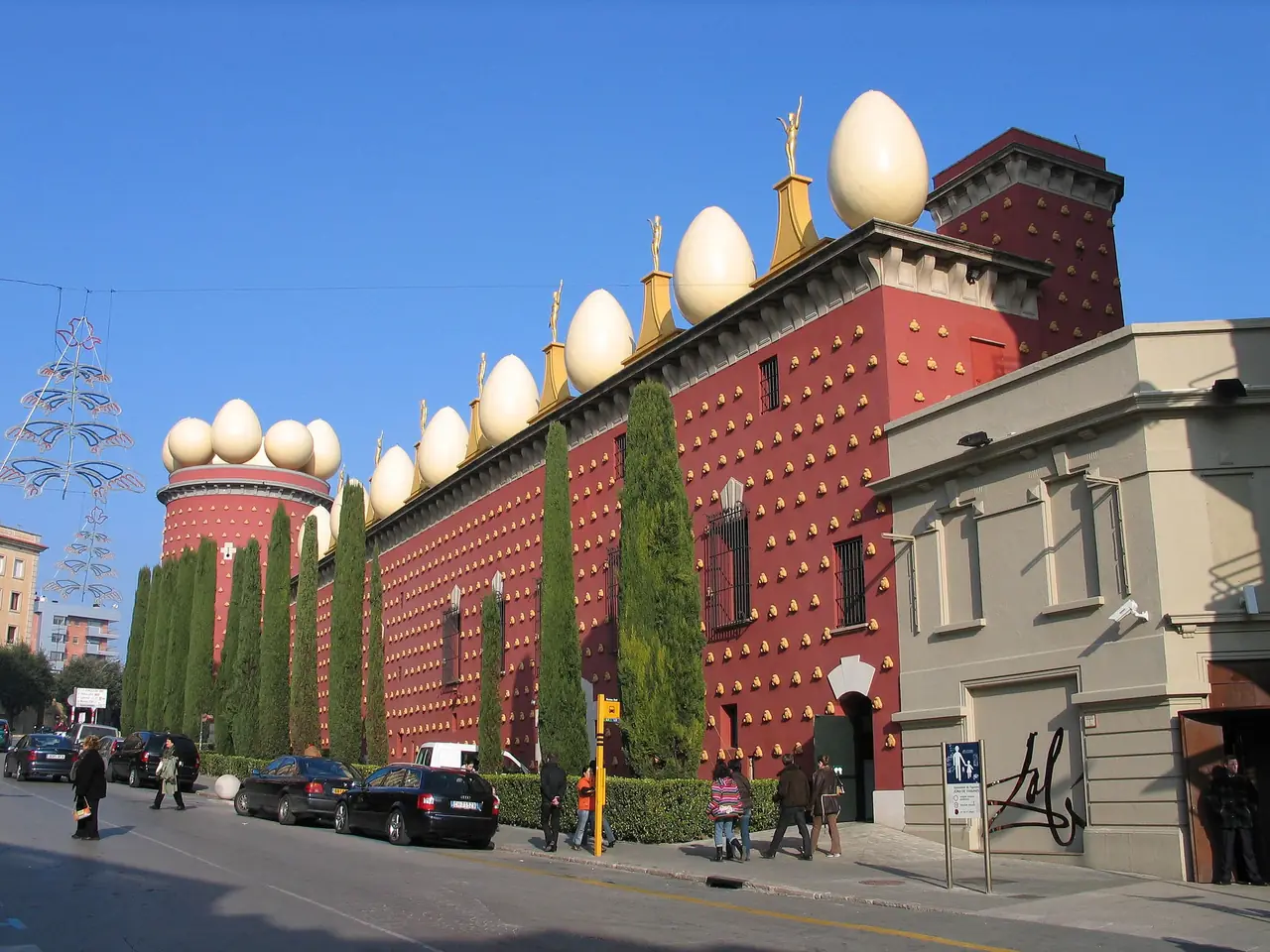
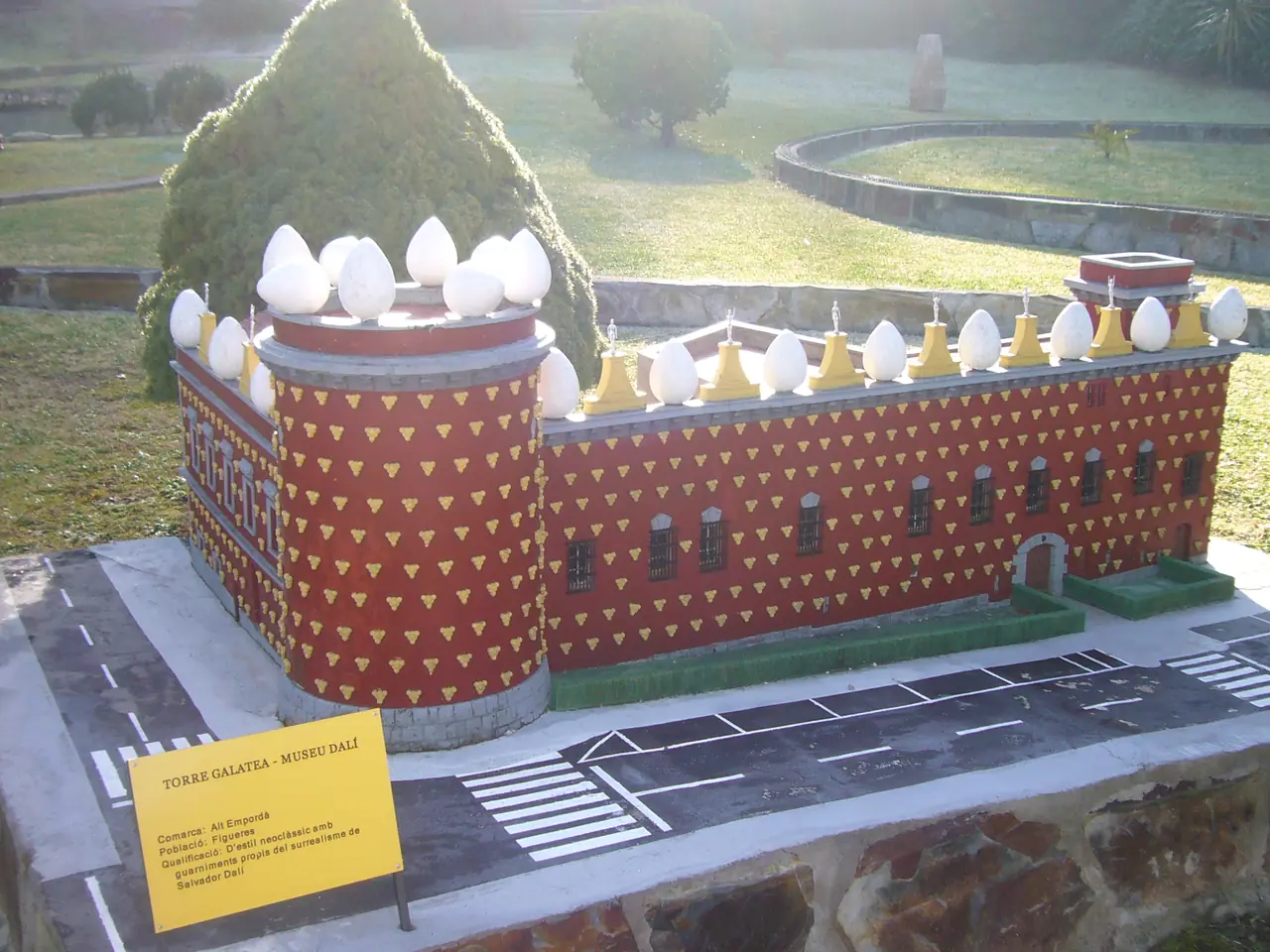
The outside is just as striking. The roofline is crowned by a row of giant golden eggs, and the walls are painted a deep red S6 S10. The colour makes the building stand out among the houses of the old town.
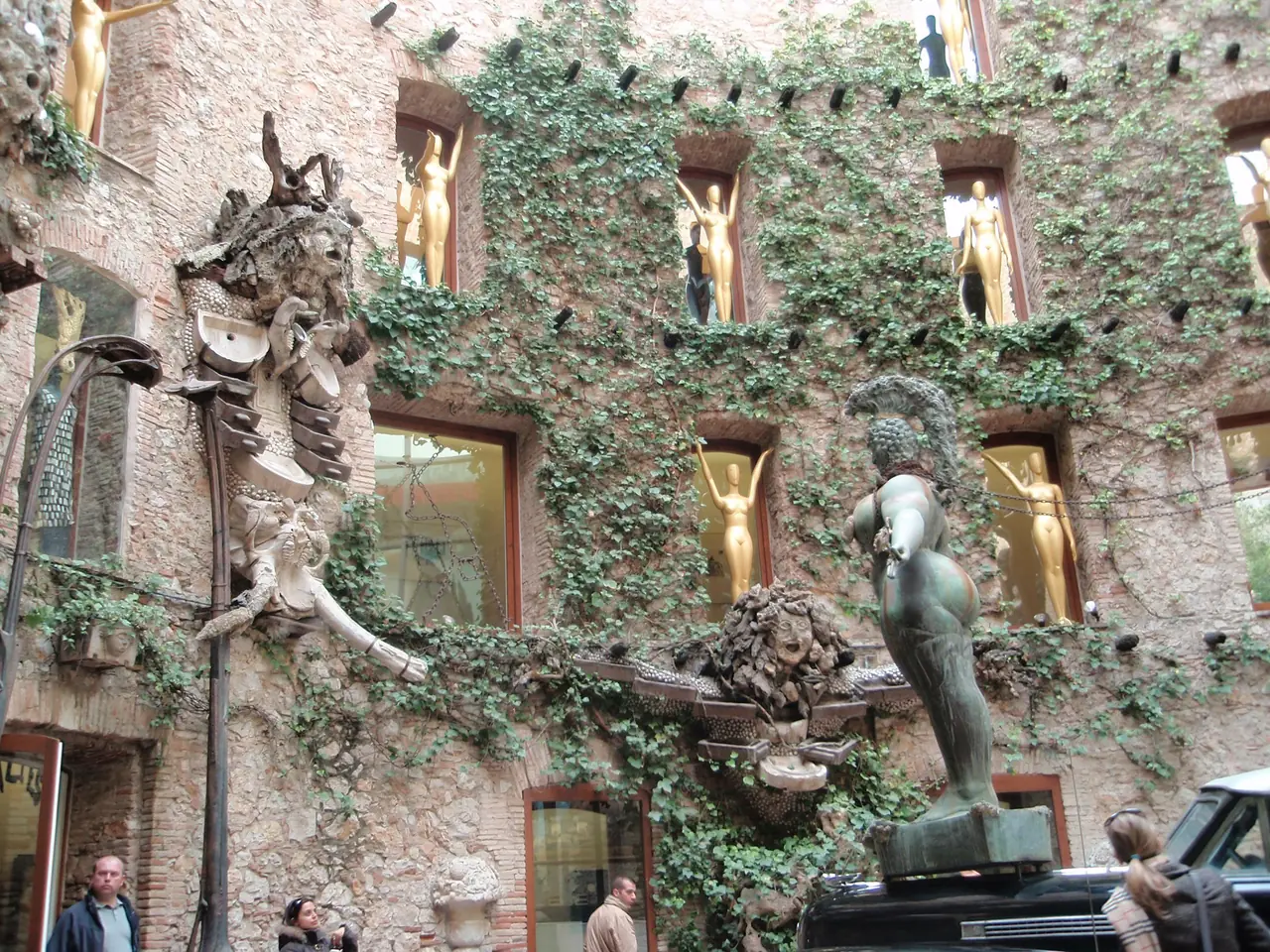
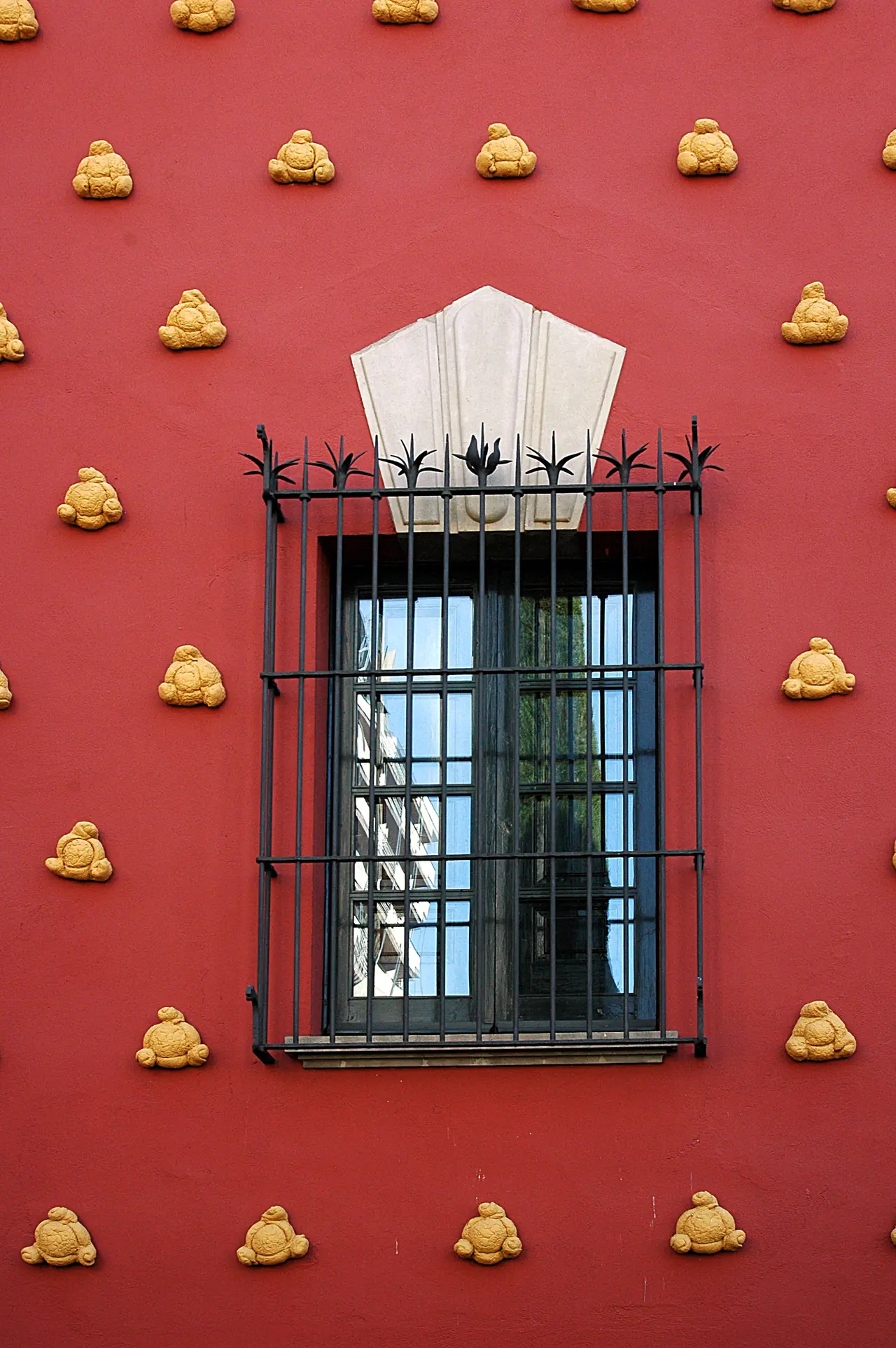
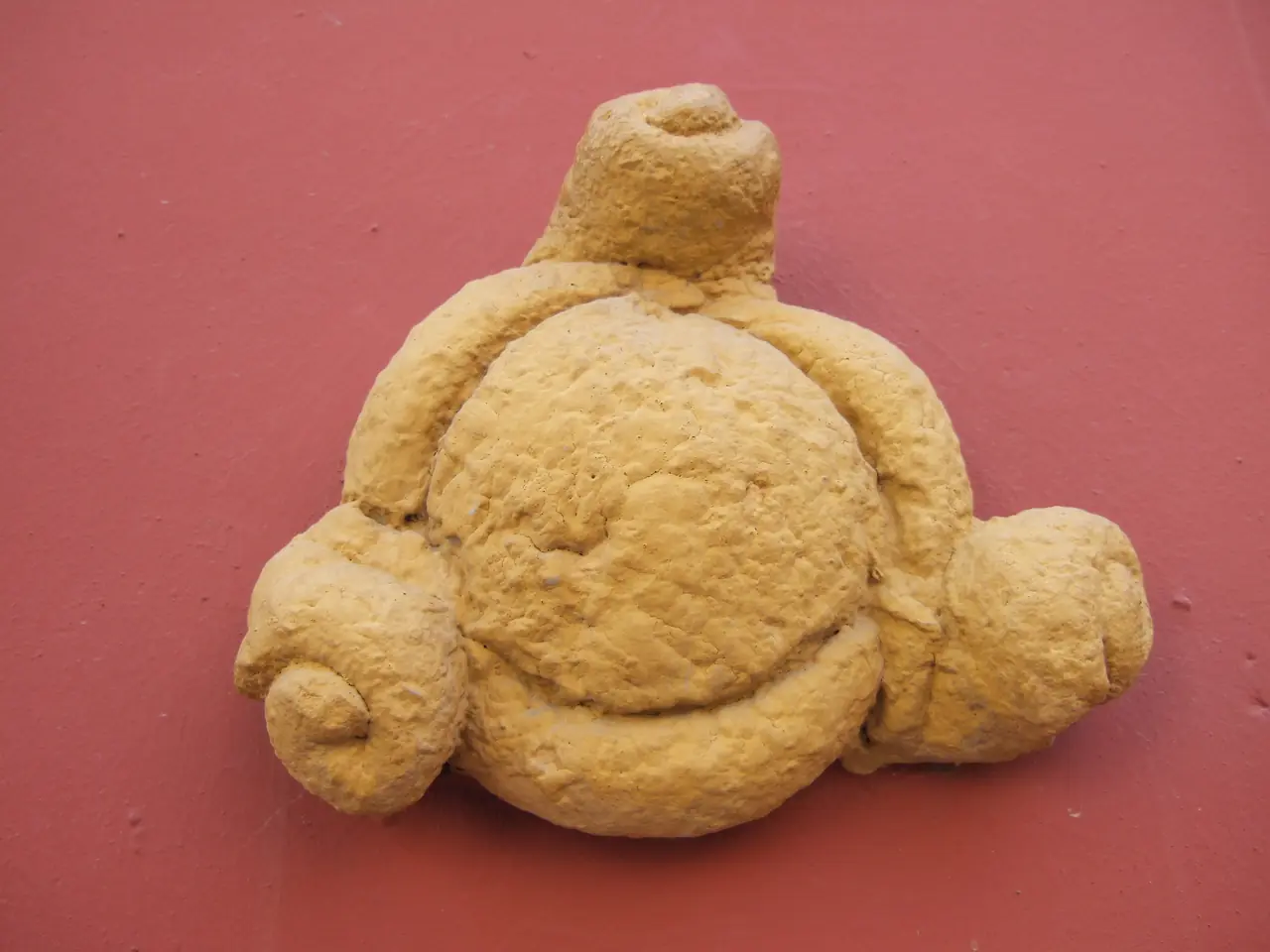
The walls of the Torre Galatea are decorated with mannequins, eggs and loaves of crusty bread, a recurring motif in Dalí’s work S8. Together, the dome and the tower are the most emblematic image of Figueres S8. The tower is clearly visible from the streets around the museum.

Inside the museum
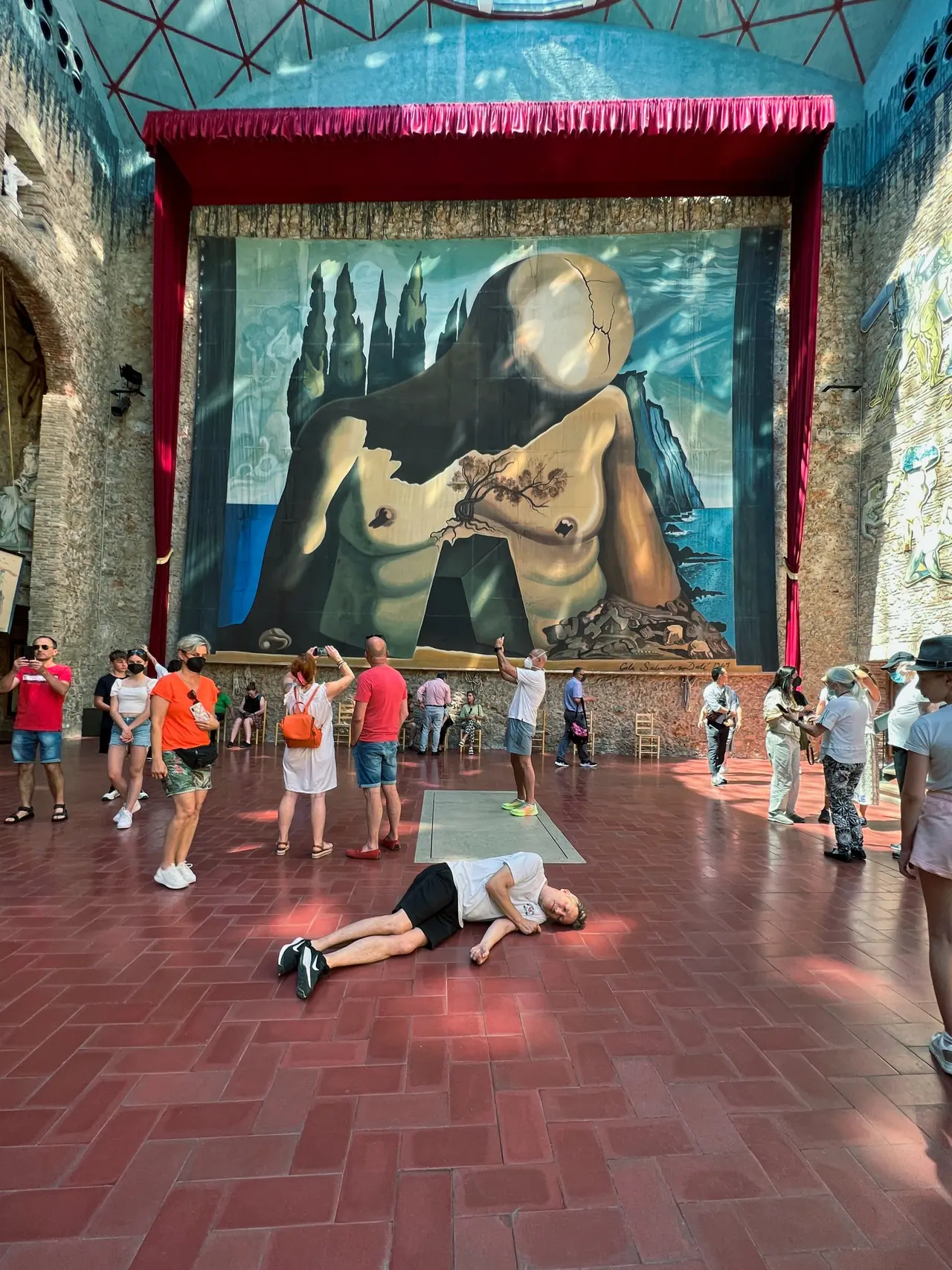
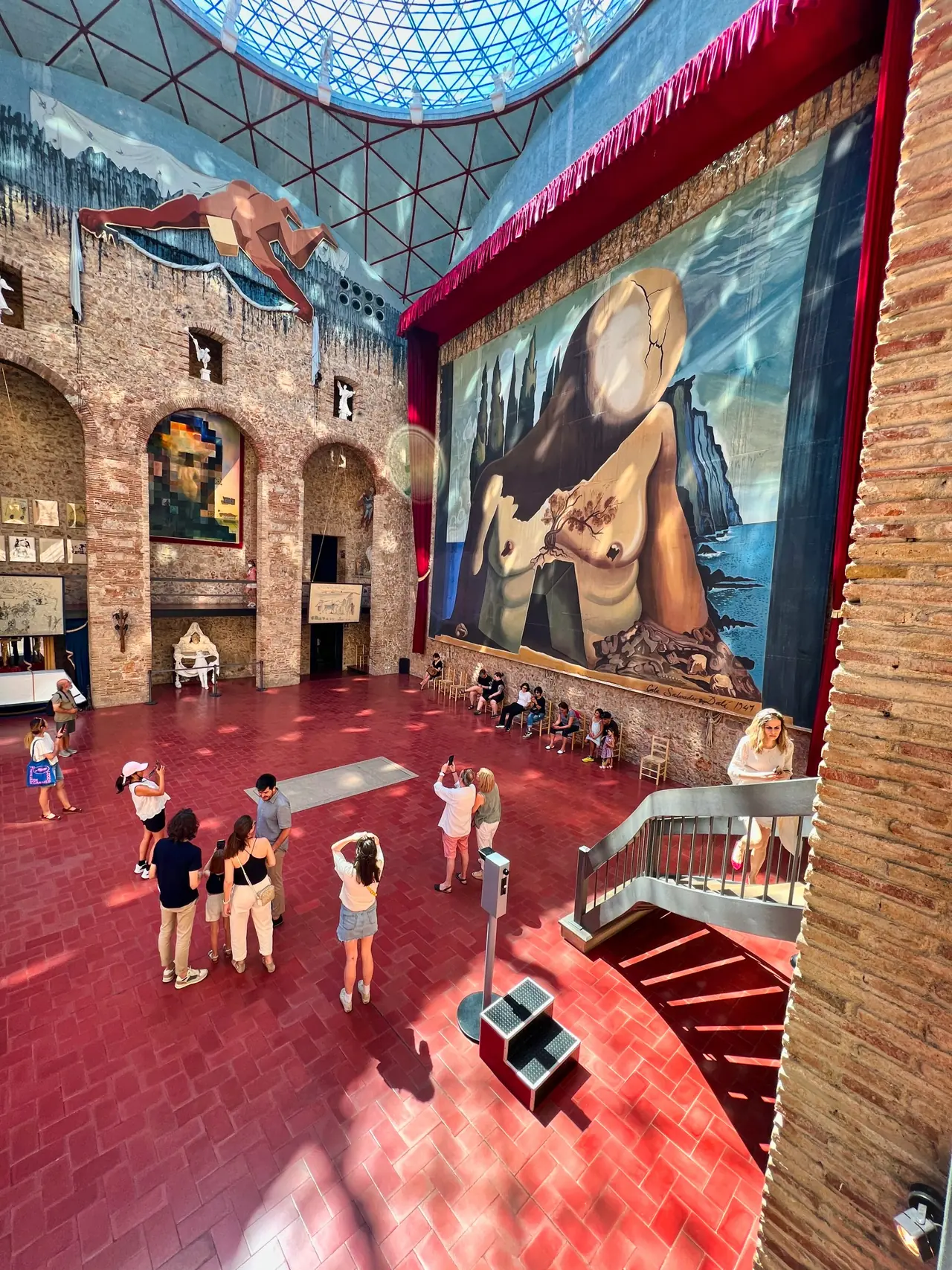
Inside, the museum holds the single largest and most diverse collection of works by Salvador Dalí, much of it from his own collection S1. The space once occupied by the audience has become a courtyard open to the sky S1. Its walls are lined with sculptures and niches that look down on the visitors.
In the central courtyard stands a black Cadillac, one of the museum’s most photographed installations S10. Paintings, sculptures, collages and optical illusions follow one another in rooms that seem designed to surprise. Few museums are so deliberately playful in the way they guide the visitor.
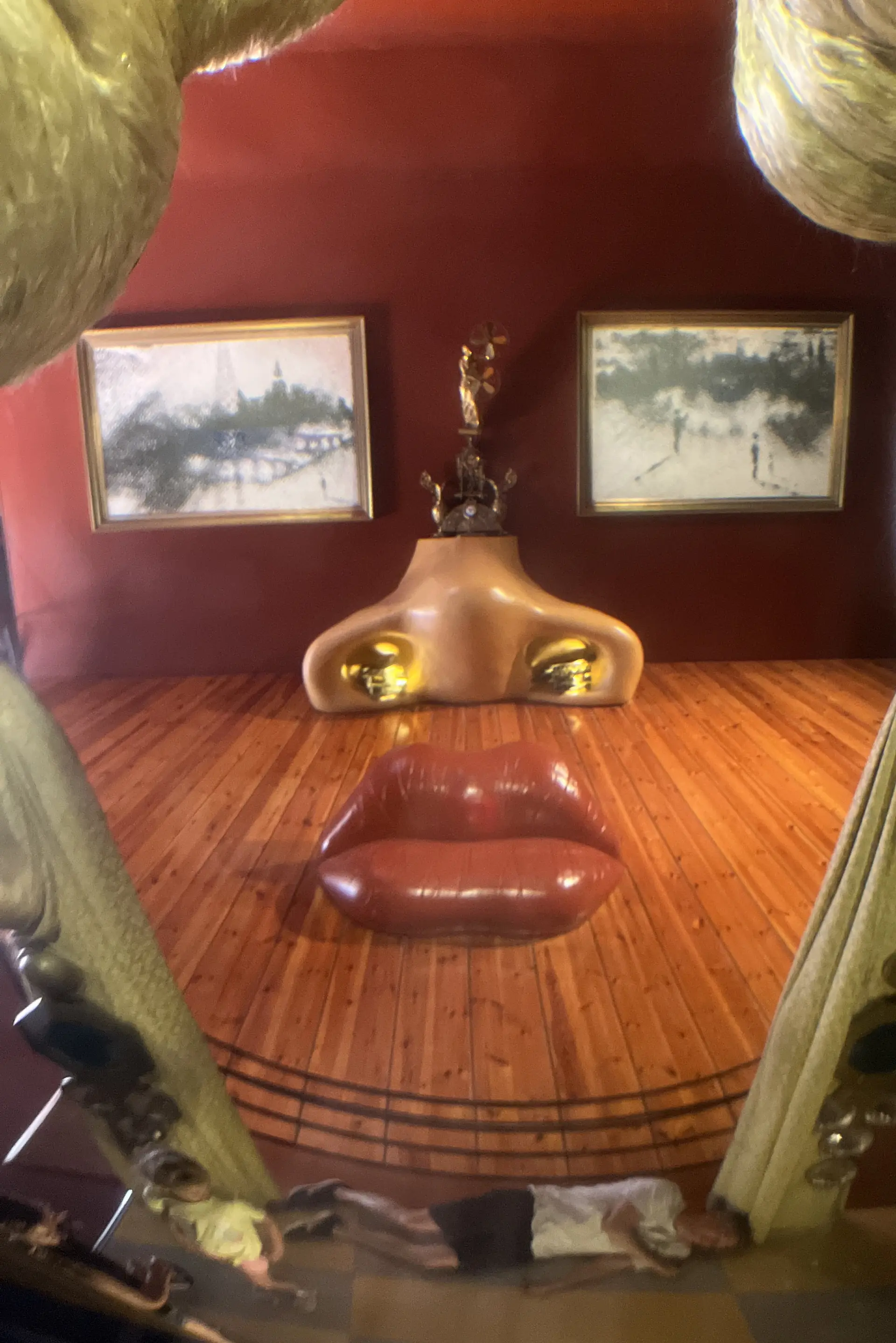
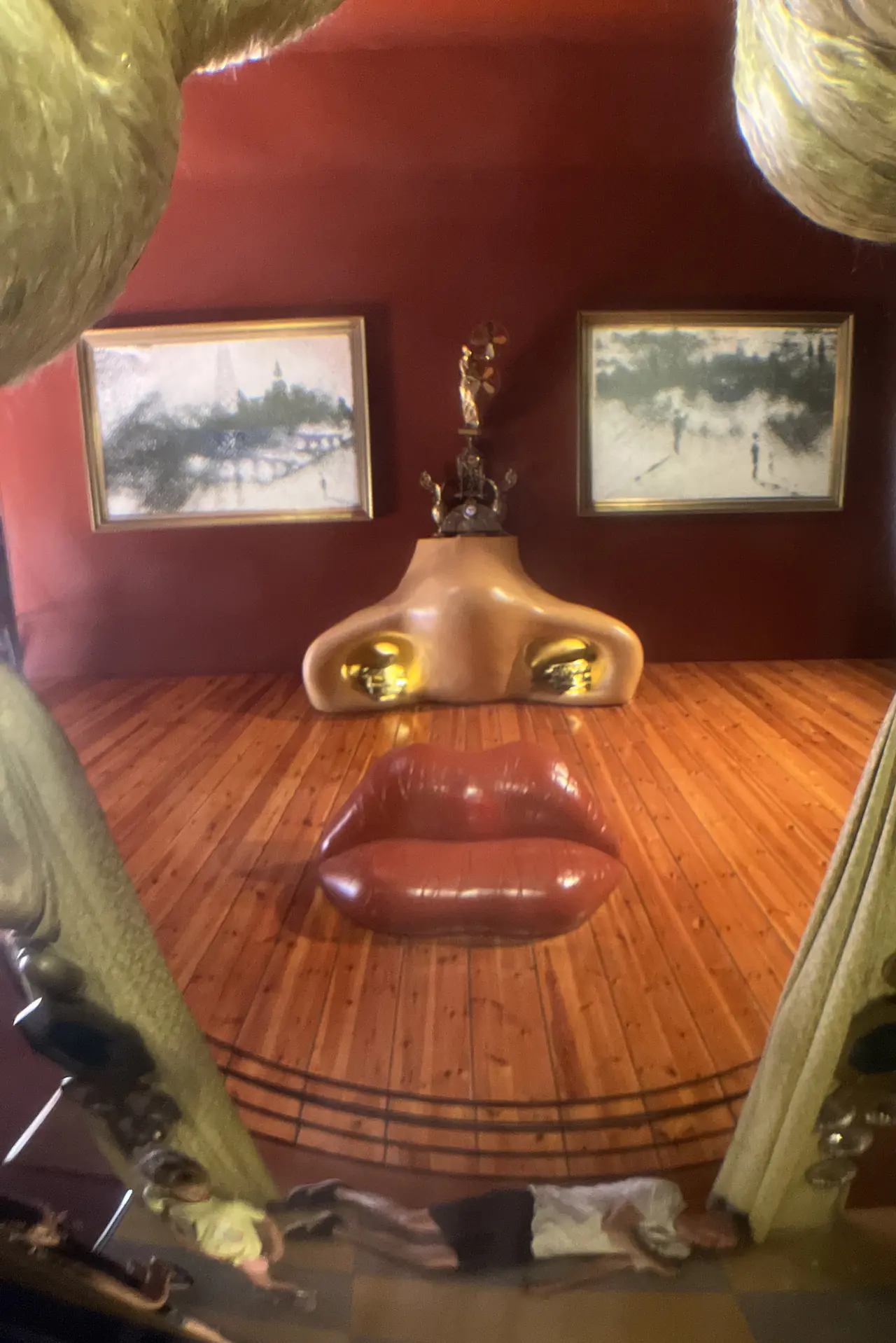
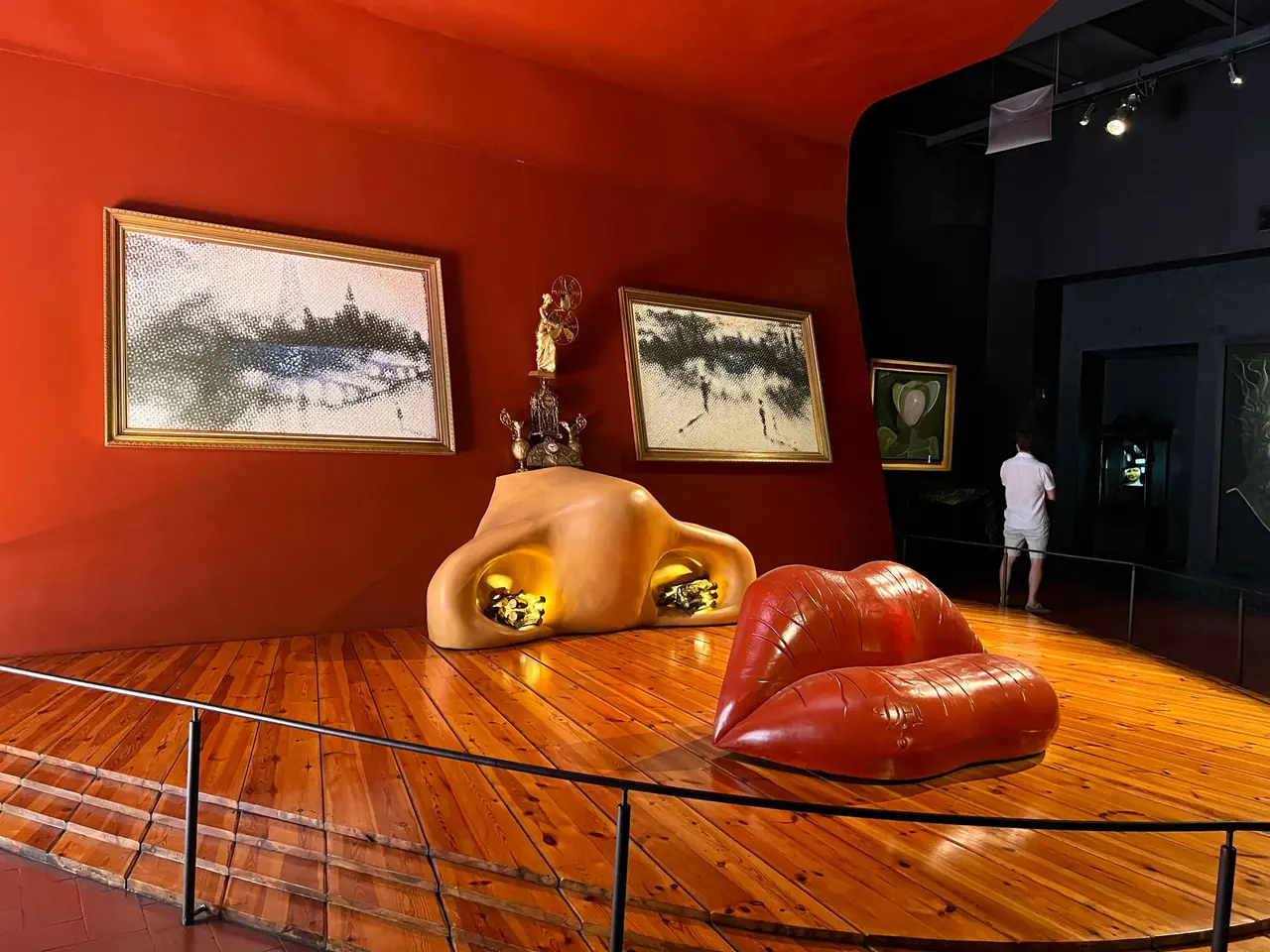
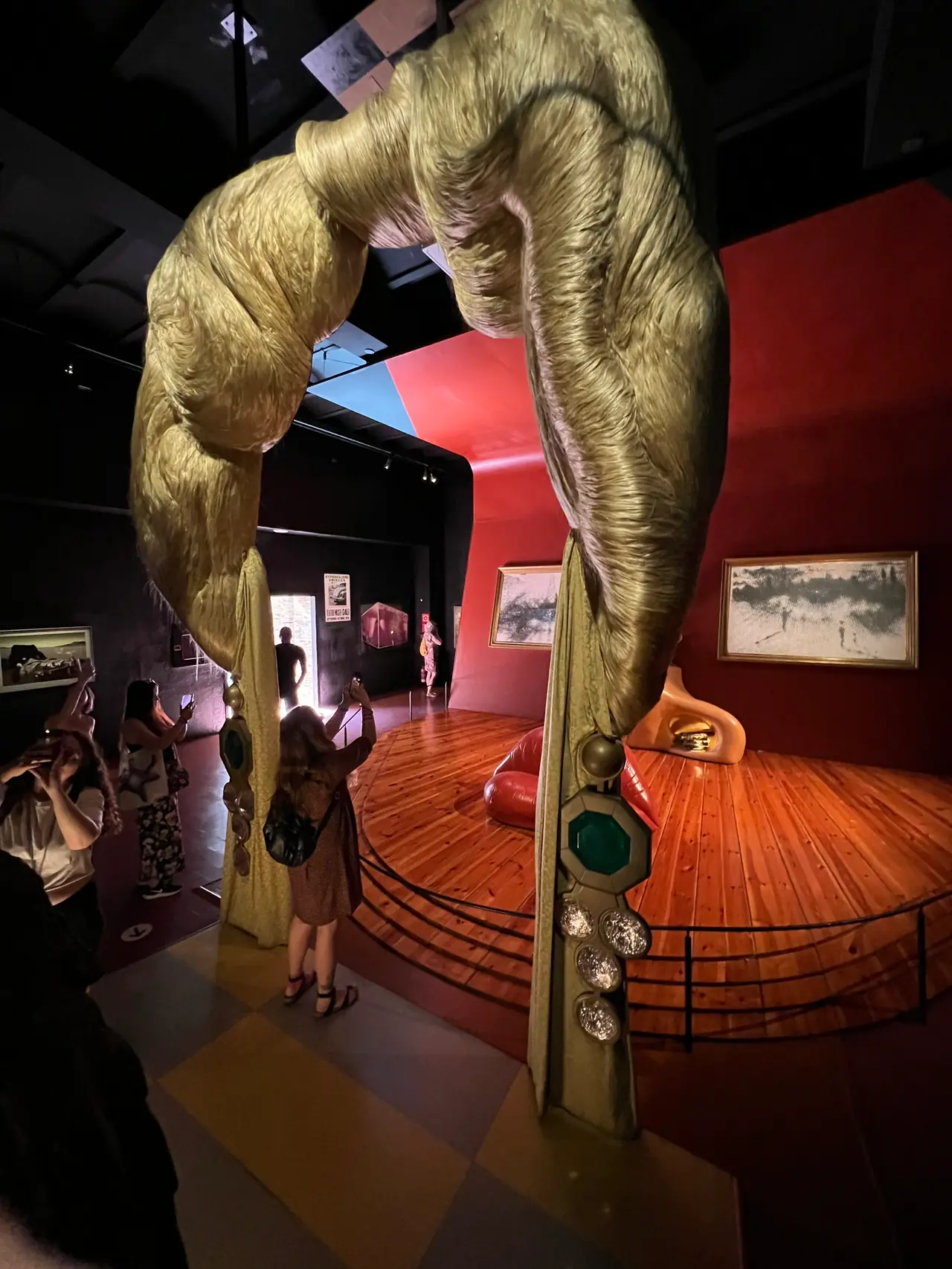
One of the most famous rooms is the Mae West Room, designed by Dalí together with Oscar Tusquets in 1974 S5. From a certain point of view, its furniture and decoration form the face of the American actress. A queue usually forms at the viewpoint from which the illusion works best.
The collection covers Dalí’s whole career, from early works such as Port Alguer, painted in 1924, to later paintings such as Galarina, from 1944 and 1945 S5. It also includes works by other artists from his personal collection. Among them are paintings by friends and contemporaries who shared his world.

Torre Galatea and the crypt
Dalí lived in the museum complex from 1984 until his death in 1989 S1. After the death of his wife Gala in 1982, his health declined S7. In his last years he rarely left the complex in Figueres.
He retired to the Torre Galatea, an old tower that forms part of the complex, and died there in January 1989 S6 S7. The tower was acquired in 1981, and another adjoining building was purchased in 1992 S4. Today the Torre Galatea houses some of the museum’s exhibition rooms S9.
Dalí was buried in a crypt beneath the stage, under the geodesic dome S1. Since his death, visitors can also see the crypt at the heart of the museum S2. The artist thus rests at the centre of the work he designed.
In 1997 part of the museum was remodelled to display a collection of gold jewels designed by the artist S2. Today the jewellery is one of the highlights of the visit. The pieces show another side of Dalí’s creativity, in gold and precious stones.

The Dalí triangle
The Theatre-Museum is the first point of what is known as the Dalí triangle of the Empordà S8. The other two are Gala’s castle at Púbol and Dalí’s house at Portlligat, near Cadaqués S8. Many visitors spend a whole day travelling between the three places.
Together, the three sites allow visitors to follow the life and work of one of the most international painters Catalonia has produced S8. The museum in Figueres, however, remains the place where Dalí chose to stage his own legacy, and to rest. Visiting it is like walking through the mind of the artist.

Frequently asked questions
When did the Dalí Theatre-Museum open?
It was officially inaugurated by Dalí and Gala on 28 September 1974 S3.
What was the building before?
The Municipal Theatre of Figueres, built in 1849–1850 and destroyed by fire in 1939 S9.
Who designed the dome?
Is Dalí buried in the museum?
Yes, in a crypt beneath the stage, under the dome S1.
What is the Dalí triangle?
The Theatre-Museum in Figueres, Gala’s castle at Púbol and Dalí’s house at Portlligat S8.
Sources
- S1 Wikipedia: Dalí Theatre and Museum.
- S2 Gala-Salvador Dalí Foundation: Dalí Theatre-Museum, History.
- S3 Gala-Salvador Dalí Foundation: The Dalinian triangle.
- S4 Gala-Salvador Dalí Foundation: The Dalí Theatre-Museum, text.
- S5 Fascinating Spain: Dalí Theatre-Museum, a place to celebrate surrealism.
- S6 Associated Press: Salvador Dalí’s surreal art palace.
- S7 Culture Trip: Exploring Salvador Dalí’s Theatre-Museum.
- S8 Patrimoni Gencat: Dalí Theatre-Museum and the Dalí triangle.
- S9 Artdaily: Dalí Theatre-Museum in Figueres.
- S10 Spain.info: The Dalí Theatre-Museum, Salvador Dalí’s last great work.
More in Spain
 UNESCO WH