Stradun: The Main Street of Dubrovnik’s Old Town
- Local name
- Stradun · Placa
- Type
- Historic main street
- Continent
- Europe
- Country
- Croatia
- County
- Dubrovnik-Neretva County
- City
- Dubrovnik
- Location
- Old Town, from the Pile Gate to Luža Square and the Ploče Gate
- Length
- About 300 metres
- Paving
- Limestone since 1468, relaid in 1901
- Current appearance
- Houses rebuilt after the earthquake of 6 April 1667
- Landmarks
- Large Onofrio’s Fountain (1438) · Orlando’s Column (1418) · City Bell Tower · Sponza Palace (1516–1522)
- UNESCO
- Old City of Dubrovnik (1979, extended 1994) · My World Heritage list
- Date
- August 2022
- Photographer
- Héctor Godes
- Published
- October 15, 2023
- Reviewed
- November 13, 2026
- Coordinates
- 42.6414, 18.1090
- More
- Wikipedia
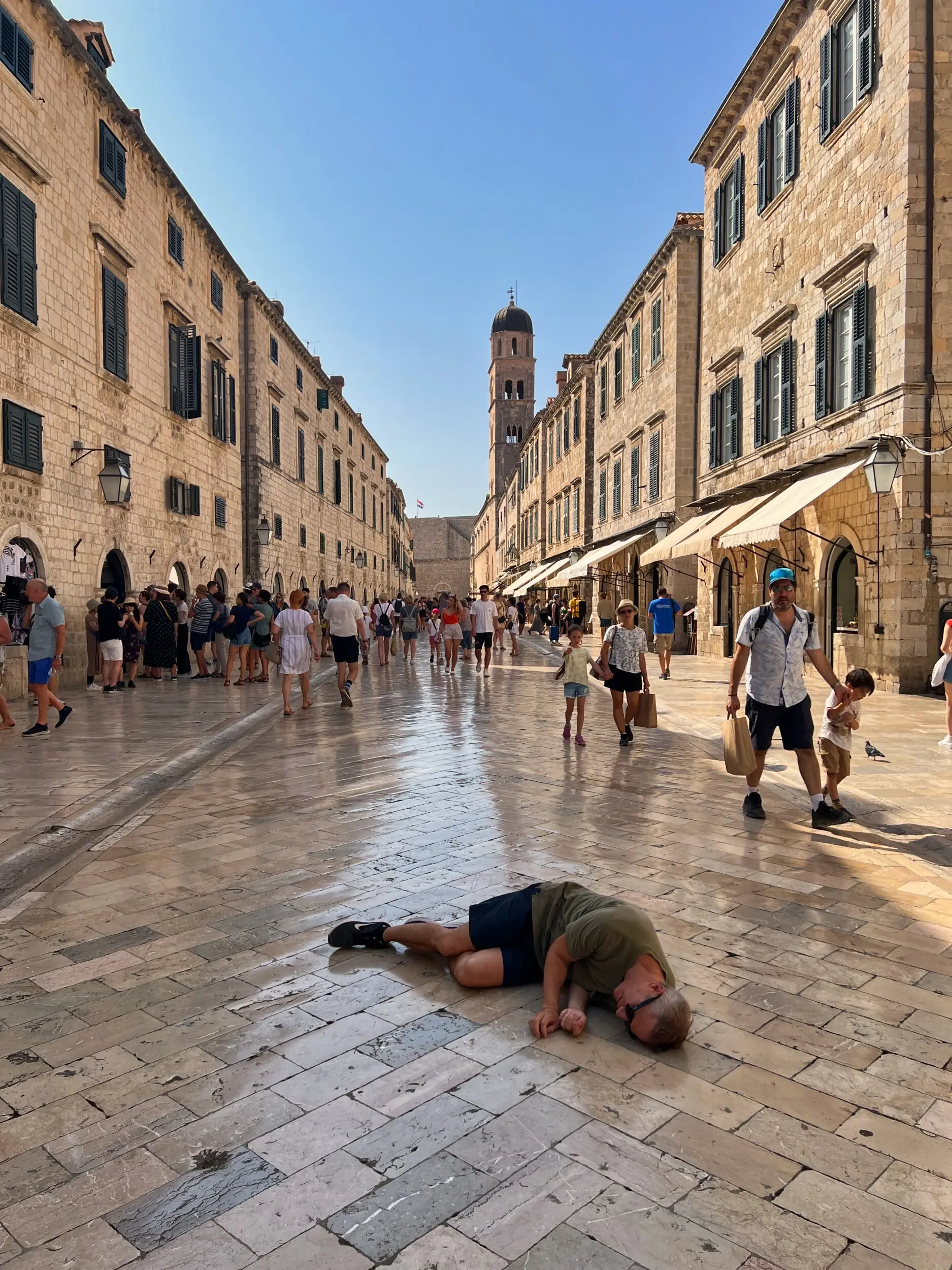
Stradun, also called Placa, is the main street of the walled Old Town of Dubrovnik, a limestone-paved pedestrian street about 300 metres long S1. It crosses the city from west to east, from the Pile Gate to the Ploče Gate, and its name comes from Venetian and means large or wide road S1.
The street is more than a thoroughfare. Its course follows a stretch of water that once divided two settlements, and its uniform façades are the result of a law passed after the disaster of 1667, so walking along it means reading the history of the Republic of Ragusa in stone.
From channel to street
The site of the street was once a marshy channel that separated Ragusa, on a rocky outcrop by the sea, from the settlement of Dubrava on the wooded mainland S1. Sources differ on when it was filled in, between the eleventh and the thirteenth century, but once it disappeared the two communities became a single city S1 S2.
The new street soon became the main axis of the town. Local sources record that it was paved with bricks in 1360 and with limestone in 1468, and that it was relaid in 1901 with slabs set in a fishbone pattern S3.
According to the same sources, Placa measures 298 metres S3. Its straight line and constant width, rare in a medieval city, make it an urban stage on which every building shares the same front.
Rebuilt after the 1667 earthquake
Before 1667 the houses lining the street were far less uniform than they are today, and many had arcades and elaborate decoration S1. On 6 April 1667 a devastating earthquake, followed by a large fire, destroyed most of the buildings of Ragusa, as Dubrovnik was then called S1.
The Republic of Ragusa responded with a law that fixed the layout of all new houses S1. That is why the seventeenth-century houses on Stradun follow the same pattern, a rare example of urban planning imposed after a catastrophe.
On the ground floor each house had a shop whose entrance combined a door and a window in a single frame under a round arch S1. During the day the door stayed closed and goods were handed to customers over the sill, which served as a counter S1.
Behind the shop was a storeroom with its own entrance from the back alley, the first floor was used as living space and the kitchen was always placed in the loft, to stop any fire from spreading S1. The memory of the fire of 1667 was literally built into the structure of each house.
The uniform fronts also suited a merchant republic that governed itself collectively. Along its main street, Ragusa presented itself as a single community rather than as a display of competing family fortunes.
Onofrio’s fountains
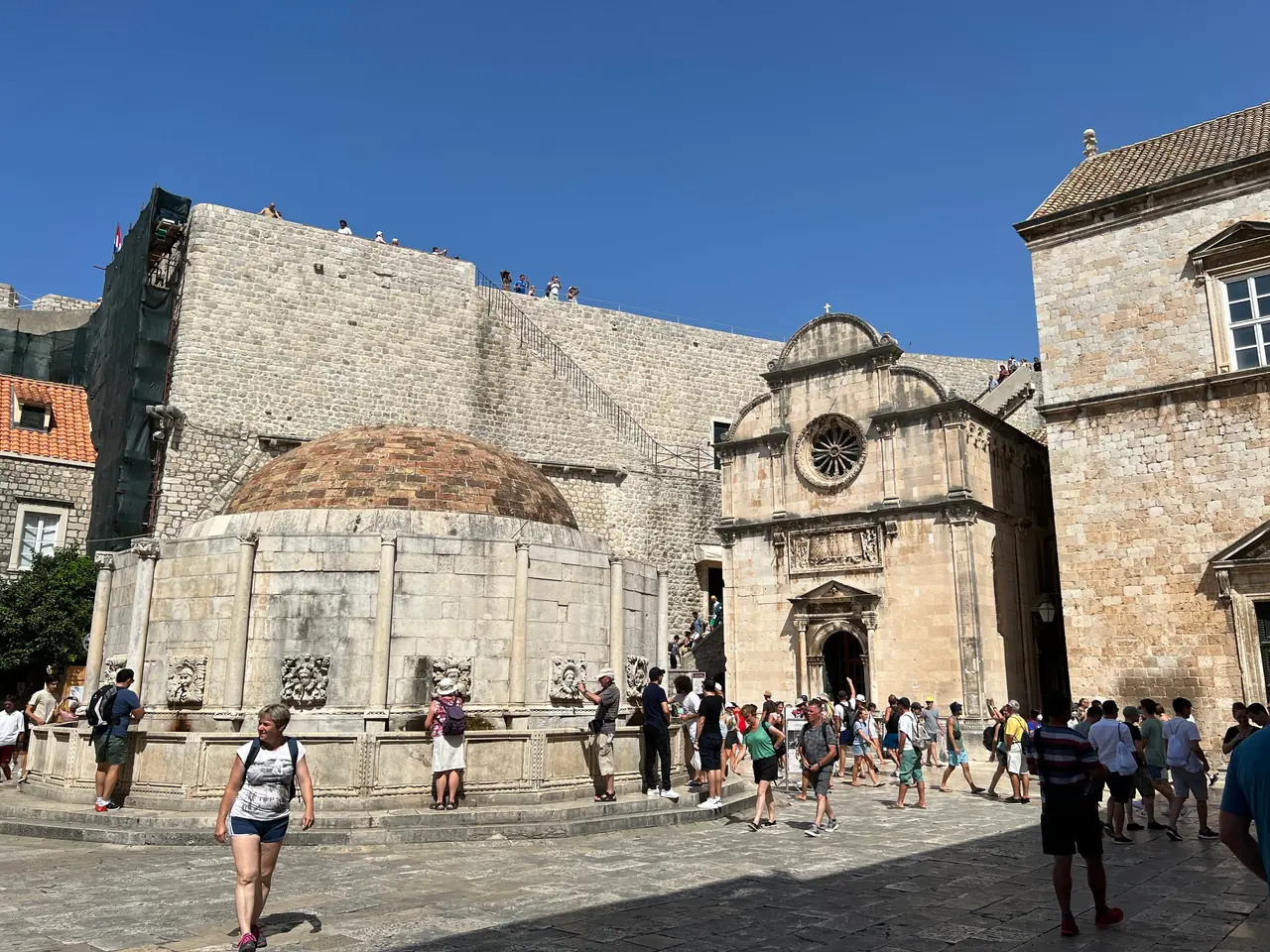
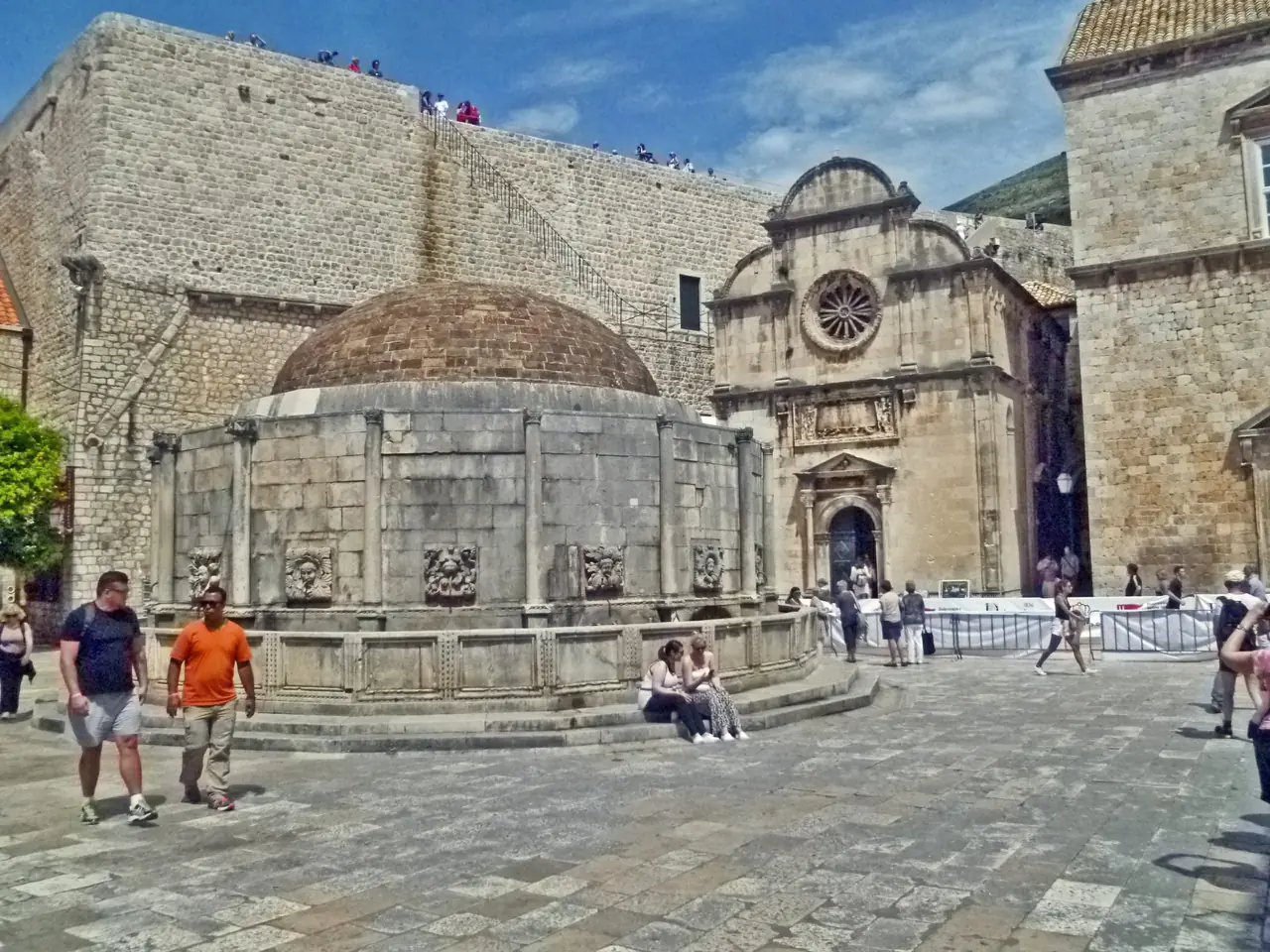
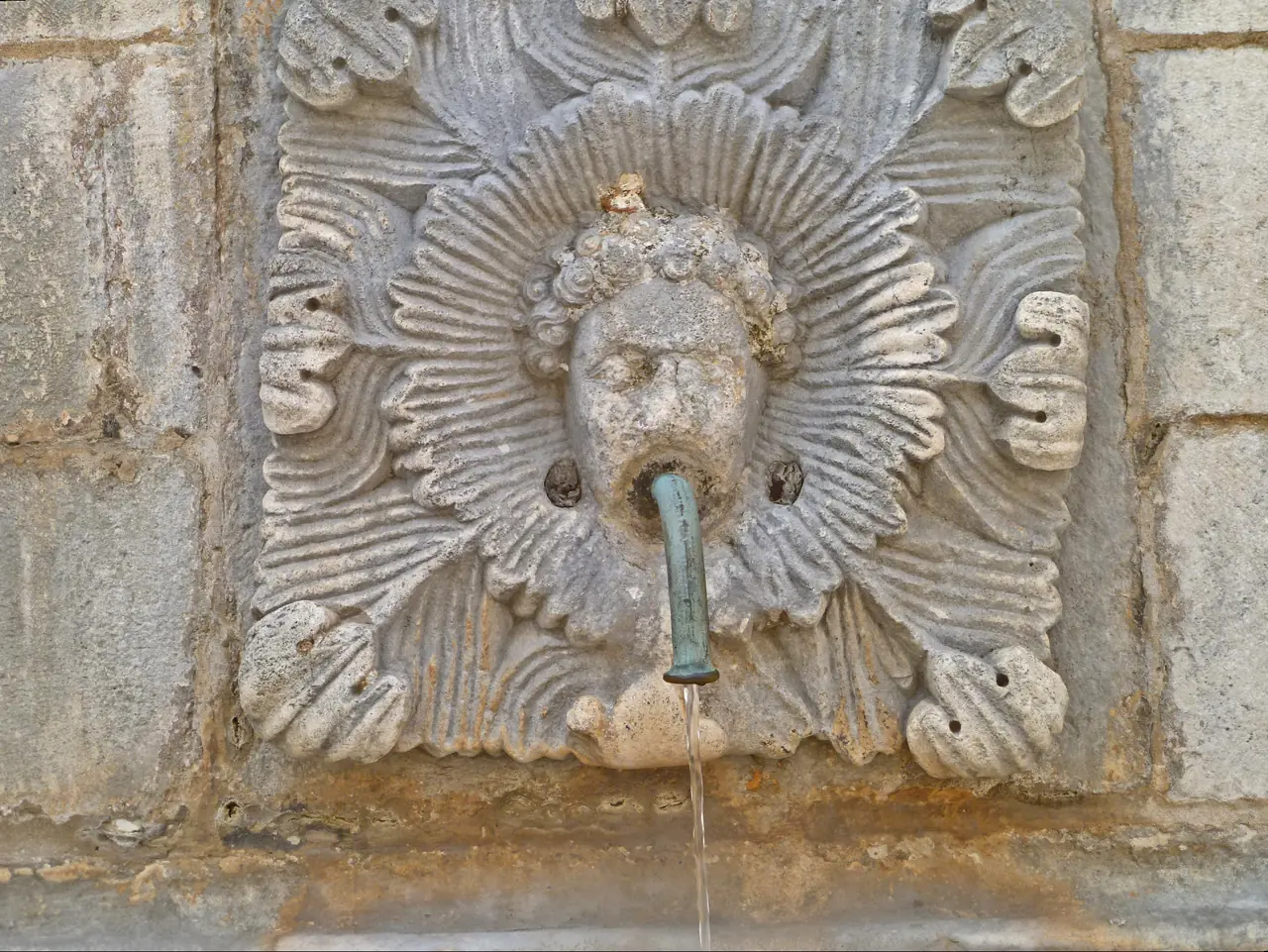
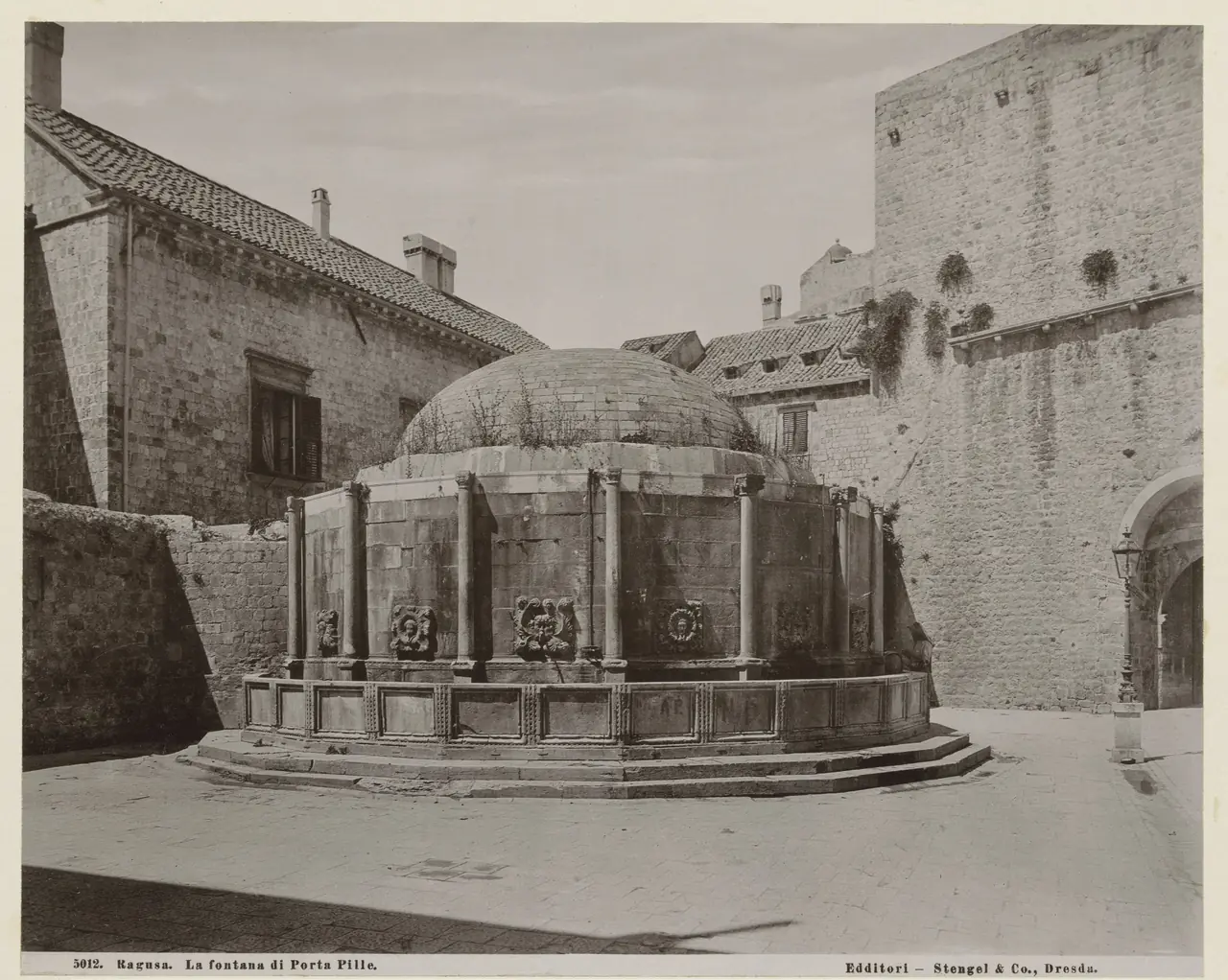
The street is framed at both ends by fountains of the fifteenth century S1. The Large Onofrio’s Fountain, near the Pile Gate, was built from 1438 by the Neapolitan architect Onofrio della Cava as the end point of the city’s aqueduct S4 S10.
Its decoration was carved by Petar Martinov from Milan and local craftsmen following Onofrio’s design S4. The earthquake of 1667 destroyed almost all of it, except the sixteen carved masks from which the water still flows S4.
At the eastern end stands the Small Onofrio’s Fountain, which closes the street near the bell tower S1. The two fountains turned the main street into the place where water reached the inhabitants, a sign of the wealth and organisation of the Republic.
The western end is also marked by the bell tower of the Franciscan monastery S1. Its pharmacy, still in operation, is considered one of the oldest continuously working pharmacies in Europe S10.
Luža Square at the eastern end
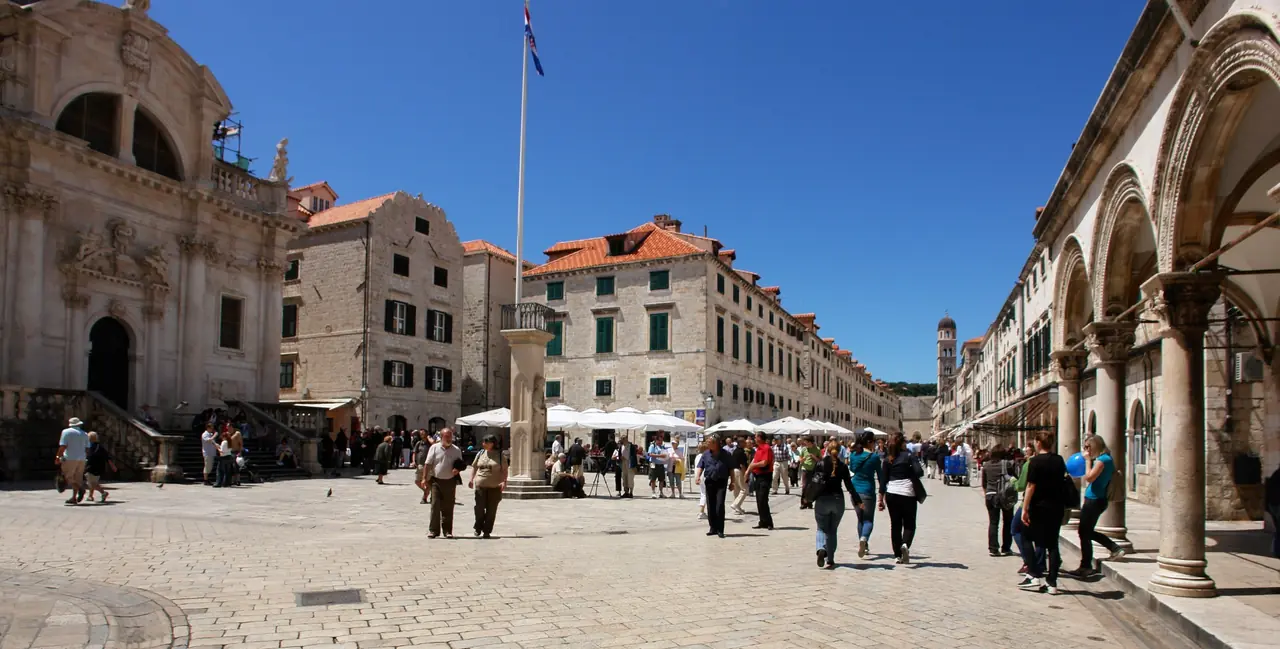
The eastern end of Stradun opens onto Luža Square, the civic heart of the old Republic. In the middle stands Orlando’s Column, carved in 1418 by Bonino di Milano and Antun Dubrovčanin, where the Libertas flag is raised each year to open the Dubrovnik Summer Festival S7.
The column also had a practical use, because the forearm of the knight served as the official measure of length in Ragusa S9. Beside it rises the City Bell Tower, 31 metres high, first built in 1444 S6. After the earthquake it began to lean, and in 1929 it was demolished and rebuilt to the same design S9.
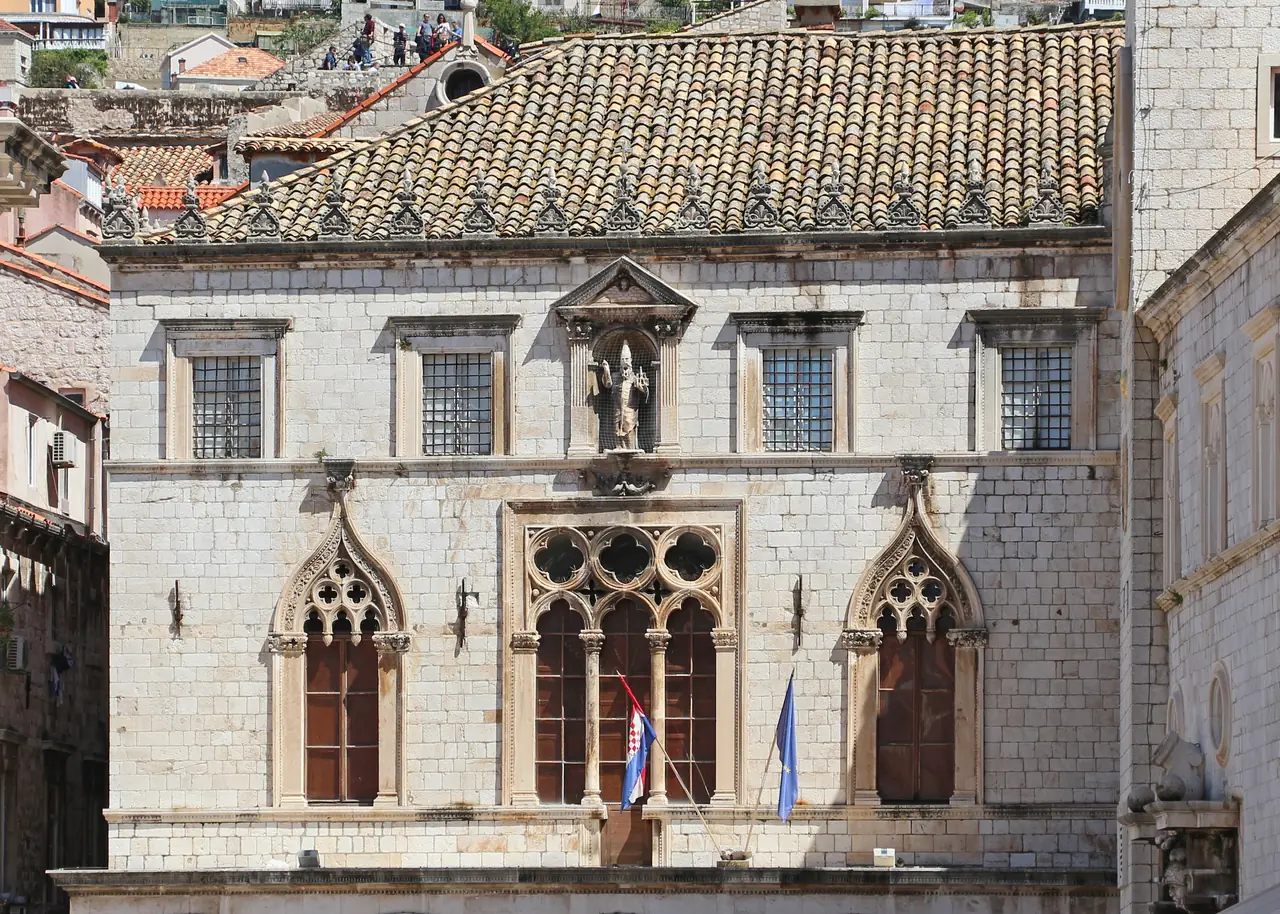
On one side of the square stands the Sponza Palace, built between 1516 and 1522 as a customs house and later used as a mint, treasury, armoury and bank S8. It is one of the few buildings in the Old Town that survived the earthquake of 1667 S8.
Between the bell tower and the Sponza Palace stands the Luža, the old bell loggia that summoned the council of the Republic and sounded the alarm for fires and other dangers S11. It was built in 1463 and thoroughly reconstructed in 1952 S11.
A stage for city life
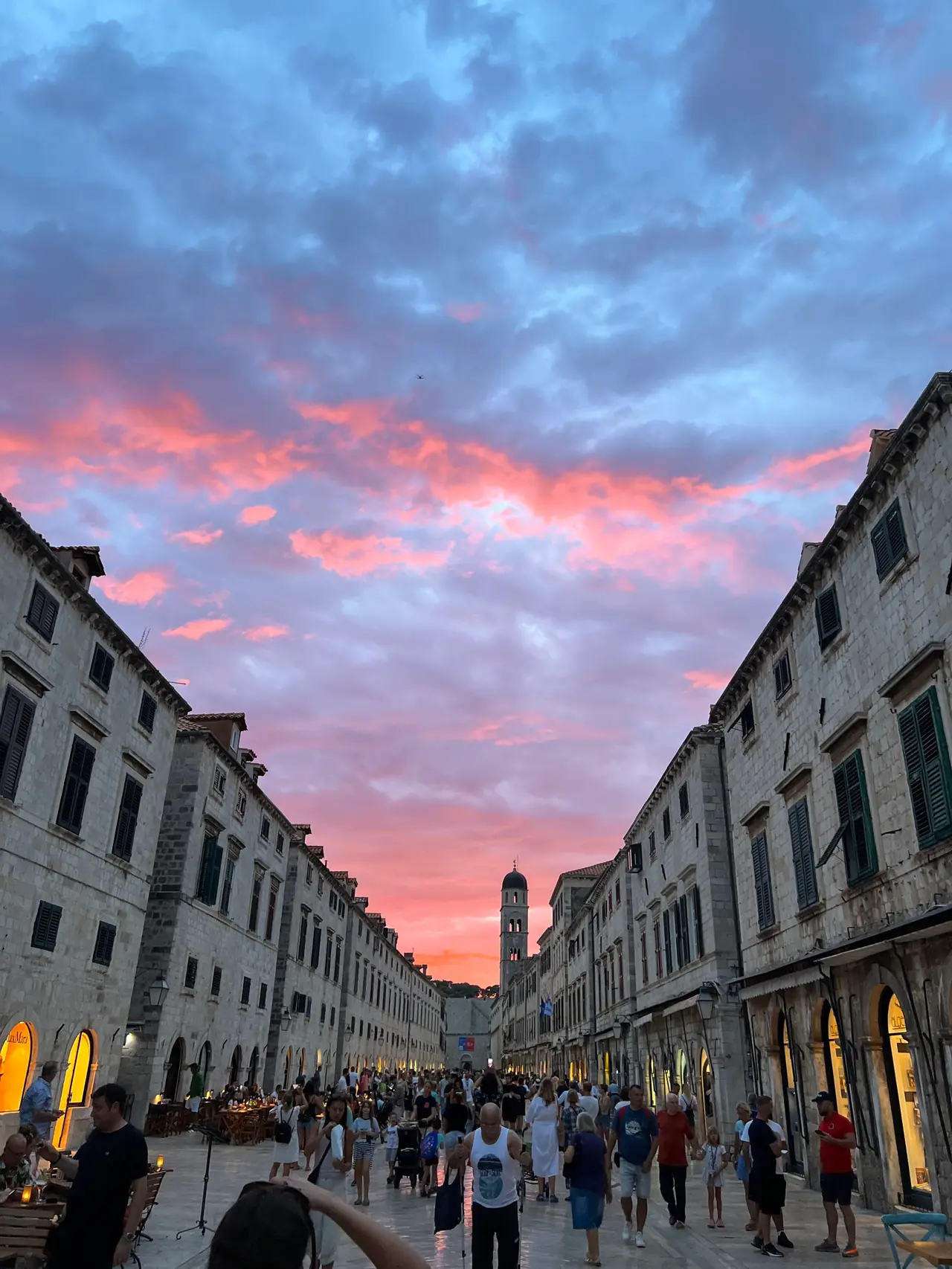
Stradun is still the main stage of city life. Every year on 3 February, the procession for the feast of Saint Blaise, patron saint of Dubrovnik, passes along it, and the street also hosts concerts and New Year’s Eve celebrations S1.
It has even served as a sports arena. On 8 July 2010 Goran Ivanišević and John McEnroe played a charity tennis match on Stradun in front of 600 spectators, broadcast live in ten countries S1.
The street was also damaged by mortar fire during the siege of Dubrovnik in 1991 and 1992, but most of the damage has since been repaired S1. The Old City of Dubrovnik was inscribed on the UNESCO World Heritage List in 1979, and the inscription was extended in 1994 S5.
Stradun today
The limestone pavement, polished by centuries of footsteps, shines almost like glass after rain S4. The effect is not a recent restoration but the result of daily use.
The arched openings of the old shops still frame cafés, galleries and stores. The commercial logic of the seventeenth-century houses continues in another form, adapted to the visitors who now fill the street from morning to night.
Stradun shows how a city can turn a disaster into a lasting form. The uniform houses, the fountains and the square at its end make the street a summary of the political and urban history of the Republic of Ragusa.
Frequently asked questions
What does Stradun mean?
The name comes from Venetian and means large or wide road; the street is also known as Placa S1.
How long is Stradun?
Why do all the houses on Stradun look the same?
After the earthquake of 1667, the Republic of Ragusa passed a law that fixed the layout of all new houses S1.
What is at each end of Stradun?
Is Stradun part of a UNESCO site?
Yes, it lies within the Old City of Dubrovnik, inscribed on the World Heritage List in 1979 S5.
Sources
- S1 Wikipedia: Stradun (street).
- S2 History Hit: Stradun.
- S3 Kompas: Placa, the main street of Dubrovnik.
- S4 Dubrovnik Online: Monuments of Dubrovnik.
- S5 UNESCO World Heritage Centre: Old City of Dubrovnik.
- S6 Dubrovnik Tourist Board: City guide.
- S7 History Hit: Orlando Column.
- S8 Lonely Planet: Sponza Palace.
- S9 Dubrovnik City: Orlando Column.
- S10 WorldAtlas: Croatian towns with unforgettable main streets.
- S11 Dubrovnik Tourist Board: About the city.
More in Croatia