Stortorget: The Oldest Square in Stockholm
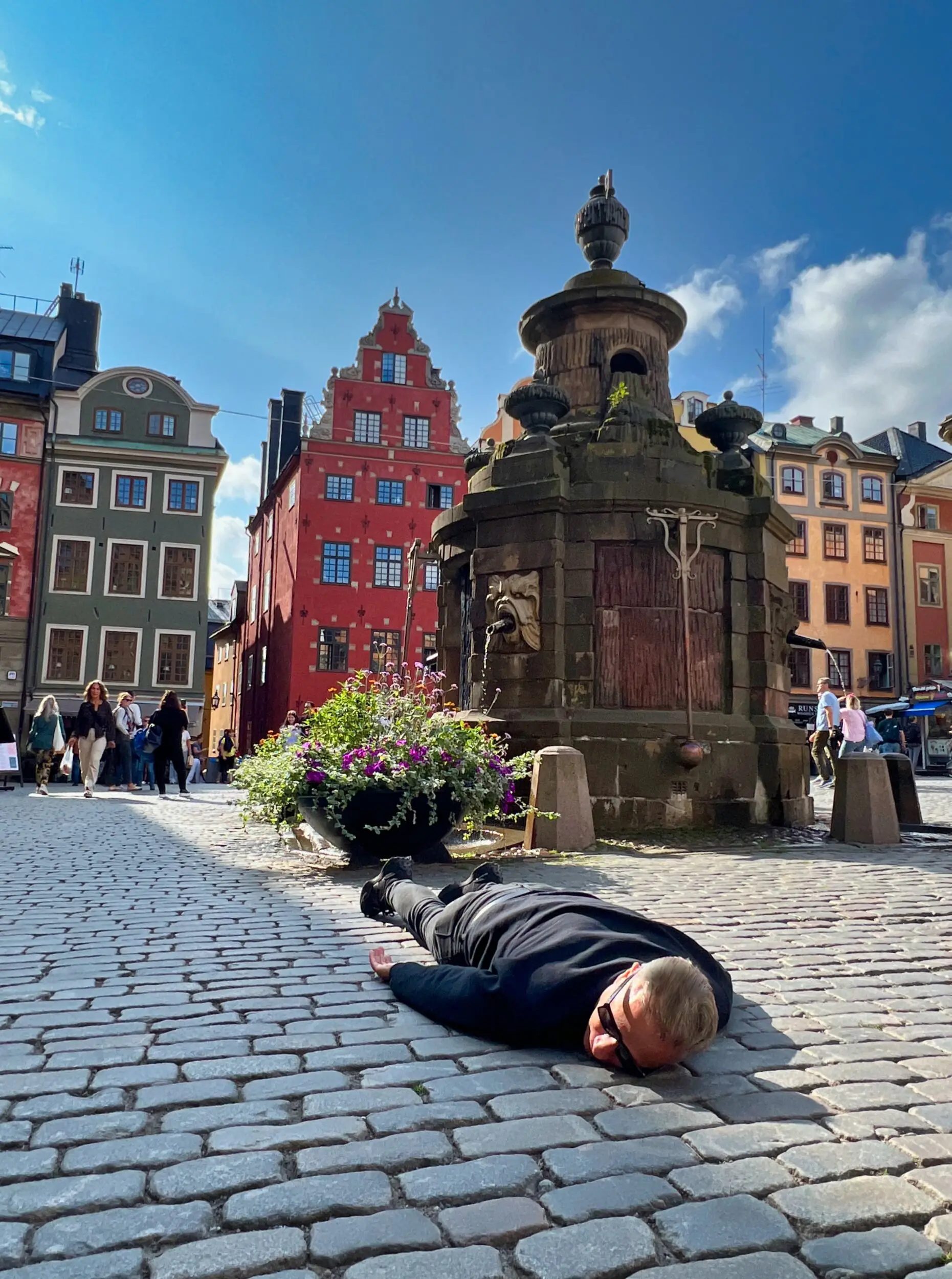
- Local name
- Stortorget
- Type
- Historic square
- Continent
- Europe
- Country
- Sweden
- City
- Stockholm
- District
- Gamla Stan
- Location
- Centre of Gamla Stan, beside the Stock Exchange Building
- Origin
- Medieval, original centre of Stockholm
- Key event
- Stockholm Bloodbath, November 1520
- Main building
- Stock Exchange Building (1776), Swedish Academy and Nobel Prize Museum
- Well
- Stortorgsbrunnen, designed by Erik Palmstedt (1778)
- Date
- August 2023
- Photographer
- Héctor Godes
- Published
- October 14, 2023
- Reviewed
- November 13, 2026
- Coordinates
- 59.3251, 18.0707
- More
- Wikipedia
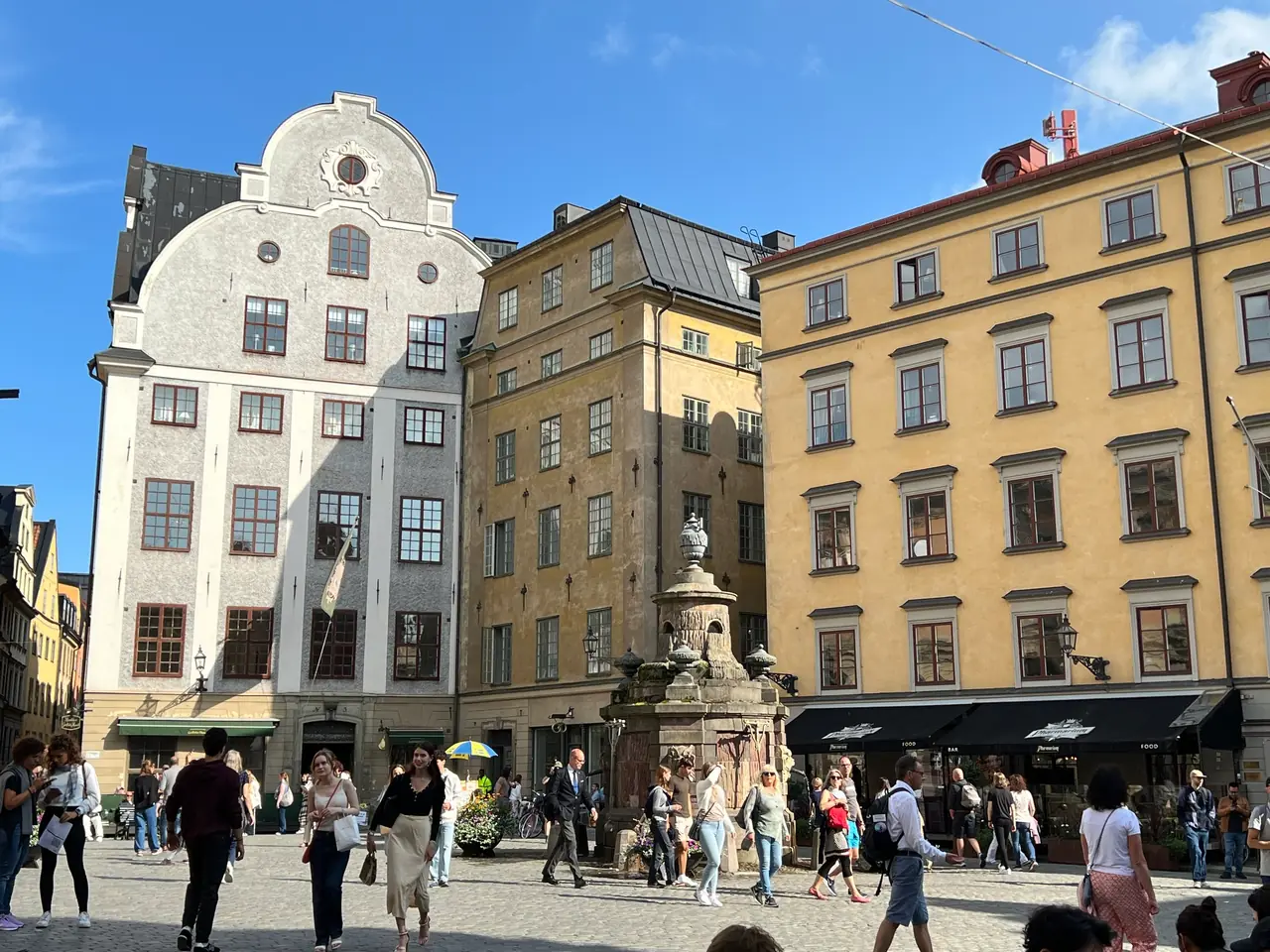
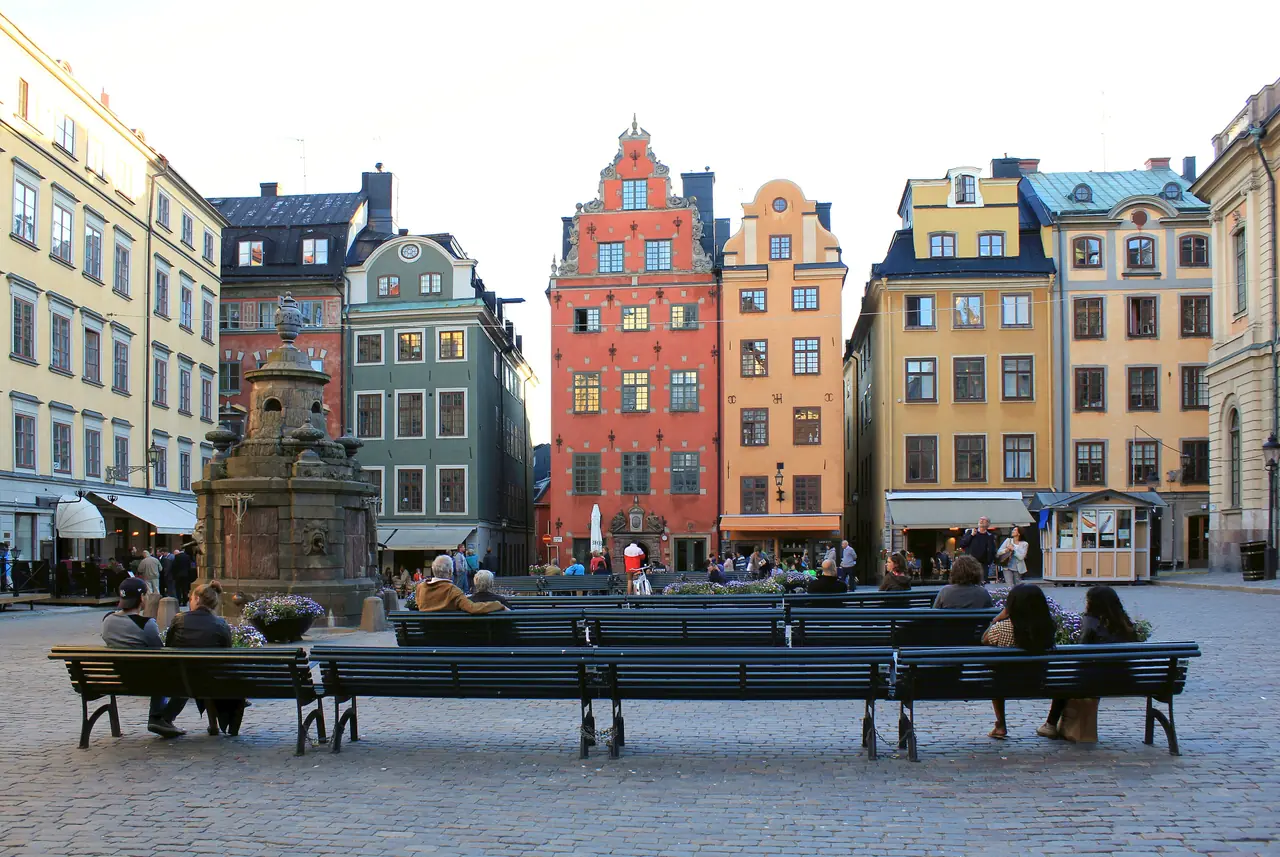
Stortorget, the Great Square, is the oldest square in Stockholm and the centre of Gamla Stan, the old town S1 S2. It was the point around which the city grew, and it is still surrounded by tall merchants’ houses and by the Stock Exchange Building, home of the Swedish Academy and the Nobel Prize Museum S1 S2.
Its calm appearance hides a turbulent past. The square has been a market, the seat of the city’s government, a place of execution and a stage for Swedish culture, and every façade preserves a piece of that history.
The centre from which Stockholm grew
Stortorget was the original centre around which Stockholm developed S2. Old records call it stora torghit in 1420 and stoor tårgeett in 1646, two early spellings of its name S2.
Gamla Stan itself means the old town, and the name became official only in 1980 S6. Before that, Stockholmers often called it the city between the bridges, a reminder that the old town occupies an island in the middle of the modern capital S6.
The plots around the square were narrow and valuable, which explains the tall, slender houses with stepped or curved gables. Each façade had to make the most of a short frontage on the busiest place in the city.
From the fourteenth century until 1732, the city’s town hall stood on the square S2. Stortorget was also the main marketplace, until trade gradually moved to other squares, and in 1849 all sales other than milk were banned there S2.
It was also a place of firsts. In 1575 the apothecary Anthonius Busenius opened Sweden’s first pharmacy on the square S2.

The Stockholm Bloodbath
The darkest episode in its history took place in November 1520 S2. Shortly after the Danish king Christian II had conquered Stockholm, he promised an amnesty to his opponents, but they were arrested and executed on the square S4.
The event, known as the Stockholm Bloodbath, cost the lives of dozens of nobles, clergymen and burghers, and it is usually associated with 82 victims S3 S4. It provoked the revolt led by Gustav Vasa, which ended Danish rule and opened a new chapter in Swedish history.
The massacre turned the civic heart of the city into a place of betrayal. A square built for trade, justice and assembly became, in Swedish memory, the setting of a promise broken by a foreign king.
Two traces of the massacre are often pointed out on the square, both linked to popular legends. The first is a cannonball, which, embedded in the corner of Skomakargatan is said to have been fired at Christian II, while he sat at a window, during Gustav Vasa’s siege of 1521 S1 S2.

The houses around the square
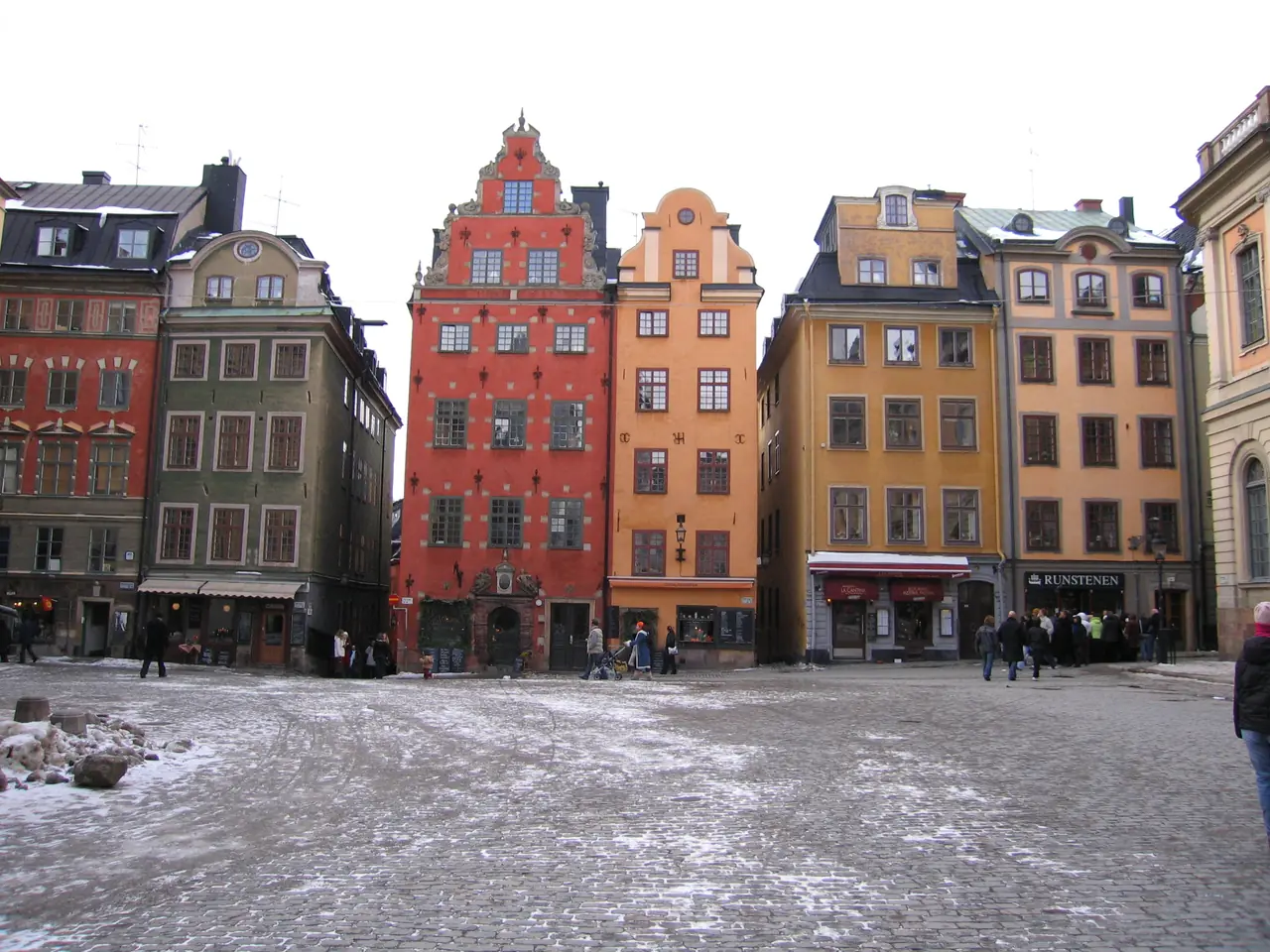
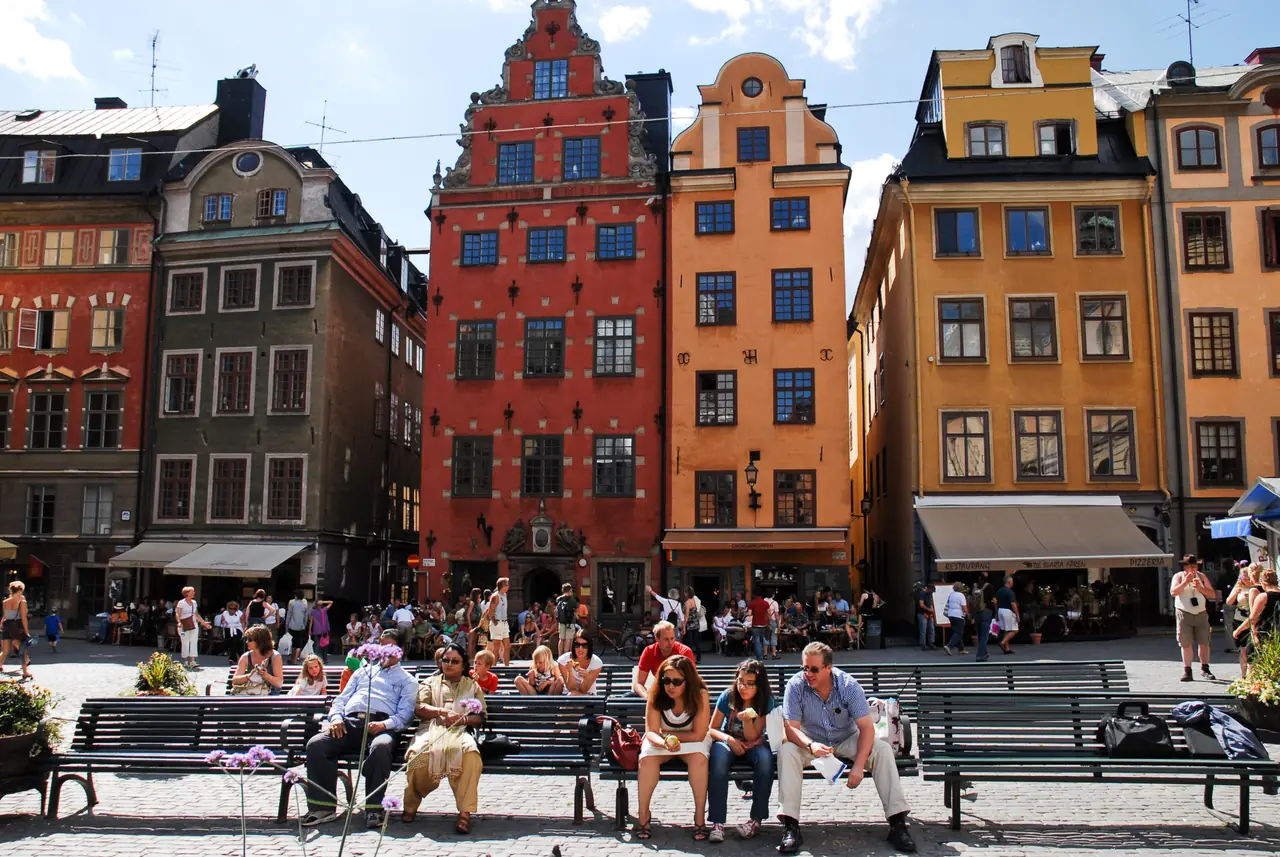
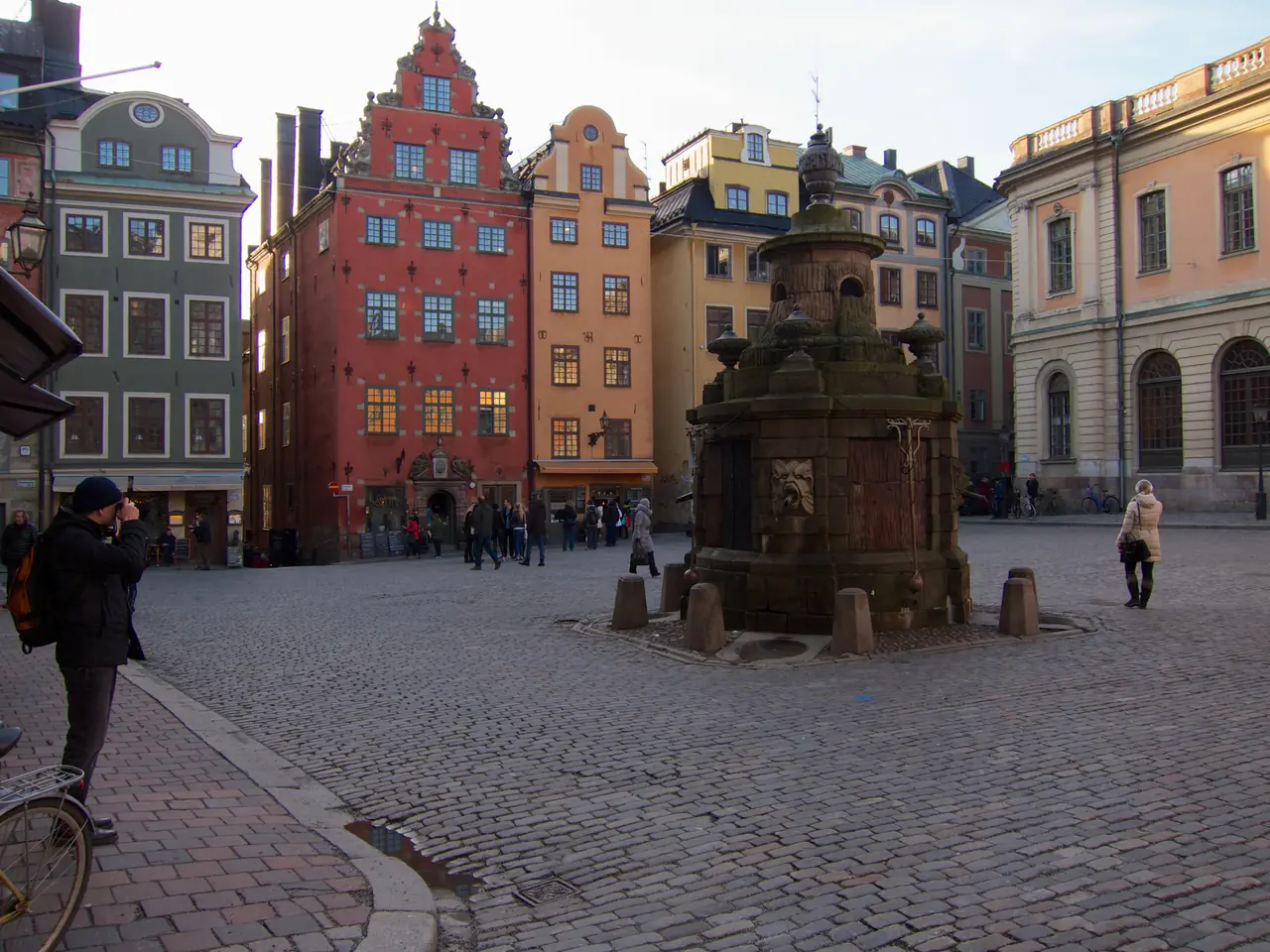
The houses that frame the square are among the most photographed buildings in Stockholm. The red house at number 20, known as Ribbinska huset or Schantzka huset, appears in records as early as 1479 S1 S3.
Its façade is studded with 82 white stones, which are sometimes said to represent the heads of the victims of 1520 S1 S3. However, they were added in 1628 by its owner Schantz, more than a century after the massacre, so the link is a legend rather than a documented memorial S1 S3.
Number 3, known as Grillska huset, was built by the merchant Hans Bremer in the 1640s and later took its name from the Grill family of goldsmiths and merchants S1. The building at the corner of Skomakargatan was rebuilt in 1795, and the legendary cannonball was then set back into its wall S2.

The Stock Exchange and the Nobel Prize
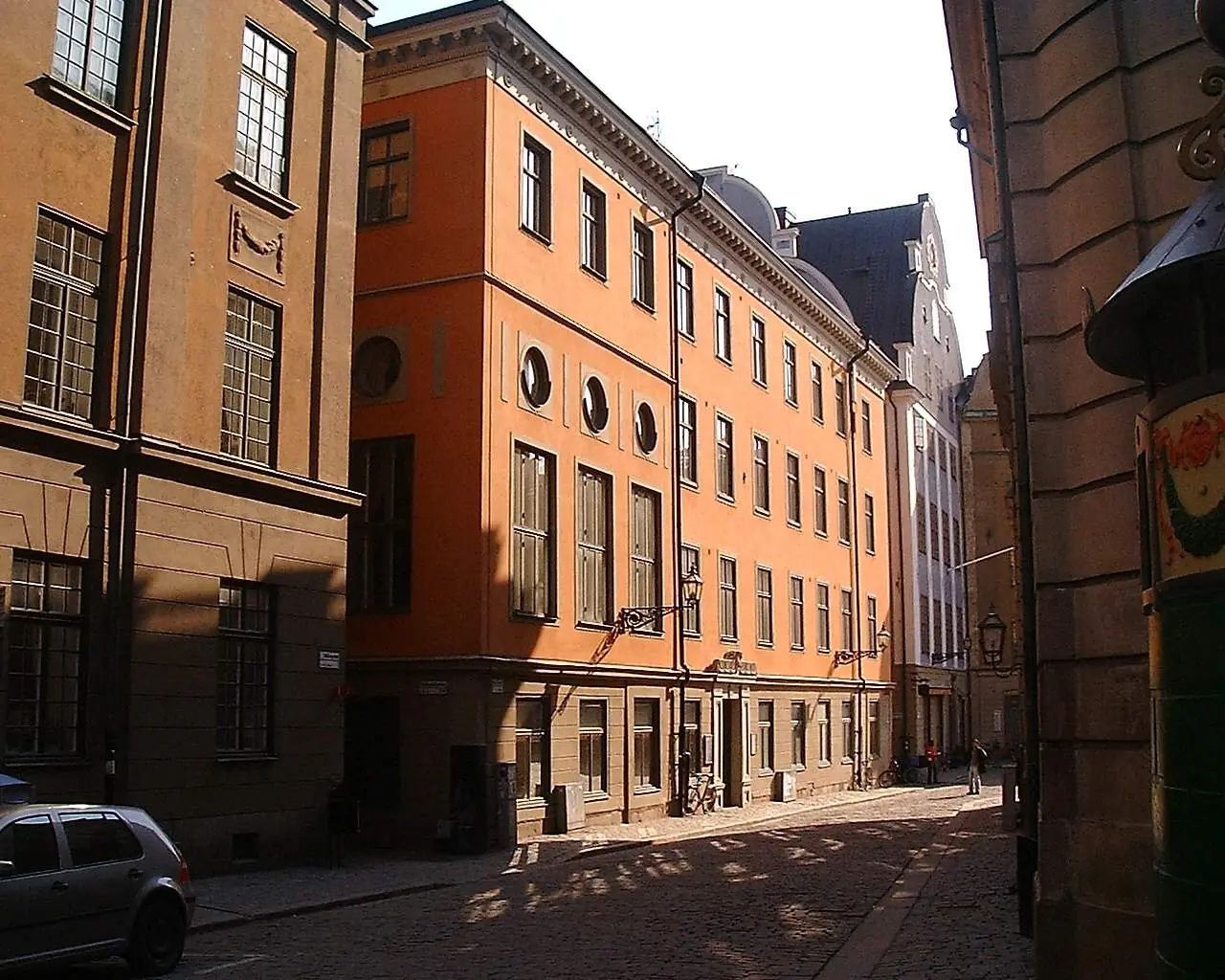
The north side of the square is dominated by the Stock Exchange Building, Börshuset, built on the site of the former town hall S4. It was inaugurated in 1776, and its upper floor has housed the Swedish Academy and the Nobel Library since 1786 S5.
The building lost its original function in 1990, when electronic trading replaced the trading floor S4. Since 2001 its ground floor has housed the Nobel Museum, now called the Nobel Prize Museum S2 S5.
The museum presents exhibitions, talks and guided tours about Alfred Nobel, the prize categories and the laureates, and it also has a research library S5. It turns the square into a starting point for exploring the ideas of the twentieth and twenty-first centuries.
Every year, the Swedish Academy announces the winner of the Nobel Prize in Literature in this building S4. A square once associated with a massacre has become one of the places where the world’s most famous literary award is revealed.
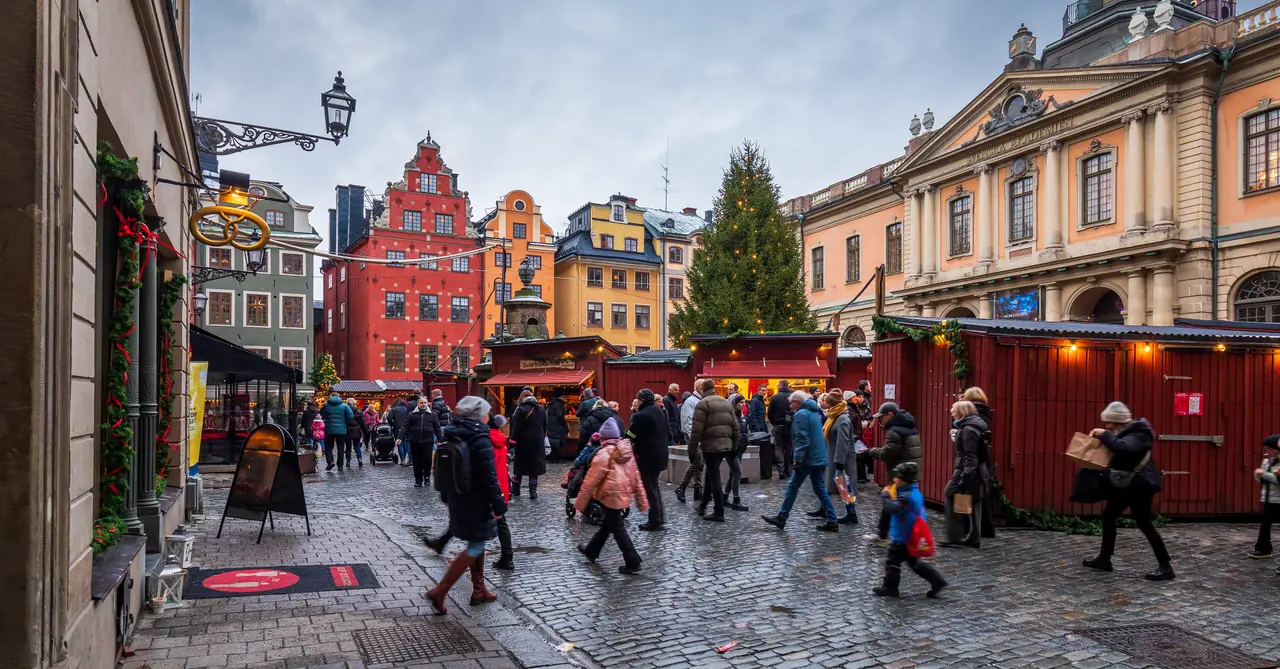
The building also gives the square a more formal north side, with neoclassical columns that contrast with the narrow, colourful gabled houses on the other sides.

A well at the heart of the city
In the middle of the square stands the Stortorget well, Stortorgsbrunnen S2. A well had stood here since the Middle Ages, and the current one was designed in 1778 by Erik Palmstedt, the architect of the Stock Exchange S2 S4.
The well marked the centre of Stockholm: distances within the city and to other towns were measured from this point S4. It was dug so deep that it reportedly reached the level of Lake Mälaren, but it dried up in 1856 S1 S2.
In 1857 it was moved to Brunkebergstorg, and it returned to its original place in 1953 S4. Its return gave the square back its symbolic centre.

Stortorget today
Today Stortorget is one of the liveliest places in Gamla Stan, with cafés and restaurants around the square. The Stortorgskällaren restaurant has occupied an old cellar on the square since 1938 S2. That vaulted cellar is said to be around five hundred years old S5.
Visitors now cross the square on their way between the Royal Palace and the narrow lanes of the old town. Few places in Stockholm show so clearly how the medieval city was organised around a single open space.
In December the square hosts a Christmas market with red wooden stalls, a tradition with medieval roots that has been held on Stortorget every year since 1915 S5.
Stortorget shows how a small square can concentrate the history of a whole country. Trade, power, violence, literature and celebration have all passed through it, and its façades keep the memory of each period.

Frequently asked questions
Why is Stortorget famous?
What happened at Stortorget in 1520?
Do the white stones represent the victims of 1520?
What is in the Stock Exchange Building?
When is the Christmas market held?
Every December; it has been held on Stortorget every year since 1915 S5.
Sources
More in Sweden