Palacio de la Música Mexicana: a city built to listen
- Country
- Mexico
- Local name
- Palacio de la Música
- Type
- Music museum and concert venue
- Continent
- North America
- State
- Yucatán
- City
- Mérida
- Location
- Calle 58 no. 497, between 59 and 60, historic centre
- Architectural teams
- Alejandro Medina Arquitectura; Muñoz Arquitectos; Quesnel Arquitectos; Reyes Ríos + Larraín Arquitectos
- Construction
- 2015–2018
- Opening
- 25 June 2018
- Area
- 8,840 m²
- Concert hall
- Over 400 seats
- Museum
- Interactive, five principal exhibition rooms
- Material
- Regional limestone
- Date
- March 2025
- Photographer
- Bruno Sellés
- Published
- July 11, 2025
- Reviewed
- November 13, 2026
- Coordinates
- 20.9686, -89.6217
- More
- Wikipedia
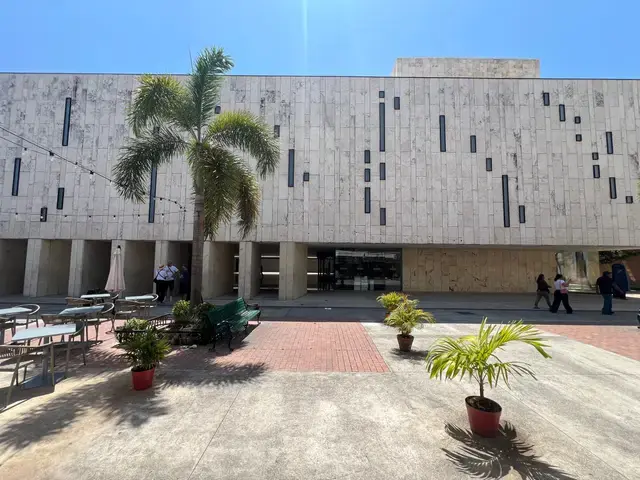
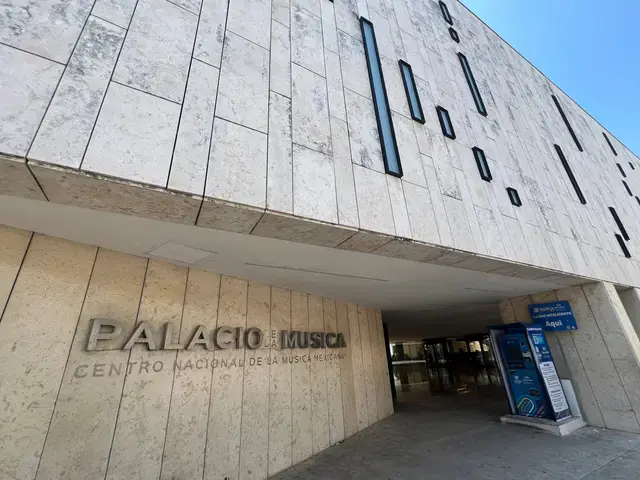
The first surprise at Mérida’s Palacio de la Música is its restraint. A massive skin of pale limestone faces the historic streets, yet the building seems to lift at ground level. Beneath that weight, people can cross an open space instead of stopping at a conventional museum door. The palace is an institution for Mexican music, but its architecture begins with an invitation to the city. Its concert hall, interactive museum, classrooms and archive bring performance, memory and public life into one address. The work opened in June 2018, on a plot previously occupied by the Yucatán state legislature. S1 S2
A new building in an old centre
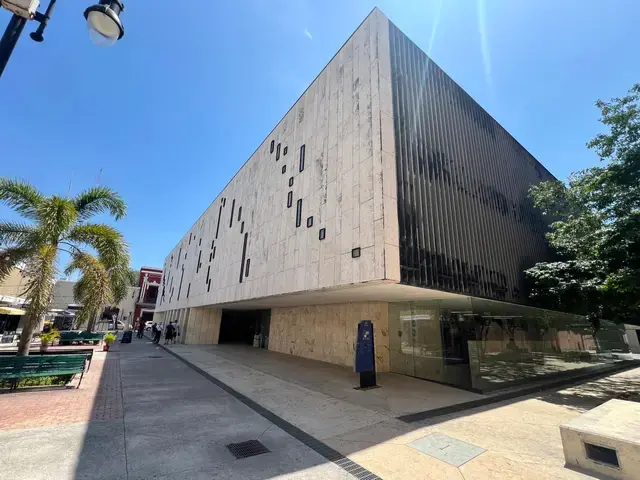
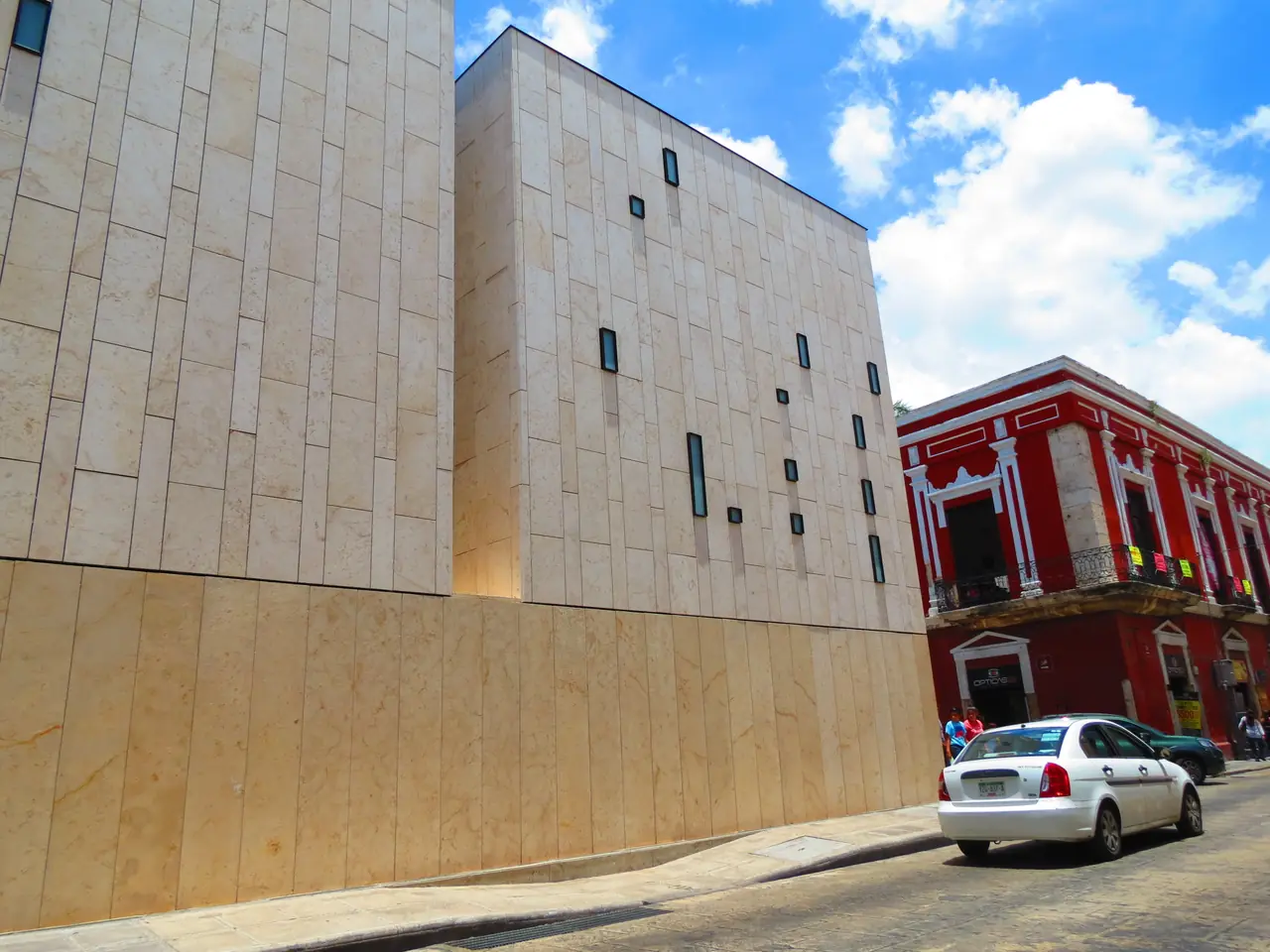
The site sits in Mérida’s historic core, where the rhythm of narrow streets and masonry façades makes any new construction conspicuous. The design team did not disguise the palace as an older building. Alejandro Medina Arquitectura, Muñoz Arquitectos, Quesnel Arquitectos and Reyes Ríos + Larraín Arquitectos instead worked with a heavy limestone base, more tightly textured stone above and a volume that acknowledges its neighbours without copying them. Their description of the project stresses negotiation with Mexico’s National Institute of Anthropology and History, which set criteria for this sensitive setting. S2 S3 S4
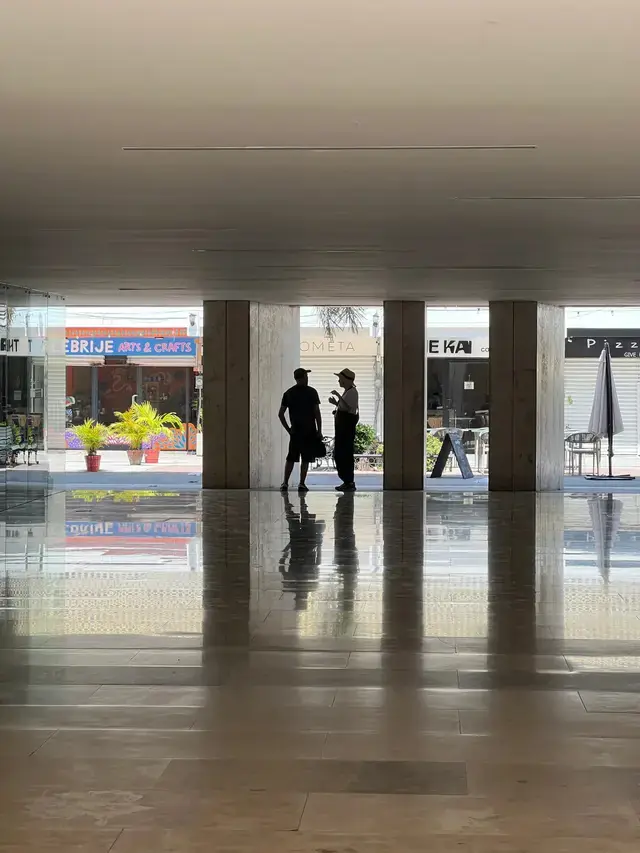
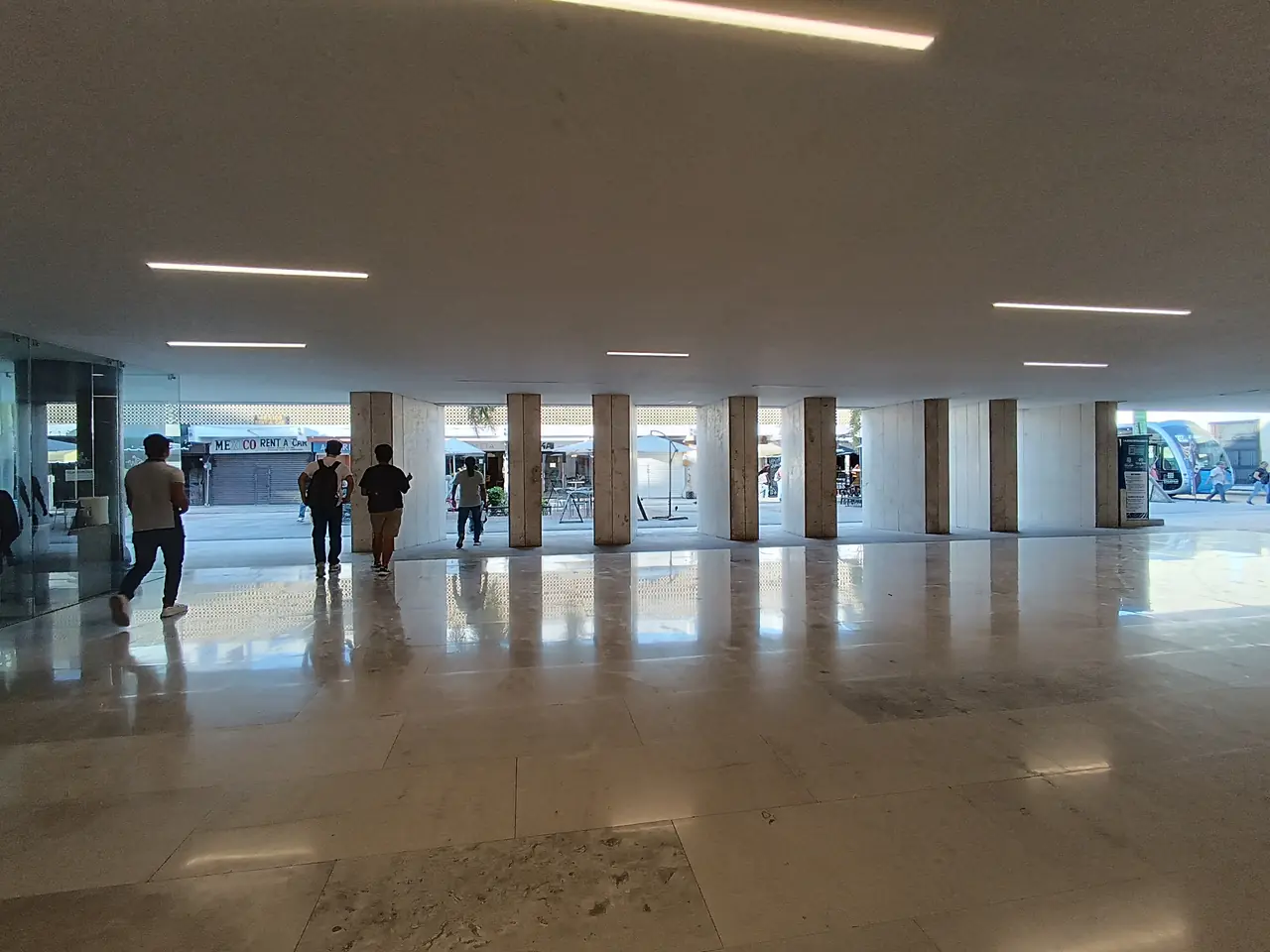
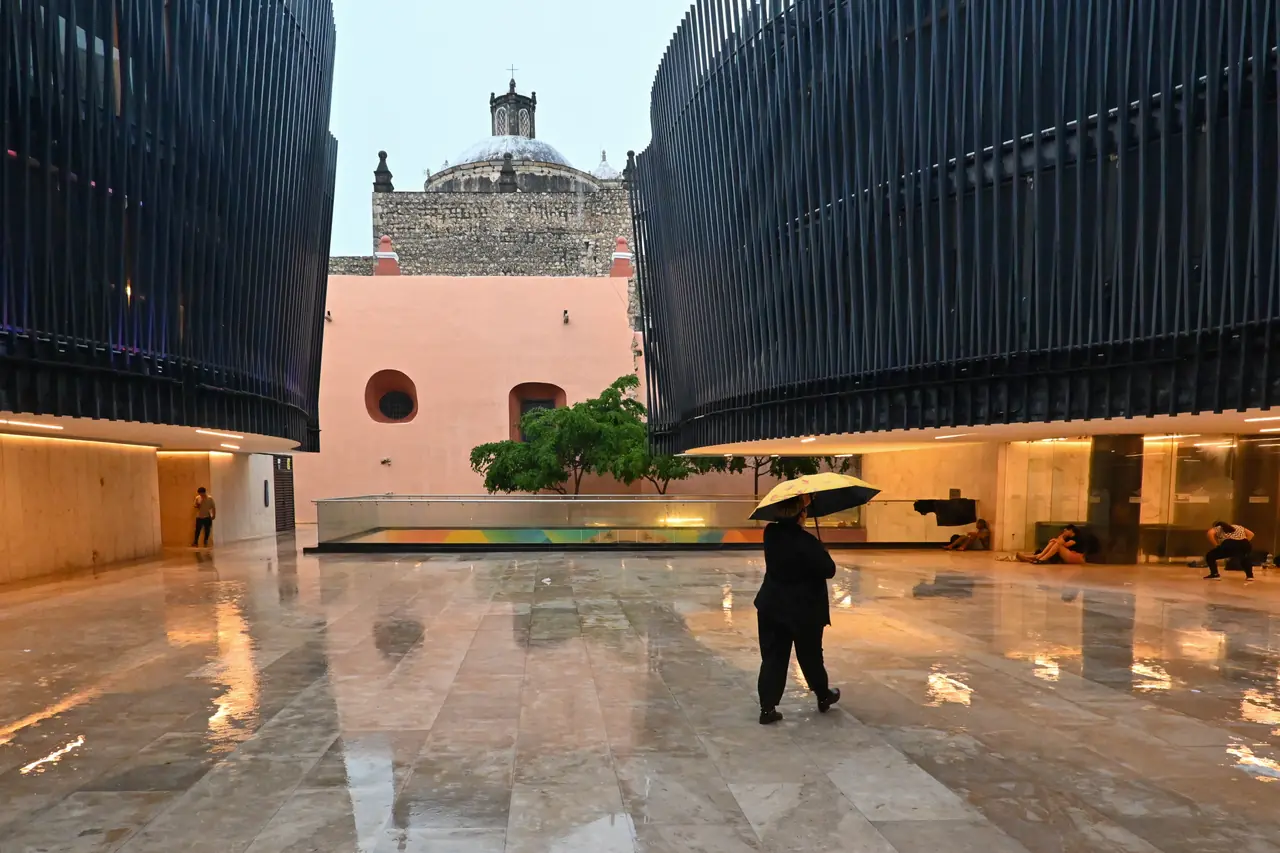
The result is both reserved and generous. Street elevations keep their openings controlled, while the ground plane creates a sheltered public threshold. The building’s two principal bodies meet below and above that passage. In the rear, the composition opens towards a nearby seventeenth-century religious monument. This is a useful way of reading the architecture: it protects the scale of the street, lets the city pass through, and then reveals places of gathering inside. S3
Limestone is more than a façade
Mérida’s light is hard and its climate is hot. Here the locally sourced limestone is a material with environmental and urban work to do. The lower plates read as a continuous, substantial base; smaller pieces form a ventilated upper skin. The architects describe this assembly as helping to moderate both heat and noise. The stone also gives the new building a shared material language with the older centre. What changes is the way it is cut, suspended and detailed. S3
Look again from the street and the thin vertical openings break the surface without turning it into a glass display case. The apparent solidity makes the opening beneath it more dramatic. One can experience the palace as a sequence of compression and release: narrow urban approach, shaded passage, then the more open interior spaces. The contrast makes music tangible before a note is played, because it asks the body to register enclosure, pause and resonance.

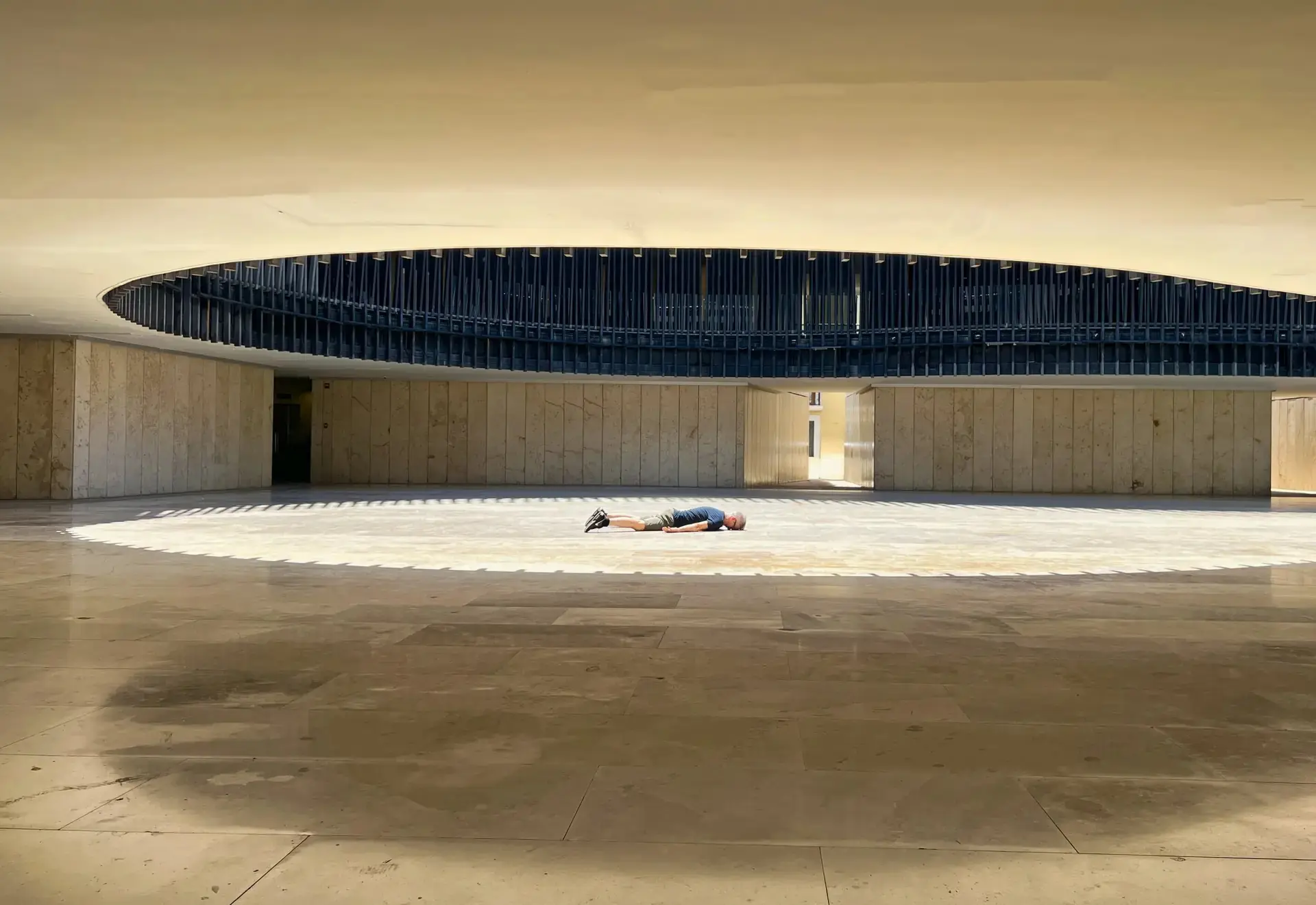
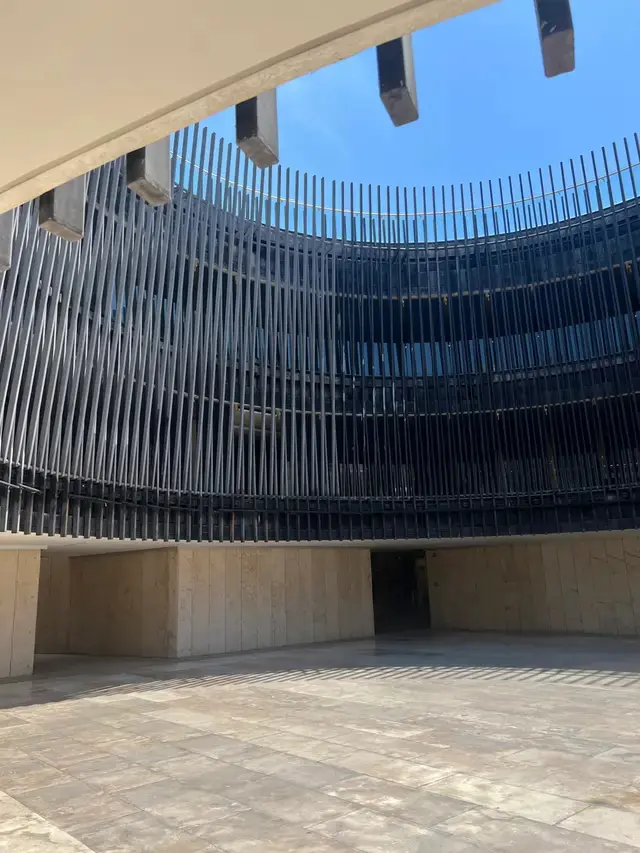
The Patio de las Cuerdas
At the centre of this sequence is the Patio de las Cuerdas, named for a field of slender elements that recalls the strings of an instrument. It is tempting to treat that association as a decorative pun. More interesting is the way the suspended lines draw attention to air and height. A string only becomes music through vibration; the patio turns that idea into an architectural space where people circulate, wait and meet. S3
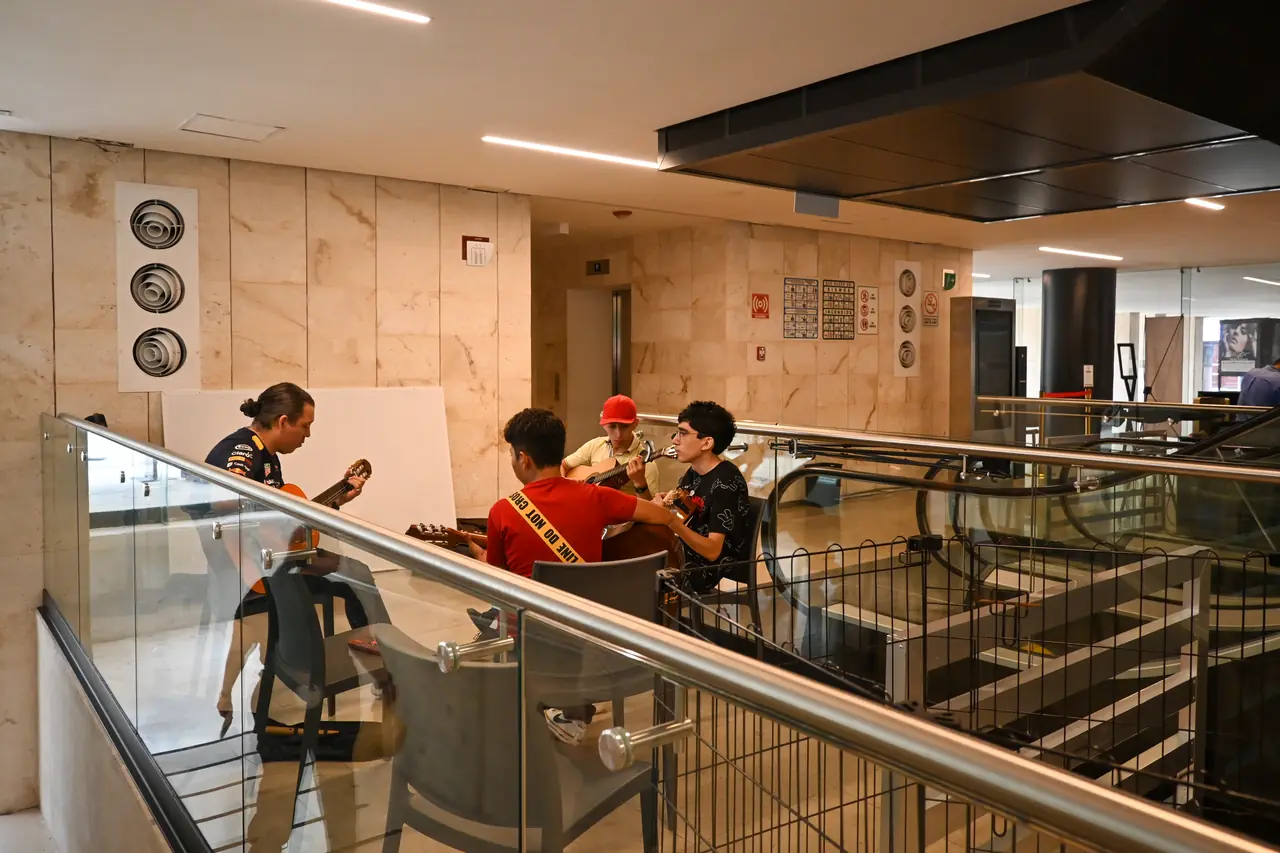
The courtyard and covered public areas help prevent the complex from becoming a sealed cultural object. Someone can encounter the building as part of an ordinary walk through Mérida, while another visitor may come for a concert or an exhibition. That overlap matters. Museums and concert halls often concentrate cultural life behind a ticketed entrance; the palace gives the street a role in its daily use. It makes room for an encounter before it asks for attention.

A concert hall inside the city
The concert hall occupies one of the raised volumes. Its purpose is straightforward: give Mexican music a purpose-built place to be heard, rehearsed and shared. Official accounts describe a room for more than four hundred people. The hall sits alongside spaces for education and documentation, so a performance can be understood as one stage in a longer cultural process rather than an isolated event. S1 S2
A room for live sound has to manage a paradox. It must isolate a performance from the traffic and heat outside, yet feel connected to the city that supports it. The dense street façades and the more porous spaces beneath and between the volumes serve those different needs. The visitor moves from a noisy street to a quieter interior; the architecture sets up the act of listening without pretending that the music exists apart from Mérida.

A museum that asks visitors to listen
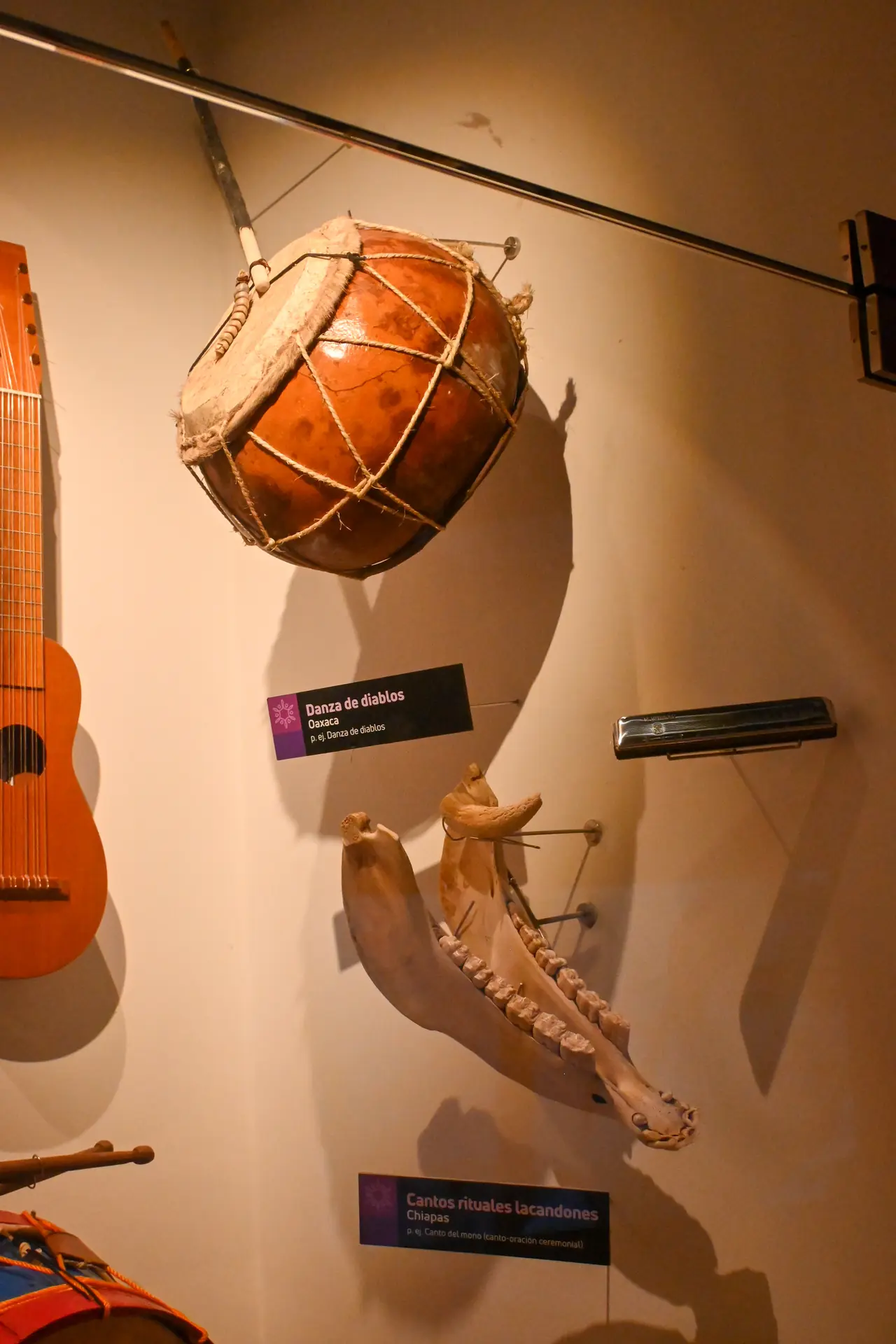
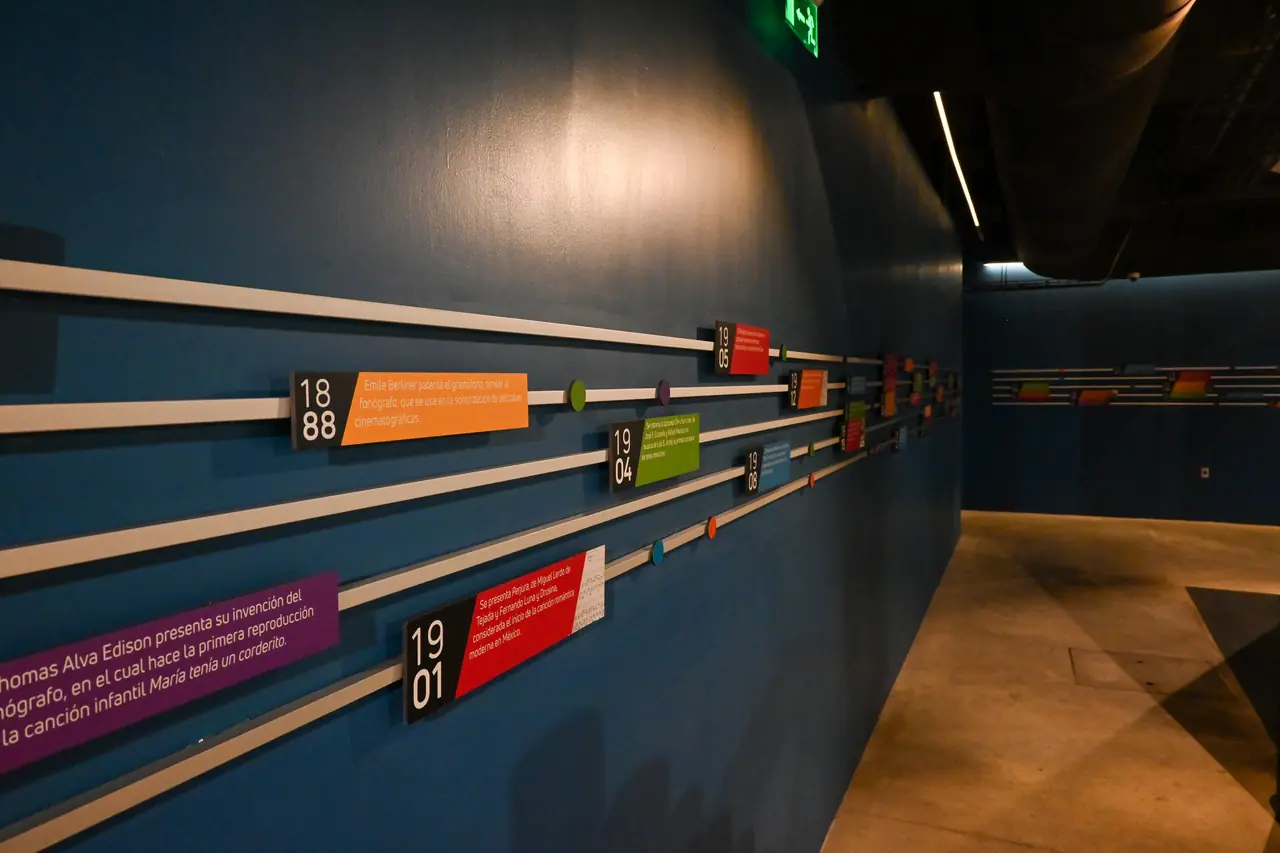
The interactive museum is below street level. Mexico’s cultural information system describes roughly 1,769 square metres of exhibition space and five principal rooms, covering antecedents, musical cultures, media, protagonists and the expansion of musical forms. The emphasis is on sound and experience as well as objects. A song does not survive as a score alone: it is carried by performers, technologies, languages, ceremonies and audiences. S2
This scope resists the idea of one definitive national soundtrack. Mexican music includes many Indigenous traditions, regional practices and popular genres, each with different histories and routes of circulation. A visitor can move from local Yucatecan forms to music that travelled through radio and recordings, asking how a voice becomes familiar far from its place of origin. The institution’s mission is preservation and dissemination, but the strongest question is what happens when a living repertoire enters a museum without ceasing to change. S1 S2


Mérida’s own musical thread
The choice of Mérida gives the national story a particular local accent. Yucatán’s trova, composers, singers and performance spaces form part of the palace’s programme and its historical setting. The inauguration announcement explicitly linked the new centre to Yucatecan creators. The building therefore serves two scales at once: a national conversation about musical heritage and a city with a distinct tradition of making and hearing music. S1
There is a danger in presenting culture as a closed catalogue of celebrated names. This palace is most convincing when concerts, learning spaces and temporary exhibitions keep its account open. The public can return for a different performance and hear a different Mexico. In that sense, the archive and the stage are complementary: one preserves traces, the other gives an art form another present tense.

Public space as cultural policy
Opening on 25 June 2018, the Palacio de la Música turned a former legislative site into a civic project devoted to music. That change of use is significant in a centre already dense with historical buildings. The building did not simply add a new object to the skyline; it introduced a passage, gathering spaces and a programme that can bring people back at different times of day. S1
The area of the project is reported as 8,840 square metres by the architects’ published project account. Numbers help convey its scale, but the experience is better measured by transitions: from stone to shade, from movement to concentration, from an individual visit to a shared performance. The palace can be read as an argument that a city’s cultural memory needs infrastructure, places to learn, and opportunities to listen together. S3
How to read the building on foot
Begin outside. Notice the different sizes of limestone, the controlled windows and the way the upper mass seems to hover over the public edge. Walk through the ground-level space and look upwards at the hanging lines of the patio. Then compare the calm of the museum or hall with the street you have just left. These are not separate design tricks. They are the stages through which an imposing building becomes an accessible one.
Finally, listen for what the word “palace” means here. There is no royal residence and no single musical canon inside. The name offers a public stage to a multitude of traditions. Its architecture gives them a durable address in Mérida, while its exhibitions and concerts must keep making that address relevant. The building is finished; the cultural conversation it houses remains open. S2 S3
Frequently asked questions
When did the Palacio de la Música open?
It was inaugurated on 25 June 2018. The new complex occupies the site of the former Yucatán state legislature. S1
Is it only a concert hall?
Who designed the building?
The published project credits Alejandro Medina Arquitectura, Muñoz Arquitectos, Quesnel Arquitectos and Reyes Ríos + Larraín Arquitectos as the architectural practices. S3
Why does the façade use limestone?
The stone relates the contemporary building to Mérida’s historic fabric. The architects also describe a ventilated upper cladding that moderates heat and noise. S3
What is the Patio de las Cuerdas?
It is an interior courtyard whose vertical elements evoke musical strings. It also forms part of the building’s circulation and public life. S3
Sources
More in Mexico
 UNESCO WH