Jet d'Eau: The Story Behind Geneva’s 140-Metre Fountain
- Local name
- Jet d’eau de Genève
- Type
- Fountain
- Continent
- Europe
- Country
- Switzerland
- Canton
- Geneva
- City
- Geneva
- Location
- Harbour of Geneva, where Lake Geneva meets the Rhône
- First jet
- 1886, at the hydraulic plant of La Coulouvrenière
- Present site
- Since 1891
- Current installation
- 1951, pumping station using lake water
- Height
- About 140 metres
- Flow
- 500 litres per second at about 200 km/h
- Operator
- SIG (Services industriels de Genève)
- Date
- January 2023
- Photographer
- Bruno Sellés
- Published
- February 19, 2023
- Reviewed
- November 15, 2026
- Coordinates
- 46.2074, 6.1559
- More
- Wikipedia
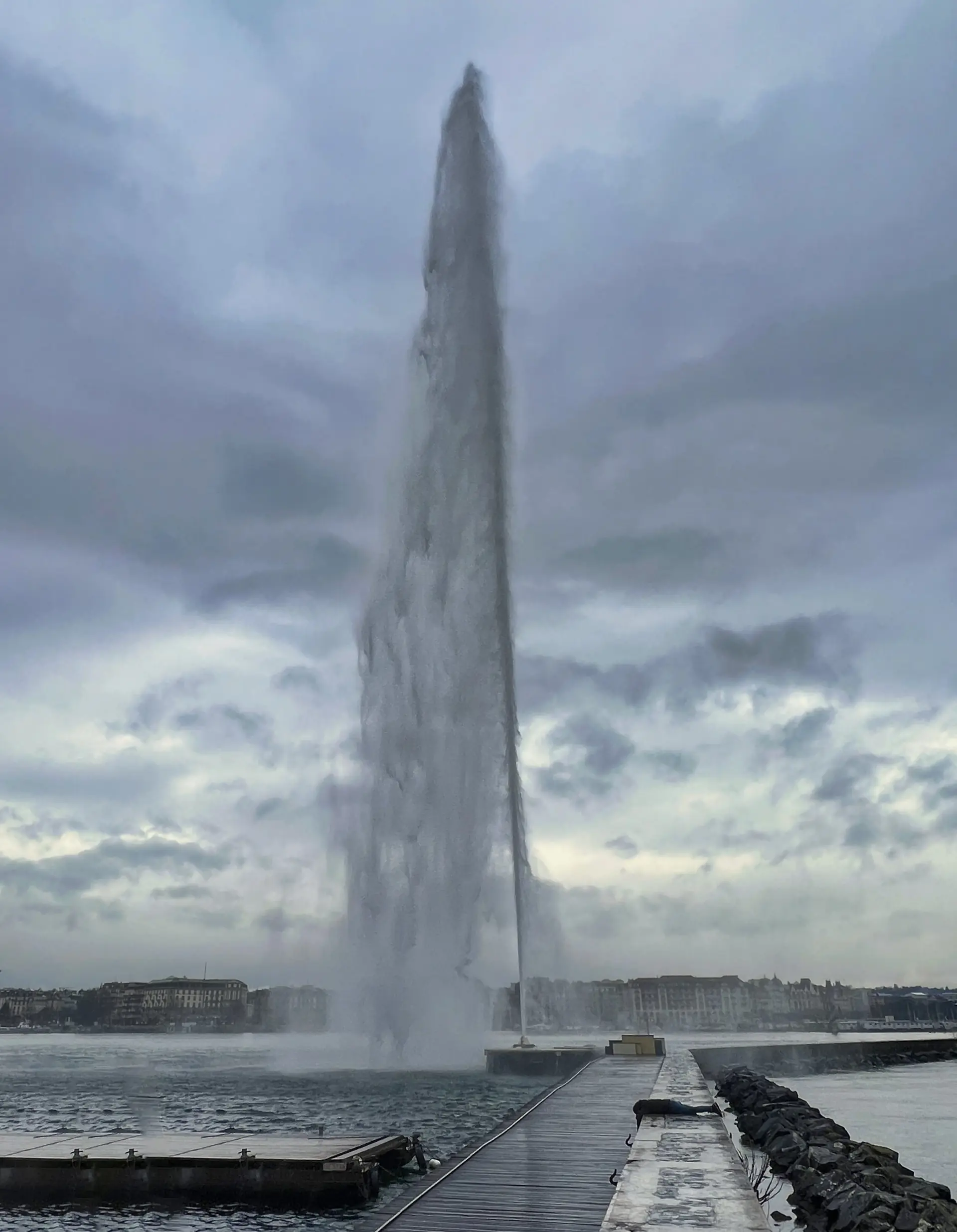
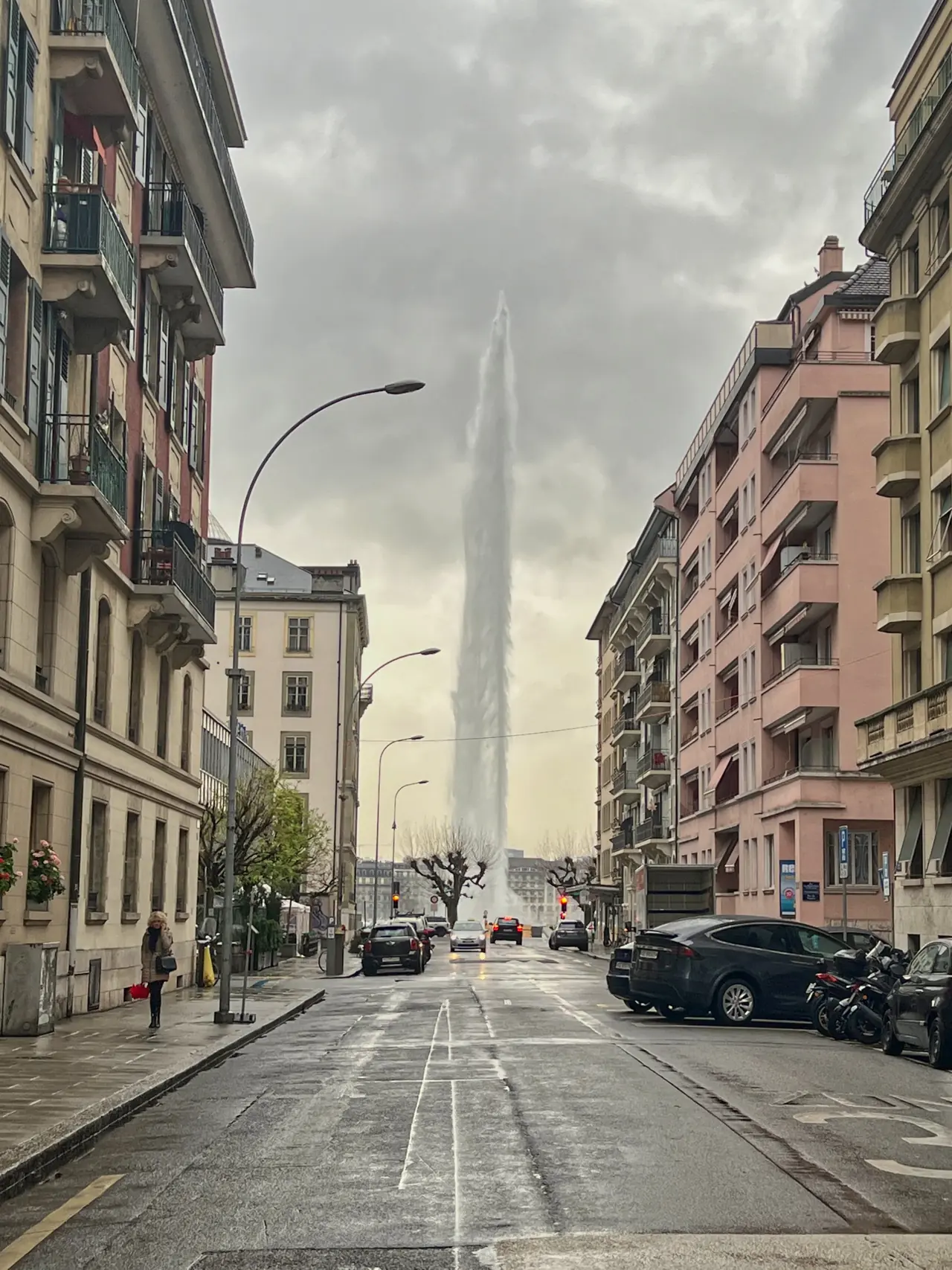
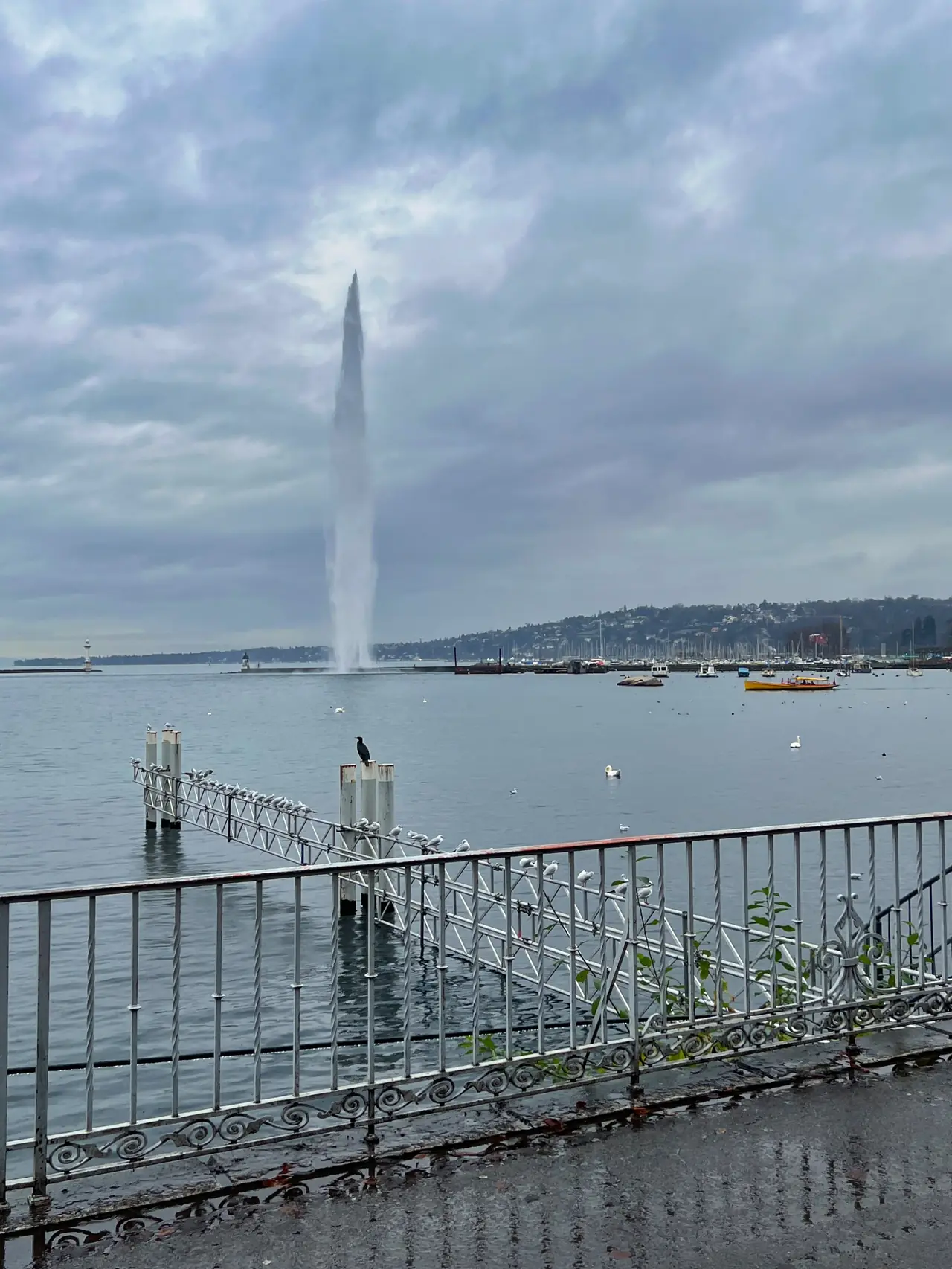
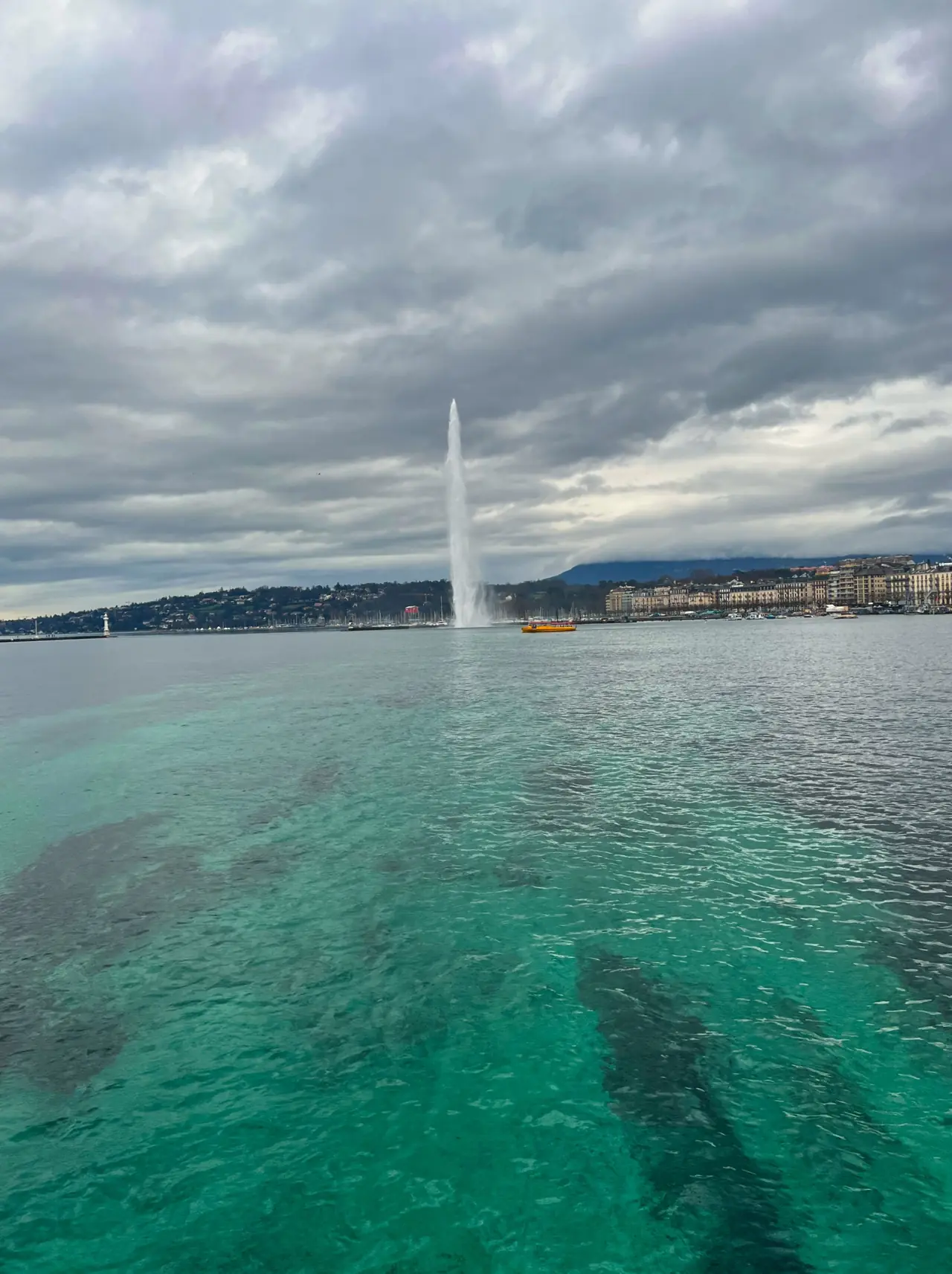
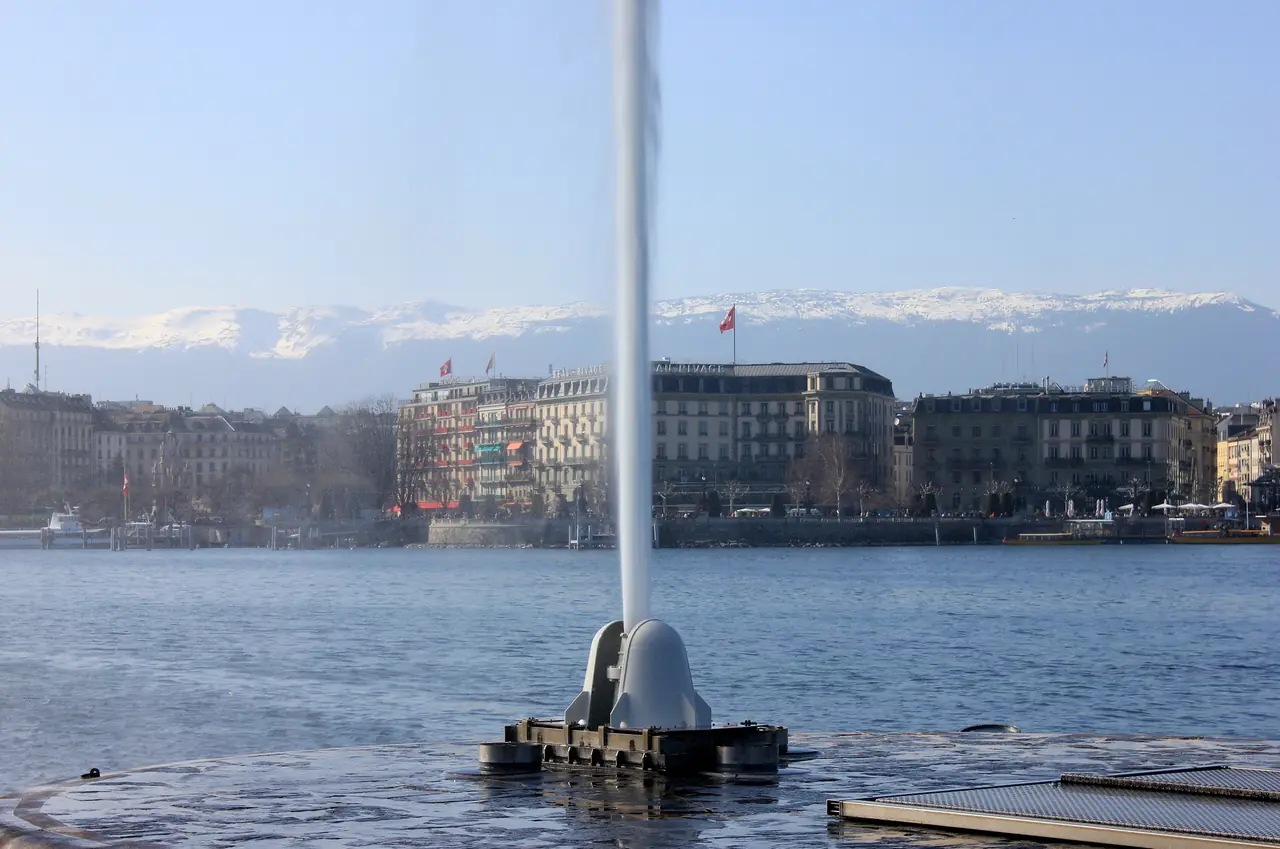
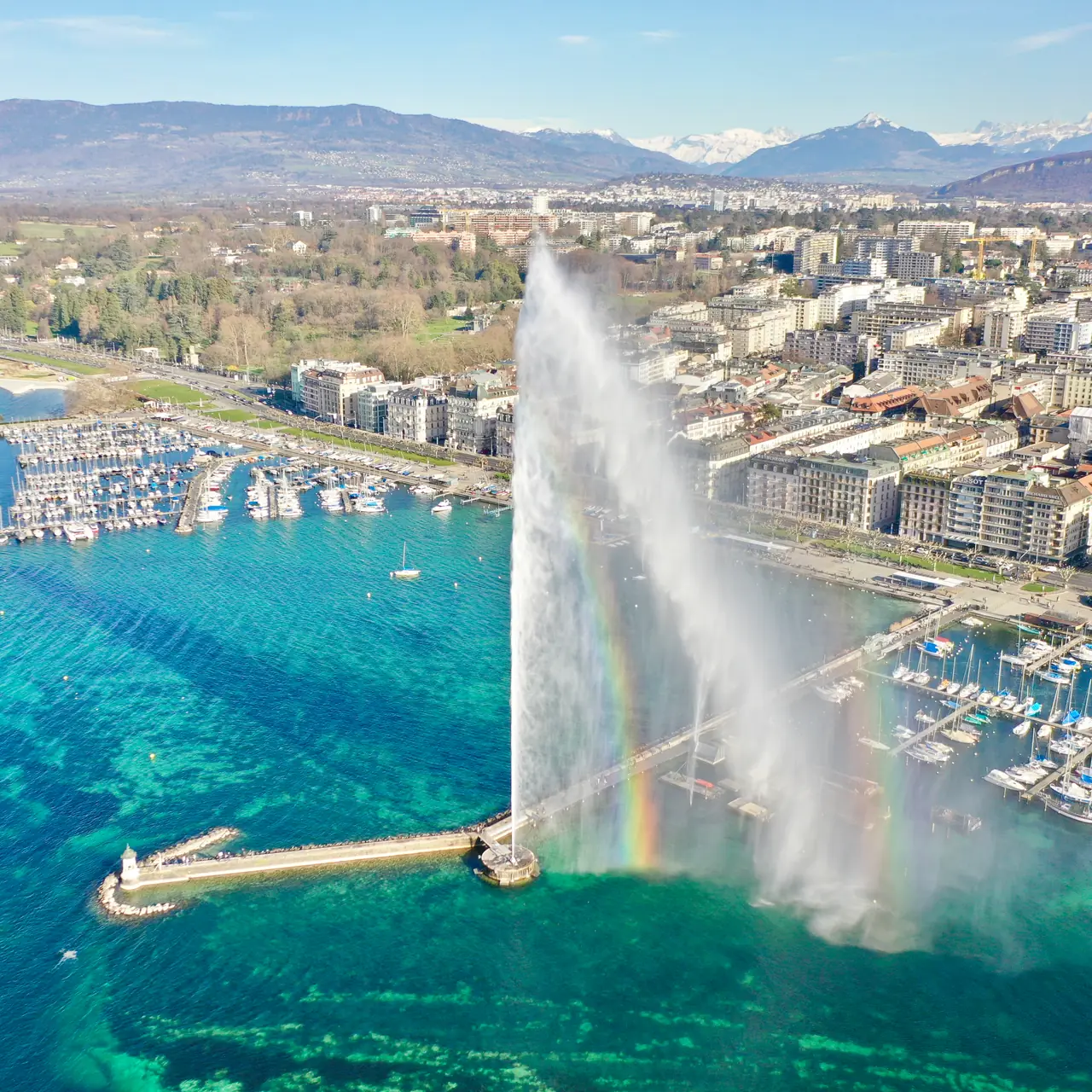
The Jet d'Eau is a fountain in the harbour of Geneva, at the point where Lake Geneva flows into the Rhône, that sends water up to 140 metres into the air S6 S1. It has become the best-known emblem of the city S1. Lake Geneva, called Lac Léman in French, is shared by Switzerland and France, and the Rhône leaves it right in the centre of the city.
Its official story is simple: a technical device that became a monument almost by accident S1. Historians have added nuances to that tale, and the history of the jet says as much about how a city tells its own story as about engineering. It is a good example of a landmark whose meaning has changed over time.
Water power for a growing city
In the 1880s Geneva was growing fast, from about 64,000 to 100,000 inhabitants, and it needed energy for the machines of its craftsmen and industries S9. The answer was the hydraulic plant of La Coulouvrenière, on the Rhône, which distributed the power of the river to the workshops S9 S7. Instead of each workshop having its own engine, water under pressure was sent through pipes to drive the machines S7.
The building was a symbol of progress in its time, moored on the river like a ship S3. Its first section was inaugurated in 1886 S3. Geneva wanted to show what modern engineering could achieve on its river.
The plant still stands a little downstream from the present jet S6. Known as the Bâtiment des Forces Motrices, it reminds visitors that the fountain was born from industry rather than from a decorative project.
A valve, or a show?
According to SIG, the public utility that owns the jet, a problem appeared in the evenings: when activity stopped, pressure built up in the network S1. A valve was created to release it, and the resulting jet, only about 30 metres high, is presented as the ancestor of today’s fountain S1. The explanation sounds plausible, because hydraulic networks of the period needed some way to release surplus pressure.
That version has been questioned. A researcher who went through the reports of the engineer Théodore Turrettini found no mention of a valve used to release excess pressure at La Coulouvrenière S2. If there was no valve, the famous origin story may be partly a later legend, repeated because it is simple and charming.
Contemporary newspapers describe another scene: at noon on the day of the inauguration, a large crowd gathered on the bridge and the quays to watch a jet about 70 metres high announcing that the pumps were working S2. For the historian David Ripoll, Geneva was already staging a celebration of its hydraulic genius in 1886 S3.
Neither SIG nor Geneva’s tourist office has changed the way it tells the story S2. Both versions agree on one point: the people of Geneva quickly took the jet to their hearts. The debate has not reduced its popularity; if anything, it has added a touch of mystery.
Moving to the harbour
In 1891 the jet was moved from La Coulouvrenière to the harbour, where it became a purely ornamental attraction S3. It was inaugurated there in July of that year for the Federal Gymnastics Festival, reaching about 90 metres S2. That was already three times the height of the first jet S4.
The move also coincided with the 600th anniversary of the Swiss Confederation S4. From then on, the jet stood where the lake narrows into the river, in full view of the quays. The quays of the harbour became the place where residents and travellers came to watch it.

The jet of 1951
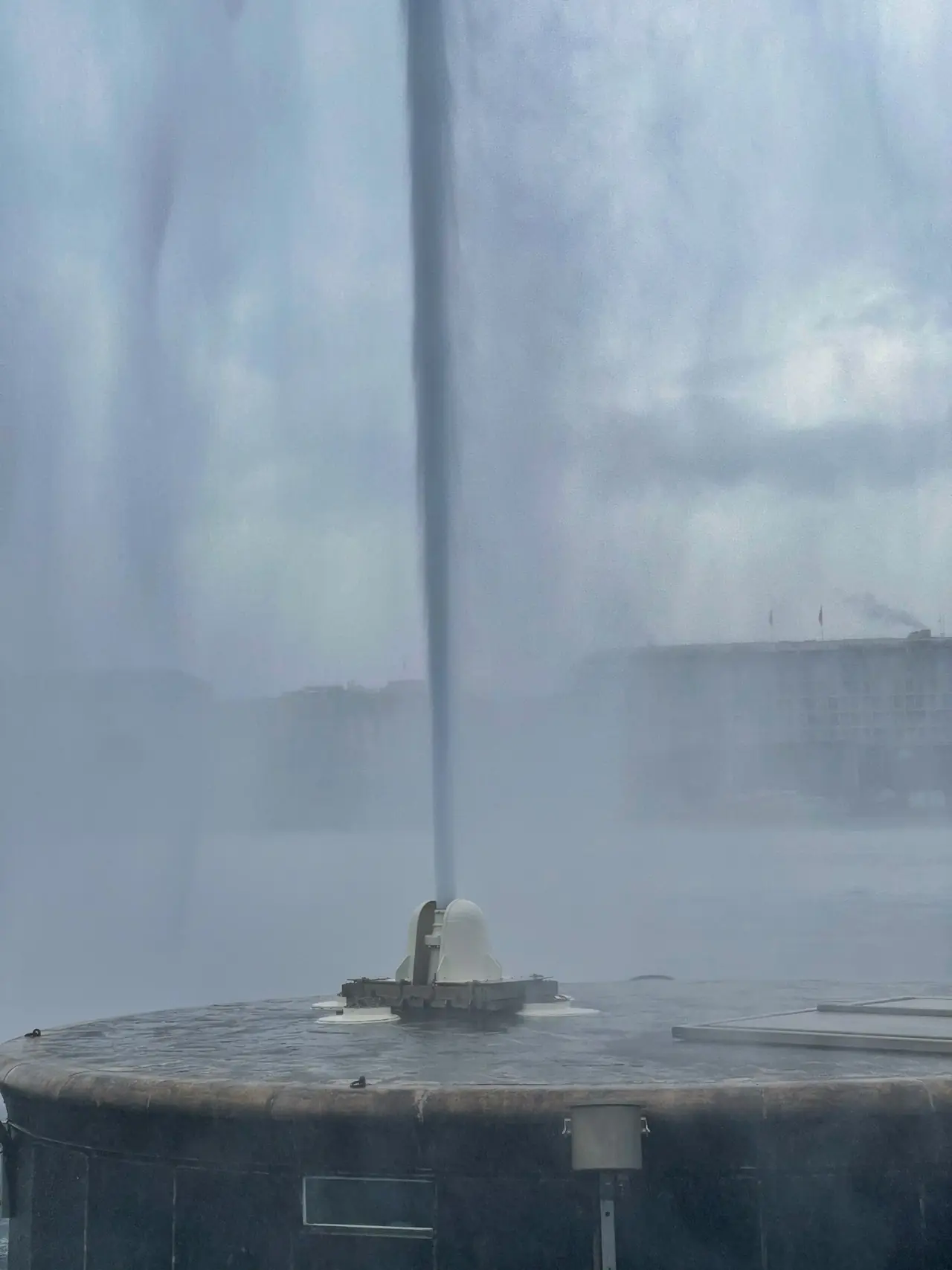
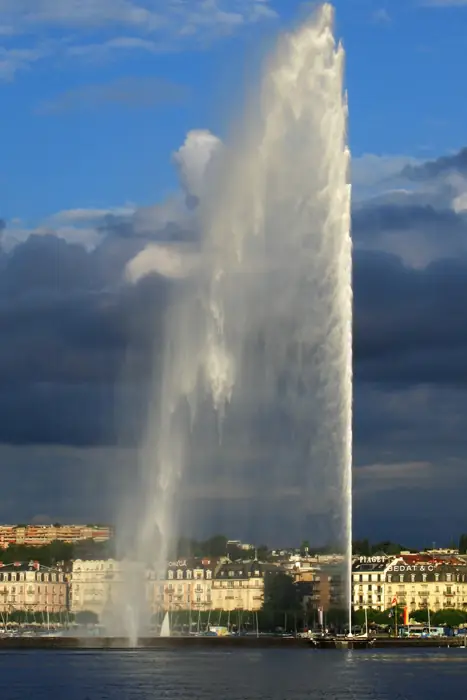
The present jet dates from 1951, when a partially submerged pumping station was built to use lake water instead of water from the city network S6. That autonomous station allowed the jet to reach its current height of 140 metres S1. Unlike the earlier jets, it no longer depended on the city’s water supply S6.
The system installed in 1951 uses two motor pumps with a combined power of 1,000 kilowatts S2. Some descriptions give them the names of two local mountains, Salève and Jura S8. The height has not changed since then, although the machinery has been maintained and renewed over the decades.

Numbers in the air
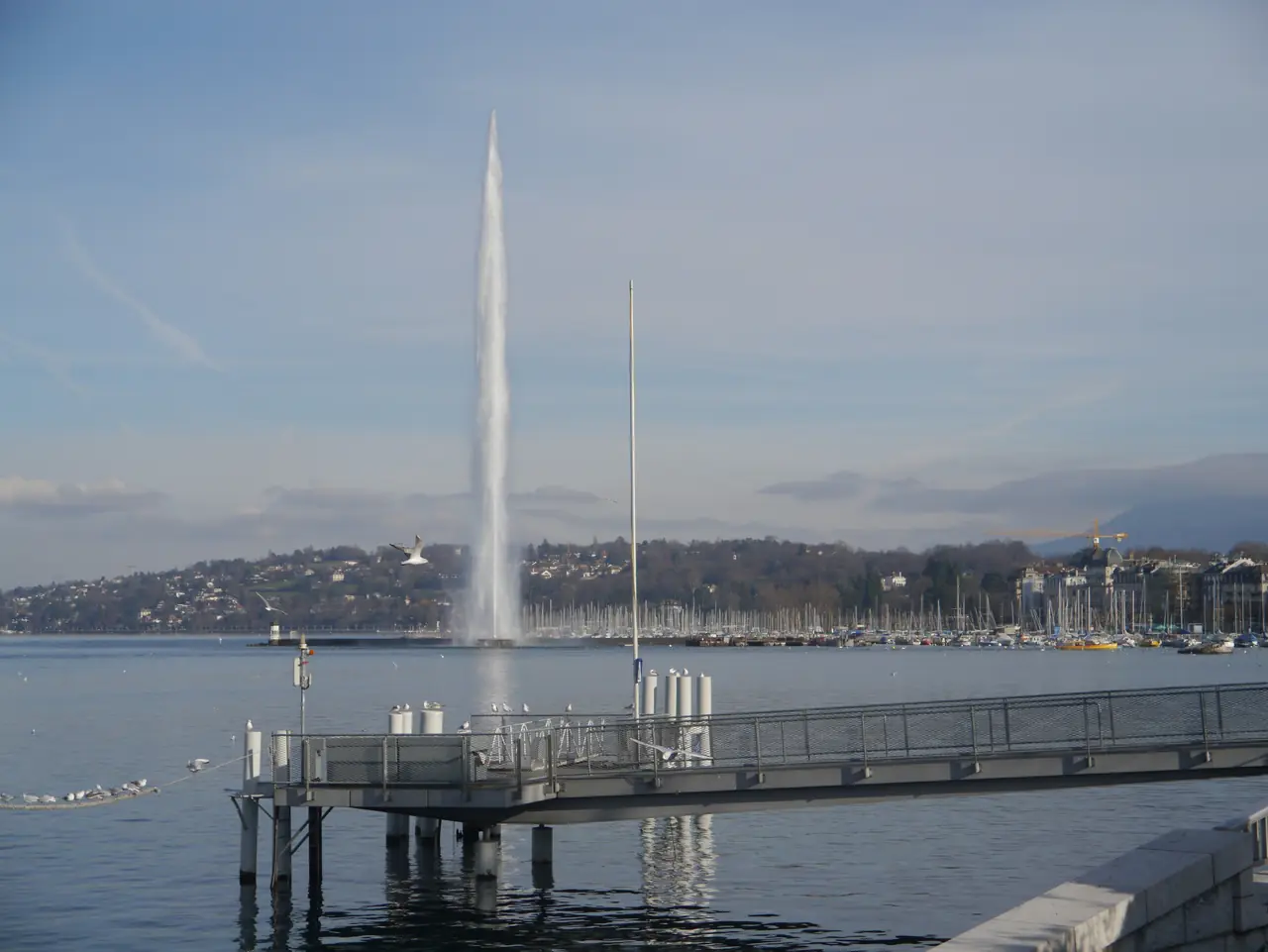
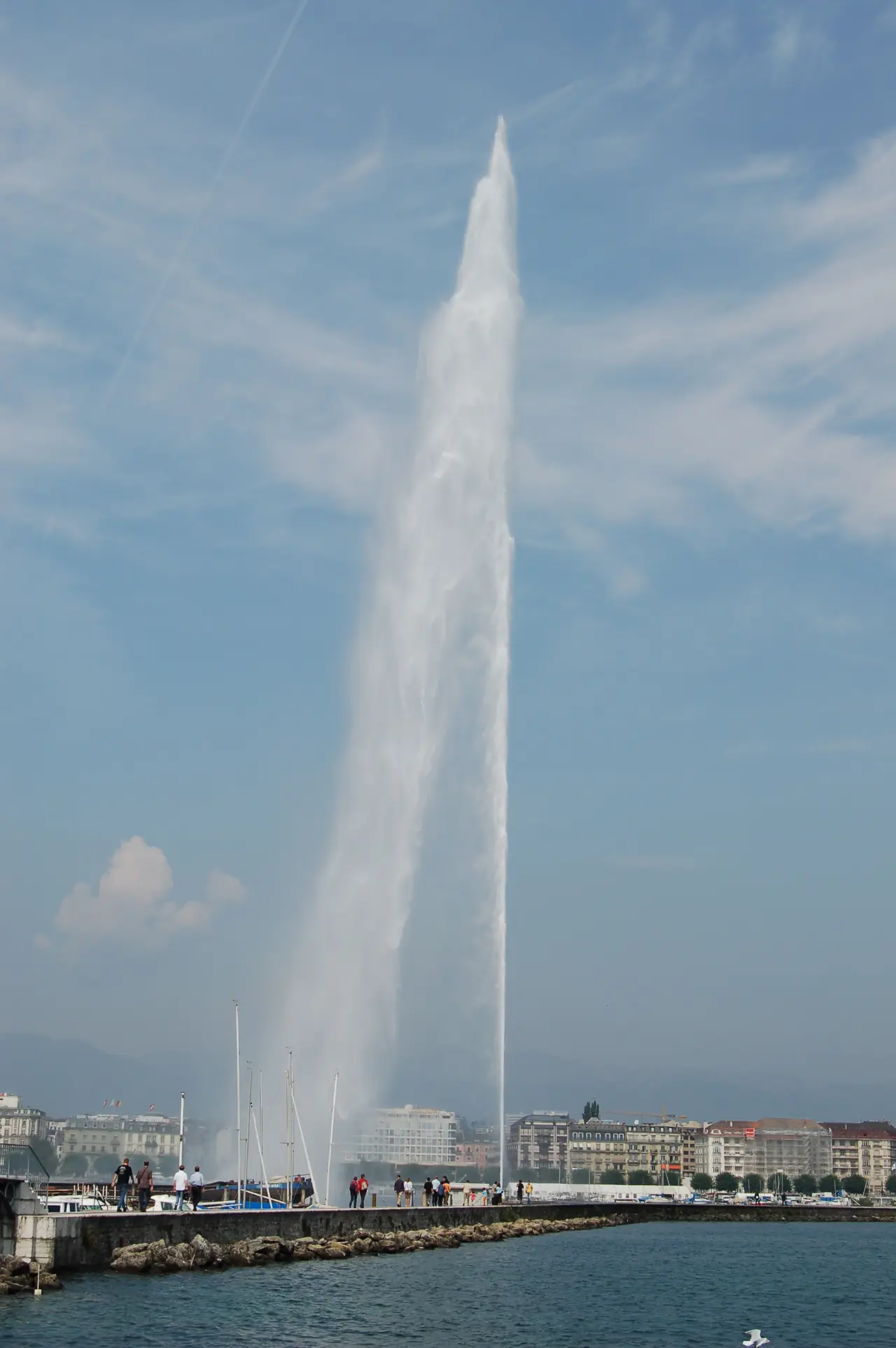
The figures explain the fascination. Every second, 500 litres of lake water leave the nozzle at about 200 kilometres per hour S1. At any given moment, about seven tonnes of water are suspended above the lake S5. Seen from the shore, the column looks almost solid, but up close it is a curtain of spray and mist.
The pumps work at 2,400 volts and consume one megawatt of power, with an electricity bill of about 510,000 Swiss francs a year S10. The figure sometimes repeated as one megawatt a year confuses power with annual consumption.
Visitors can walk along a stone jetty to the base of the jet S11. When the wind changes direction, the spray can soak anyone standing there S11. On sunny days, rainbows often form in the mist around the base.


When the jet stops
The jet does not always run. It cannot be switched on in very cold or windy weather, and its operators must stay alert so as to turn it off in time and avoid damage S7.
Its schedule therefore depends on the weather and the season, and switching it on is a daily decision rather than a fixed routine. SIG also offers a webcam so that anyone can watch the jet live S1.
A symbol of Geneva
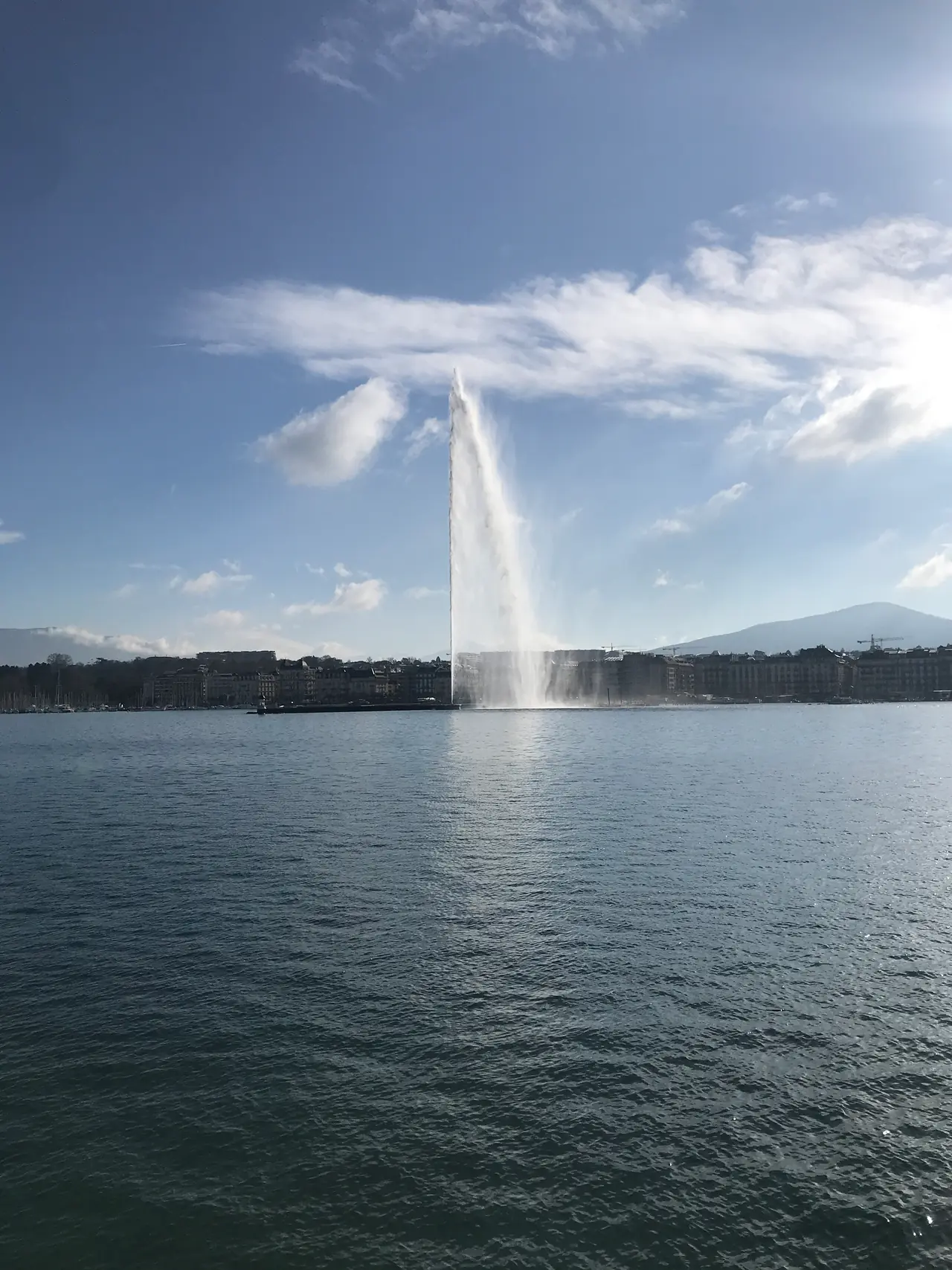
Geneva likes to point out that its jet may not be the tallest fountain in the world, but that it was the first of its kind S7. It appears on postcards, posters and countless photographs of the city. The comparison is less about height than about history: few fountains have defined the image of a city for so long.
SIG, which owns and maintains the jet, organises guided tours about its history, from its industrial origins to the pumping station S1. For many visitors, however, the best way to understand it is simply to stand on the quay and watch the column of water bend in the wind.
The story of the Jet d'Eau shows how an industrial object can become an identity. Whether it began as a safety valve or as a show, Geneva turned a column of water into its signature. It has watched the city become a capital of diplomacy and international organisations, and it remains the first image many visitors keep of it.


Frequently asked questions
How high is the Jet d'Eau?
It reaches about 140 metres, a height achieved after the new pumping station of 1951 S1.
Why was the Jet d'Eau created?
How much water does it use?
It throws 500 litres of lake water per second at about 200 kilometres per hour S1.
Does the Jet d'Eau run all year?
It depends on the weather: it cannot run in very cold or windy conditions S7.
Who runs the Jet d'Eau?
SIG, Geneva’s public utility, owns and maintains it S1.
Sources
- S1 SIG: The Jet d’eau, a symbol rich in history.
- S2 City of Geneva libraries: What is the history of the Jet d’eau?.
- S3 University of Geneva: Is Geneva’s Jet d’eau a fountain?.
- S4 Culture Trip: A brief history of the Jet d'Eau.
- S5 Geneva Tourism: The Jet d'Eau.
- S6 Wikipedia: Jet d'Eau.
- S7 Association Lémanique: The history of the Jet d’eau in Geneva.
- S8 Audiala: Jet d'Eau.
- S9 Correio Braziliense: How Geneva’s Jet d'Eau works.
- S10 Wikiwand: Jet d’eau.
- S11 Public Art Around the World: Jet d'Eau.
More in Switzerland