Mount of Olives: Three Thousand Years of Graves, Gardens and Prayers
- Local name
- Har HaZeitim (Hebrew) · Jabal al-Zaytun (Arabic)
- Type
- Ridge with cemetery and religious sites
- Continent
- Asia
- Country
- Disputed: East Jerusalem, under Israeli control since 1967
- City
- Jerusalem
- Location
- East of the Old City, across the Kidron Valley
- Cemetery
- Jewish burials for more than 3,000 years; about 70,000–150,000 graves
- Main sites
- Gethsemane · Church of All Nations (1924) · Dominus Flevit (1955) · Chapel of the Ascension · Tomb of Mary
- Olive trees
- Three of the Gethsemane trees dated to 1092, 1166 and 1198
- Date
- September 2022
- Photographer
- Maria Rosselló
- Published
- March 5, 2023
- Reviewed
- November 15, 2026
- Coordinates
- 31.7779, 35.2457
- More
- Wikipedia
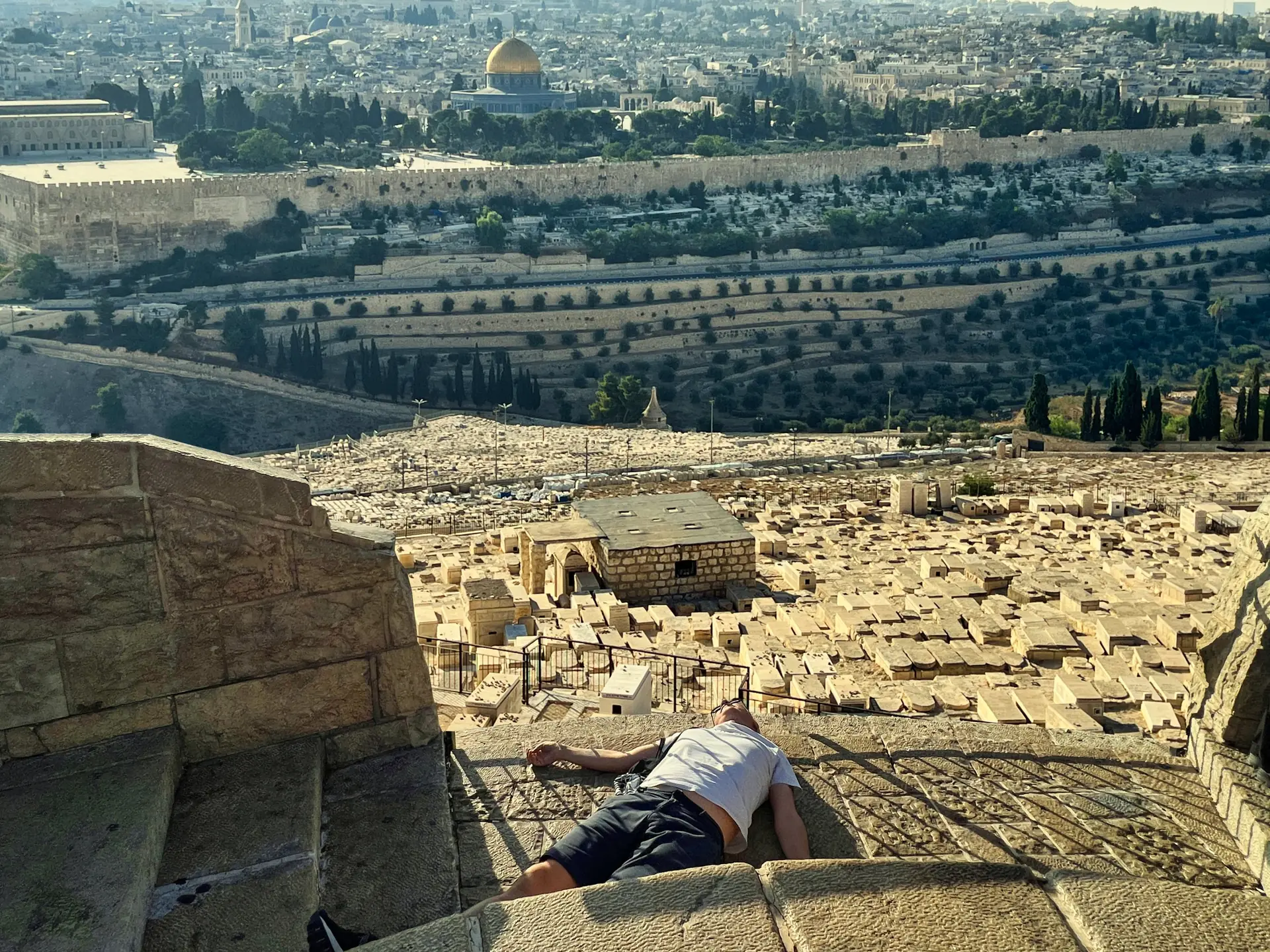
The Mount of Olives is a ridge east of the Old City of Jerusalem, separated from it by the Kidron Valley S8. The ridge stretches for about three kilometres S8. Its western slope faces the Temple Mount, and for many travellers it offers the first full view of the walled city S8.
Few hills concentrate so many traditions. The Mount of Olives holds the oldest Jewish cemetery in the world, the places where Christians remember the last night and the ascension of Jesus, and a site that is also part of Islamic history S4 S5. Each tradition has left its buildings, its graves and its stories on the same slope.
The name comes from the olive groves that once covered its slopes. Gethsemane, the garden at its foot, takes its name from an Aramaic word that means oil press S3.
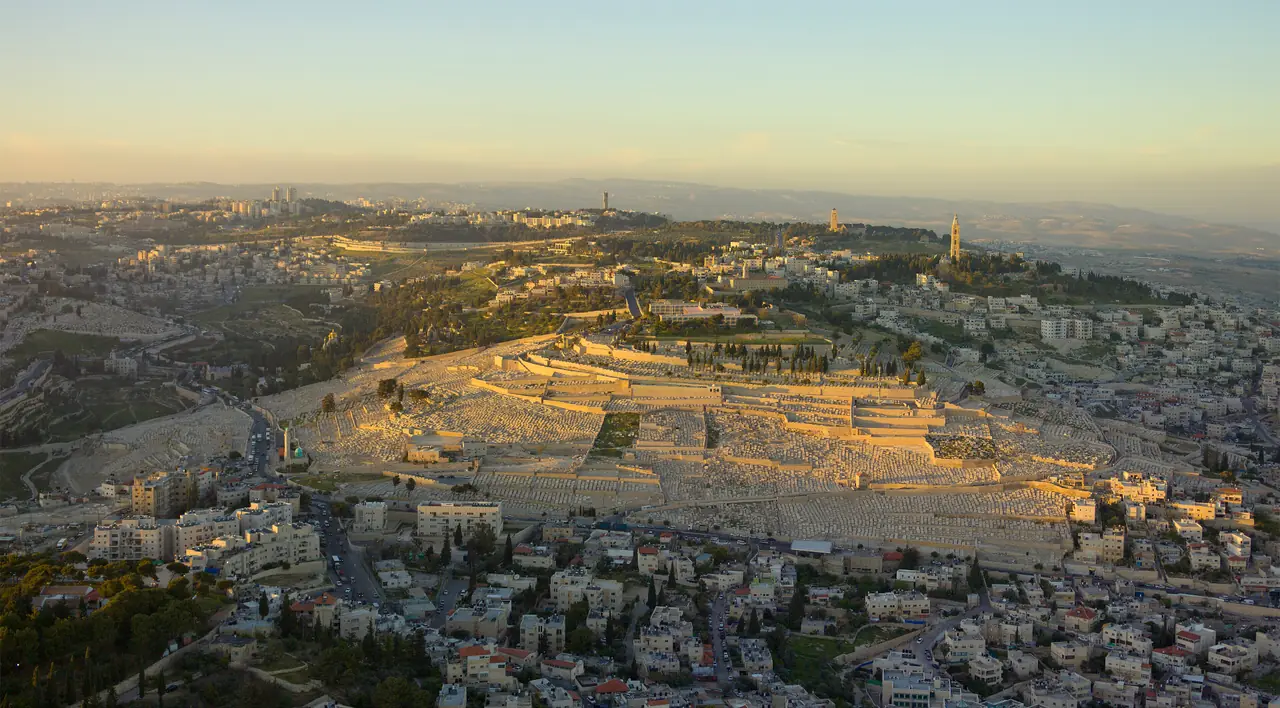

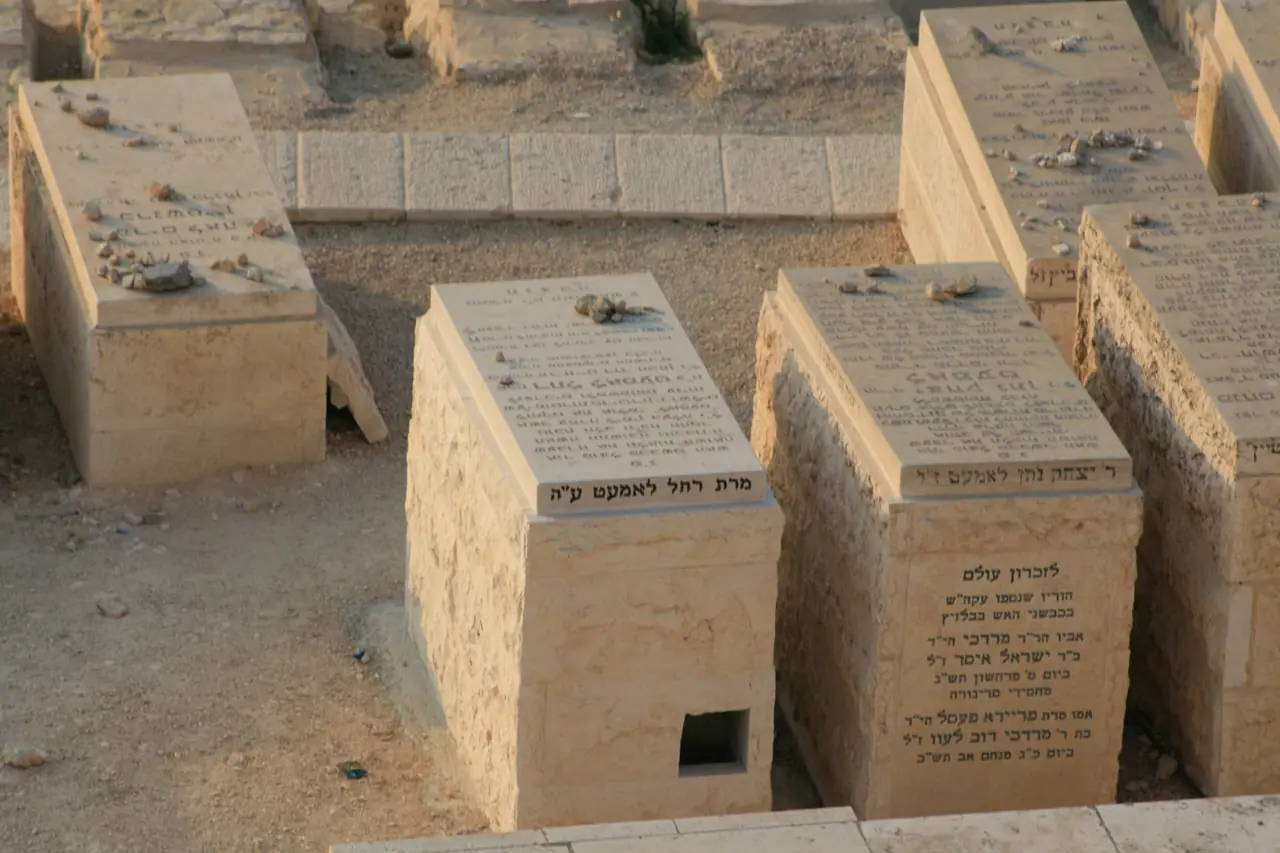
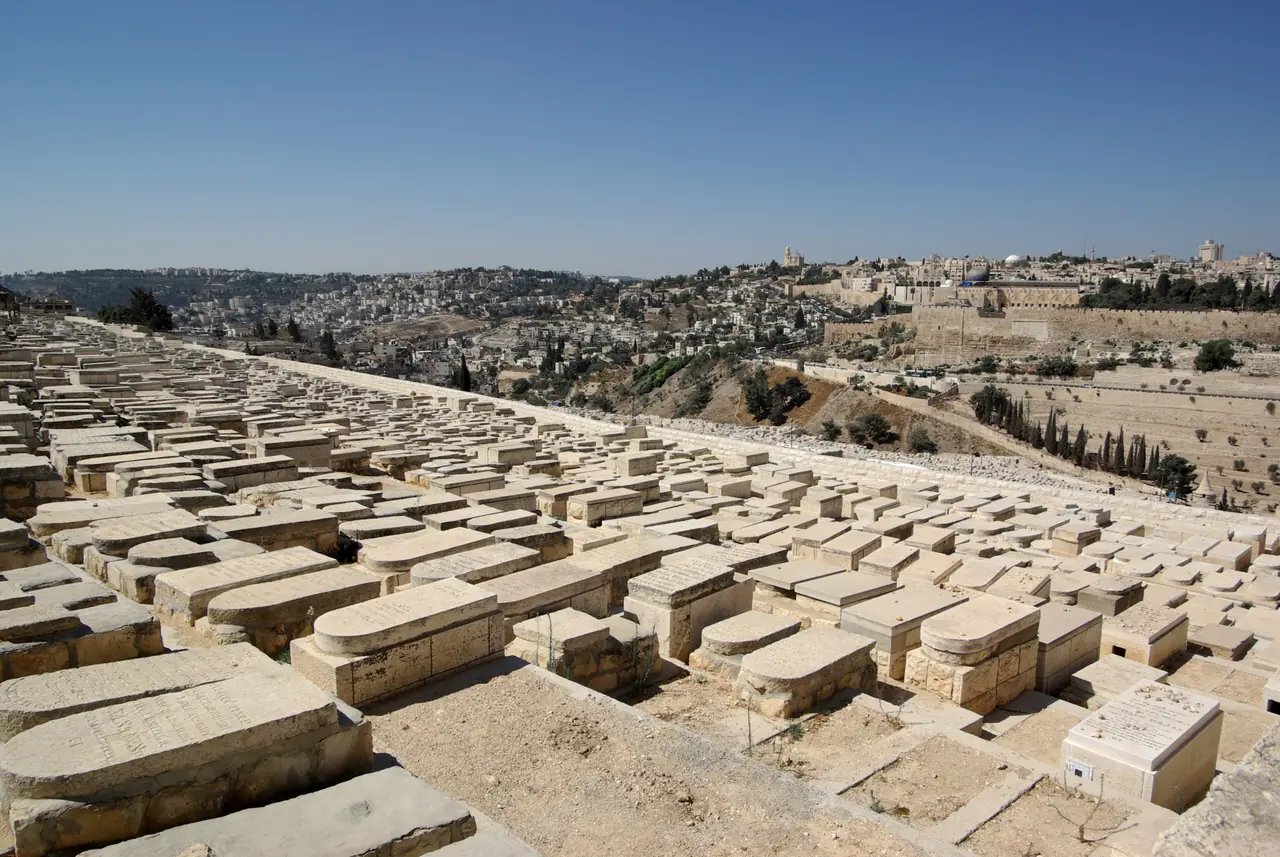
The western slope has been used for Jewish burials for more than 3,000 years, and tradition dates the first graves to the time of King David, around 1000 BCE S4. It is considered the largest and most important historic Jewish cemetery in the world S4. Its rows of pale stone tombs, facing the Temple Mount, form one of the most recognisable landscapes of Jerusalem.
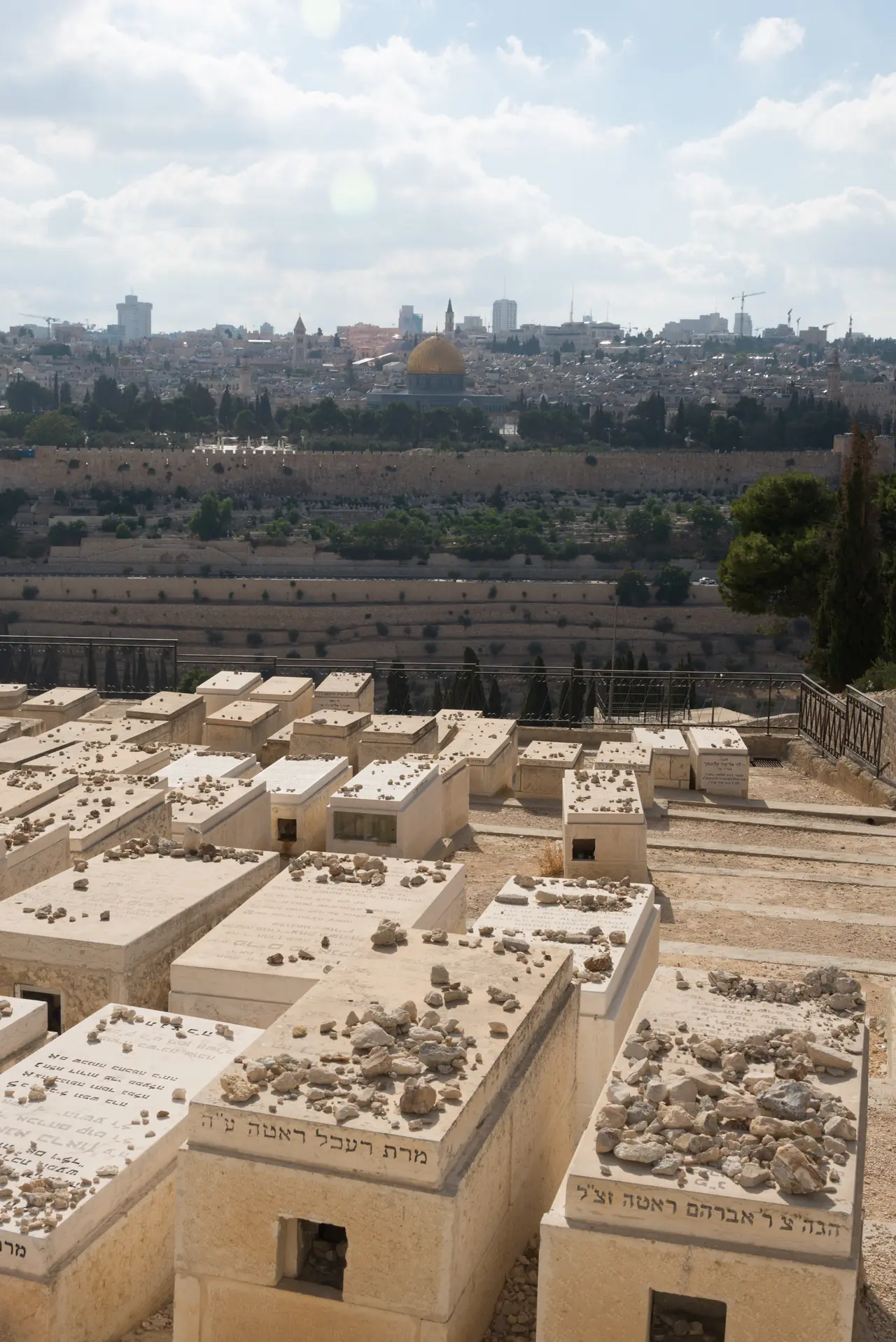
Estimates of its size vary: some sources speak of about 70,000 graves and others of about 150,000 S5 S4. Visitors often notice small stones placed on the tombs, a Jewish custom of remembrance.

Part of its importance comes from prophecy. According to the Book of Zechariah, the Messiah will arrive on the Mount of Olives before descending to redeem Jerusalem, which is why this slope has been so sought after as a burial place S9.
The cemetery has also suffered. During Jordanian rule between 1949 and 1967, about 38,000 graves were damaged, according to Jewish heritage sources S4. In 2019 the graves were documented with a mobile app created by BillionGraves, a partner of MyHeritage S4.

Gethsemane and its olive trees
At the foot of the hill lies Gethsemane, the garden where, according to the Gospels, Jesus prayed on the night of his arrest S1. Modern scholarship acknowledges that its exact location is unknown, but early Christians already came here to pray S1.
In 1681 three Croatian knights bought the garden and gave it to the Franciscans, who still own it S1. Its fenced grove holds eight ancient olive trees S1.
A study by Italy’s National Research Council, presented in 2012, dated samples from three of them by radiocarbon to 1092, 1166 and 1198 S3. DNA analysis showed that the trees came from the same parent plant S3. Dating olive trees is difficult, because the oldest wood at the centre of their trunks has usually rotted away S1.
The researchers stressed that the results do not settle whether these are the trees of the Gospel story, because olive trees can grow back from their roots after being cut down S3. A later paper by Mauro Bernabei linked their planting to the twelfth century, when the Crusaders were restoring Christian memorial sites in the Holy Land S2. The Custos of the Holy Land, Pierbattista Pizzaballa, put it differently: the question is not whether these are the same trees, but whether this is the place described in the Gospels S3.
Barluzzi’s churches
Beside the garden stands the Church of All Nations, also called the Basilica of the Agony, built over the rock where Jesus is said to have prayed S5. Completed in 1924, it rests on the foundations of a fourth-century Byzantine basilica and a twelfth-century Crusader chapel S5. Its façade is supported by a row of Corinthian columns S7.
Its name recalls the many countries whose donations paid for it S7. The church was designed by the Italian architect Antonio Barluzzi, who also built another sanctuary higher up the slope S12.
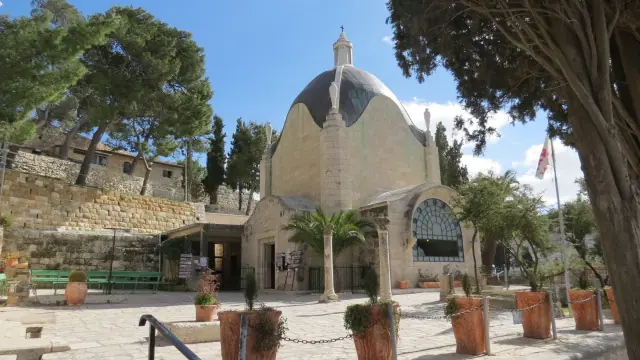
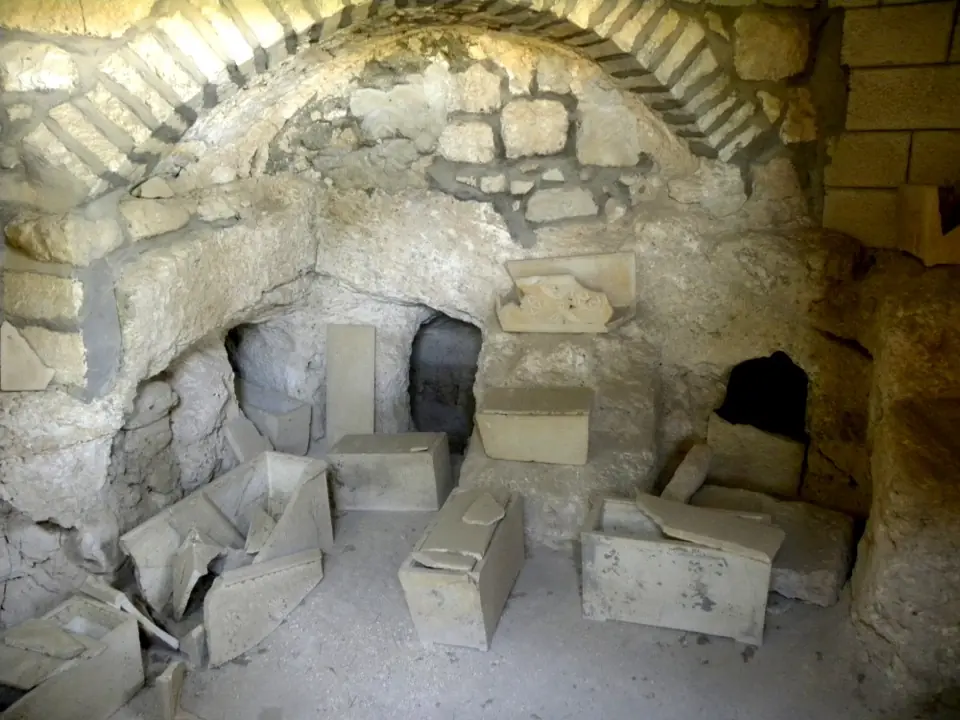
Halfway up stands Dominus Flevit, built in 1955 to Barluzzi’s design in the shape of a teardrop, recalling the Gospel episode in which Jesus wept over Jerusalem S6. It rises on the remains of a fifth-century Byzantine church, in an area of tombs dating back as far as 1600 BCE S6. The window behind its altar frames a view of the Old City S6.


Ascension and other traditions
Near the summit, the Chapel of the Ascension marks the place from which, according to Christian tradition, Jesus ascended into heaven S5. It now stands inside the courtyard of a twelfth-century Ayyubid mosque, a sign of how different faiths have overlapped on this hill S5.
Other sanctuaries mark further episodes. In the valley below, the Tomb of Mary is a dimly lit underground church where a Christian tradition places the burial of the mother of Jesus S11. Higher up stand the Russian Orthodox Church of Mary Magdalene and the Church of the Pater Noster, which commemorates the prayer Jesus taught his disciples S5 S11.
Jewish tradition adds another image. The olive branch that Noah’s dove brought back after the flood is said to have been plucked from a tree on this mountain S9.
A disputed place
The Mount of Olives lies in East Jerusalem S7. The area was under Jordanian control from 1949 to 1967 and has been under Israeli control since the war of 1967 S4 S10.
Israel extended its administration to East Jerusalem after 1967 and considers the whole city its capital S10. Most of the international community has not recognised that annexation, and the prevailing view, shared by the European Union, is that the status of the city must be settled through negotiation S10. The Palestinians, for their part, seek East Jerusalem as the capital of a future state S10.
That reality is visible on the ground. Holy sites, neighbourhoods and cemeteries of different communities lie side by side on a single ridge, and the hill remains a place of religious devotion as well as political tension.
The view from the top
From the top, the panorama takes in the Kidron Valley, the walls of the Old City and the Temple Mount S8. It is one of the classic viewpoints over Jerusalem.
Sunrise and late afternoon are favourite times to visit, when the low light falls on the stone of the city and on the thousands of graves on the slope below. The walk down from the summit to Gethsemane follows a steep lane that passes most of the sites described here.

The Mount of Olives is a place where the dead, the faithful and the political history of Jerusalem meet. Its ancient olive trees, which have outlived crusades and empires, are a reminder of how long this hill has been watched over.
Frequently asked questions
Why is the Mount of Olives important?
How many graves are there on the Mount of Olives?
How old are the olive trees of Gethsemane?
Three of the eight trees were dated to 1092, 1166 and 1198, so they are about 900 years old S3.
Who designed the Church of All Nations?
Which country is the Mount of Olives in?
It lies in East Jerusalem, under Israeli control since 1967; most of the international community has not recognised the annexation, and its status is disputed S10.
Sources
- S1 Wikipedia: Gethsemane.
- S2 FAO AGRIS: The age of the olive trees in the Garden of Gethsemane (Bernabei, 2015).
- S3 Sunday Times (Reuters): Olive trees of Gethsemane among oldest in world.
- S4 MyHeritage: Mount of Olives Jewish Cemetery.
- S5 Madain Project: Mount of Olives.
- S6 See the Holy Land: Church of Dominus Flevit.
- S7 Wikipedia: Church of All Nations.
- S8 Israel Ministry of Tourism: Mount of Olives.
- S9 JewishPress: Mount of Olives trees are world’s oldest.
- S10 Gulf News (AFP): Occupied Jerusalem at core of conflict.
- S11 See the Holy Land: Mount of Olives sites.
- S12 VoiceMap: Churches and graves of the Mount of Olives.
More in Israel
 UNESCO WH