Hermitage Museum: Catherine the Great’s Collection in Saint Petersburg
- Local name
- Государственный Эрмитаж (Gosudarstvennyj Ermitazh)
- Type
- Art and culture museum
- Continent
- Europe
- Country
- Russia
- City
- Saint Petersburg
- Location
- Palace Embankment and Palace Square
- Founded
- 1764, Catherine the Great
- Public opening
- 1852
- Collection
- About three million objects
- Visitors
- 2,812,913 (2022)
- UNESCO
- Historic Centre of Saint Petersburg (1990) · My World Heritage list
- Date
- August 2010
- Photographer
- Merche Mateo
- Published
- November 12, 2021
- Reviewed
- November 15, 2026
- Coordinates
- 59.9398, 30.3146
- More
- Wikipedia
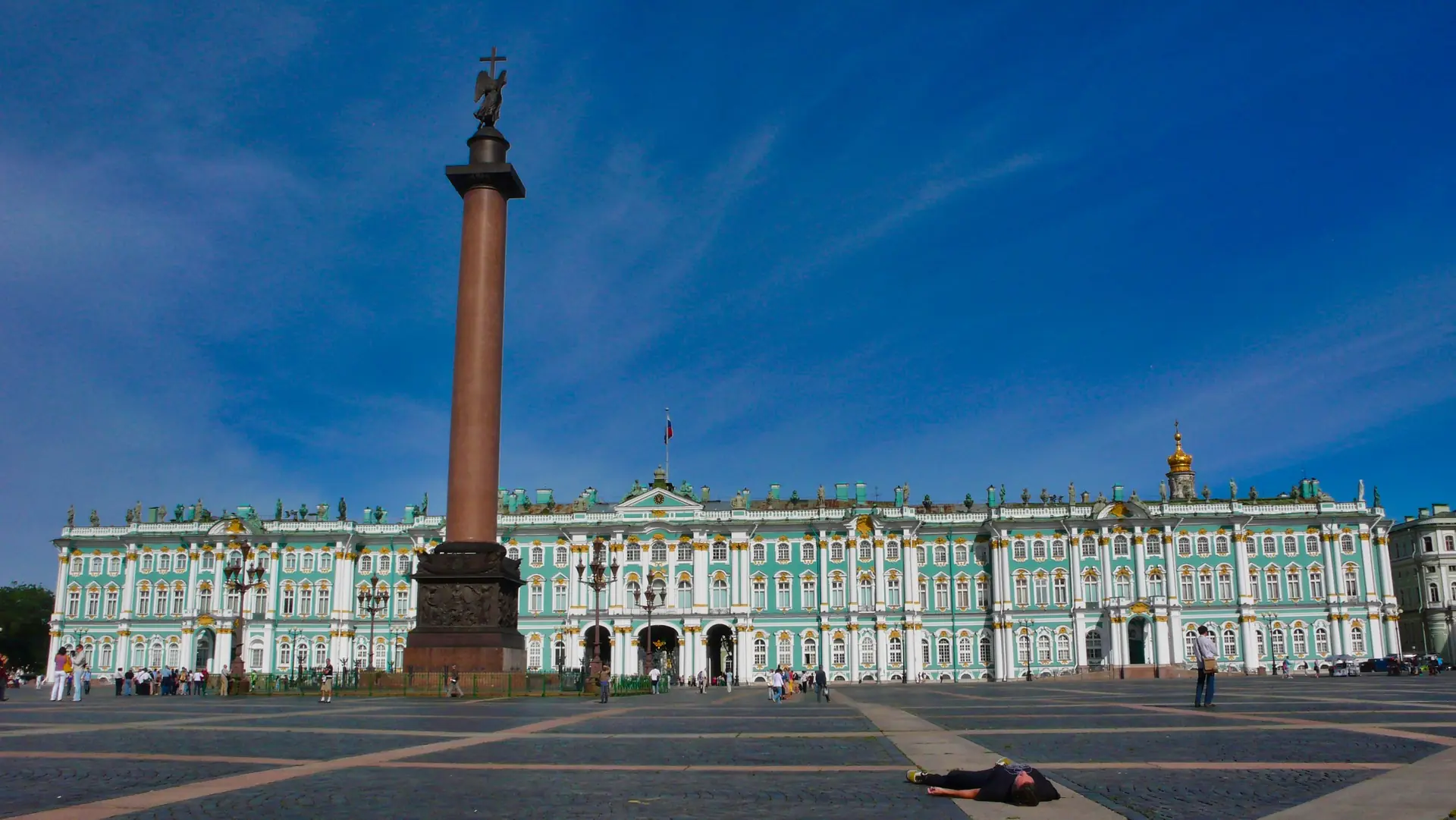
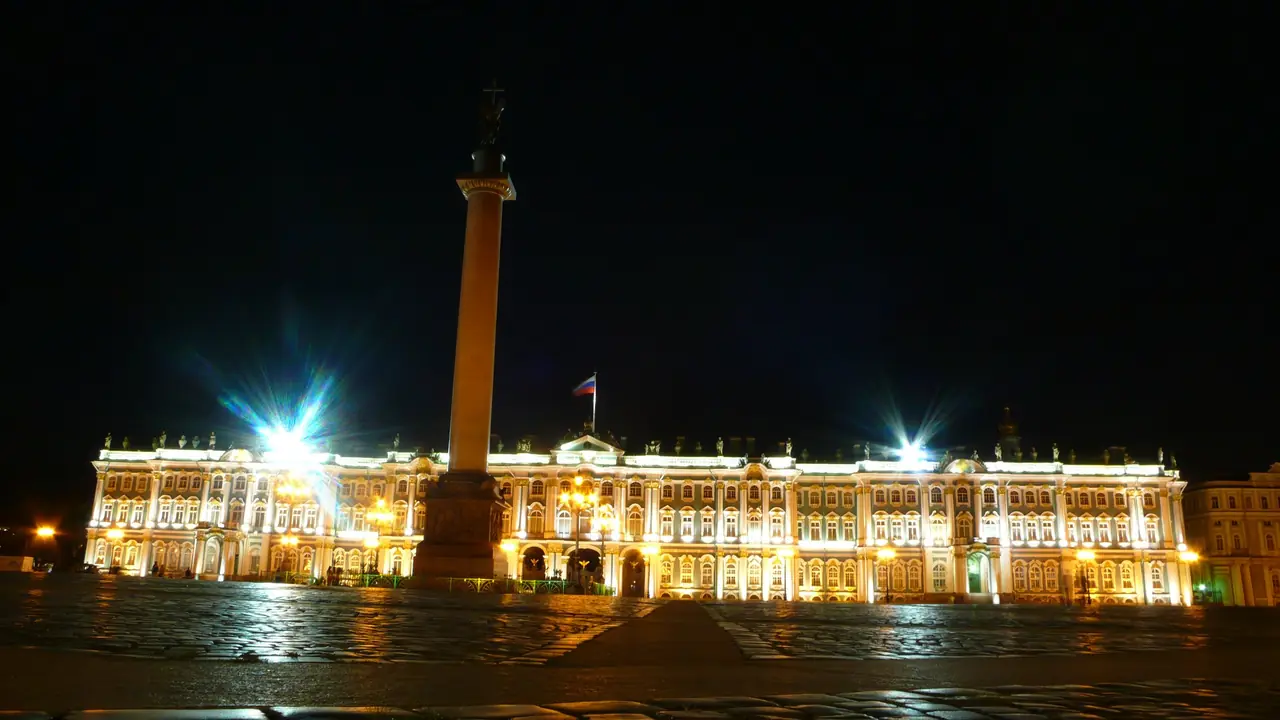
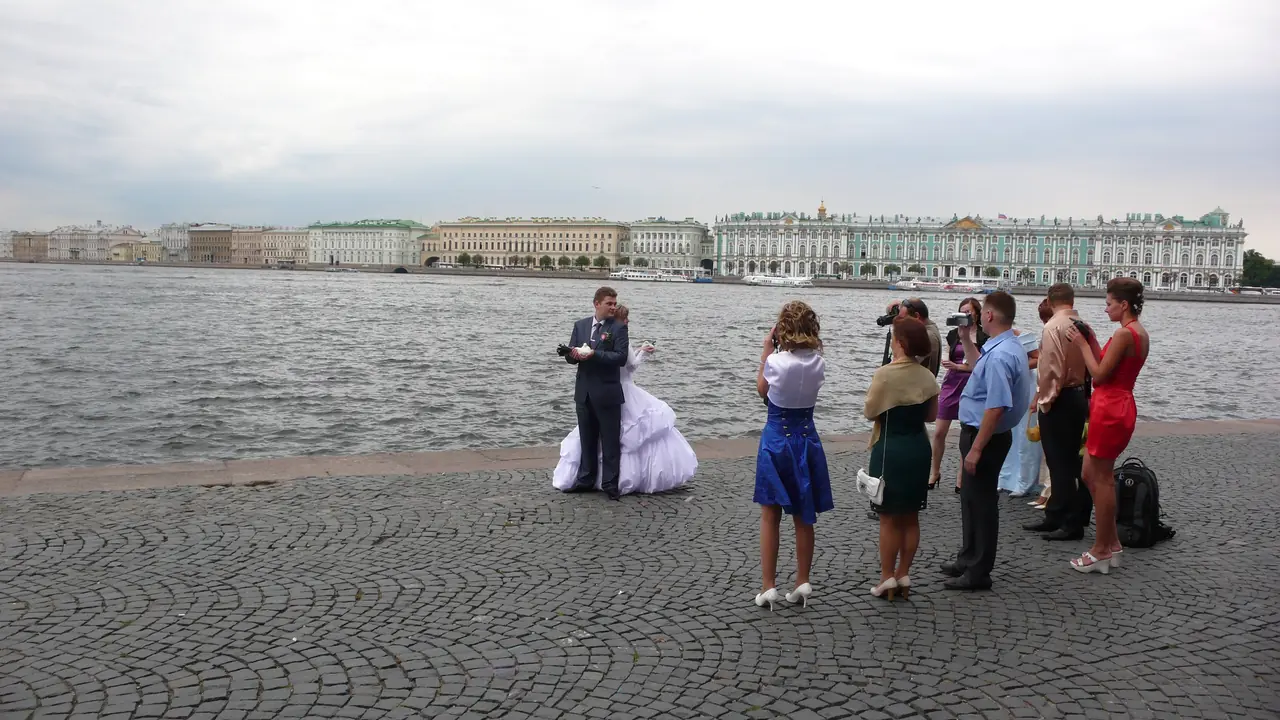
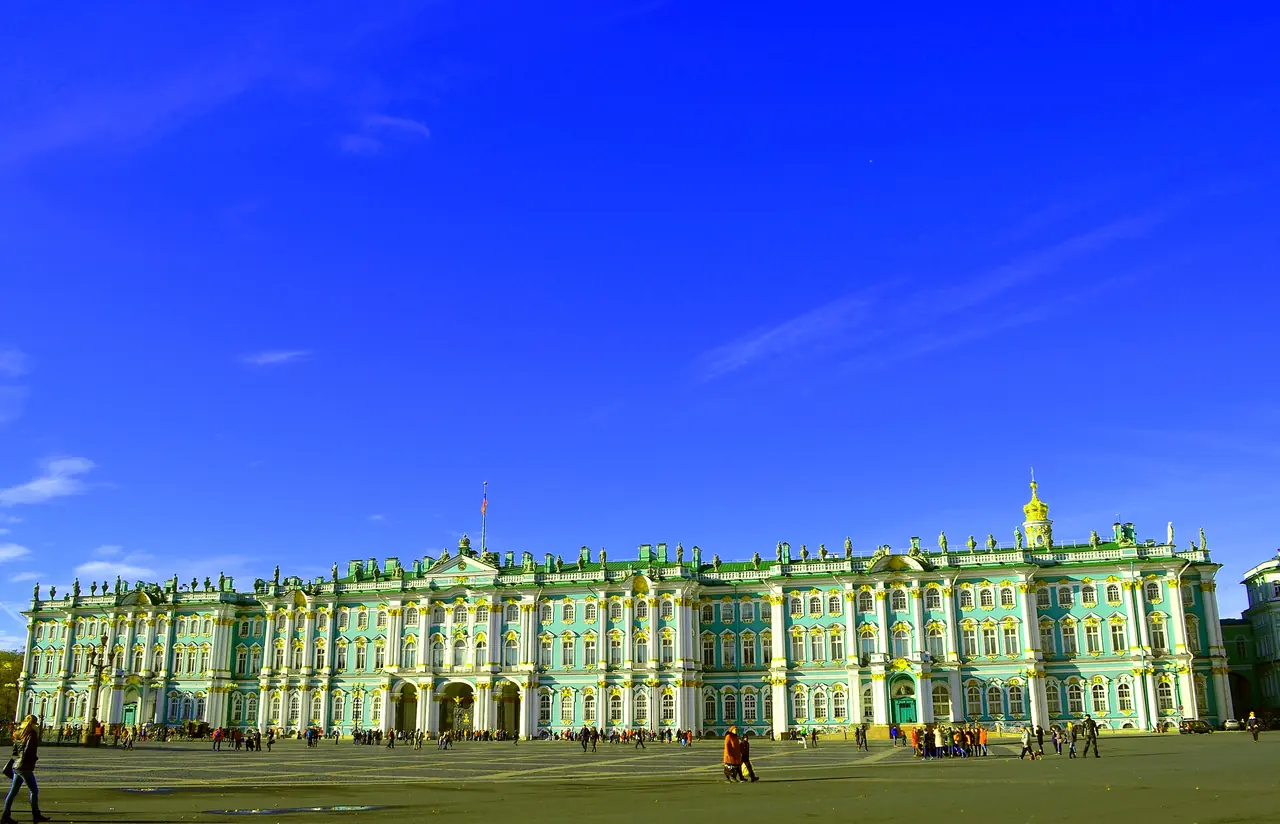
The State Hermitage Museum is a museum of art and culture in Saint Petersburg, Russia S11. It holds one of the largest collections of paintings in the world and some three million objects, of which only a small part is on display S11 S1. Its pale turquoise palace on the banks of the Neva is one of the symbols of the city.
About a third of those three million items are coins and medals in its numismatic collection S1. The rest cover the history of art and culture from the Stone Age to the present S3. It would take years to see every object in the collection.
A collection born in 1764
The museum’s story begins in 1764, when Empress Catherine the Great acquired a large collection of paintings from the Berlin merchant Johann Ernst Gotzkowsky S11. That purchase is considered the founding moment of the Hermitage S1. The paintings had originally been intended for the King of Prussia, Frederick the Great.
Catherine kept her growing collection in private apartments next to the Winter Palace S10. The name Hermitage comes from the French word for a place of solitude S10. For the empress, it was a private retreat where she could enjoy her art with a few guests.
At first, only the Small Hermitage housed the collection S1. It was built between 1764 and 1775 for Catherine by Jean-Baptiste Vallin de la Mothe and Yuri Felten S2. Its hanging gardens connected the pavilions above the ground floor.
The empress went on buying entire collections across Europe, and the space soon became too small. The Hermitage grew with each new acquisition, and new buildings were added to hold it. By the end of her reign, the imperial collection was one of the largest in Europe.
Five buildings, one museum
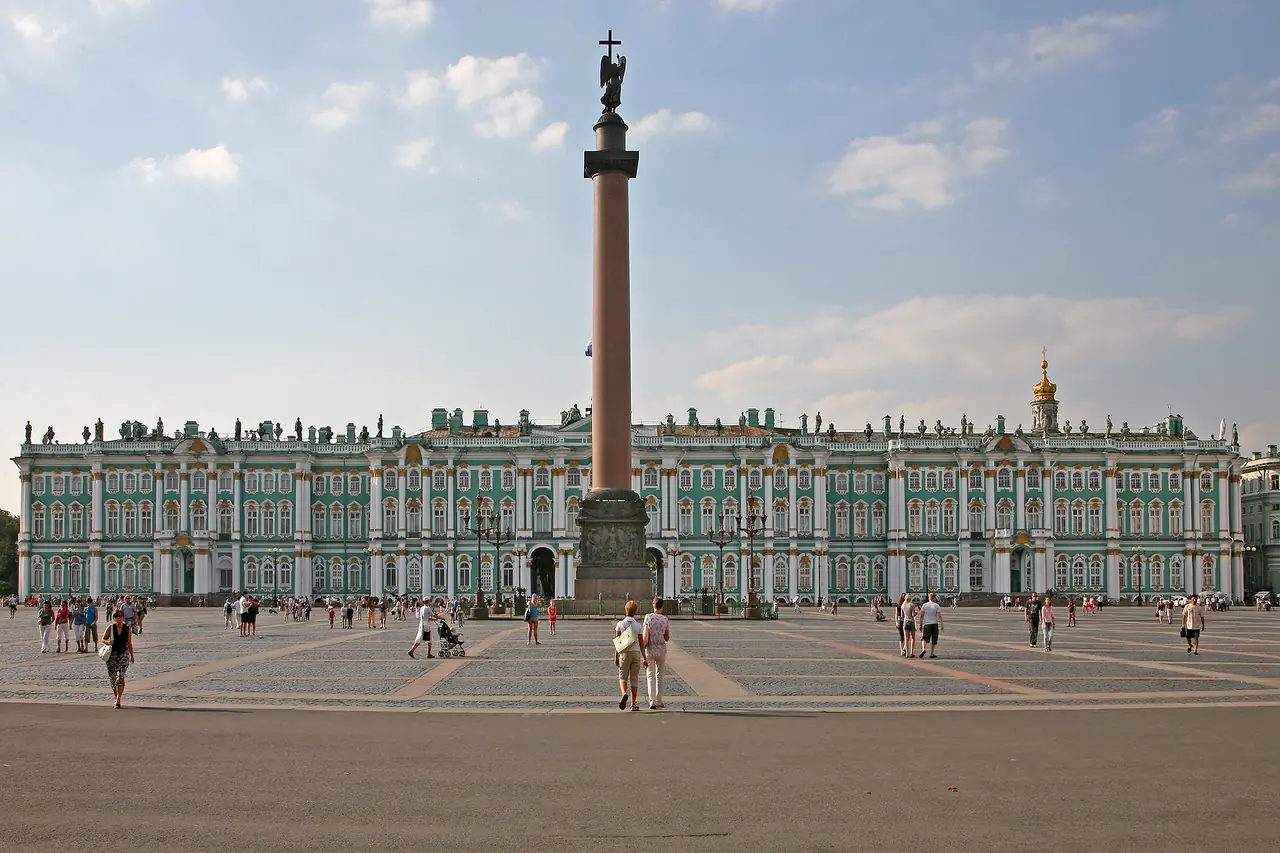
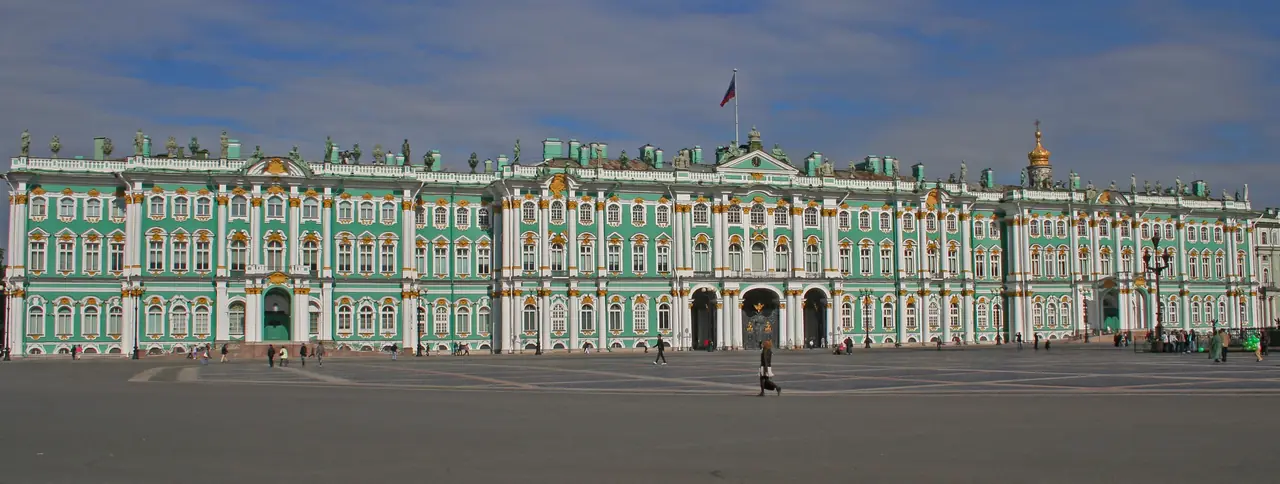
Today the main museum complex occupies six historic buildings along the Palace Embankment S11. Five of them are open to the public: the Winter Palace, the Small Hermitage, the Old Hermitage, the New Hermitage and the Hermitage Theatre S8. Together they form a continuous facade along the river.
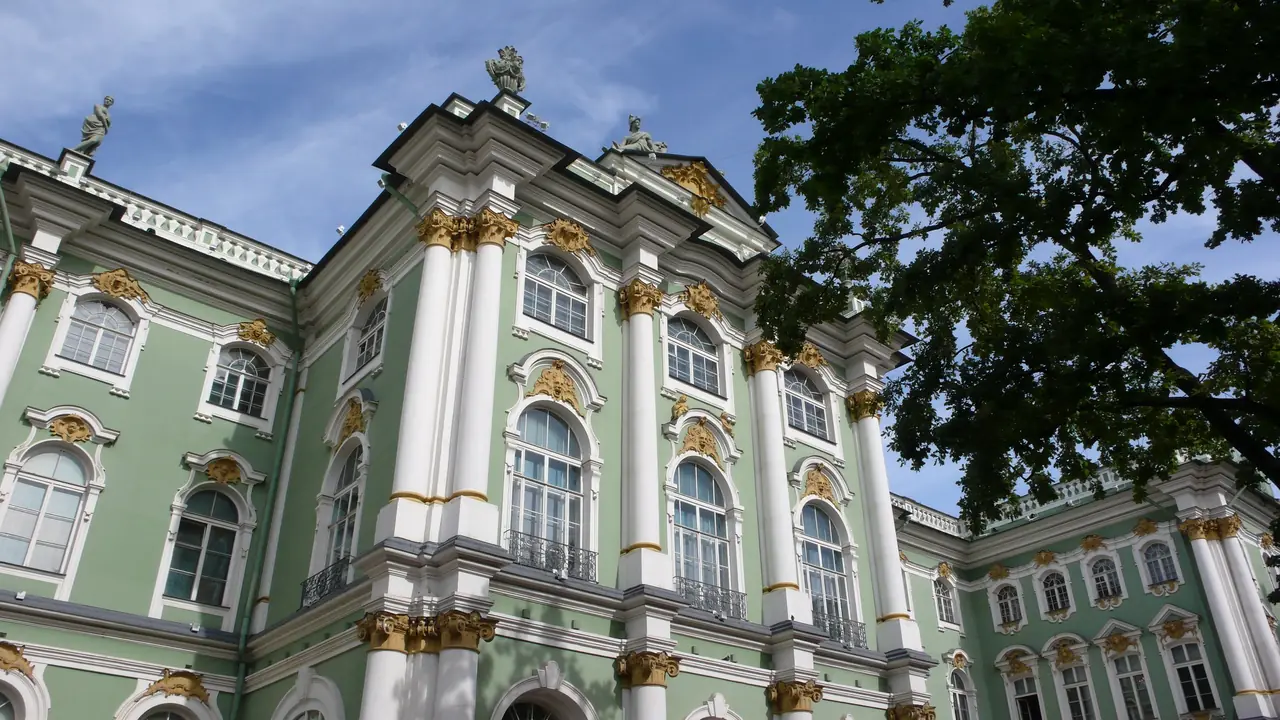
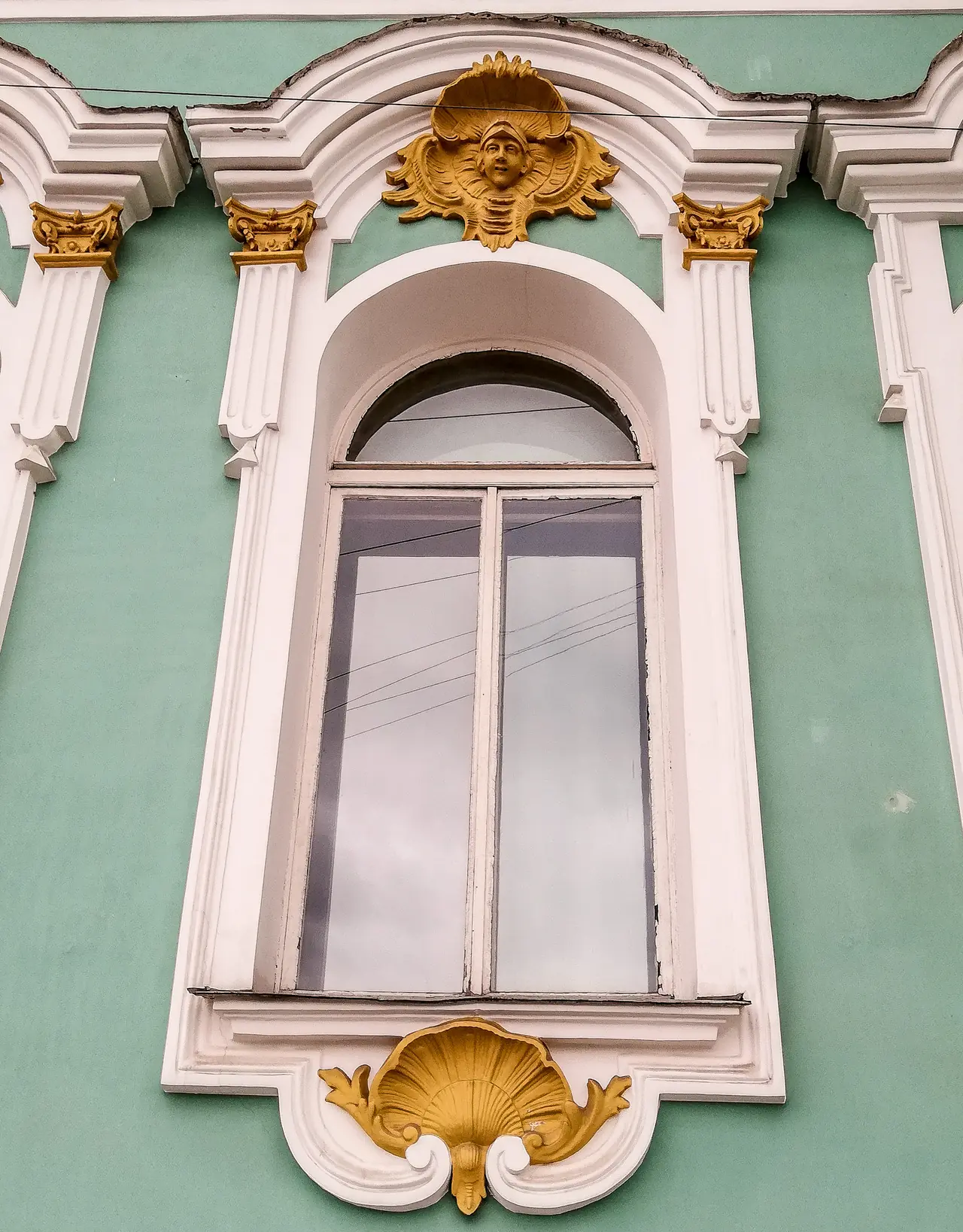
The oldest is the Winter Palace, built between 1754 and 1762 by Francesco Bartolomeo Rastrelli S2. It was the official residence of the tsars and a masterpiece of Russian Baroque. Its green, white and gold facades face both the river and Palace Square.
Yuri Felten built the Great, or Old, Hermitage between 1771 and 1787, and the Hermitage Theatre was built between 1783 and 1787 to designs by Giacomo Quarenghi S4. The New Hermitage, by Leo von Klenze, was completed in 1851 S5. Each architect left the mark of his own period on the complex.
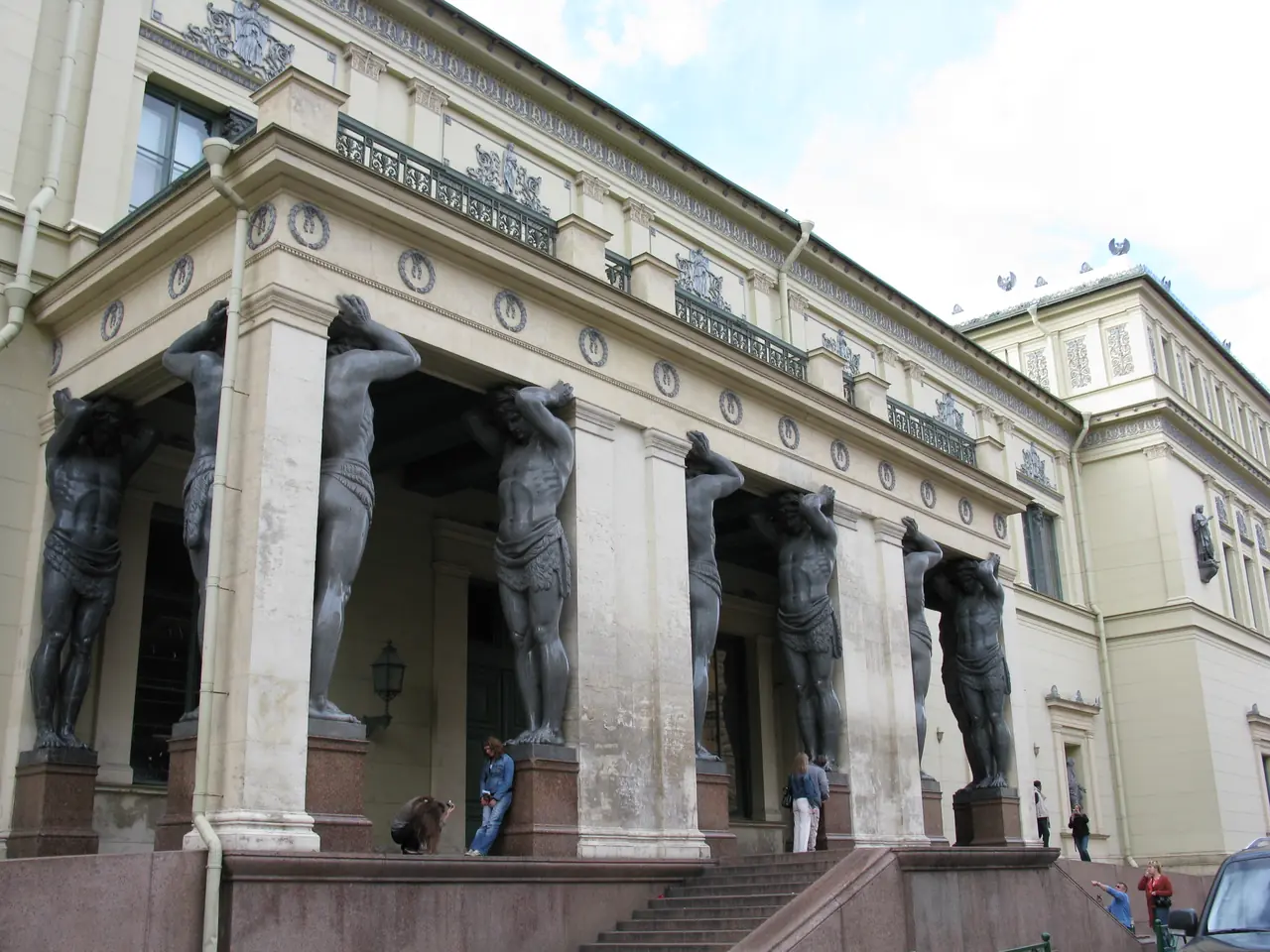
Until the 1920s, the museum’s entrance was a portico supported by atlantes, five metres high and carved from grey Serdobol granite from Finland, on the southern facade of the New Hermitage S7. The atlantes are still one of the most photographed details of the complex. Many visitors stop to photograph them before entering.
Opening the doors
In 1837 a great fire damaged the Winter Palace, which was then restored S6. The Hermitage collection, housed in the adjoining buildings, continued to grow. Many halls of the palace were rebuilt in a new style after the fire.
Under Emperor Nicholas I, a building was designed specifically as a public museum S6. The New Hermitage opened its doors to the public in February 1852 S6 S5. For the first time, the imperial collection could be seen by the public.
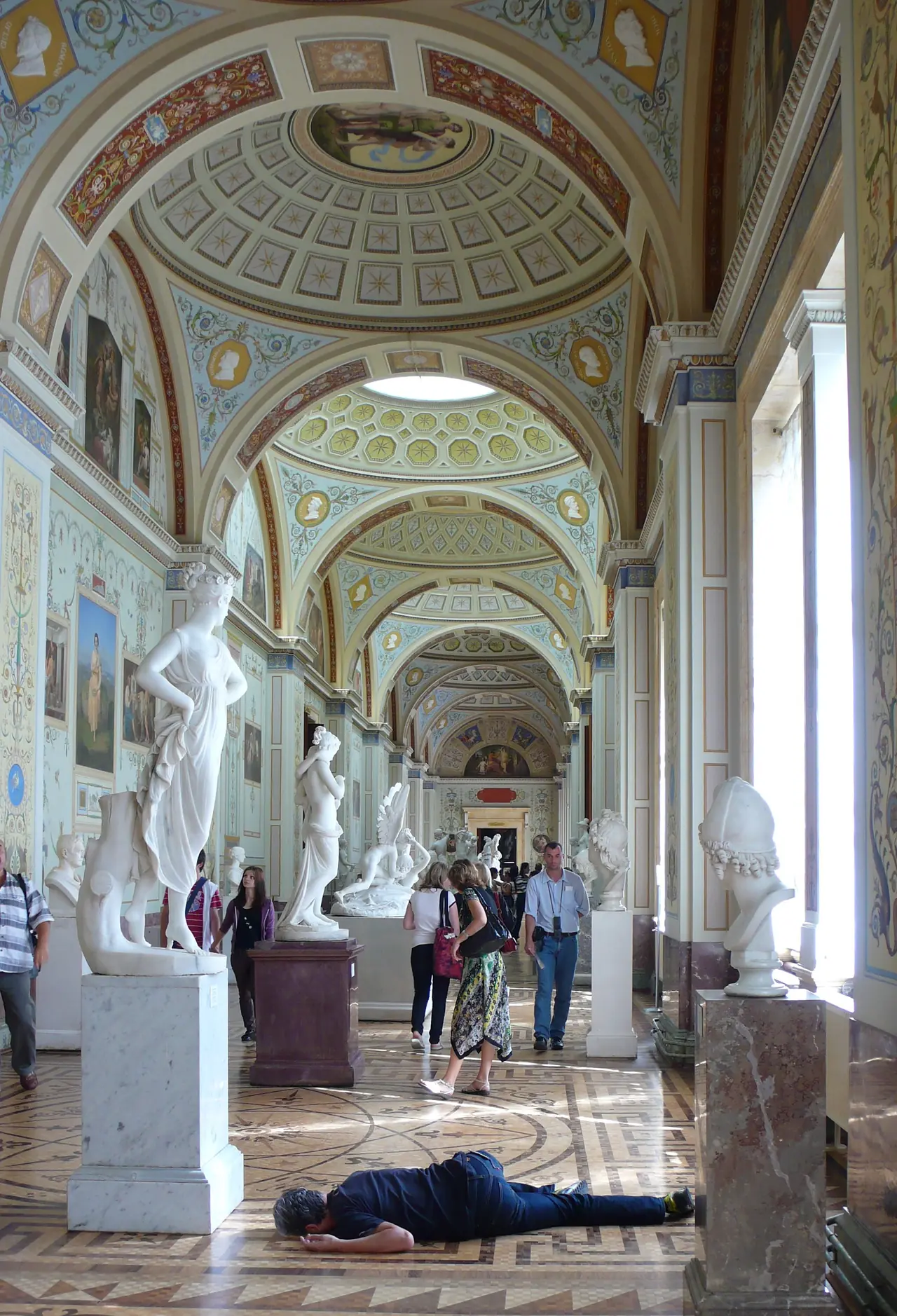
Klenze, known for his museums in Munich, designed the ground-floor interiors in the Greek revival style, with painted polished stucco and columns of marble and granite S1 S10. The building was conceived as a temple of art. Skylit halls were designed specially to display the paintings.
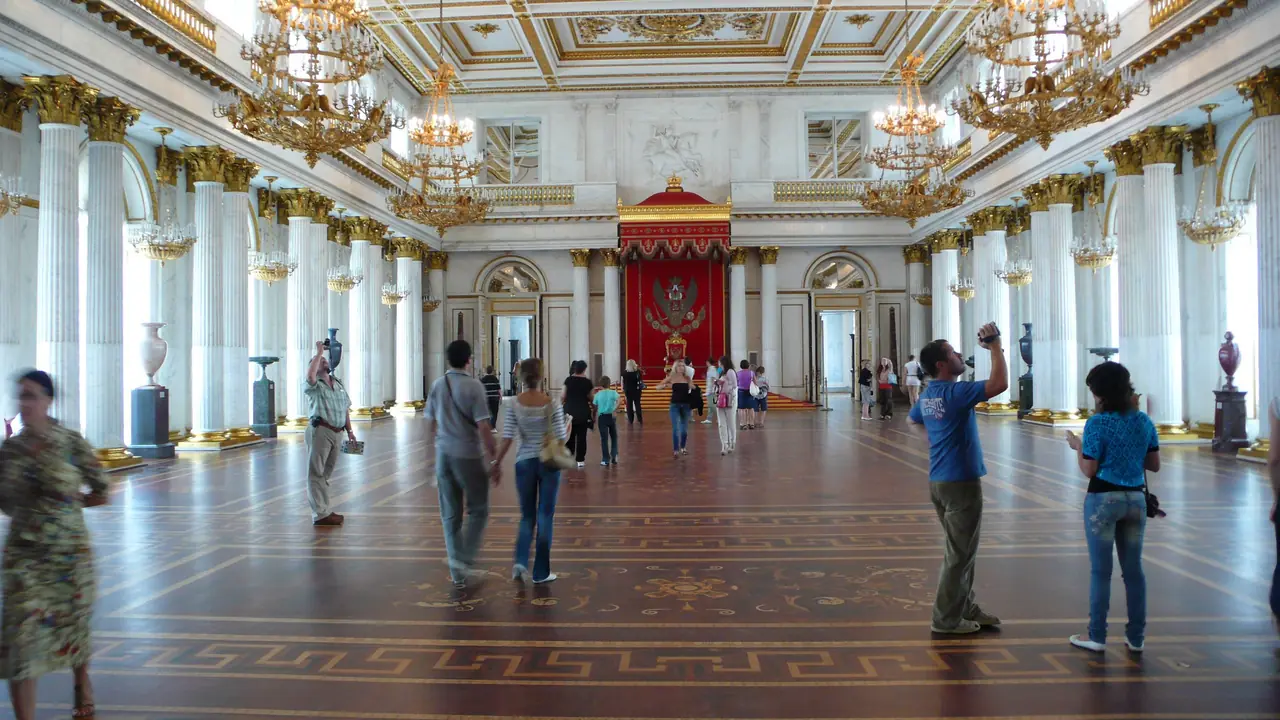
In 1917, after the Russian Revolution, the Winter Palace was declared a national museum S10. From then on, the imperial residence became part of the Hermitage. Its state rooms now form part of the visit.
Treasures of the collection
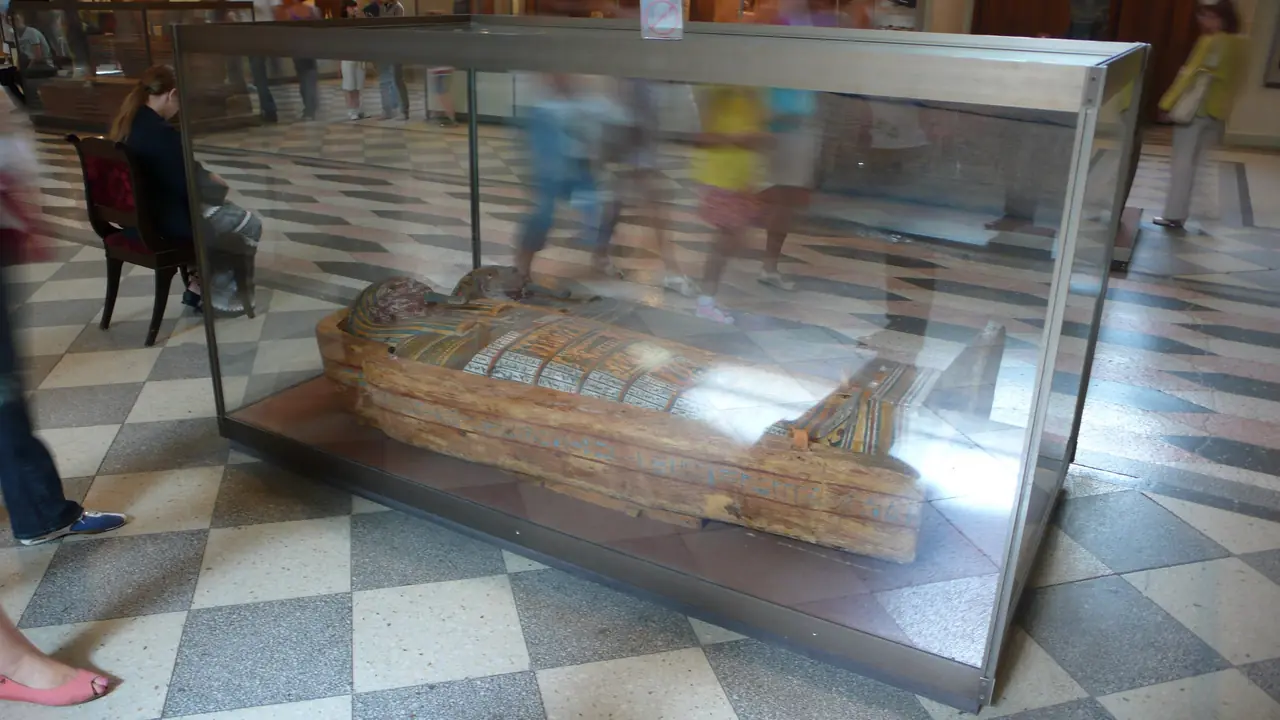
The galleries hold Egyptian antiquities, classical sculpture, European old masters, Russian decorative arts and modern painting. Since 1940, the Egyptian collection has occupied a large hall on the ground floor of the Winter Palace S8. The variety of the collections reflects the tastes of the tsars over two centuries.
The European paintings include works by masters such as Leonardo da Vinci, Rembrandt and Titian, as well as Spanish painters such as Zurbarán, Ribera and Goya S8. Each school occupies its own rooms, often in the former imperial halls. Visitors often spend hours in the rooms of Dutch and Italian painting alone.
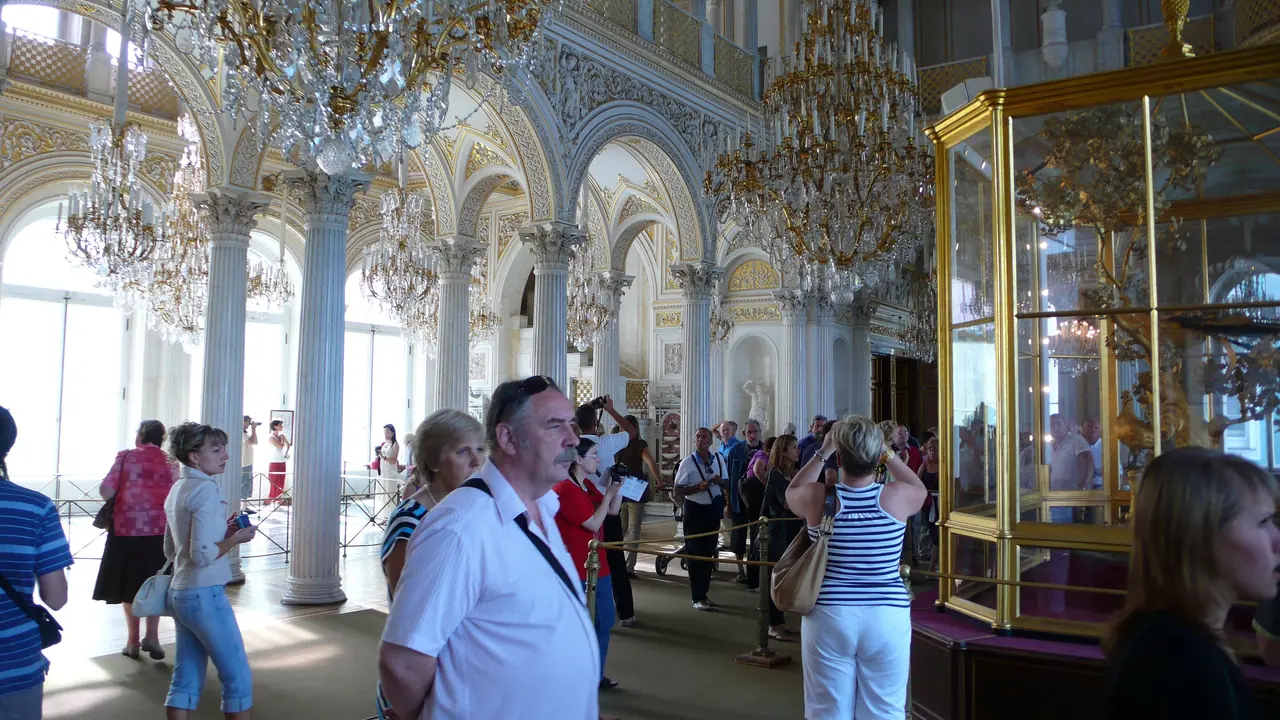
One of the most famous objects is the Peacock Clock, made in the 1770s by the English jeweller James Cox and commissioned by Prince Grigory Potemkin S9. Its gilded peacock, cockerel and owl move when the mechanism is wound S9. It is one of the few eighteenth-century automata still in working order.
A changing museum
The clock stands in the Pavilion Hall of the Small Hermitage, designed by Andrei Stackenschneider in 1858 S1. It is wound up every Wednesday evening S9. Watching it in motion has become a small event for visitors.
In recent years the museum has expanded beyond the Palace Embankment. It now also includes the eastern wing of the General Staff Building on Palace Square and the Menshikov Palace S11. The General Staff Building houses much of the museum’s modern art.
The colour of the Winter Palace has also changed over time. Its present pale turquoise dates from restorations in 1946 S10. In earlier periods the palace was painted in warmer colours.
In 2022 the Hermitage received 2,812,913 visitors S1. The historic centre of Saint Petersburg, including the Winter Palace, was inscribed on the UNESCO World Heritage List in 1990 S3. The city itself had been founded by Peter the Great in 1703.
Visiting the Hermitage
The scale of the museum can overwhelm first-time visitors. It is advisable to choose a few rooms or collections in advance rather than trying to see everything. Crowds are usually lighter in the late afternoon and on days with extended opening hours.
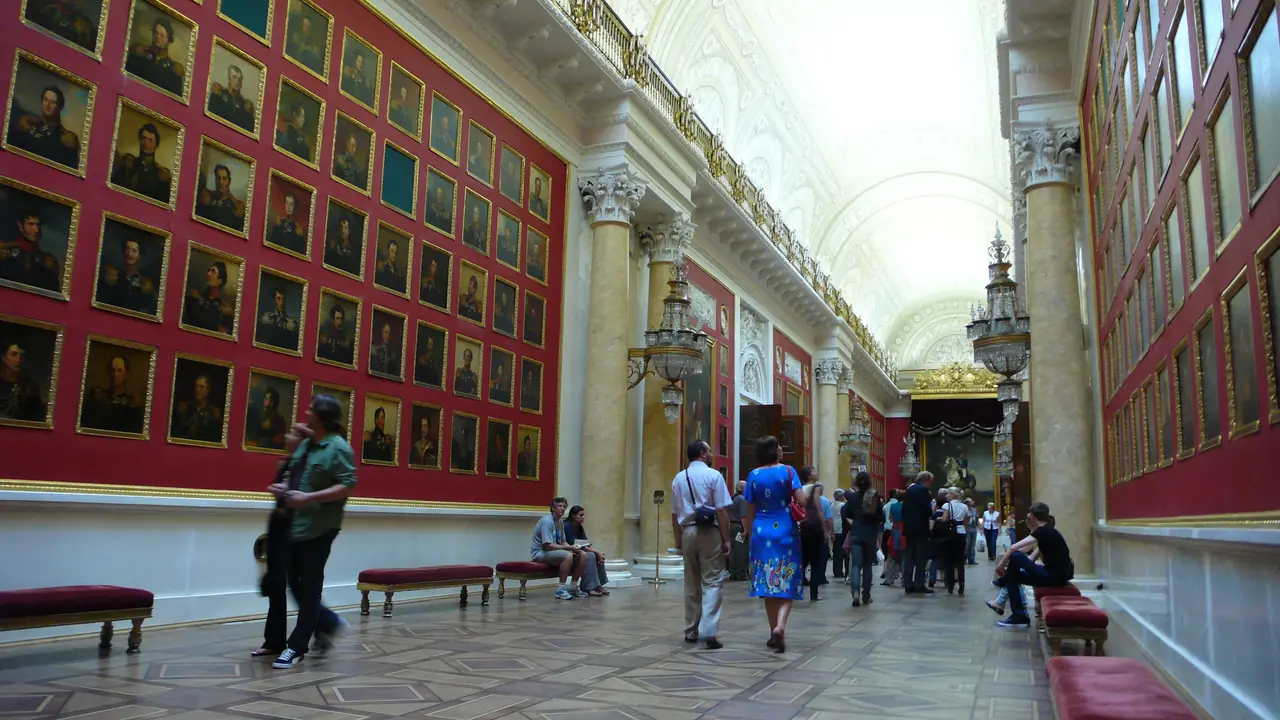
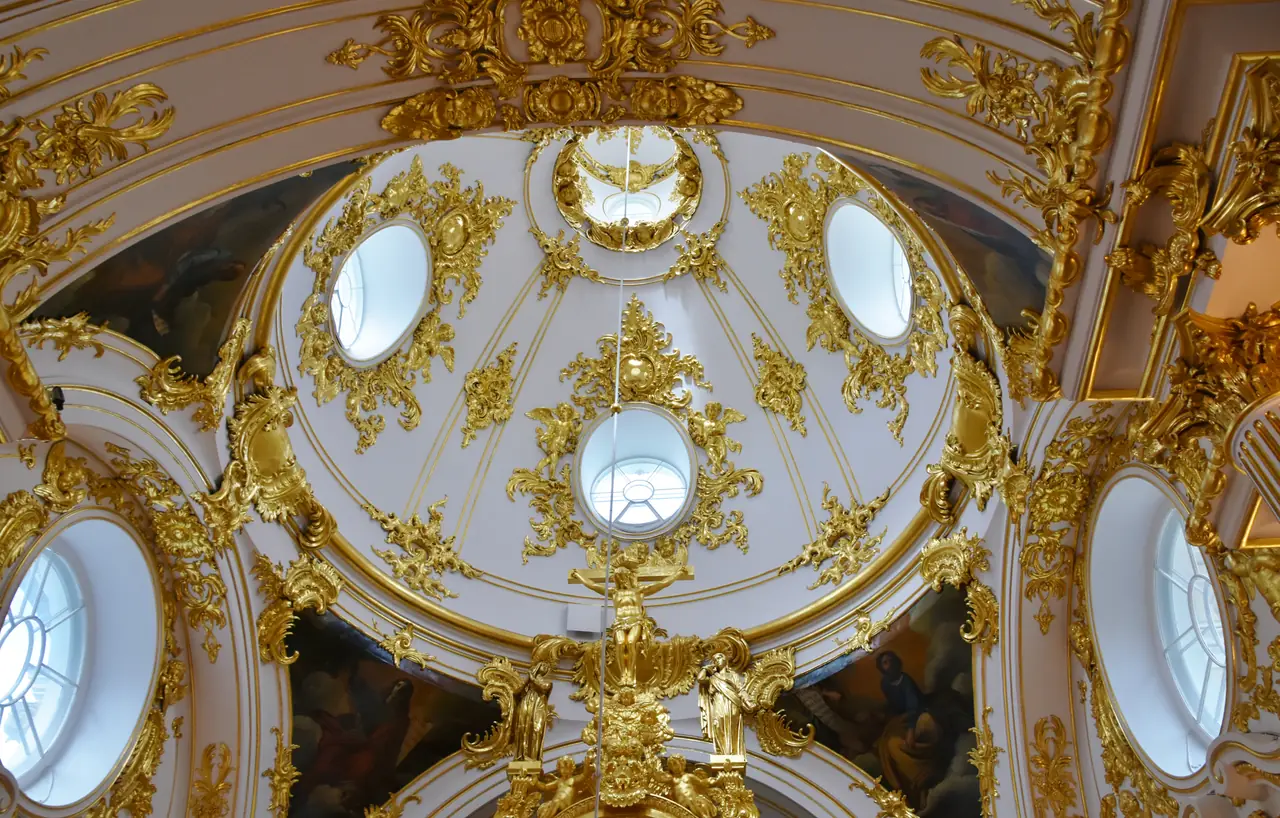
The palace interiors, with their staircases, gilded ceilings and halls, are as impressive as the works of art. Many visitors remember the building itself as much as any painting. The grand Jordan Staircase welcomes visitors at the entrance of the Winter Palace.
From Catherine’s first purchase to the millions of visitors of today, the Hermitage has grown into one of the great museums of the world. A visit is a journey through both the history of art and the history of Russia. Few museums combine a palace and a collection so completely.
Frequently asked questions
When was the Hermitage founded?
In 1764, when Catherine the Great bought a collection of paintings from Johann Ernst Gotzkowsky S11.
When did it open to the public?
How many objects does it hold?
About three million, a third of them coins and medals S1.
Which buildings form the museum?
What is the Peacock Clock?
An automaton clock made in the 1770s by James Cox and commissioned by Prince Potemkin S9.
Sources
- S1 Wikipedia: New Hermitage / Hermitage Museum.
- S2 Google Arts & Culture: The State Hermitage Museum.
- S3 Encyclopaedia Britannica: Hermitage.
- S4 Google Arts & Culture: The State Hermitage Museum (buildings).
- S5 Smithsonian Magazine: The Hermitage first opened to the public in 1852.
- S6 Presidential Library: State Hermitage Museum.
- S7 University of Notre Dame: New Hermitage lantern slide.
- S8 Wikipedia on IPFS: Hermitage Museum.
- S9 Homo Faber: The State Hermitage Museum.
- S10 Made in Russia: The Hermitage.
- S11 Wikipedia: Hermitage Museum.
More in Russia