Elogio del Horizonte: a sculpture that gives the sea a voice
- Country
- Spain
- Local name
- Elogio del Horizonte
- Type
- Concrete sculpture and public artwork
- Continent
- Europe
- Region
- Asturias
- Municipality
- Gijón
- Location
- Cerro de Santa Catalina, Cimavilla, Gijón, Asturias, Spain
- Historical periods
- Military use; public park established in the 1980s
- Dimensions
- 10 m high; 15.5 m long; 12.5 m wide
- Construction
- Approved 30 October 1989; inaugurated 9 June 1990
- Artist
- Eduardo Chillida
- Collaborators
- José Luis Martín and Francisco Pol (park); Jesús Aledo (model); José Antonio Fernández Ordóñez (engineering)
- Date
- August 2024
- Photographer
- Héctor Godes
- Published
- July 18, 2025
- Reviewed
- November 12, 2026
- Coordinates
- 43.5491, -5.6631
- More
- Wikipedia
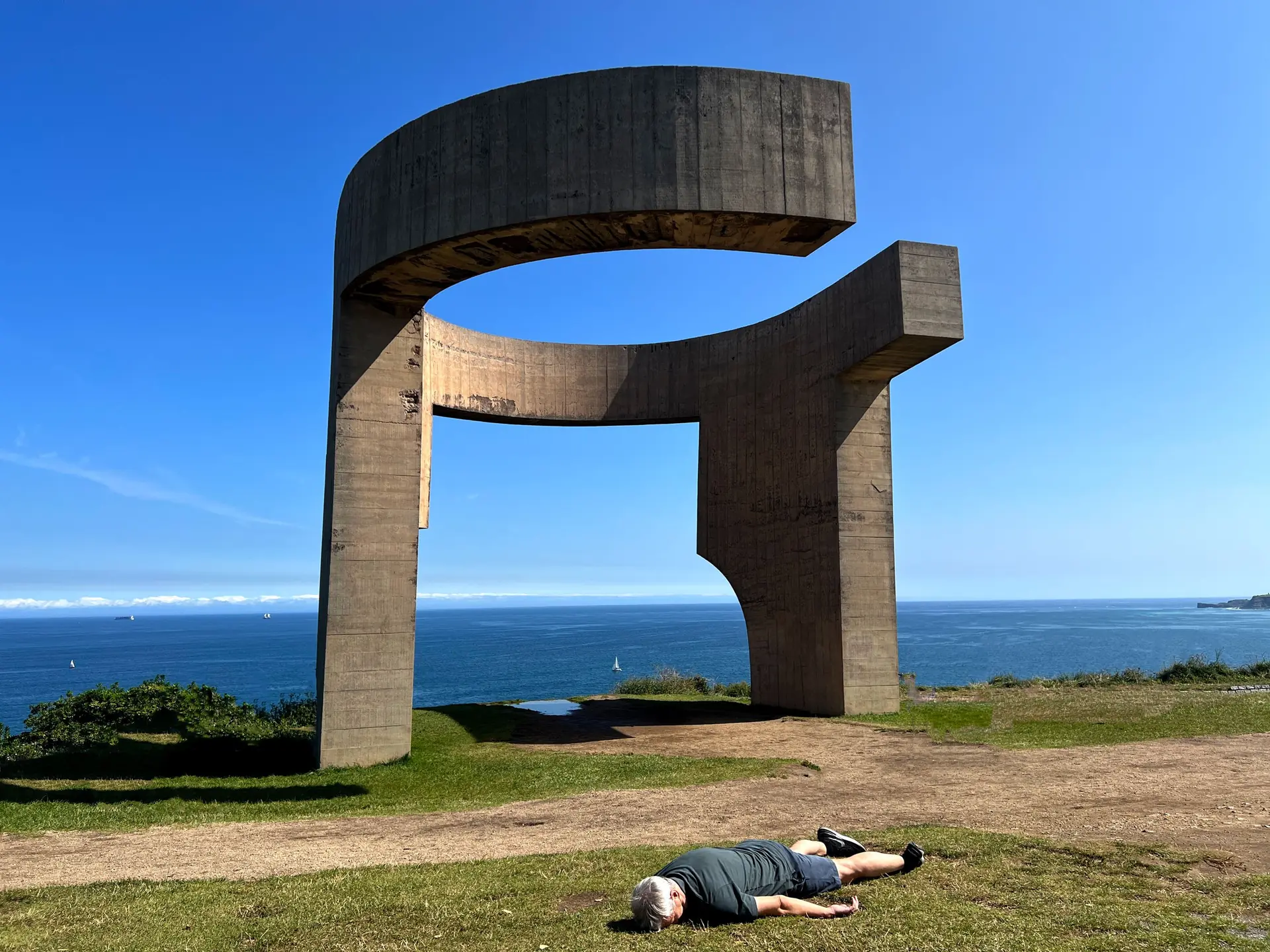
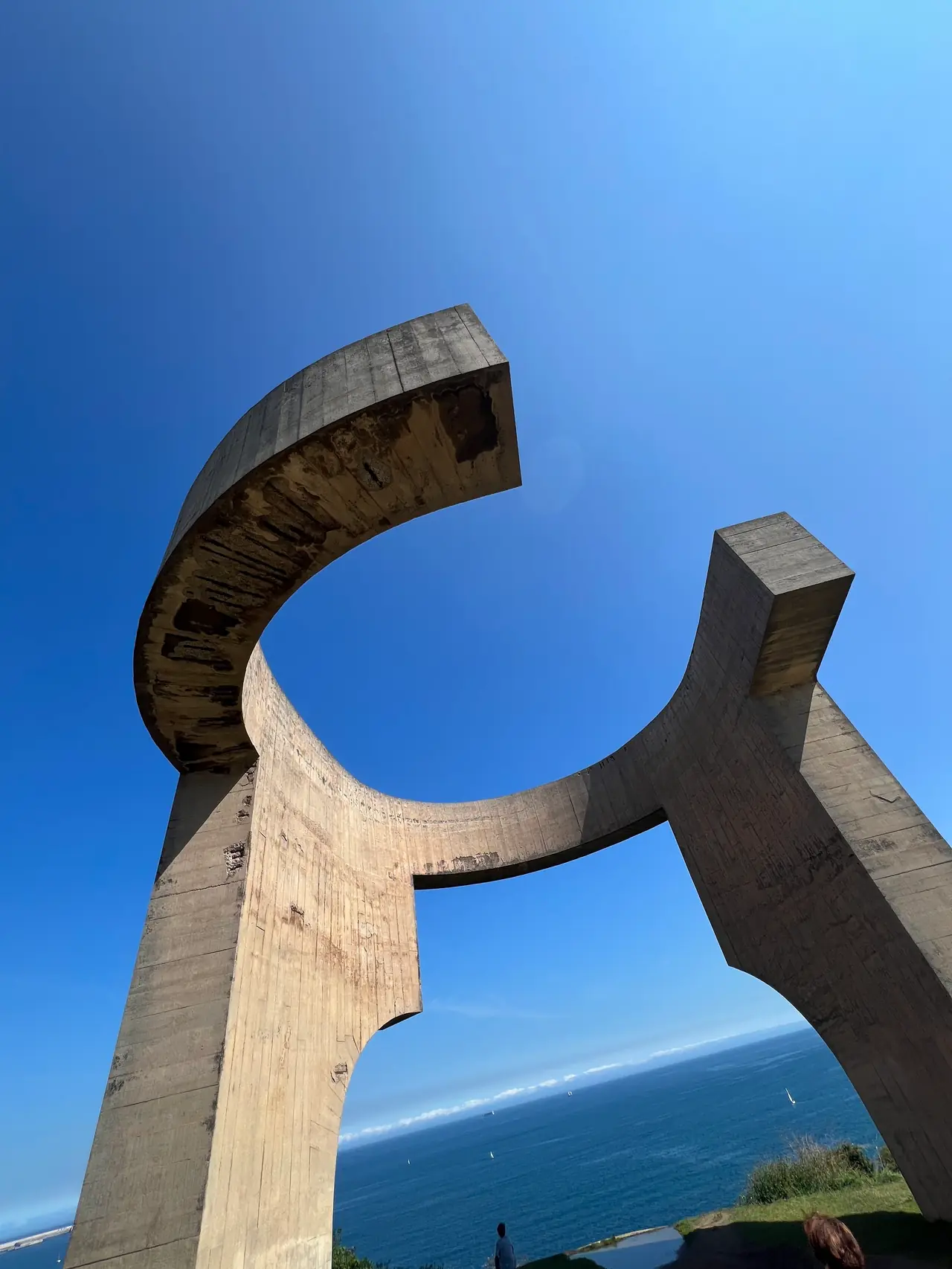
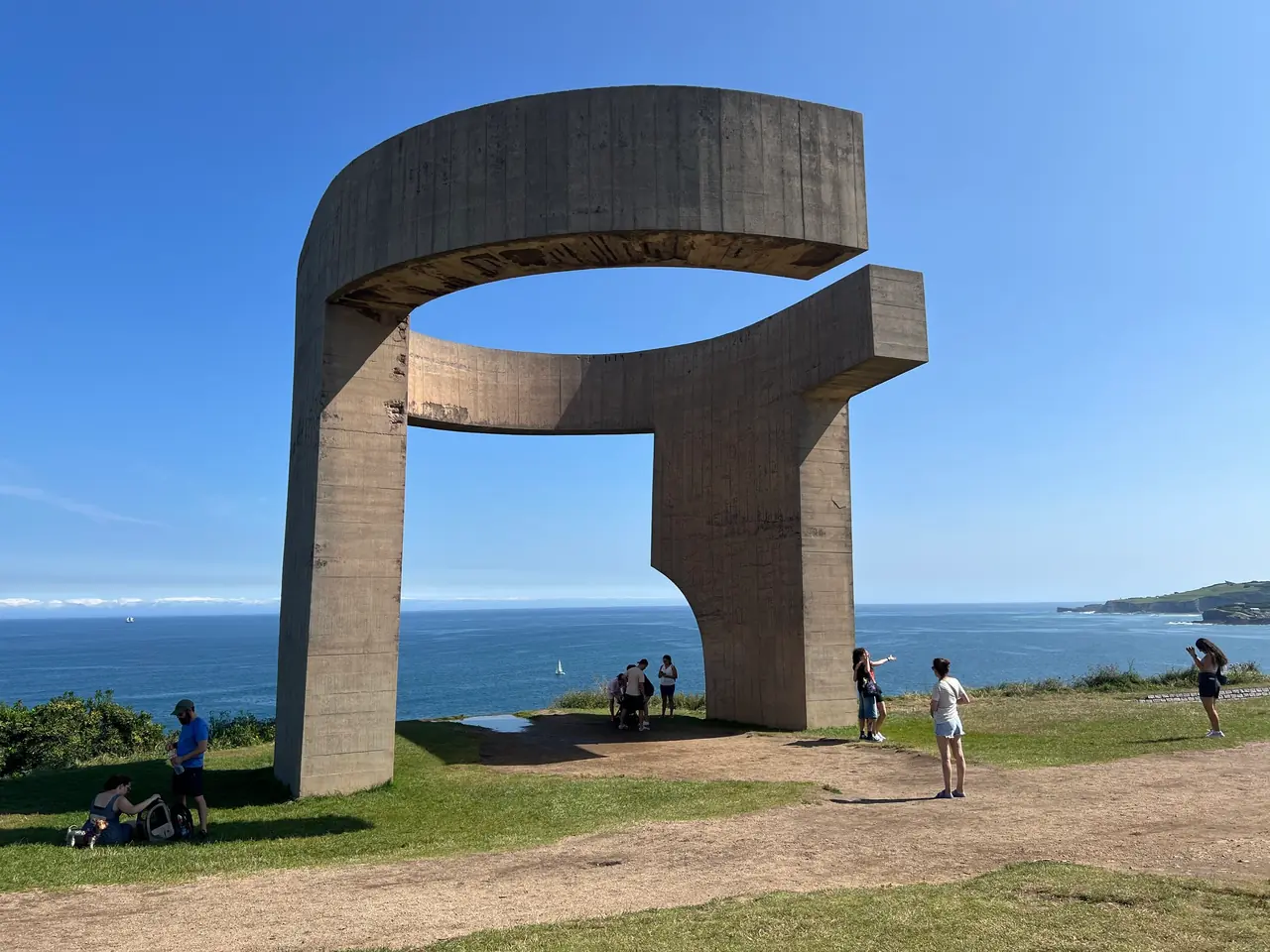
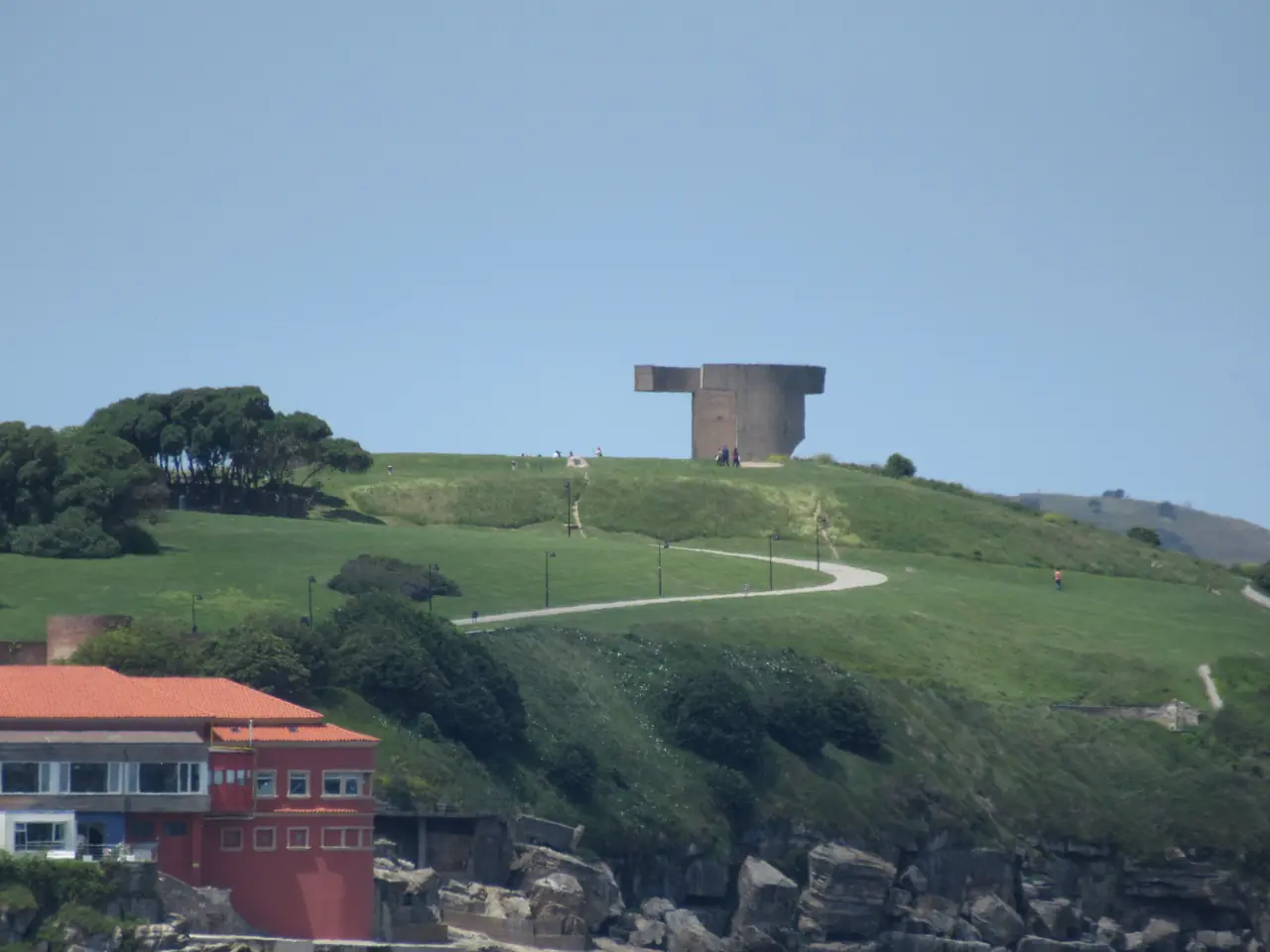
On a headland above Gijón, a pair of concrete arms opens towards the Cantabrian Sea. Elogio del Horizonte is at once a sculpture, a shelter and a way of framing the coast. Eduardo Chillida did not place an image of the sea on the hill; he built a form that makes the sea, the wind and the horizon more sharply felt.
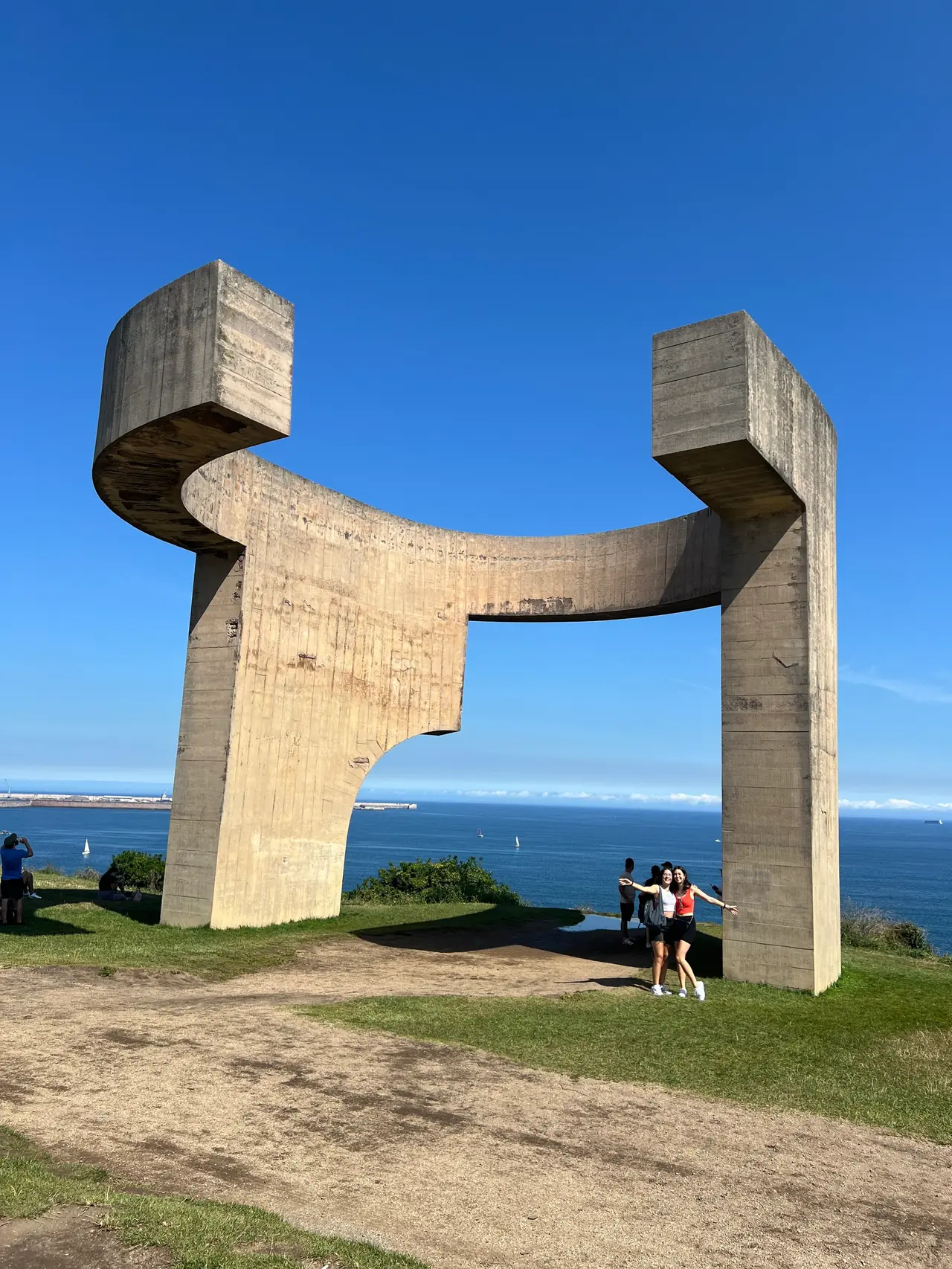
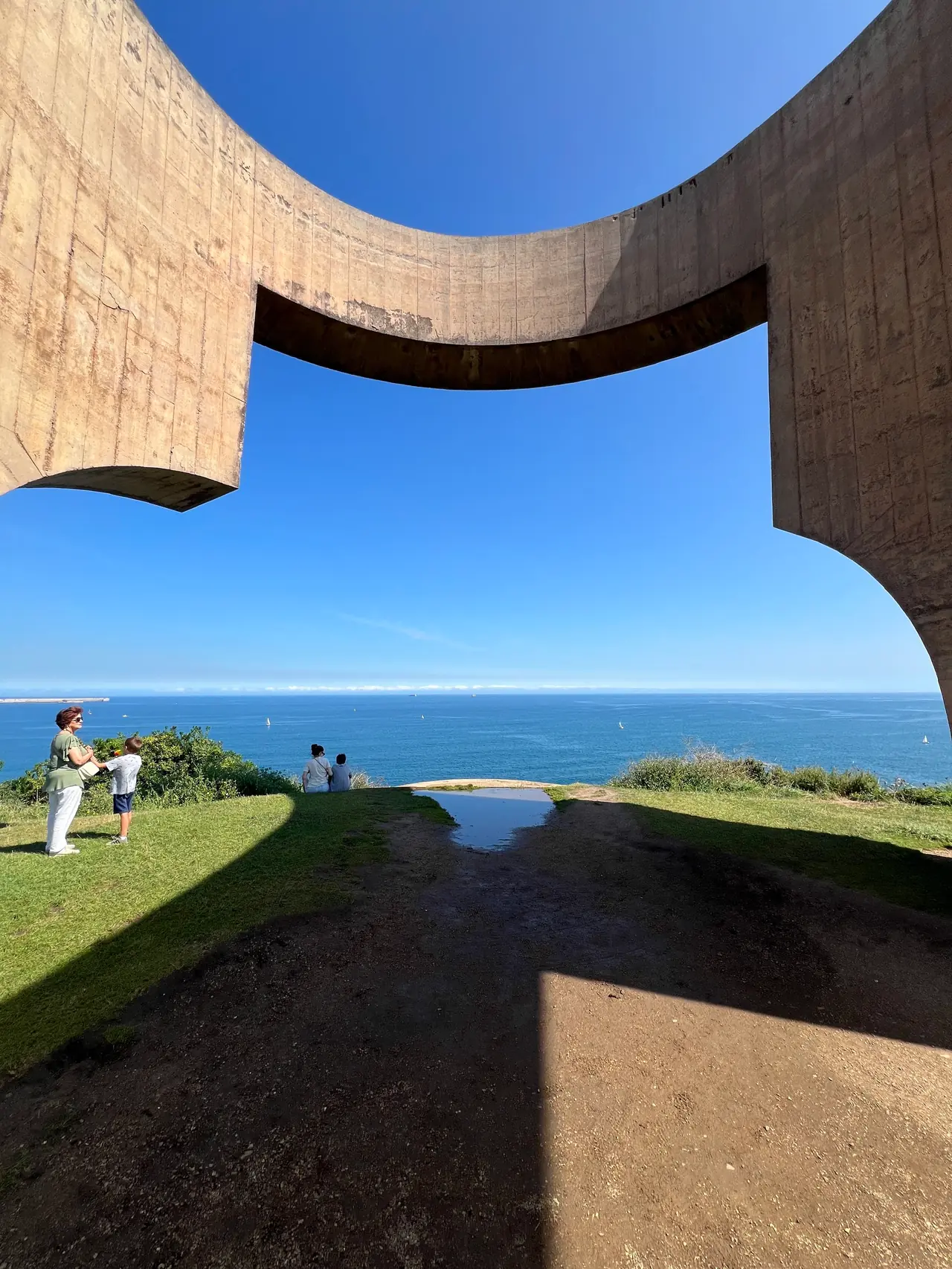
The work stands in Cerro de Santa Catalina, a former military site transformed into a public park. Its scale is monumental, yet its central space is open to anyone who walks into it. From inside, the city falls behind and the water takes over the view. Wind and surf enter as sound, so the landscape is not only seen but heard. S1 S2
A hill returned to the city
The story of Elogio del Horizonte begins with a change in the life of the hill beneath it. Cerro de Santa Catalina rises at the northern edge of Cimavilla, the old maritime quarter of Gijón, and reaches out towards the Cantabrian Sea. Its position made it useful for defence, and for a long period the summit belonged to military installations rather than to the everyday public realm. The city acquired the land in 1982, opening the way for a different future: a park that would let residents and visitors approach the coast from a place that had long been closed off. The transformation was not simply a landscaping exercise. It asked how a former defensive promontory could become a civic space without erasing the character of its exposed, windswept setting. S1
The park was developed across roughly six hectares with architects José Luis Martín and Francisco Pol. Instead of filling the summit with buildings, the project kept the high ground open and treated its broad views as a central public resource. The proposal to invite Eduardo Chillida followed from this landscape. He was looking for a coastal site where a sculpture could engage with the meeting of land, air and water, rather than sit apart as an isolated object. His first visit to the hill took place in October 1987. The encounter between artist and place set the terms for a work that would depend on its position as much as on its material form. S1
Chillida and the horizon
Chillida’s practice returned repeatedly to the relationship between solid matter and empty space. Rather than treating a sculpture as a closed mass, he often made the surrounding void an active part of the work. Elogio del Horizonte brings that concern into a coastal setting. Its two rising arms do not depict a wave, a ship or a human figure. They frame an opening towards the sea and create a passage between the land behind the viewer and the horizon ahead. The title is therefore more than a poetic label: it directs attention to a line that can never be reached, yet continually organises the experience of looking outward.
The work was conceived for this particular promontory, but it avoids a literal illustration of Gijón or its maritime history. The sculpture offers a form of orientation rather than a narrative scene. Its outline is visible against changing skies, while its interior makes the surrounding air perceptible through sound. This combination of sight and hearing connects the work to the coast without requiring it to imitate natural forms. The sea remains beyond the concrete, but its presence is carried into the sculpture by wind, reflected light and the shifting line where water appears to meet the sky. S2
Making a monument in concrete
The monumental appearance of Elogio del Horizonte can make it seem as though it were carved from a single block. Its construction was more complex. The project involved the sculptor, specialist formwork carpenters, a model maker, structural engineering and a major contractor. The carpenters of Bereziartua prepared the formwork in Hernani before it was transported to Gijón; sculptor Jesús Aledo helped shape the model, and engineer José Antonio Fernández Ordóñez carried out the structural calculations and worked on the concrete mix. Their contributions translated a sculptural idea into a structure able to withstand the exposed conditions of the hill. S1
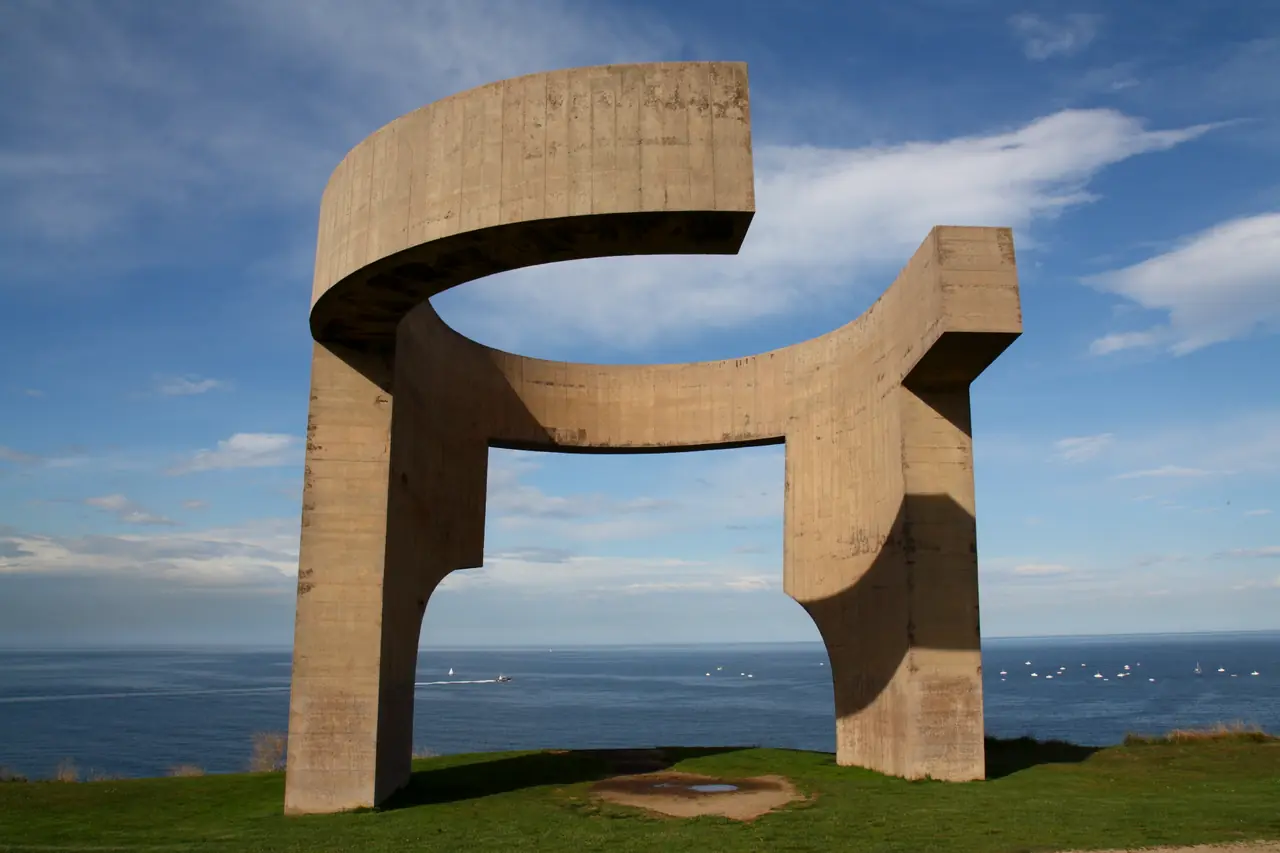
The completed work measures about ten metres high, fifteen and a half metres long and twelve and a half metres wide. Its walls are approximately 1.4 metres thick. Around 200 cubic metres of concrete were used, and the sculpture weighs about 500 tonnes. Deep foundations, with piles extending roughly twenty metres into the ground, anchor the mass to the summit. These figures describe scale, but they also clarify the unusual balance of the design: the arms appear to open lightly towards the horizon even though their weight and foundations are substantial. The construction was approved on 30 October 1989, marking the completion of a demanding process in which artistic decisions and engineering requirements had to remain closely connected. S1

A room open to the elements
Approaching the sculpture, the visitor moves from the broad openness of the hill into a defined interior. The concrete arms shelter a central space without sealing it off. There is no conventional roof or enclosed chamber; the work remains exposed to the weather and to the moving air. That openness changes the way its scale is experienced. From outside, the sculpture reads as a powerful silhouette. From within, the horizon becomes a framed prospect, and the wall surfaces direct attention back towards the coast. The work is both an object in the landscape and a place one can enter.
Sound is part of that spatial design. The curved surfaces and open ends amplify and shape the noise of the Cantabrian Sea and the wind. The result is not a recorded soundtrack but a changing acoustic event, dependent on weather, tide and the direction of the air. On a quiet day, the interior may seem contemplative; under stronger wind, it can feel animated and resonant. The sculpture makes an ordinary environmental condition noticeable by gathering it in one place. The sea is not merely scenery beyond the hill: its voice becomes one of the materials through which the work is encountered. S1
An unexpected public symbol
When the sculpture was installed, its scale and cost prompted debate. Its abstract form was unfamiliar to many people, and public reactions included irreverent nicknames that compared the interior to a giant toilet. Such responses are part of the work’s local history, not evidence that it failed to connect with its surroundings. They show how a demanding piece of contemporary art entered everyday conversation. A monument does not become meaningful only through agreement or solemn admiration. It can also become a shared reference because people question it, joke about it, return to it and gradually make it part of the identity of a place.
The city formally inaugurated Elogio del Horizonte on 9 June 1990. In the decades since, the sculpture has become one of Gijón’s most recognisable landmarks and a defining feature of Cerro de Santa Catalina. It is encountered as a work by a major twentieth-century sculptor, but also as part of a public park where people walk, pause and look across the coast. That combination gives it a civic life beyond the art world. Its meaning continues to change through use: the same concrete form can be read as an abstract composition, a coastal observatory, a piece of urban identity or simply a familiar point on the skyline. S3
Cimavilla, city and sea
The sculpture’s setting makes it possible to read several layers of Gijón from one elevated position. Behind the hill lies Cimavilla, whose streets preserve the compact character of the old settlement and its connection with fishing and port activity. Beyond it, the modern city extends along the coast. In the other direction, the Cantabrian Sea opens into a broad field of water and sky. Elogio del Horizonte does not explain these layers with plaques or images; instead, it establishes a place from which they can be seen in relation to one another.
This relationship between monument and viewpoint is reciprocal. The hill gives the sculpture a dramatic position, while the sculpture gives the hill a focus. The open park remains legible as landscape, not merely as a pedestal for the artwork, and the city remains present rather than disappearing behind a cultural attraction. The result is unusually direct: a public work set at the edge of the urban fabric, where architecture, sculpture and natural conditions overlap. The visual experience depends on distance and movement. At one moment the work appears against the skyline; at another, the sea occupies the opening it frames. S2

Concrete changed by time
Concrete can suggest permanence, yet a coastal structure is continually exposed to change. Salt carried in the air, rain, sunlight and wind affect its surface over time. Chillida’s project was conceived with this exposure in mind: weather is not an interruption to the work but part of the conditions under which it exists. The grey material shifts in appearance as light changes, becoming warmer or cooler against the sky. The surface records the passage of time in a quieter way than a figurative monument would, without needing to represent a particular historical event.
This interaction between material and atmosphere also complicates the idea of a sculpture as a finished object. The form was completed in 1989 and opened to the public in 1990, but its encounter with the coast is renewed each day. The wind entering the central space, the changing brightness of the water and the weathering of the concrete keep the setting active. It is still a carefully engineered work, built on deep foundations and shaped through exacting construction, but it does not dominate its environment by sealing itself away from it. Its mass creates a frame through which the elements remain present. S1
A work that invites interpretation
There is no single key that resolves Elogio del Horizonte. Some visitors respond first to its resemblance to an embracing figure; others notice the architectural quality of its interior or the way its arms establish a line towards the sea. The work can suggest protection, listening, openness or simply an abstract arrangement of mass and void. These readings are not mutually exclusive, and the sculpture does not require a visitor to choose one. Its title offers a direction for thought, while its physical presence keeps the experience grounded in the place.
That openness helps explain why the sculpture can feel both monumental and approachable. Its dimensions are immense, yet it does not stand on a remote plinth or behind a barrier. The visitor can walk around it, pass into its central space and move back into the park. The experience is bodily and spatial, not just visual. It unfolds through changing positions, weather and sound. In this sense, the work’s scale is not only a measurement. It is the distance between the person standing inside the concrete arms and the horizon that remains beyond them. S2
Frequently asked questions
Who created Elogio del Horizonte?
Eduardo Chillida conceived the sculpture. Its construction involved specialist formwork carpenters, sculptor Jesús Aledo, engineer José Antonio Fernández Ordóñez and the contractor Entrecanales y Távora. S1
When was the sculpture made?
What is it made of and how large is it?
It is made of concrete, stands about ten metres high, measures 15.5 metres long and 12.5 metres wide, and weighs about 500 tonnes. S1
Why does the interior amplify sound?
Its curved concrete surfaces and open form shape and amplify the sound of wind and sea, making the coast part of the work’s acoustic experience. S1
Where is it located?
On Cerro de Santa Catalina, in the Cimavilla district of Gijón, Asturias, Spain. S2
Sources
More in Spain
 UNESCO WH