Banana Creek Launch Viewing Area: Watching the Way to the Moon
- Local name
- Banana Creek Launch Viewing Area · Banana Creek viewing site
- Type
- Rocket launch viewing area and space museum
- Continent
- America
- Country
- United States
- State
- Florida
- County
- Brevard County
- Location
- Kennedy Space Center, Merritt Island, on the Kennedy Parkway about two miles north of the Vehicle Assembly Building
- Museum
- Apollo/Saturn V Center (opened in December 1996)
- Main exhibit
- Saturn V rocket, about 363 feet long
- Launch pads in view
- Launch Complex 39 (Pads 39A and 39B)
- Operator
- Kennedy Space Center Visitor Complex
- Date
- December 2023
- Photographer
- Héctor Godes
- Published
- January 28, 2024
- Reviewed
- November 13, 2026
- Coordinates
- 28.6037, -80.6681
- More
- Wikipedia
The Banana Creek Launch Viewing Area is an outdoor grandstand inside Kennedy Space Center, on Florida’s Atlantic coast, from which spectators watch rockets lift off from the launch pads across the water S1. It sits beside the Apollo/Saturn V Center, the museum that houses one of the three surviving Saturn V moon rockets S3.
The site brings together two ways of looking at spaceflight. From the bleachers, visitors watch the launches of today, while a few steps away the hall of the Saturn V tells the story of the program that first took people to the Moon.
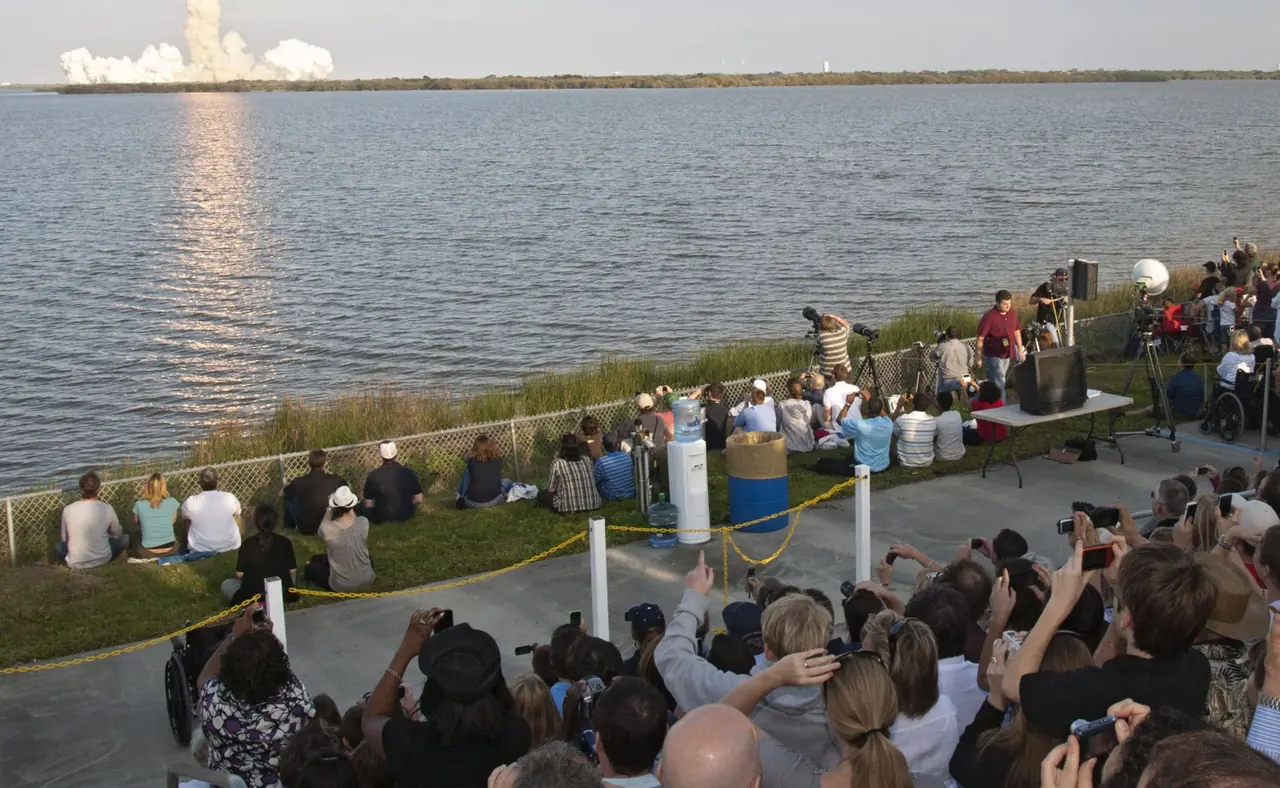
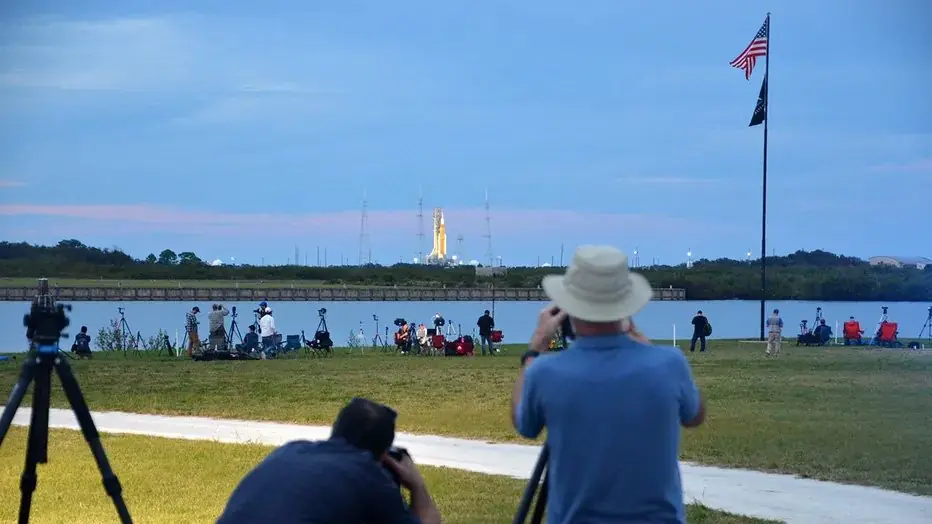
Across Banana Creek
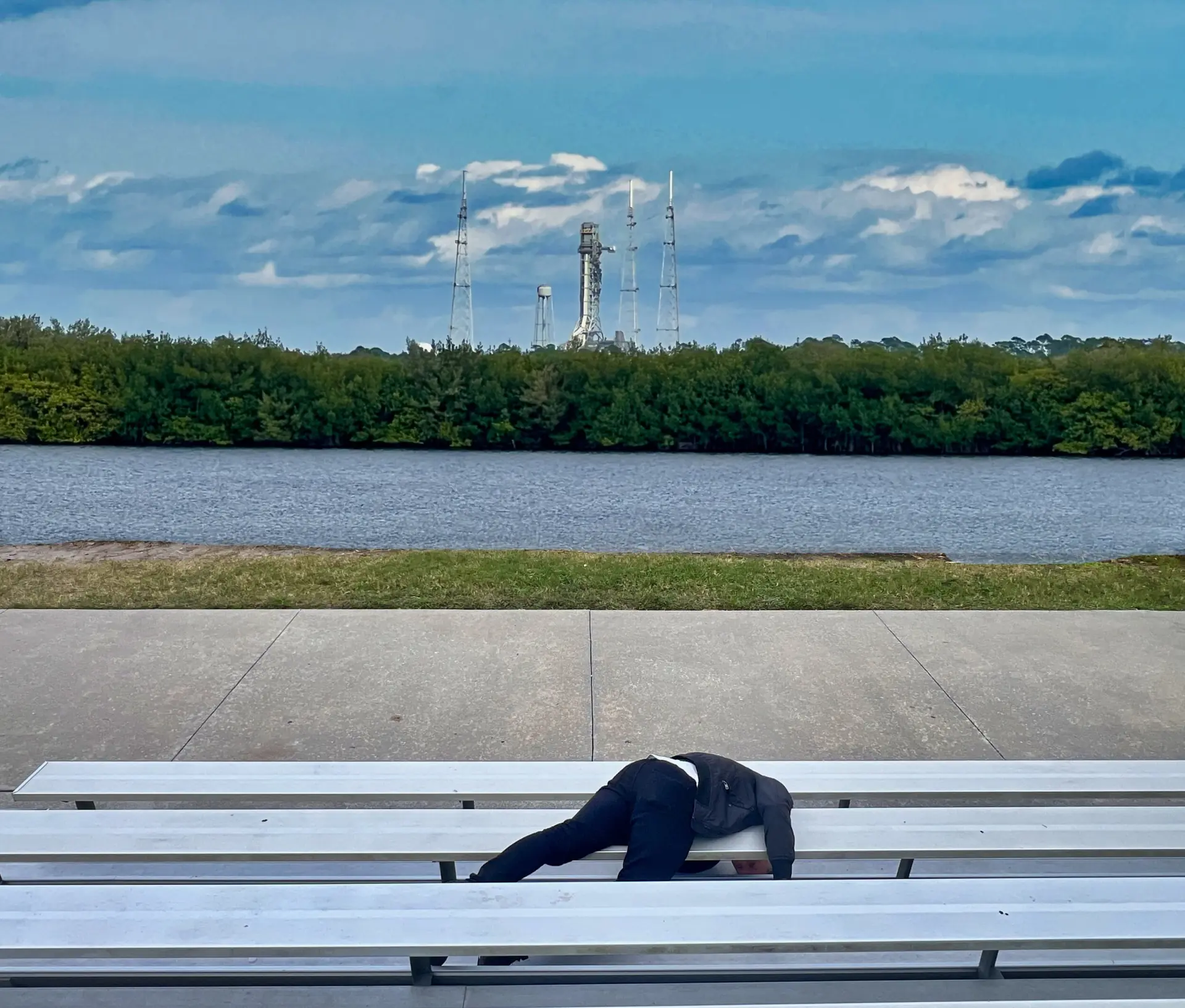
Banana Creek is a waterway that crosses the grounds of Kennedy Space Center, and the viewing area takes its name from it S1. The bleachers face the launch pads of Launch Complex 39 on the far side of the creek, with no buildings or trees blocking the view S1.
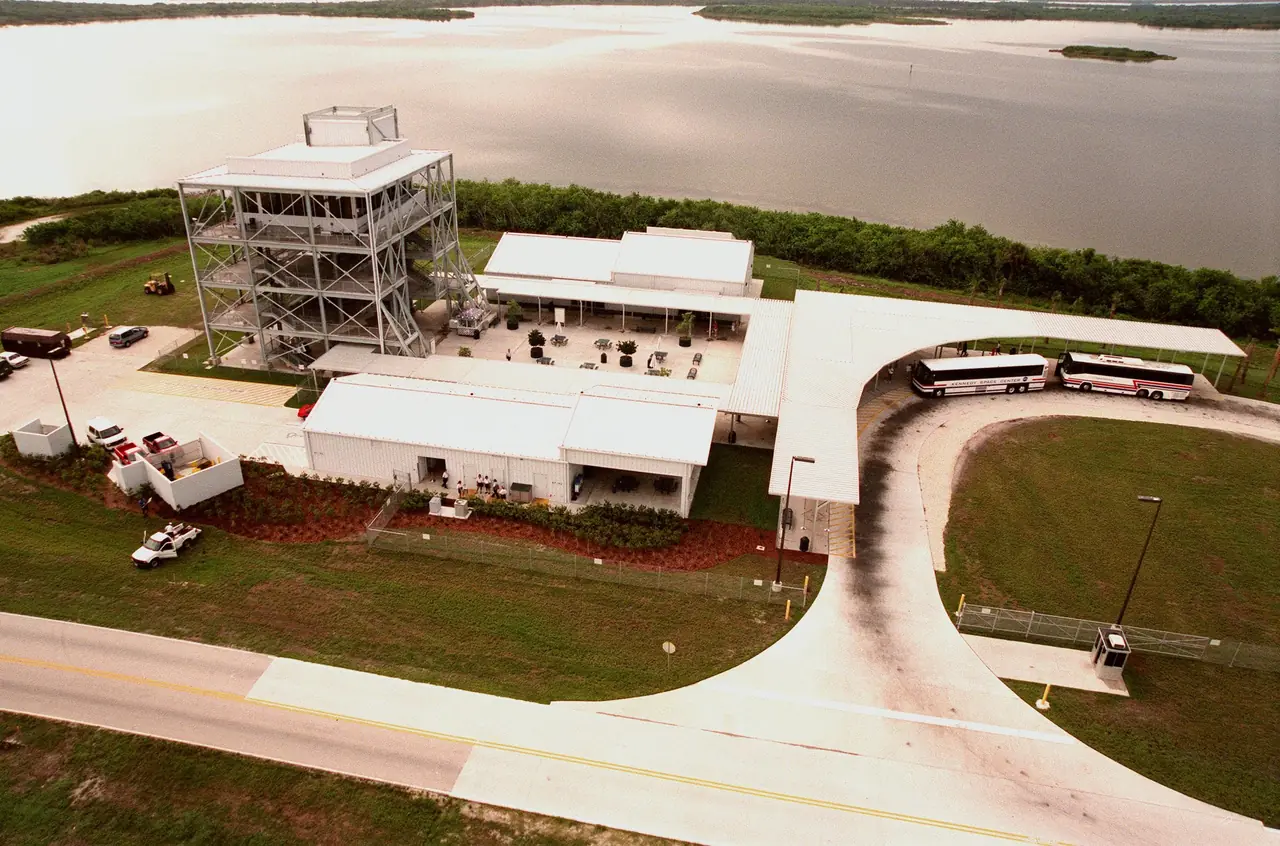
The site lies on the Kennedy Parkway, about two miles north of the Vehicle Assembly Building, the huge hangar where rockets are stacked before they roll out to the pads S2. It is inside the security perimeter of the space centre, so visitors can only reach it on buses that leave from the main visitor complex S1 S6.
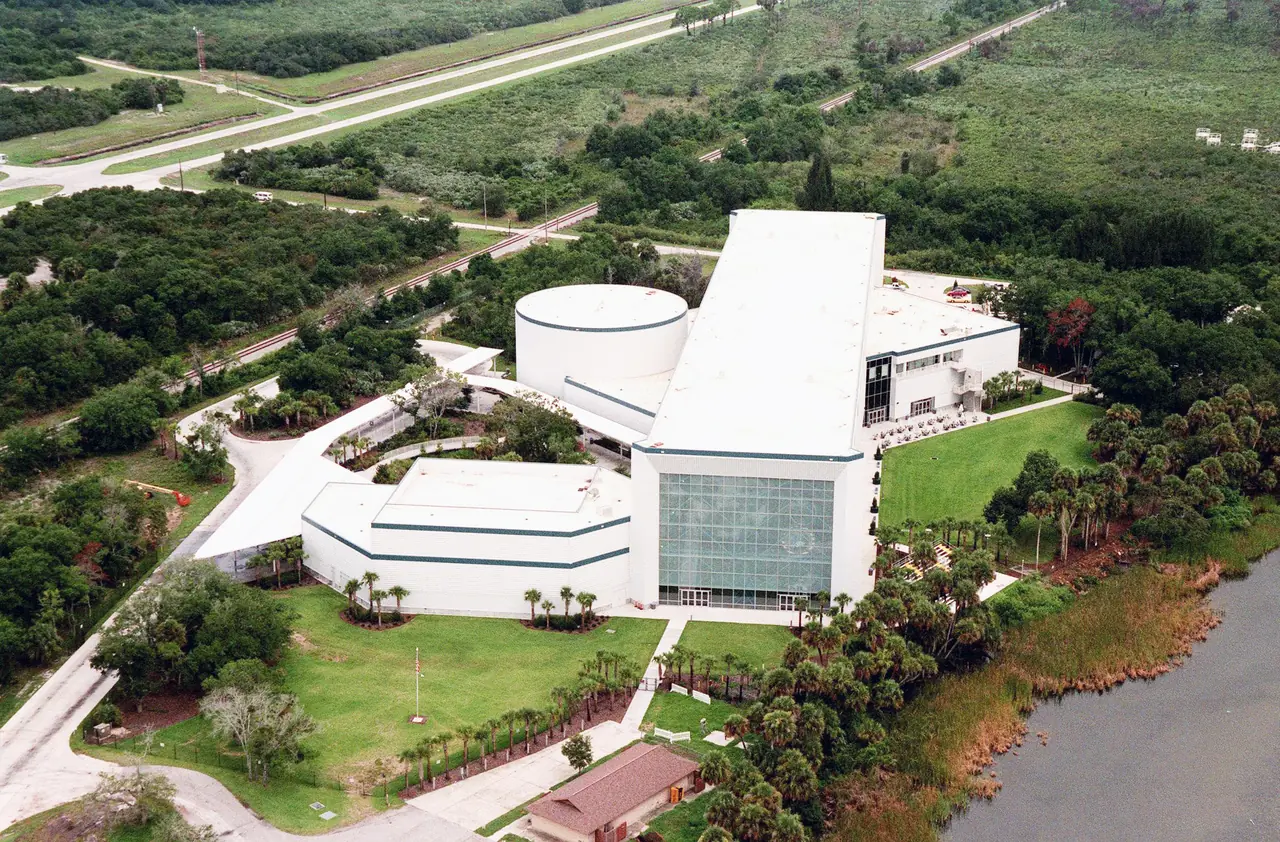

The location was chosen for its view rather than its closeness. The pads are several miles away, a distance that keeps spectators safe while still letting them see the flames, feel the vibration and hear the roar a few seconds after the lift-off S1.
From VIP stand to museum
During the Space Shuttle era, Banana Creek was the viewing site that NASA reserved for its invited guests and officials S2. The stands were close enough to give a clear view of the shuttle climbing from the pads, but far enough to meet the safety rules of the range.
In the 1990s the visitor complex decided to build a new museum next to that site S7. The Apollo/Saturn V Center opened in December 1996, with a hall of about 100,000 square feet designed around a single object, the Saturn V rocket S2 S6.
The opening ceremony was attended by Eugene Cernan, the last astronaut to walk on the Moon S12. The project cost about 37 million dollars and turned a restricted viewing site into one of the main stops of the public bus tour S7.

Launch Complex 39
The pads seen from Banana Creek were built for the Apollo program. Launch Complex 39 hosted the first Saturn V launch, the uncrewed Apollo 4 mission, on 9 November 1967 S11.
On 16 July 1969, Apollo 11 lifted off from Pad 39A with Neil Armstrong, Michael Collins and Edwin Aldrin on board S9. Four days later, Armstrong and Aldrin became the first people to walk on the Moon.
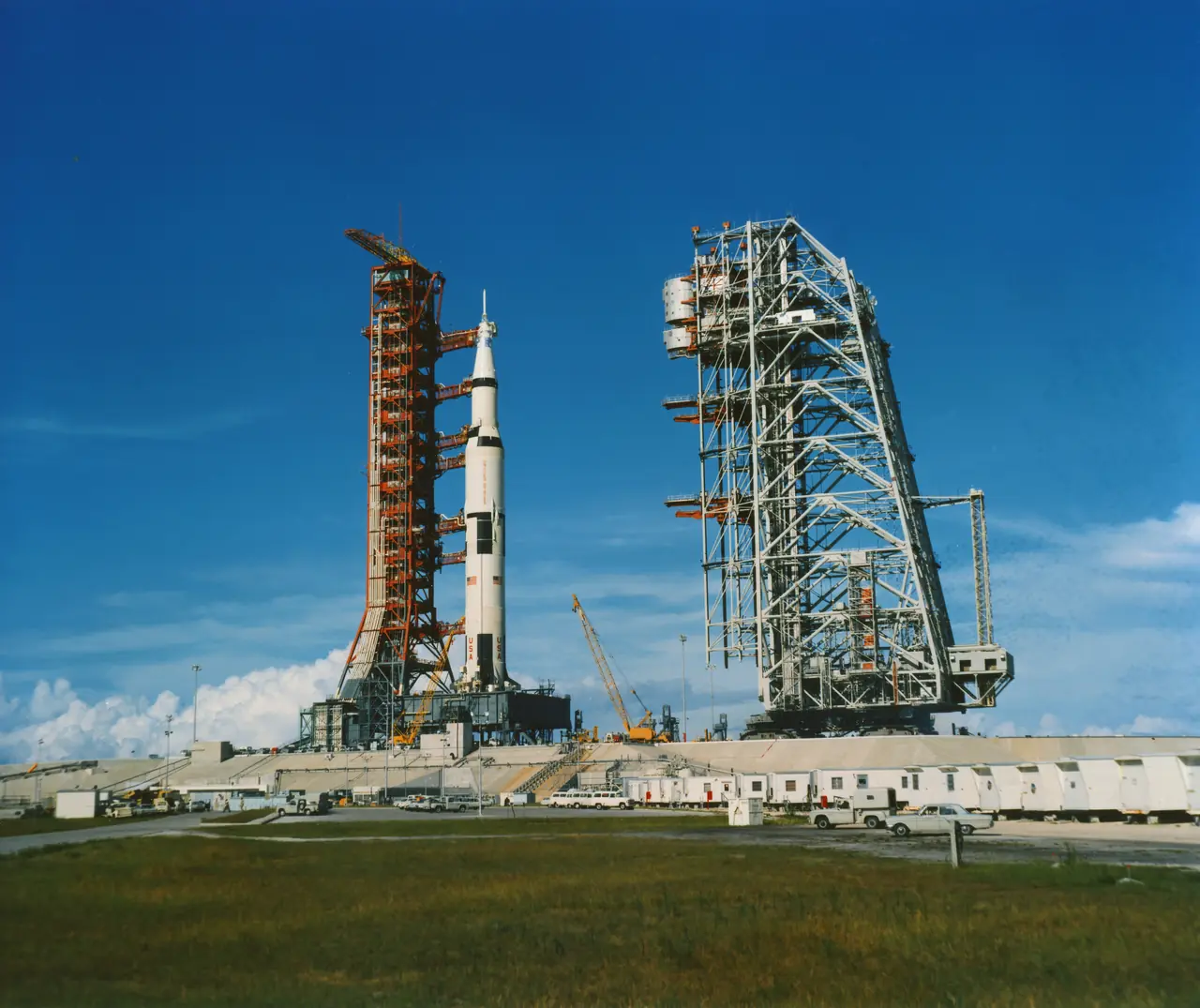

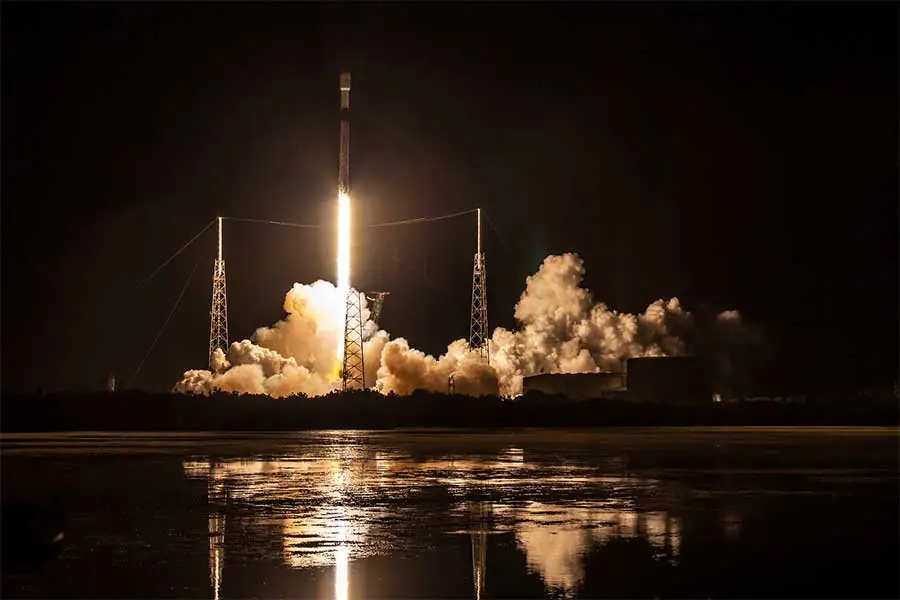
The same pads were later adapted for the Space Shuttle, which flew from them for three decades. Today they are used again by new generations of rockets, so the view from Banana Creek has changed its protagonists without changing its frame.
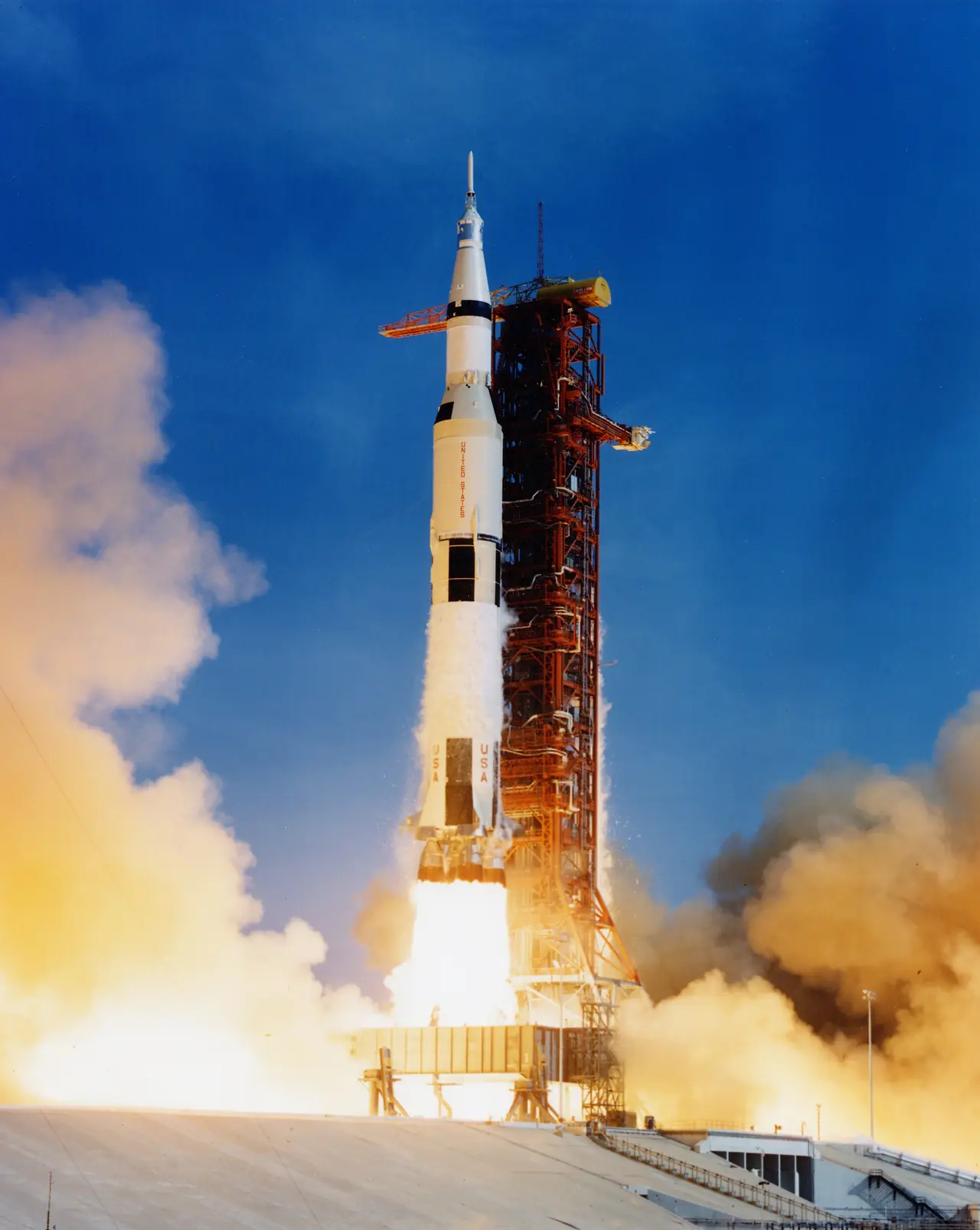

The Saturn V
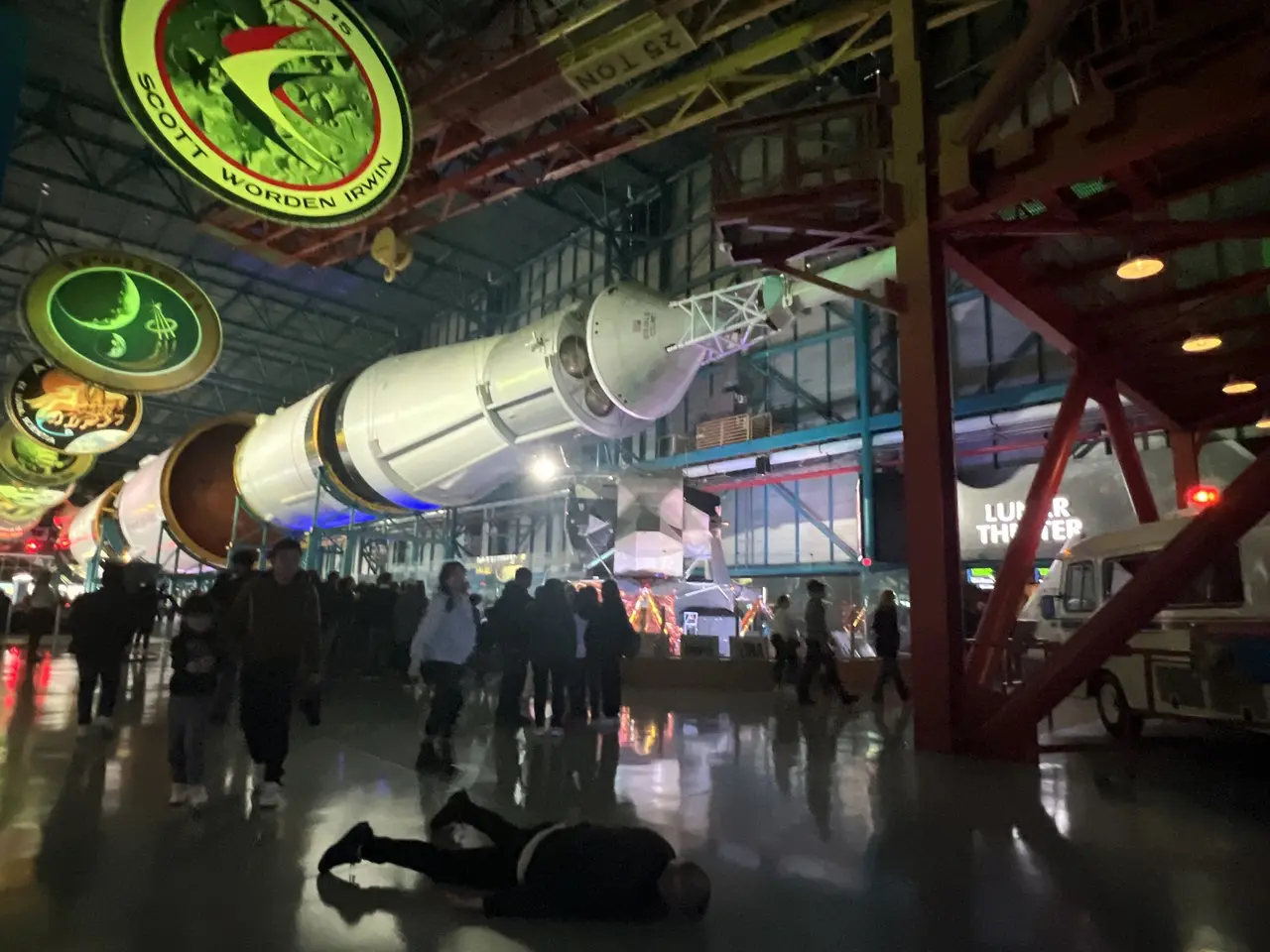
The centrepiece of the museum is a Saturn V about 363 feet long, displayed horizontally with its stages separated so that visitors can walk underneath it S3 S6. It is one of only three Saturn V rockets left in the world S3.
For years the rocket lay outdoors beside the Vehicle Assembly Building, exposed to sun, rain and salt that corroded its surface S10. It stayed there until the mid-1990s, when it was rescued, restored and moved indoors to the new building at Banana Creek S3.
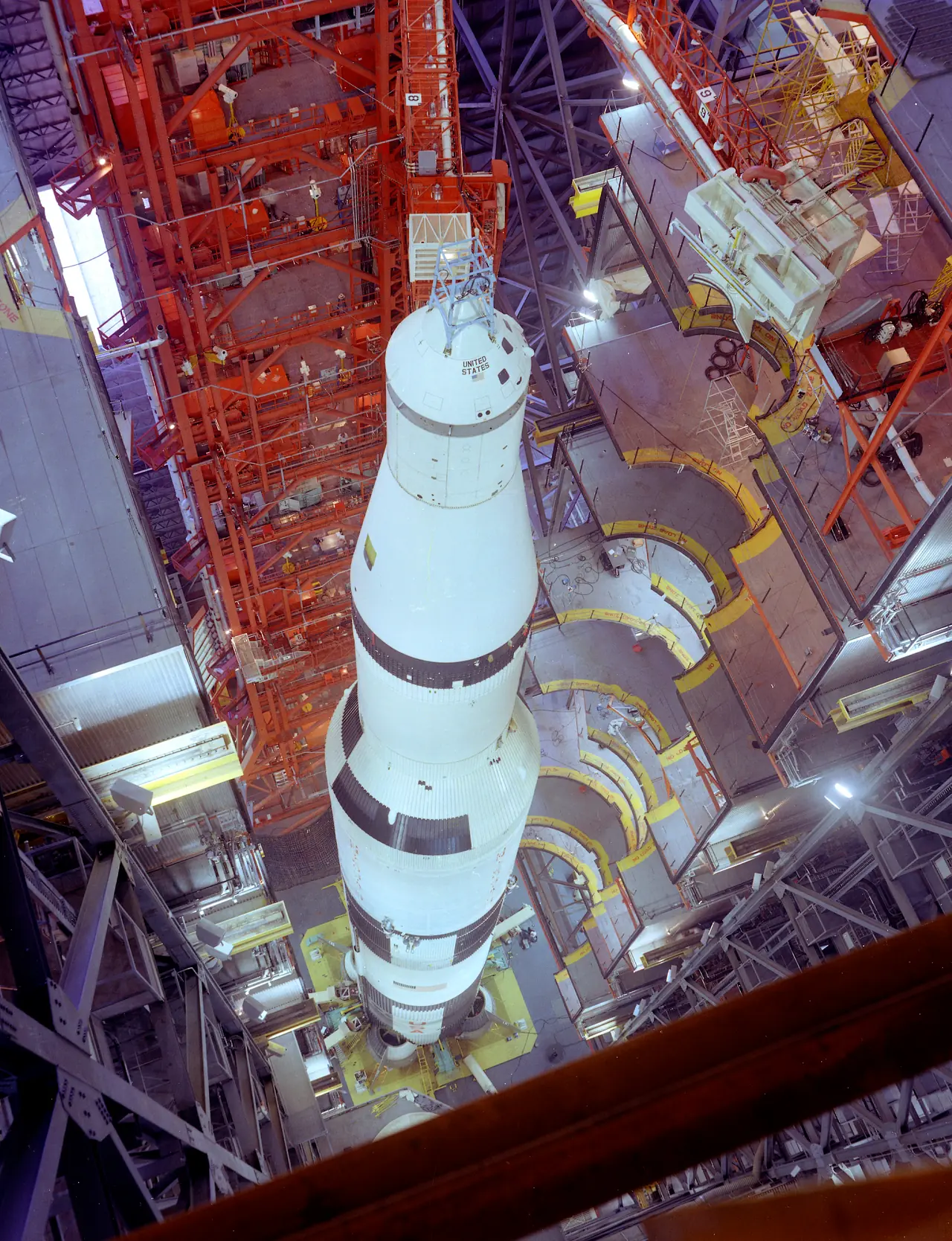

Seen up close, the rocket explains the scale of the Apollo effort better than any figure. Its first-stage engines, its stage joints and the ring-shaped instrument unit that guided the flight are all at eye level. Walking from the engines to the nose takes several minutes, and that walk is the simplest way to understand the size of the machine.

Inside the Apollo/Saturn V Center
The visit begins in the Firing Room Theater, which recreates the launch control room with real consoles from the 1960s S3. The show replays the last minutes of the countdown of Apollo 8, the first crewed flight around the Moon, launched in December 1968 S8.
The theater seats about 400 people, and its stage reproduces the control room with chairs and jackets bearing the names of the companies that took part in the launch S8. When the countdown reaches zero, the lights and sound simulate the lift-off, and the audience then walks out into the hall of the Saturn V.
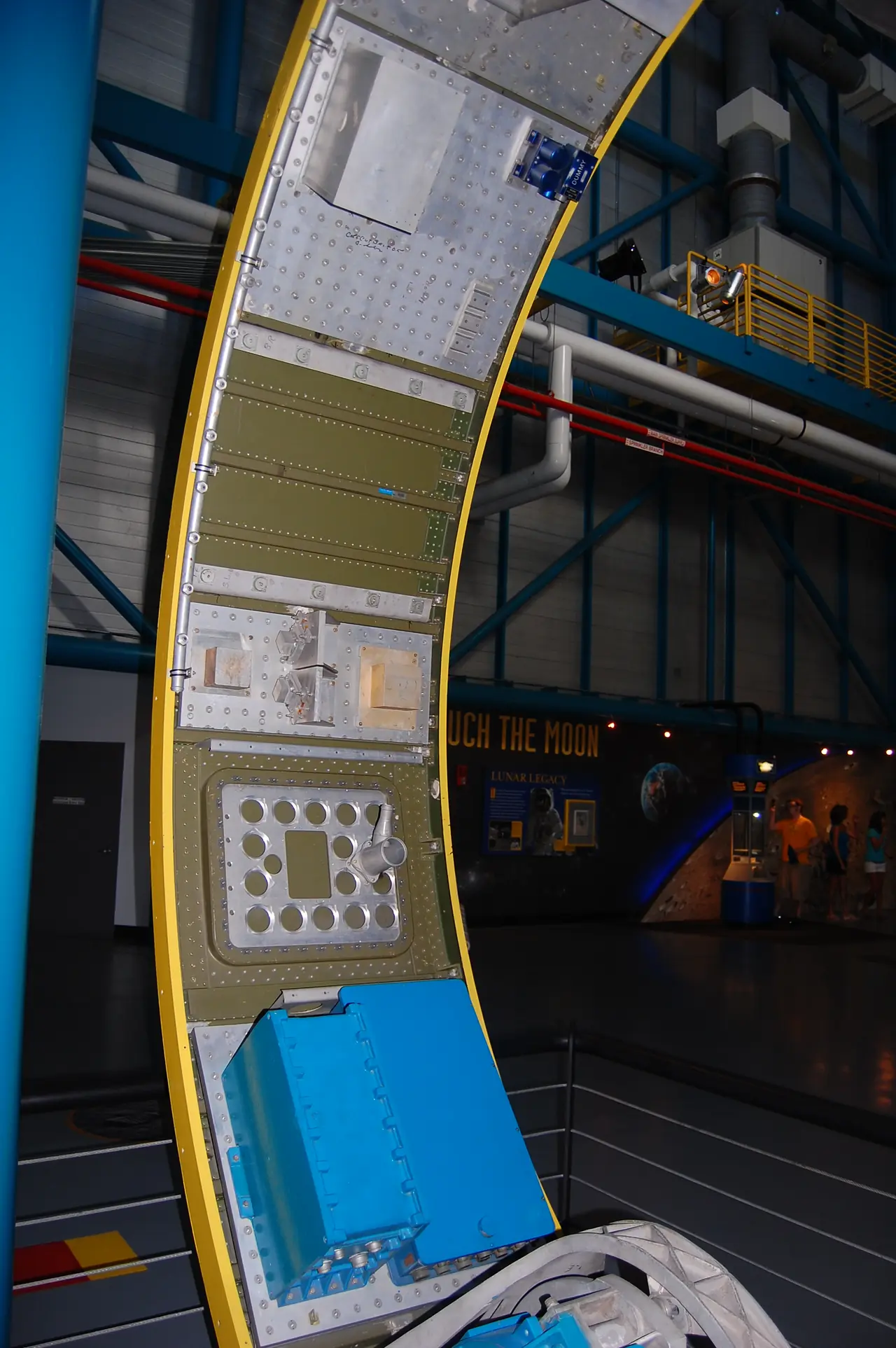
Among the original objects on display is the command module Kitty Hawk, which brought the Apollo 14 crew and more than 100 pounds of lunar samples back to Earth S3. Nearby stands CSM-119, a command and service module that was kept ready as a rescue vehicle for the Skylab missions S5.
Under the nose of the Saturn V, on a reconstructed lunar surface, rests Lunar Module 9 S3. It was built for Apollo 15, but was replaced by an extended version when the lunar rover was added to that mission, and today it is one of only three remaining lunar modules designed for flight S4.
The module was fully refurbished in 2017 with new reflective films on its outer surfaces and landing legs S4. It belongs to the Smithsonian National Air and Space Museum, which has lent it permanently to the visitor complex S4.
Watching a launch today
The Banana Creek viewing area does not open for every launch. Access depends on the mission, the launch pad, Space Force range safety rules, NASA approval and expected public interest S1.
Distance matters in both directions. Some viewing points are too close to certain pads to be used safely, so each launch has its own map of open and closed areas S1.
When it opens, spectators travel by bus through NASA’s gates and wait on the bleachers for the countdown to end S1. If the launch window allows it, the Apollo/Saturn V Center also stays open, so the wait can be spent beside the moon rocket S1.
Between two eras of spaceflight
Few places show the continuity of the American space program as clearly as Banana Creek. The museum preserves the machines that reached the Moon, while the stands face pads that are still in use.
For a visitor, the contrast is part of the experience. The Saturn V lies silent indoors, and outside the next rocket may be waiting for its countdown.
Banana Creek also explains why so many people travel to Florida’s Space Coast to watch a launch. A rocket climbing over the water can be seen from beaches and bridges miles away, but here the history of the place gives the moment a context that no beach can offer.
Frequently asked questions
Where is the Banana Creek Launch Viewing Area?
It is inside Kennedy Space Center, next to the Apollo/Saturn V Center, facing the pads of Launch Complex 39 across Banana Creek S1.
Can you drive to Banana Creek?
What is the Apollo/Saturn V Center?
Which missions launched from the pads seen from Banana Creek?
Launch Complex 39 hosted the Saturn V missions of the Apollo program, including Apollo 11 in 1969, and later the Space Shuttle S9.
Is the viewing area open for every launch?
No, it depends on the mission, the pad, range safety rules and NASA approval S1.
Sources
- S1 Kennedy Space Center Visitor Complex: Launch viewing locations.
- S2 NASA: Aerial view of the Apollo/Saturn V Center.
- S3 Kennedy Space Center Visitor Complex: Apollo/Saturn V Center fact sheet.
- S4 Kennedy Space Center Visitor Complex: Landed! Apollo Lunar Module 9.
- S5 Kennedy Space Center Visitor Complex: Attraction spotlight, Apollo/Saturn V Center.
- S6 Wikipedia: Kennedy Space Center Visitor Complex.
- S7 The Spokesman-Review: Exhibit captures excitement of space program.
- S8 TV Technology: Firing Room Theater at the Apollo/Saturn V Center.
- S9 Wikimedia Commons: Apollo 11 Saturn V lifting off on July 16, 1969 (NASA, KSC-69PC-442).
- S10 Kennedy Space Center Visitor Complex: History of the visitor complex.
- S11 Wikimedia Commons: Apollo 4 Saturn V on Pad A, Launch Complex 39 (NASA, S67-50531).
- S12 NASA: Opening ceremony of the Apollo/Saturn V Center, KSC-96PC-1377.
More in USA