Charging bull: The Guerrilla Gift That Became Wall Street’s Icon
- Local name
- Charging Bull (Wall Street Bull)
- Type
- Bronze sculpture
- Continent
- America
- Country
- United States
- State
- New York
- City
- New York City
- Location
- Broadway at Bowling Green, Manhattan
- Artist
- Arturo Di Modica
- Installed
- December 1989
- Size
- About 3.4 × 4.9 m
- Weight
- About 3,200 kg
- Cost
- About 360,000 dollars
- Date
- August 2012
- Photographer
- Merche Mateo
- Published
- November 7, 2020
- Reviewed
- November 23, 2026
- Coordinates
- 40.7056, -74.0134
- More
- Wikipedia
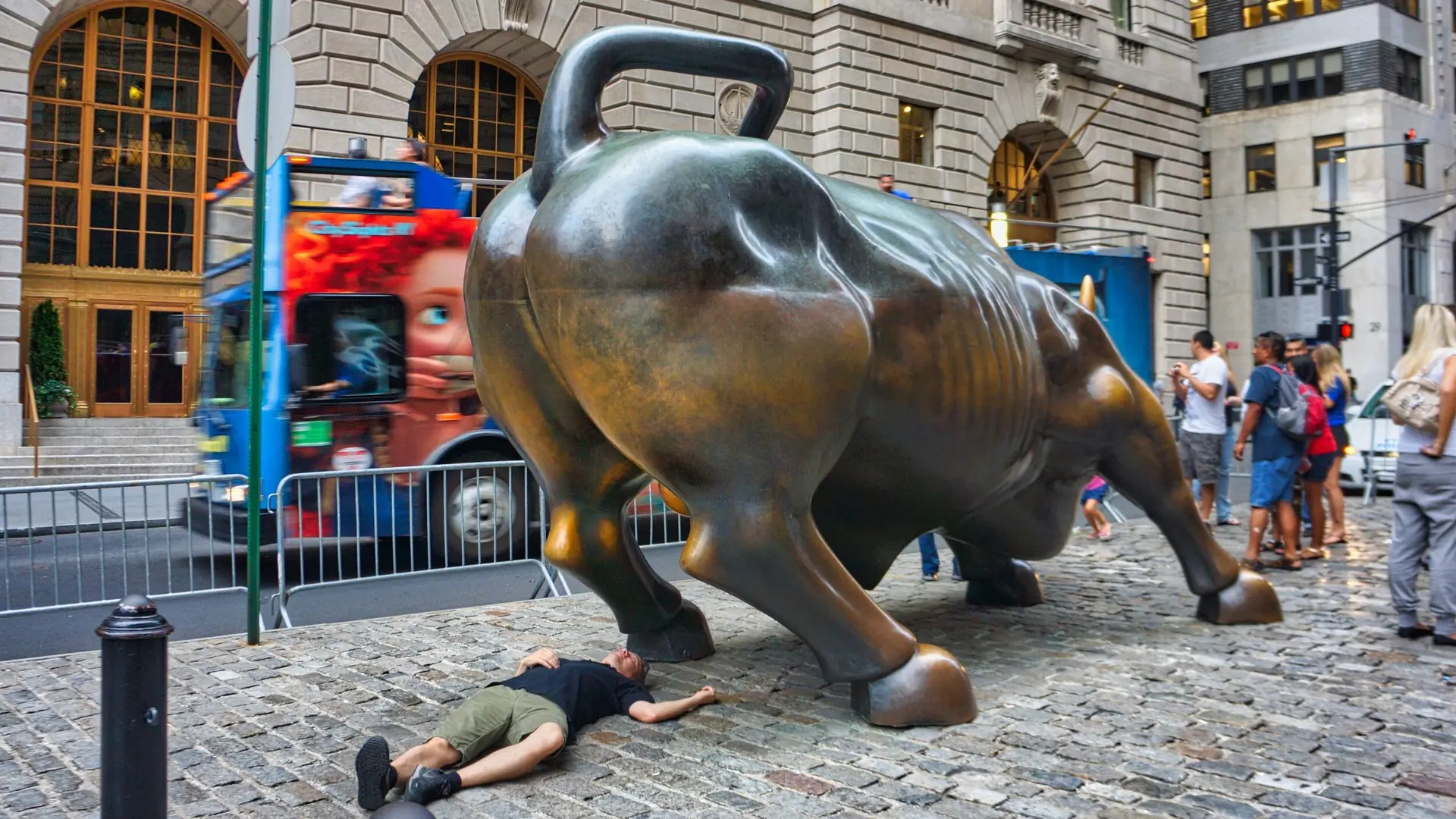
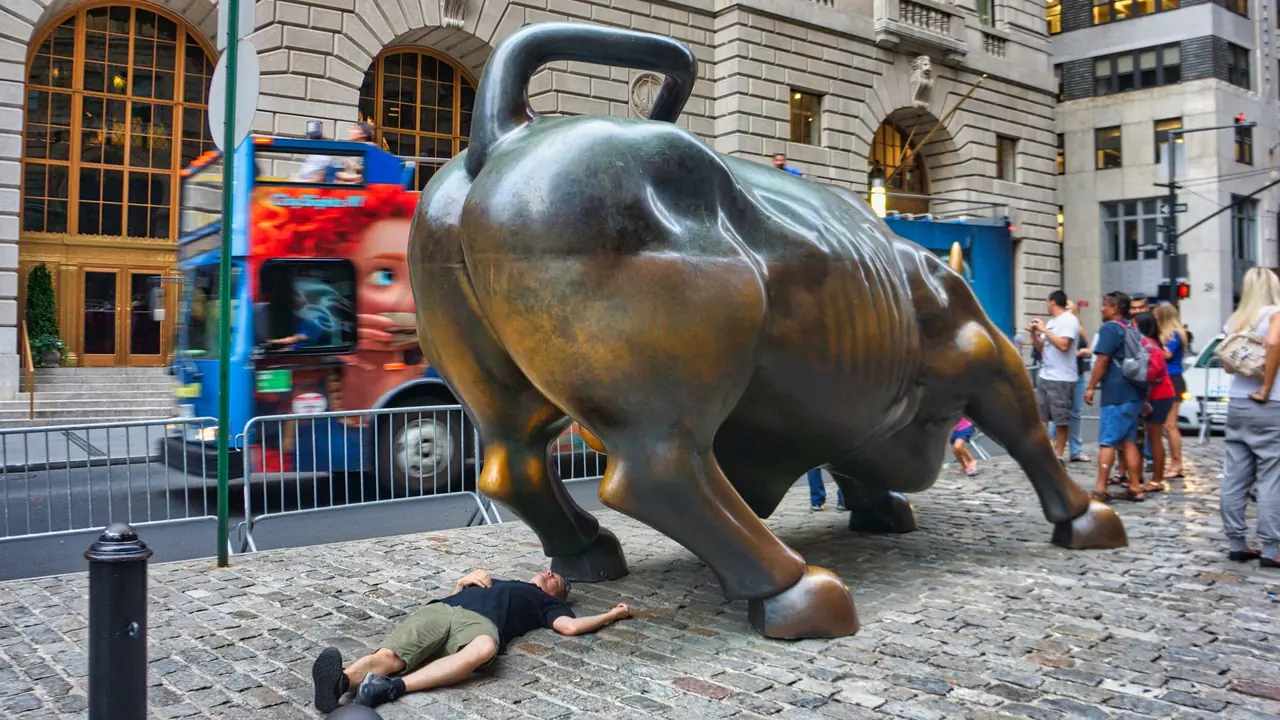
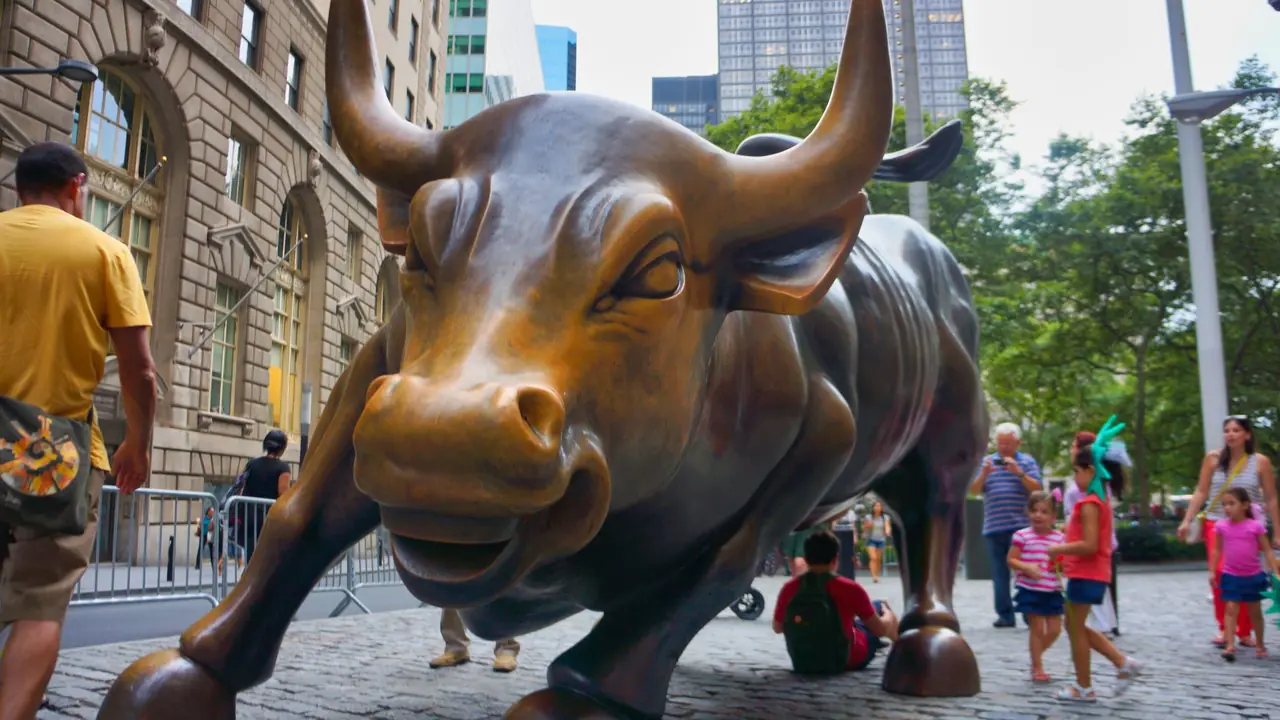
Charging Bull, sometimes called the Bull of Wall Street or the Bowling Green Bull, is a bronze sculpture that stands on Broadway just north of Bowling Green, in the Financial District of Manhattan S1. It measures about 11 by 16 feet, roughly 3.4 by 4.9 metres, and weighs 7,100 pounds, or about 3,200 kilograms S1.
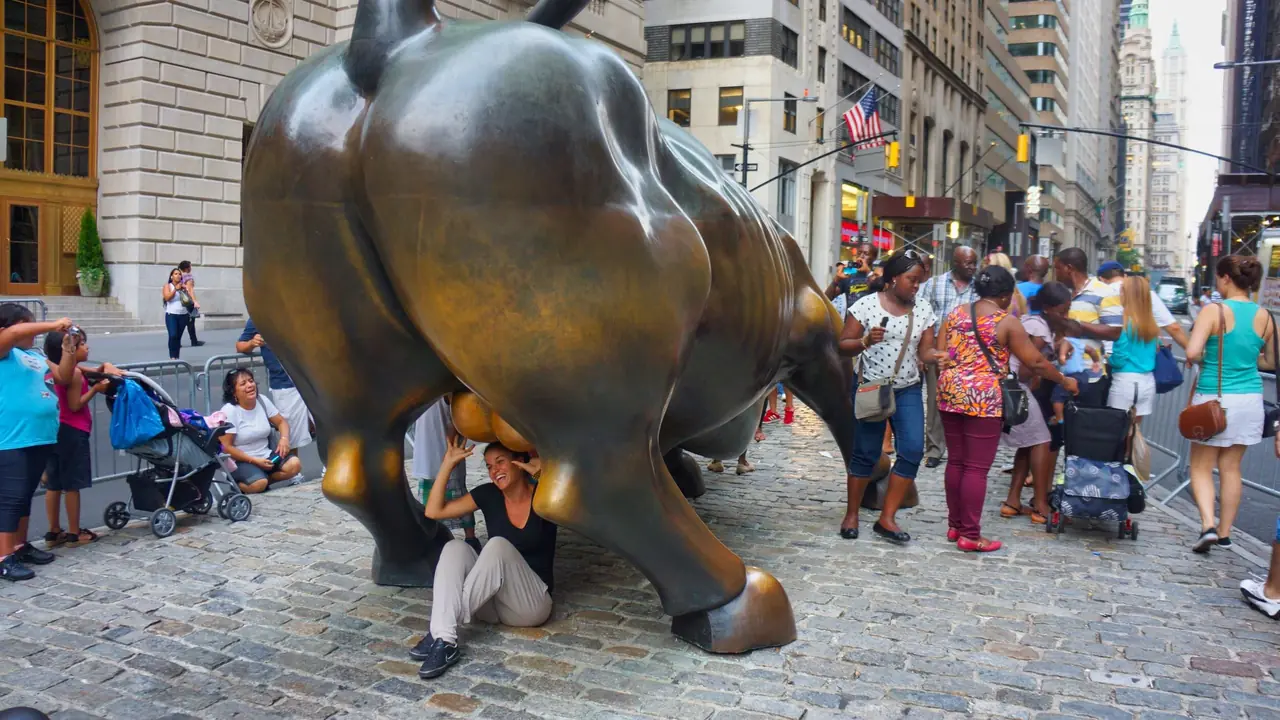
The bull has become a popular tourist destination that draws thousands of people a day and symbolises Wall Street and the Financial District S1. Yet it was never commissioned by the city: it arrived as an unauthorised gift. Its story is as much about art and protest as about money.
Video
A sculptor from Sicily
Its creator, Arturo Di Modica, was born on 26 January 1941 in Vittoria, Sicily S2. He lived in New York for more than 40 years S9.
Di Modica worked largely outside the traditional art world. He conceived the bull as a response to the stock market crash of 1987 S3. He wanted to give the city a symbol of strength at a difficult time.
The sculpture was cast at the Bedi-Makky Art Foundry, at a cost of about 360,000 dollars S5. The artist paid for it himself, intending it as a gift of encouragement to the city.
The bull is shown with its head lowered and its body twisted, as if about to charge. Its muscles and tension express strength, energy and optimism. Its nose and horns shine from the hands of countless visitors.

A Christmas present by night
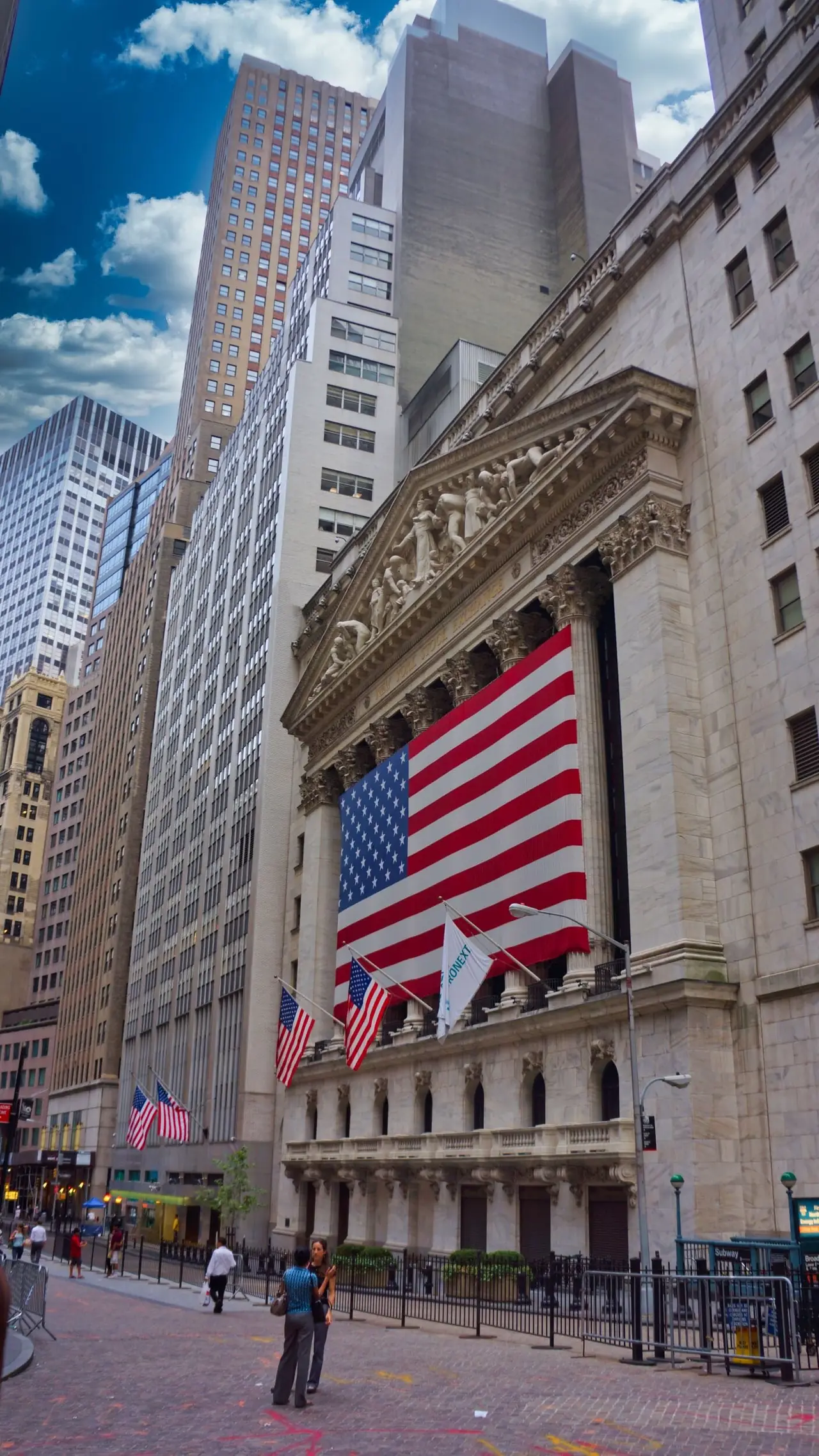
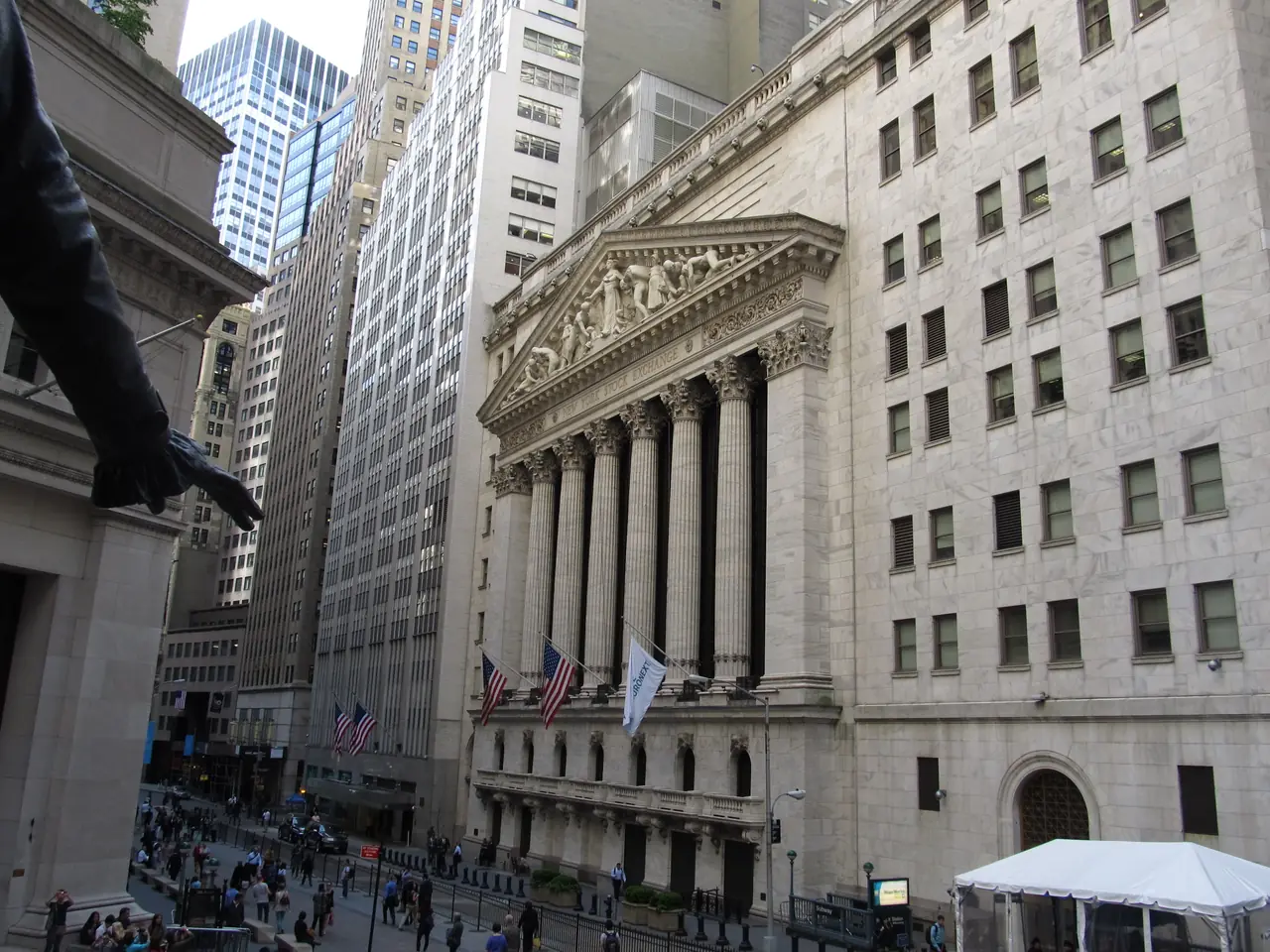
Late in the evening of 14 December 1989, Di Modica arrived on Wall Street with the bull on the back of a truck S1. He placed it beneath a 60-foot Christmas tree in the middle of Broad Street, in front of the New York Stock Exchange Building, as a Christmas gift to New Yorkers S1.
According to the artist, the operation was carried out with some 40 friends, a crane and a truck S9. By morning, the bronze bull was standing in front of the Exchange.
Di Modica stayed beside the sculpture to greet morning commuters S2. Passers-by were surprised, amused and curious about the animal that had appeared overnight. For a few hours, the bull belonged to the street.
The New York Stock Exchange arranged for the sculpture to be removed, and the police took it away later that day S2 S1. Di Modica paid a fine of 500 dollars for the illegal installation S3.

From Broad Street to Bowling Green
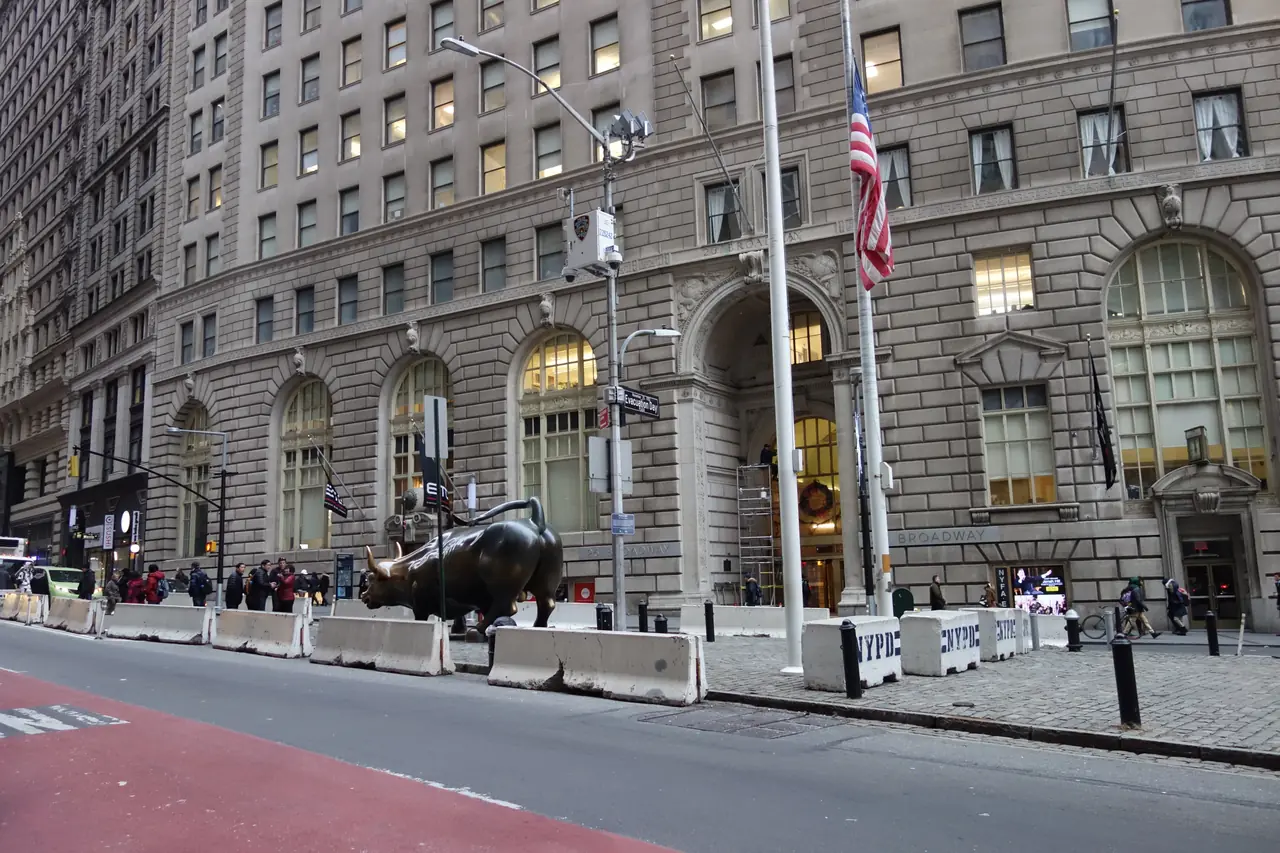
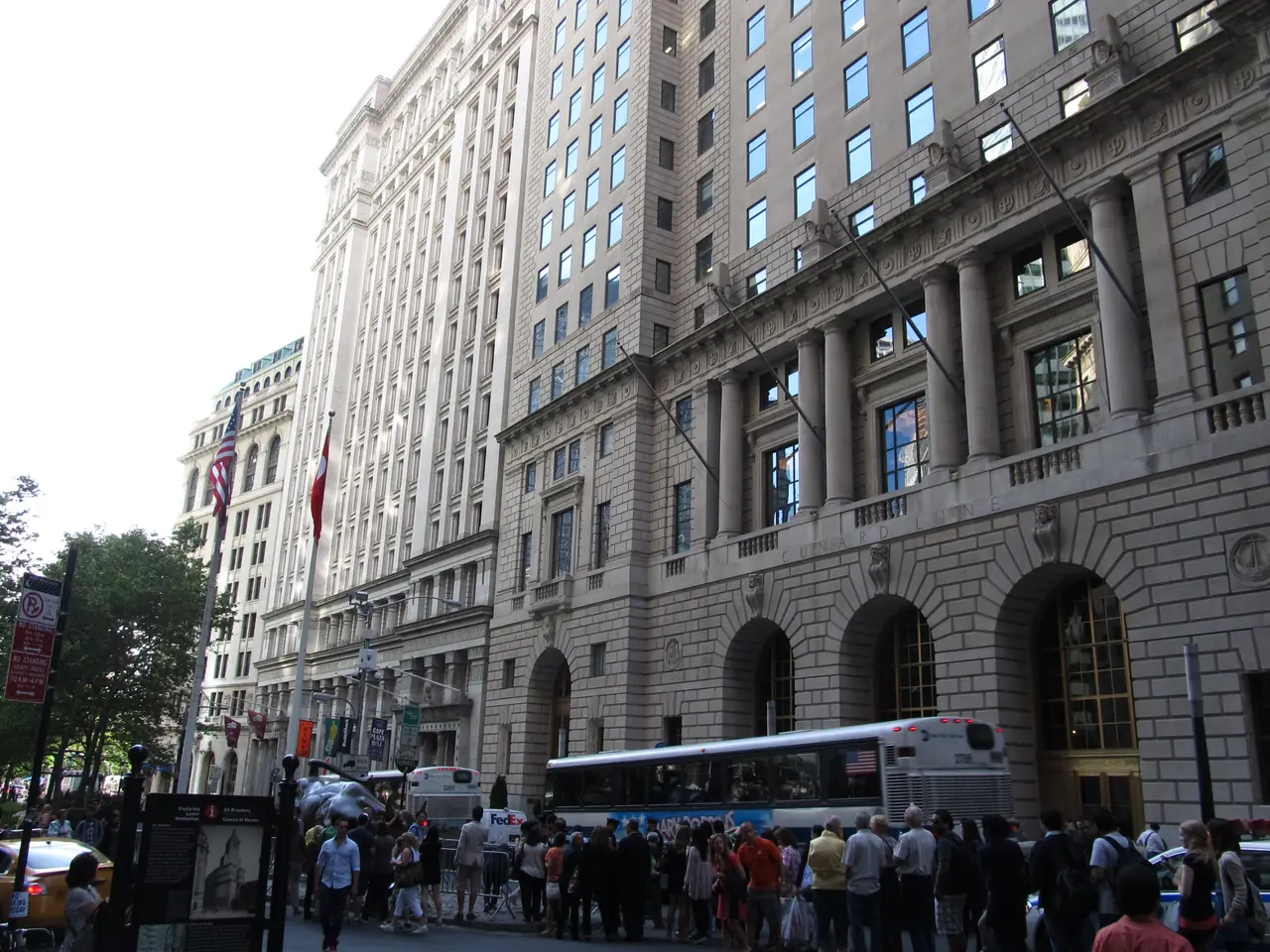
The public outcry that followed led the New York City Department of Parks and Recreation to reinstall the bull two blocks south of the Exchange S1. It was placed in Bowling Green, facing up Broadway just north of Whitehall Street S1. The location at the foot of Broadway gave it a permanent stage.
The bull was installed at Bowling Green on 20 December 1989 and rededicated with a ceremony the following day S1. Despite having only a temporary permit at first, it soon became a popular attraction S1.
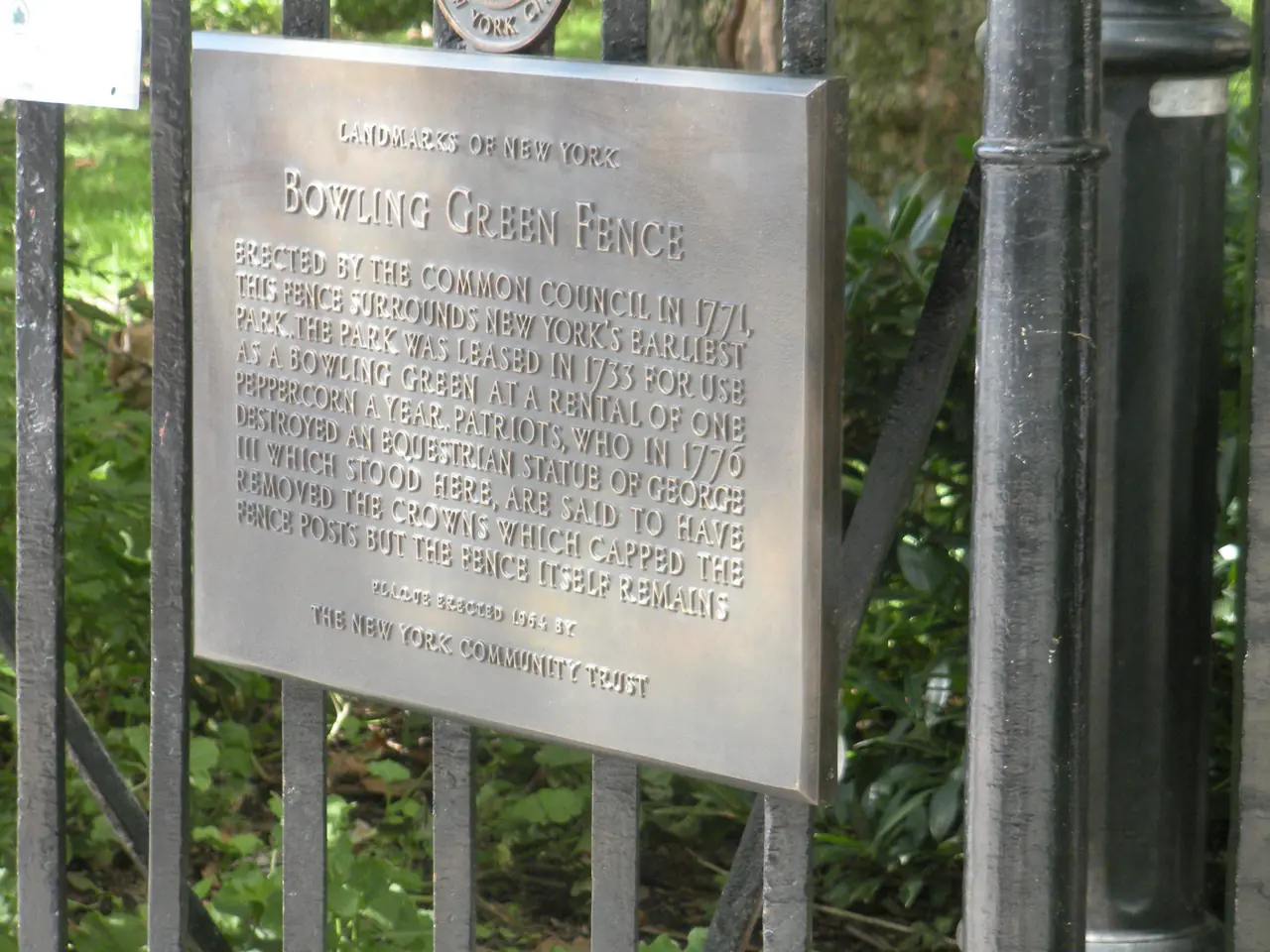
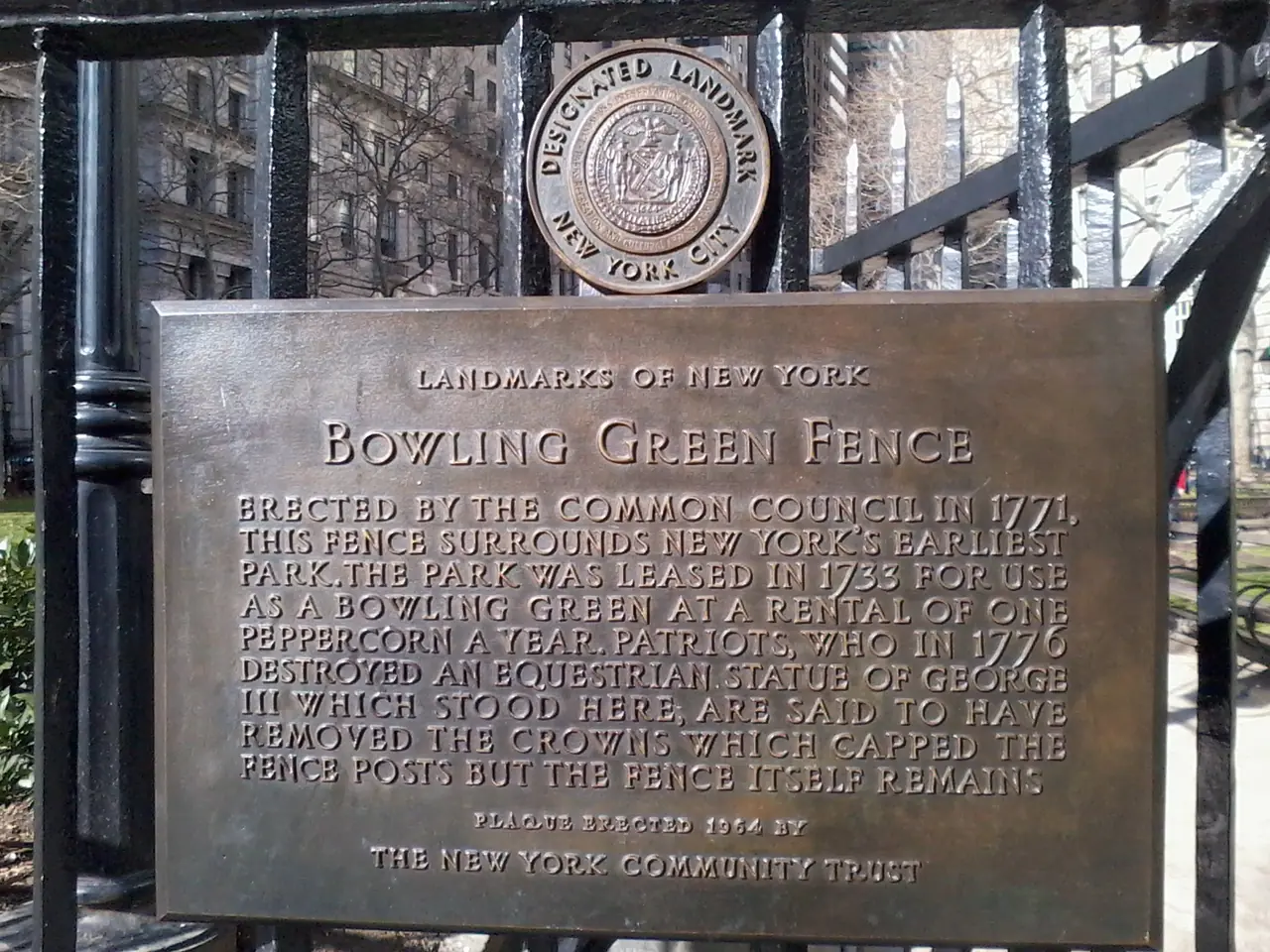
Bowling Green itself is a historic place. According to a plaque on its fence, it is New York’s earliest park and was leased in 1733 for use as a bowling green at a rent of one peppercorn a year S8. Its name recalls the game of lawn bowls played there in colonial times.
The iron fence around the park was erected in 1771 S8. In 1776 patriots destroyed an equestrian statue of King George III that stood there, and they are said to have removed the crowns that topped the fence posts S8.

A symbol for sale
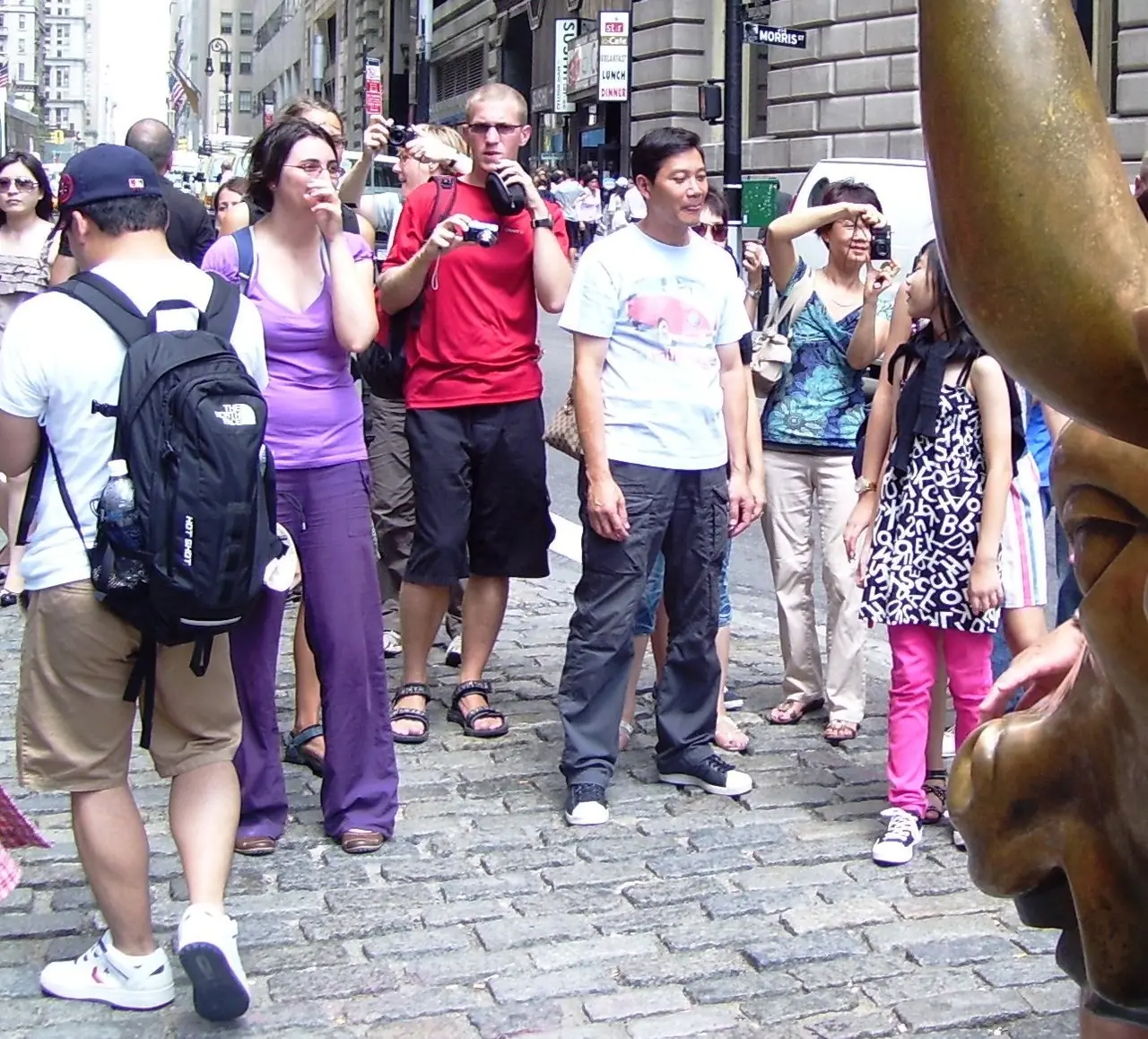
Over the following years, the bull became one of the most photographed sights in New York. During its solo stay at Bowling Green, it was seen by millions of visitors S10. It also appeared in films, advertisements and countless news reports about the markets.
In 2004 Di Modica announced that the sculpture was for sale, on condition that it remain in its location S6. The artist kept the rights to the statue S6.
In 2006 he sued Random House and other companies for selling replicas and using the image of the bull in advertising without permission S6. The bull had become a powerful brand, and its creator fought to control it.
Over time, the bull came to represent the financial world itself. For many visitors it is simply a symbol of optimism and prosperity. Traders and tourists alike touch it for luck.

The bull and the girl
On 7 March 2017, on the eve of International Women’s Day, a new statue appeared at the northern tip of Bowling Green, facing the bull S7. Fearless Girl, a small bronze girl standing in a confident pose, seemed to stare the bull down S4.
Di Modica asked for her removal, arguing that she exploited his work for commercial purposes and changed the meaning of the bull S7. He called Fearless Girl an advertising trick S7.
Fearless Girl was removed from Bowling Green on 28 November 2018 and unveiled on 10 December at a new site facing the New York Stock Exchange S7. A plaque with footprints marks the place where she once stood S1.
In November 2019 city officials announced that they wished to move the bull to a plaza outside the Stock Exchange for safety reasons S1. Di Modica argued that such a move would turn his work into a New York Stock Exchange bull S4.
Arturo Di Modica died on 19 February 2021 in his hometown of Vittoria, at the age of 80 S2. In his last years he had bought land in Vittoria to build a sculpture school S3.

Visiting the bull
Today the bull stands on a traffic island at the northern tip of Bowling Green Park S4. A queue often forms to take photos with it, especially in front of its head and behind its back.
The bull is easy to reach on foot from Wall Street, Battery Park and the Staten Island Ferry terminal. Early morning is the best time to see it without crowds. The Bowling Green subway station is only a few steps away.
More than three decades after it appeared overnight, the bull still charges up Broadway. What began as an illegal Christmas present has become one of the best-known images of New York.

Frequently asked questions
When did it appear?
Late on 14 December 1989, in front of the New York Stock Exchange S1.
How heavy is the bull?
About 7,100 pounds, or 3,200 kilograms S1.
Why was it moved to Bowling Green?
It was removed from Broad Street and, after public outcry, reinstalled at Bowling Green on 20 December 1989 S1.
Where is Fearless Girl now?
In front of the New York Stock Exchange, since December 2018 S7.
Sources
- S1 Wikipedia: Charging Bull.
- S2 Wikipedia: Arturo Di Modica.
- S3 The Art Newspaper: Arturo Di Modica has died aged 80.
- S4 The Art Newspaper: Plans to move the Charging Bull.
- S5 Simple English Wikipedia: Wall Street Bull.
- S6 Wikipedia (es): Toro de Wall Street.
- S7 Wikipedia: Fearless Girl.
- S8 Wikimedia Commons: Bowling Green Fence plaque.
- S9 Associated Press: Sculptor of Charging Bull dies.
- S10 NYU Journal of Intellectual Property: Charging Bull and Fearless Girl.
More in USA