Ocean Drive: The Art Deco Seafront of Miami Beach
- Local name
- Ocean Drive · Barbara Capitman Way (10th Street section)
- Type
- Historic seafront street
- Continent
- America
- Country
- United States
- State
- Florida
- County
- Miami-Dade County
- City
- Miami Beach
- Neighbourhood
- South Beach
- Location
- Seafront of South Beach, facing Lummus Park; hotels between 5th and 15th Streets
- Historic district
- Miami Beach Architectural District, National Register of Historic Places (14 May 1979)
- Architectural styles
- Art Deco · Streamline Moderne · Mediterranean Revival
- Main architects
- Henry Hohauser · L. Murray Dixon · Albert Anis · Anton Skislewicz
- Landmarks
- Colony Hotel (1935) · Tides (1936) · Park Central (1937) · Cardozo (1939) · Casa Casuarina (1930)
- Date
- December 2023
- Photographer
- Héctor Godes
- Published
- January 14, 2024
- Reviewed
- November 13, 2026
- Coordinates
- 25.7685, -80.1332
- More
- Wikipedia
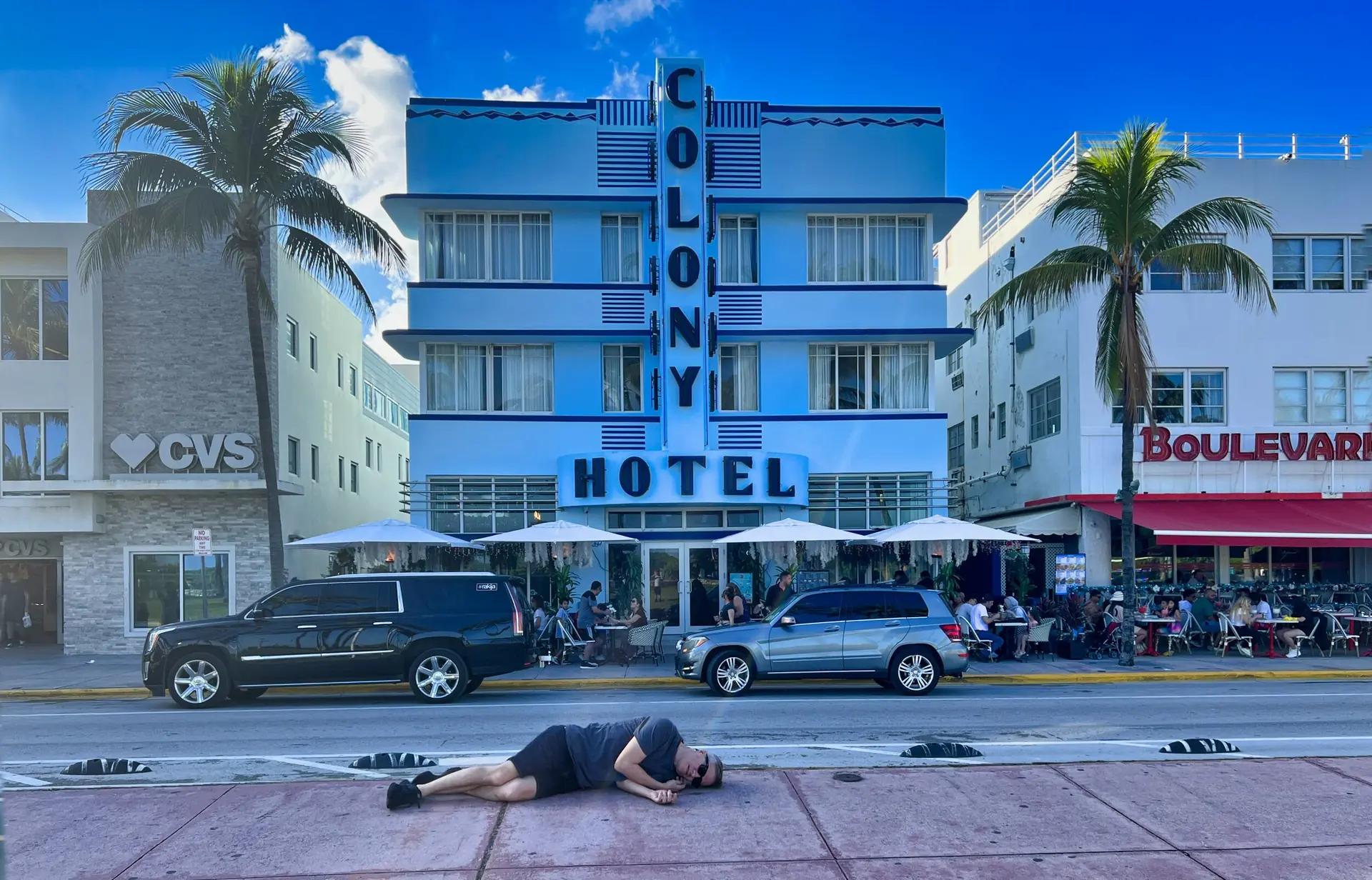
Ocean Drive is the seafront street of South Beach, in Miami Beach, Florida, lined on one side by small hotels from the 1930s and on the other by Lummus Park and the Atlantic S5. It is the most visible part of the Miami Beach Architectural District, the first urban district of the twentieth century to enter the National Register of Historic Places S1.
Today the street looks like a postcard, but its pastel façades are the result of a recent battle. In the 1970s many of these buildings were run-down and threatened with demolition, and Ocean Drive owes its current image to a group of activists who decided that ordinary resort hotels deserved to be protected.
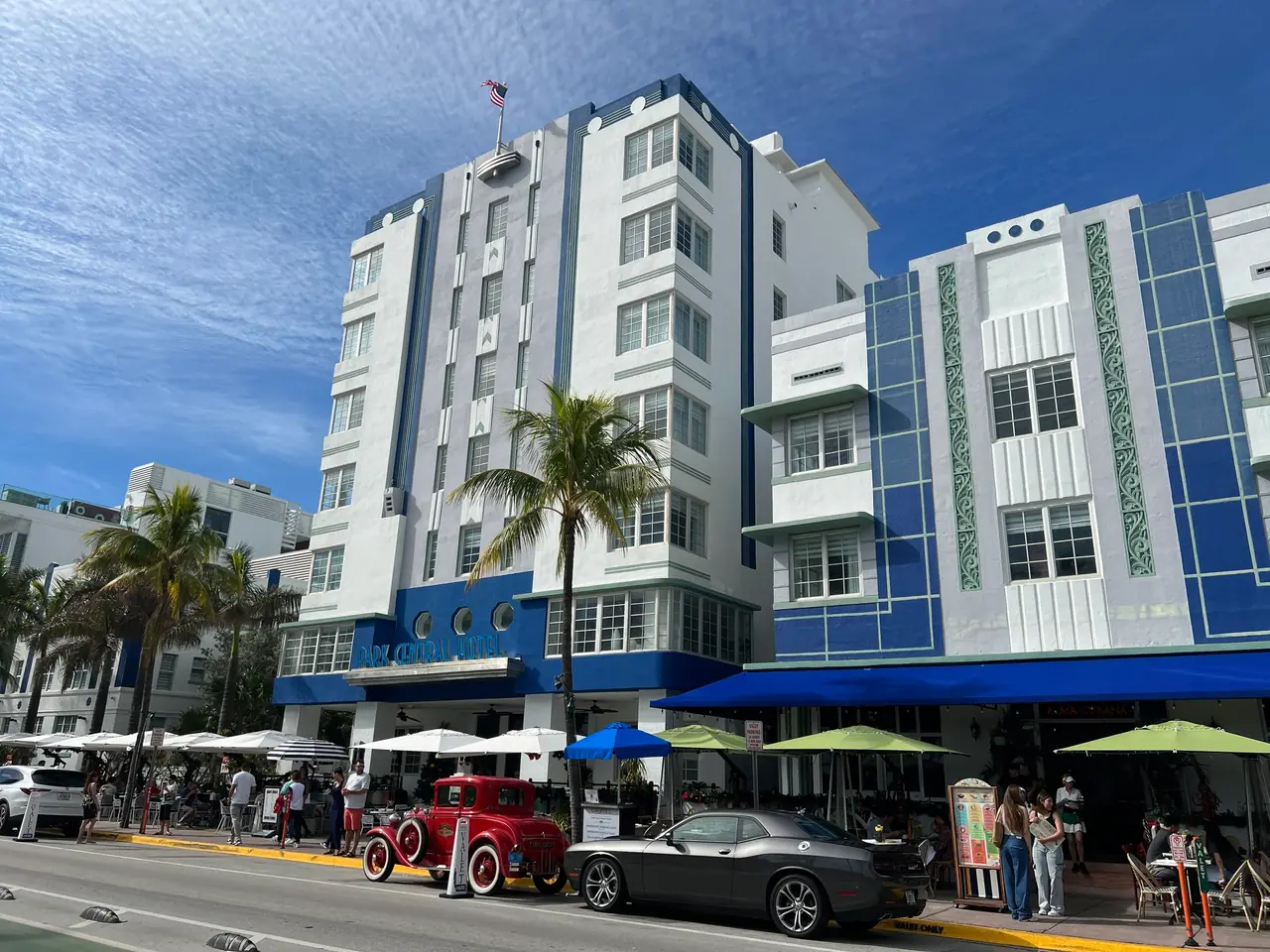
A street facing the ocean
The hotels of Ocean Drive stand between 5th and 15th Streets, the stretch where buildings can look directly onto the sea S5. Between them and the beach lies Lummus Park, a public park named after the Lummus brothers, two pioneers of Miami S10.
That arrangement explains the character of the street. Instead of building on the sand, Miami Beach kept a green strip of palms and lawn in front of the hotels, so the façades became a continuous front facing a park and the water.
The park covers about 30 hectares along the beach. It was redesigned in the mid-1980s as part of the renewal of the historic district, with lawns, palms, sports courts and a seafront promenade S10.
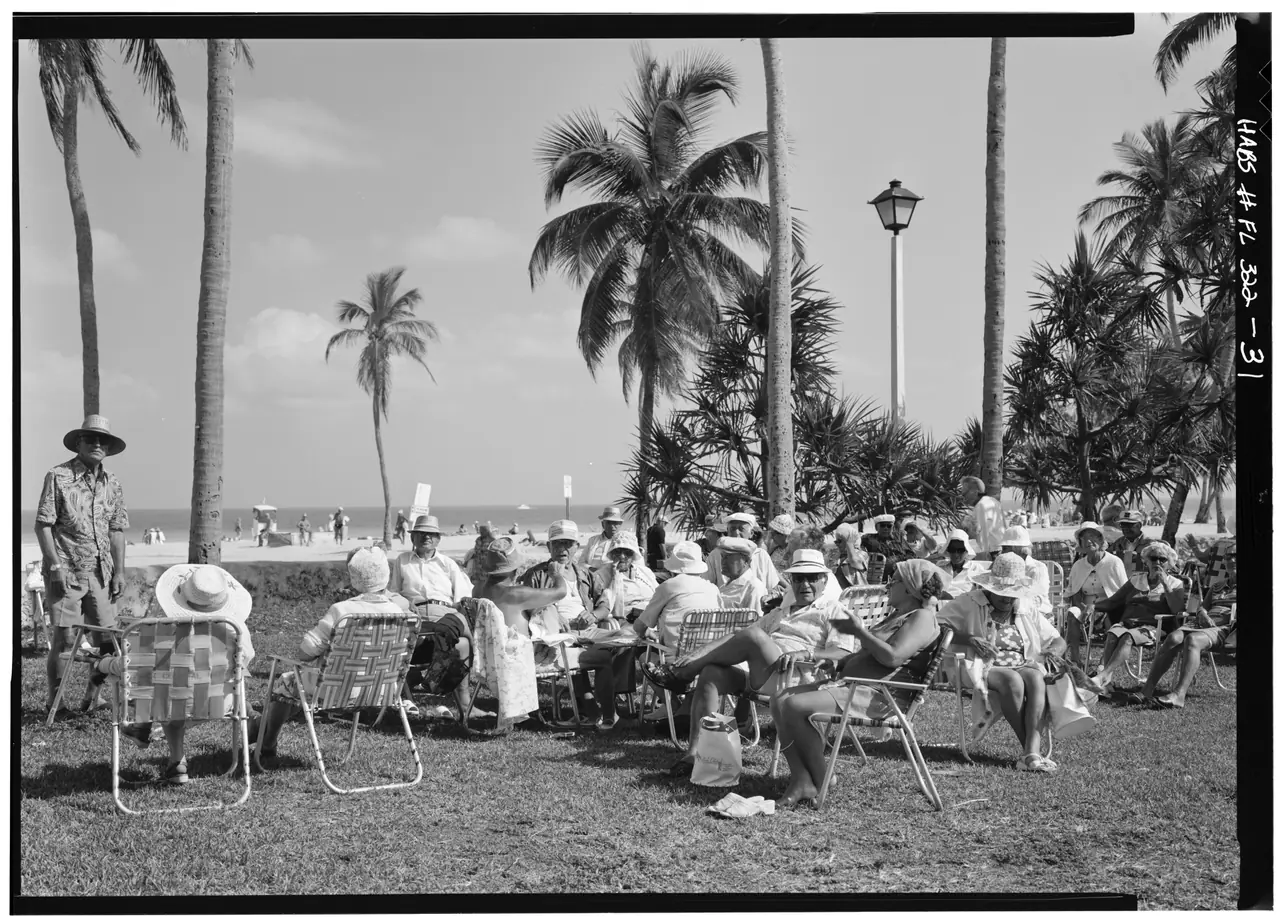
The hotels of the 1930s
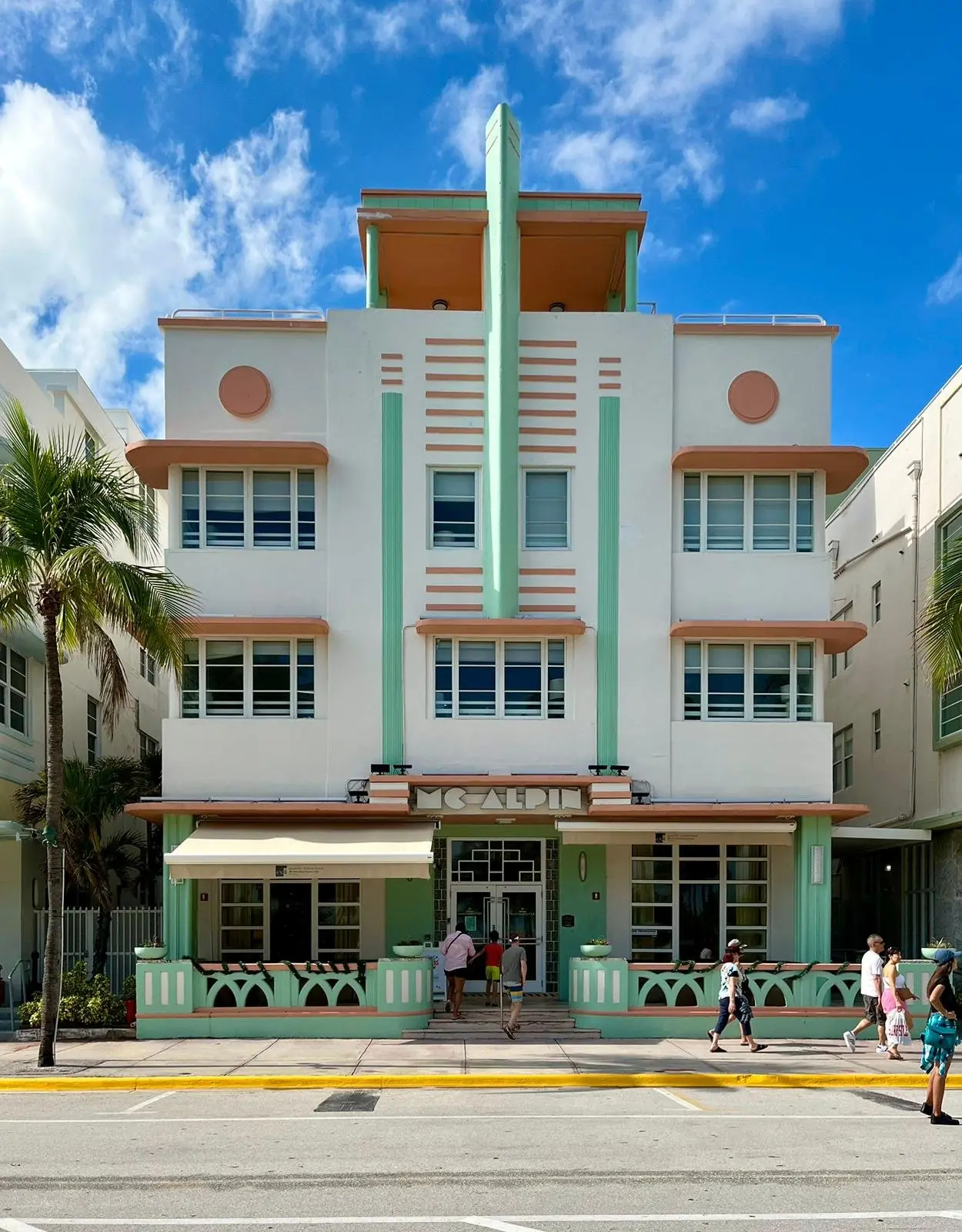
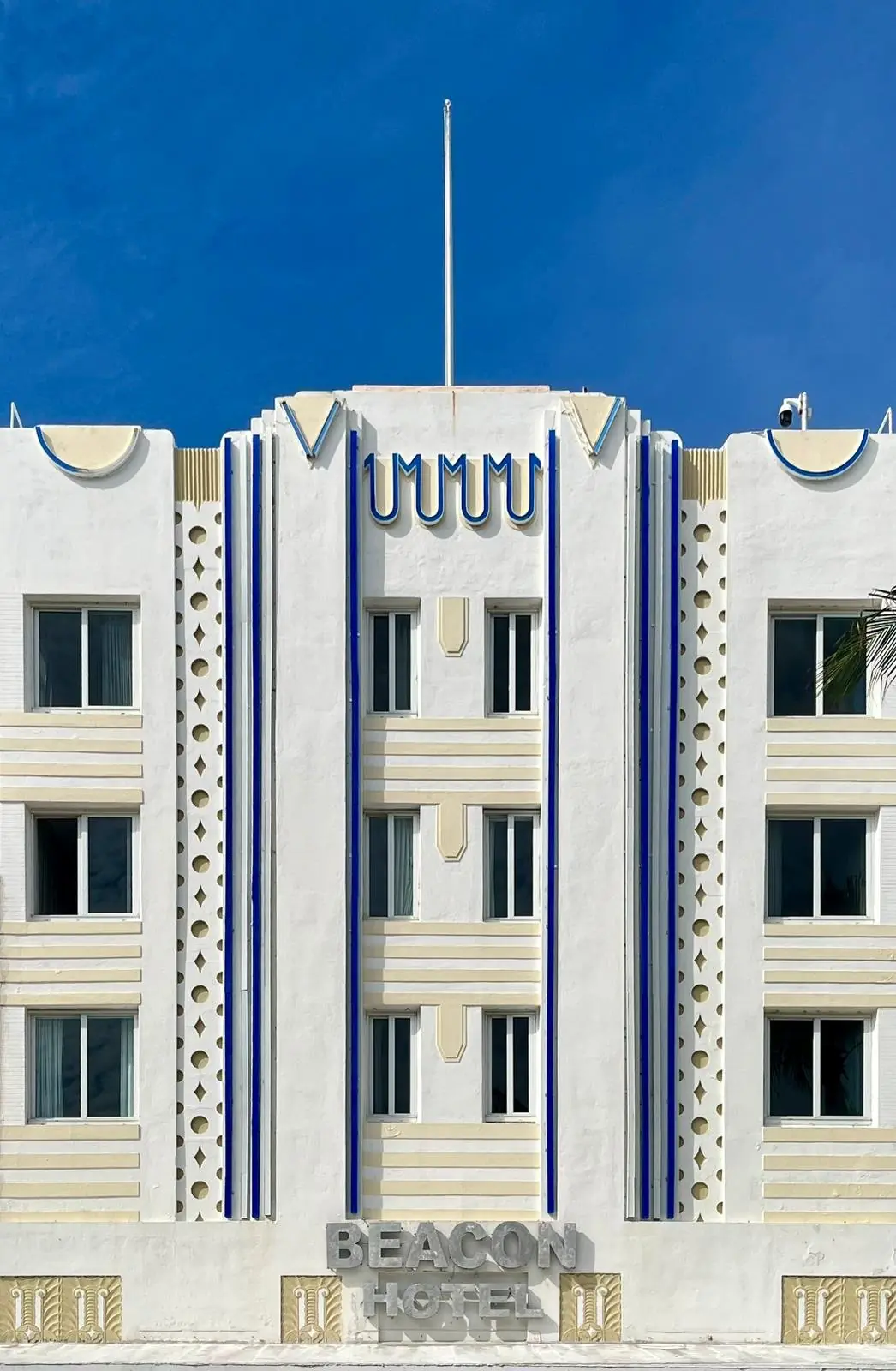
Most of the buildings on Ocean Drive date from the mid-1930s to the early 1940s S5. They were modest hotels for middle-class holidaymakers, designed by a small group of architects who shaped the image of South Beach, among them Henry Hohauser, L. Murray Dixon, Albert Anis and Anton Skislewicz S5.
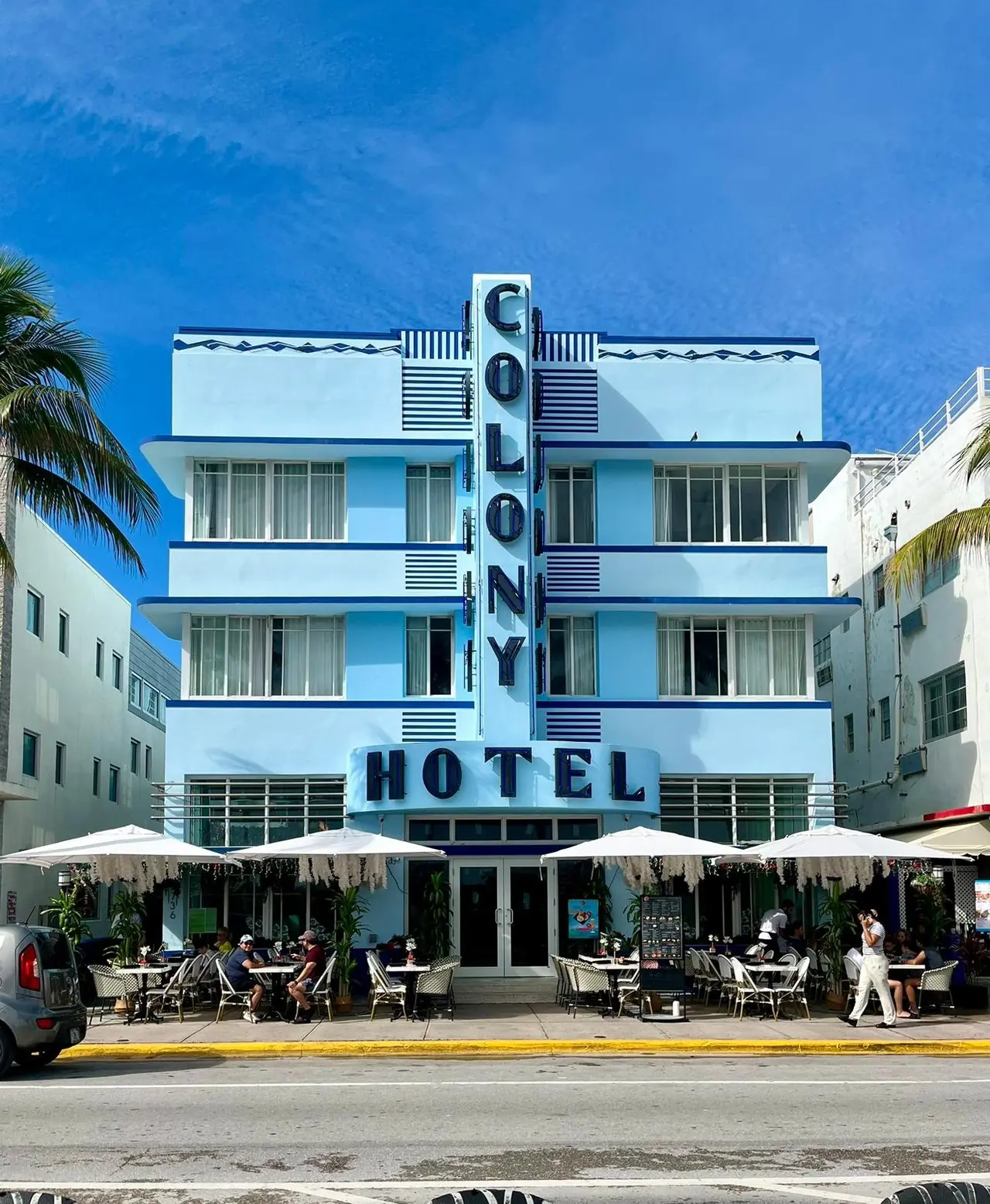
Henry Hohauser, trained at the Pratt Institute in New York, arrived in Florida in 1932 S6. On Ocean Drive alone he designed the Colony (1935), the Edison (1935), the Park Central (1937) and the Cardozo (1939) S6.
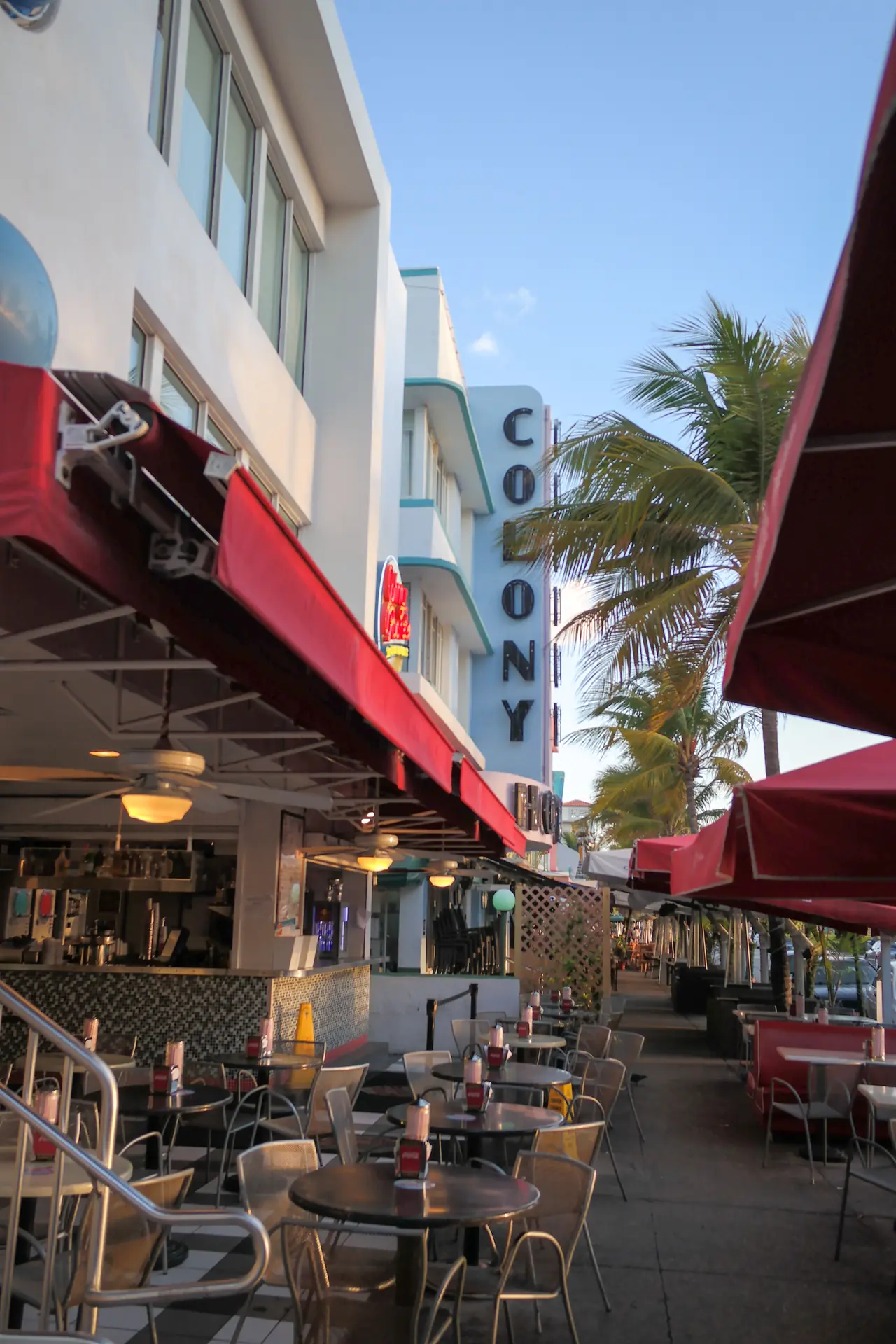

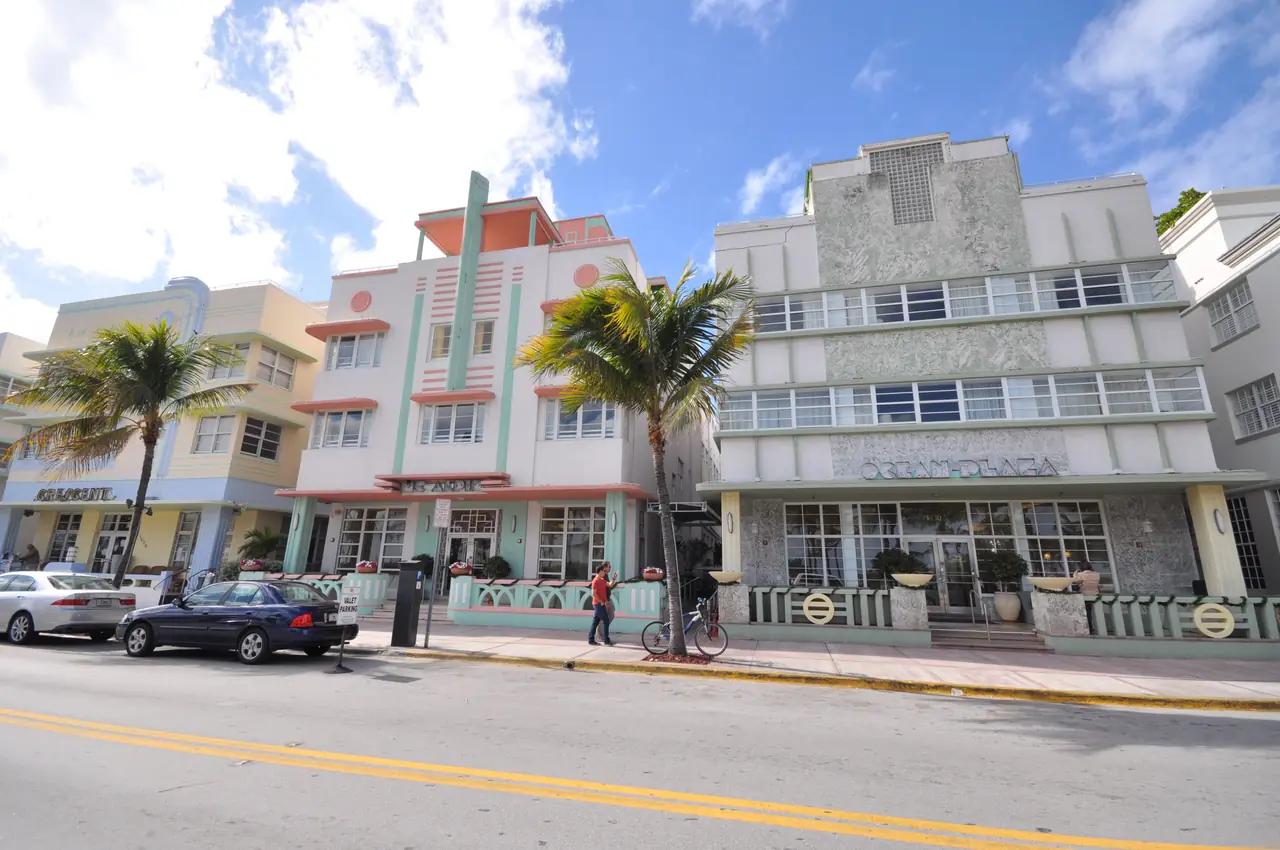
Art Deco by the sea
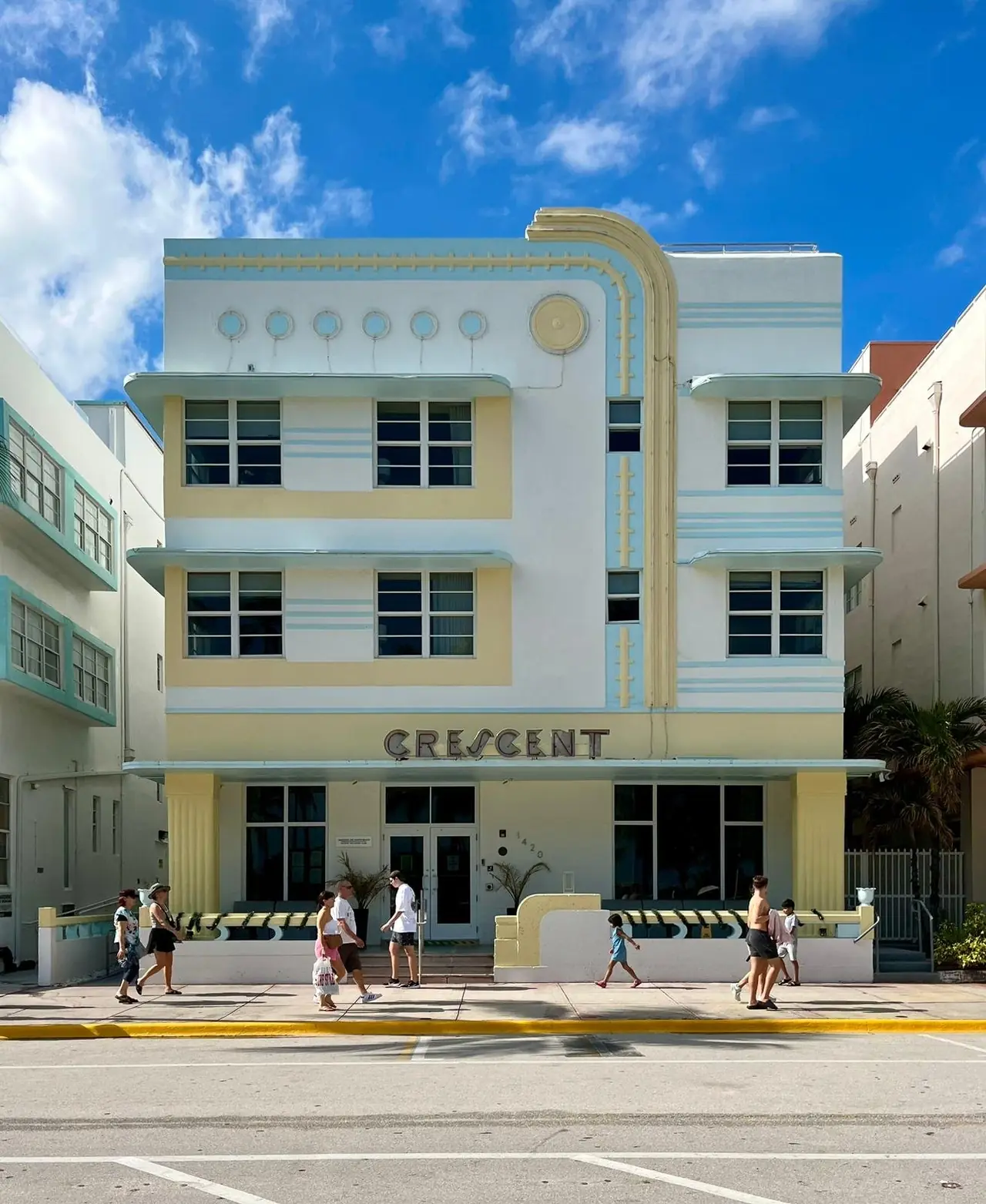
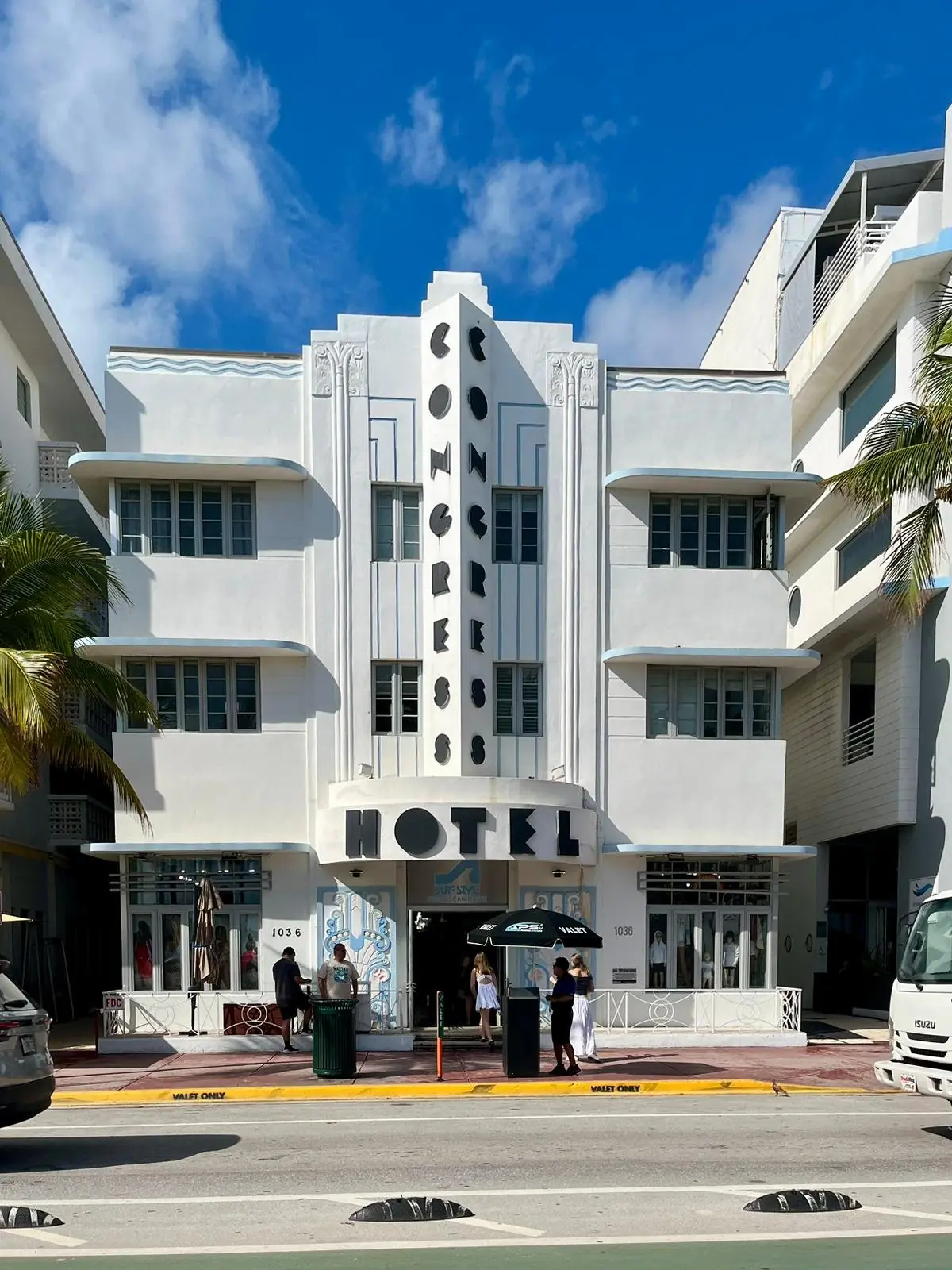
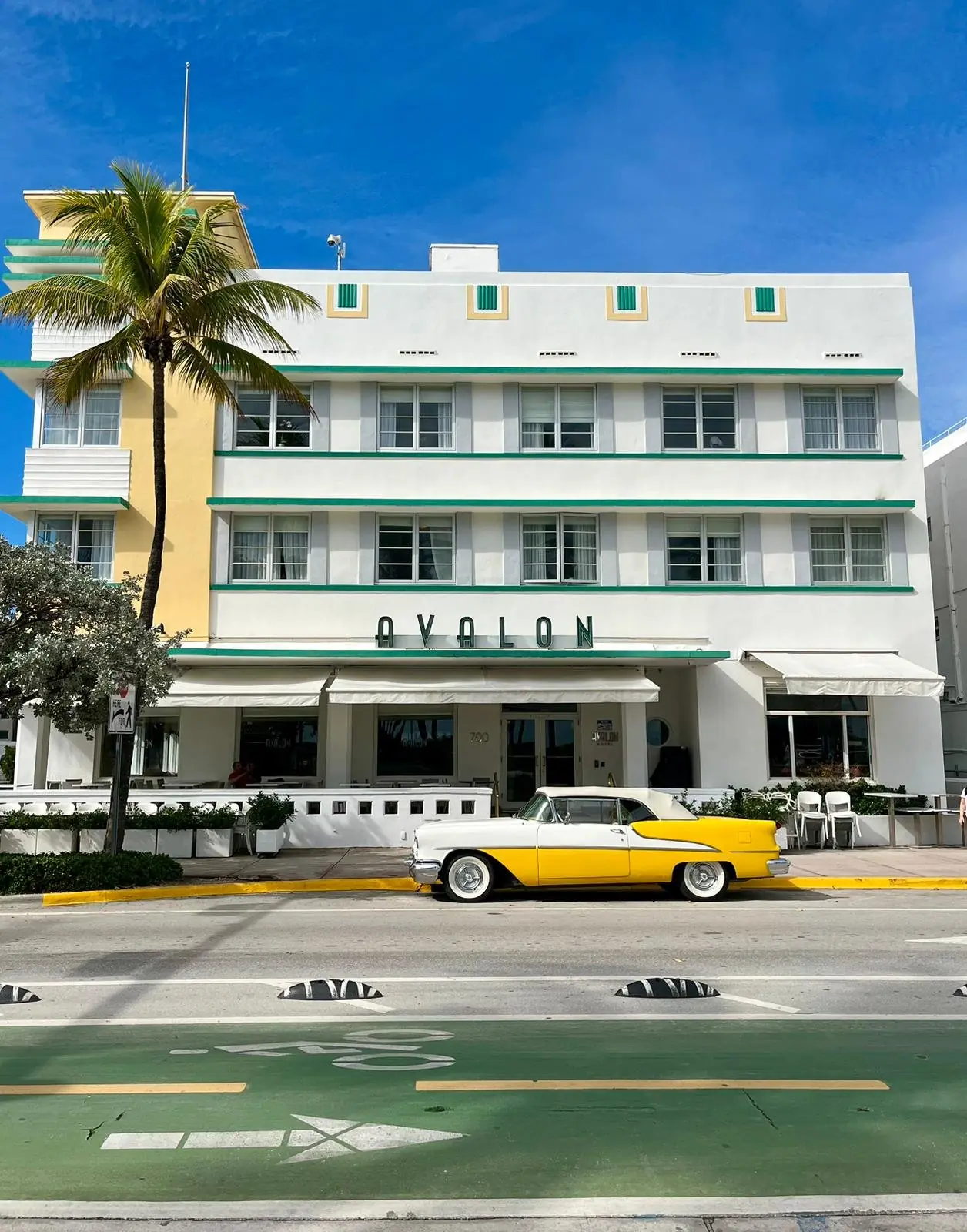
The architecture of Ocean Drive adapts the Art Deco style to a tropical resort. The buildings are low, usually three or four storeys, with symmetrical façades, vertical towers or spires over the entrance and horizontal bands that emphasise speed and movement.
Many of them belong to the later variant known as Streamline Moderne, inspired by ocean liners and aerodynamic design. Curved corners, porthole windows and the thin concrete ledges called eyebrows, which shade the windows from the sun, are recurring features of the street.

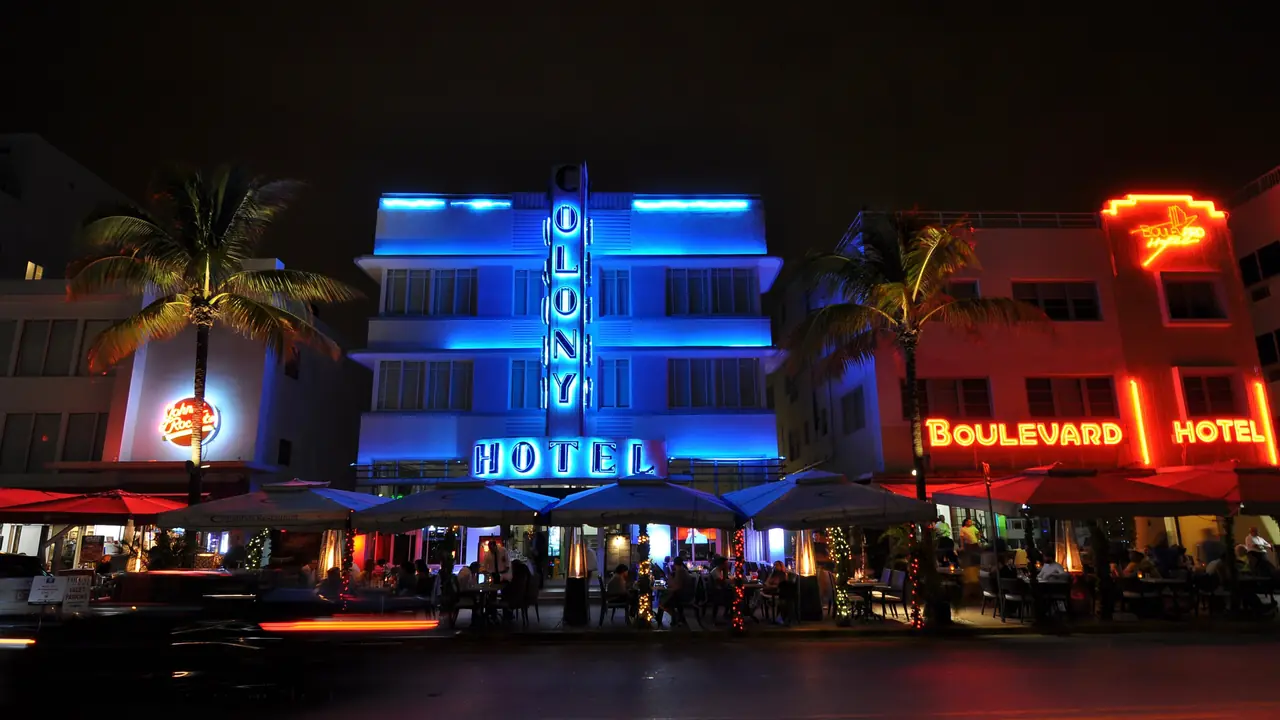
Neon signs complete the picture. At night the names of the hotels light up in vertical letters, turning the street into one of the best-known images of Miami Beach.
Casa Casuarina
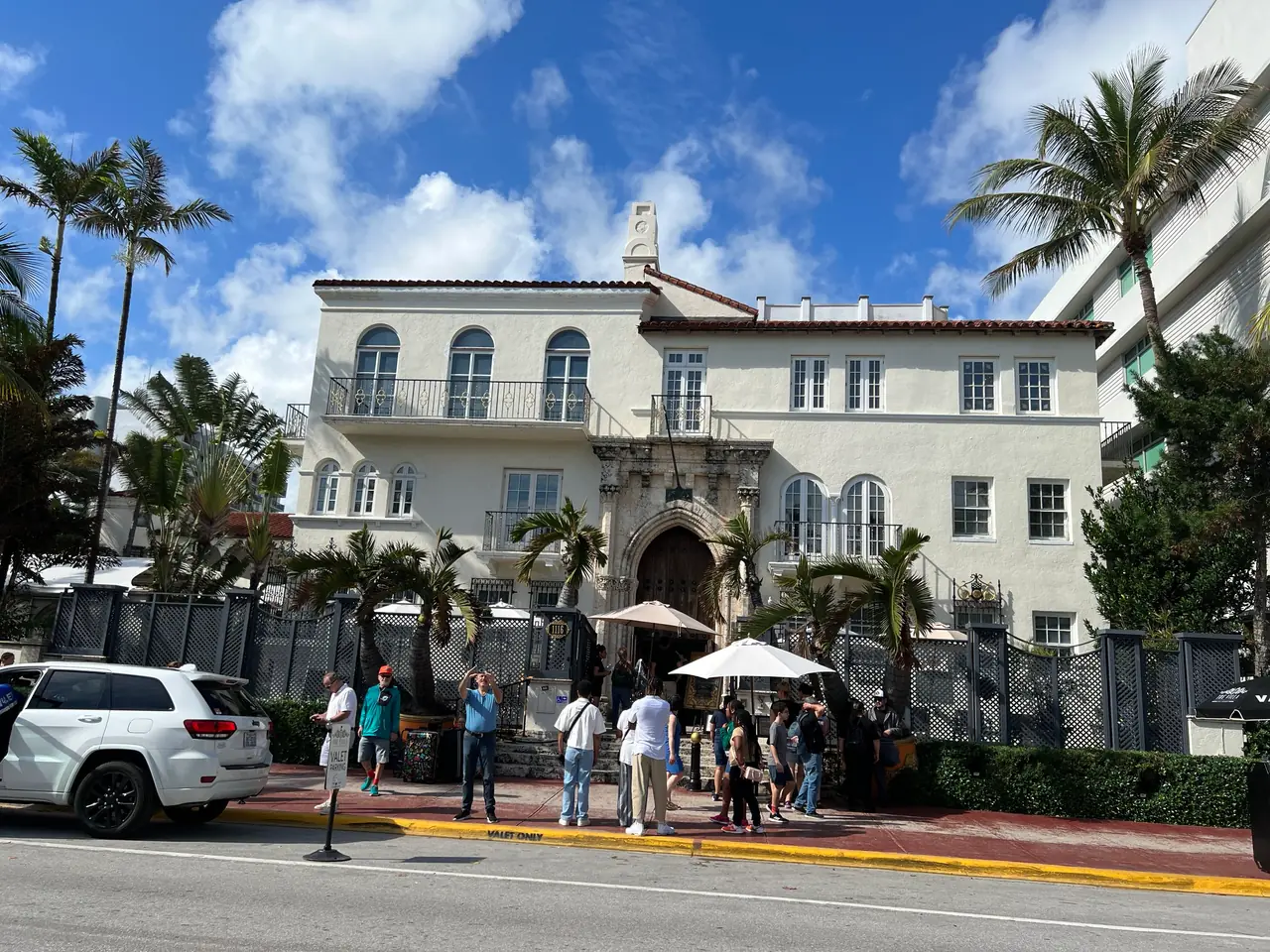
One building on Ocean Drive breaks the pattern. Casa Casuarina, at number 1116, was built in 1930 in the Mediterranean Revival style, around a central courtyard, for the philanthropist Alden Freeman S5 S7.
Freeman modelled it on the Alcázar de Colón, the house of Christopher Columbus’s son in Santo Domingo, and even incorporated a brick from that building S9. After Freeman’s death it changed hands and took the name of Amsterdam Palace, under which it appears in the historic district S5.
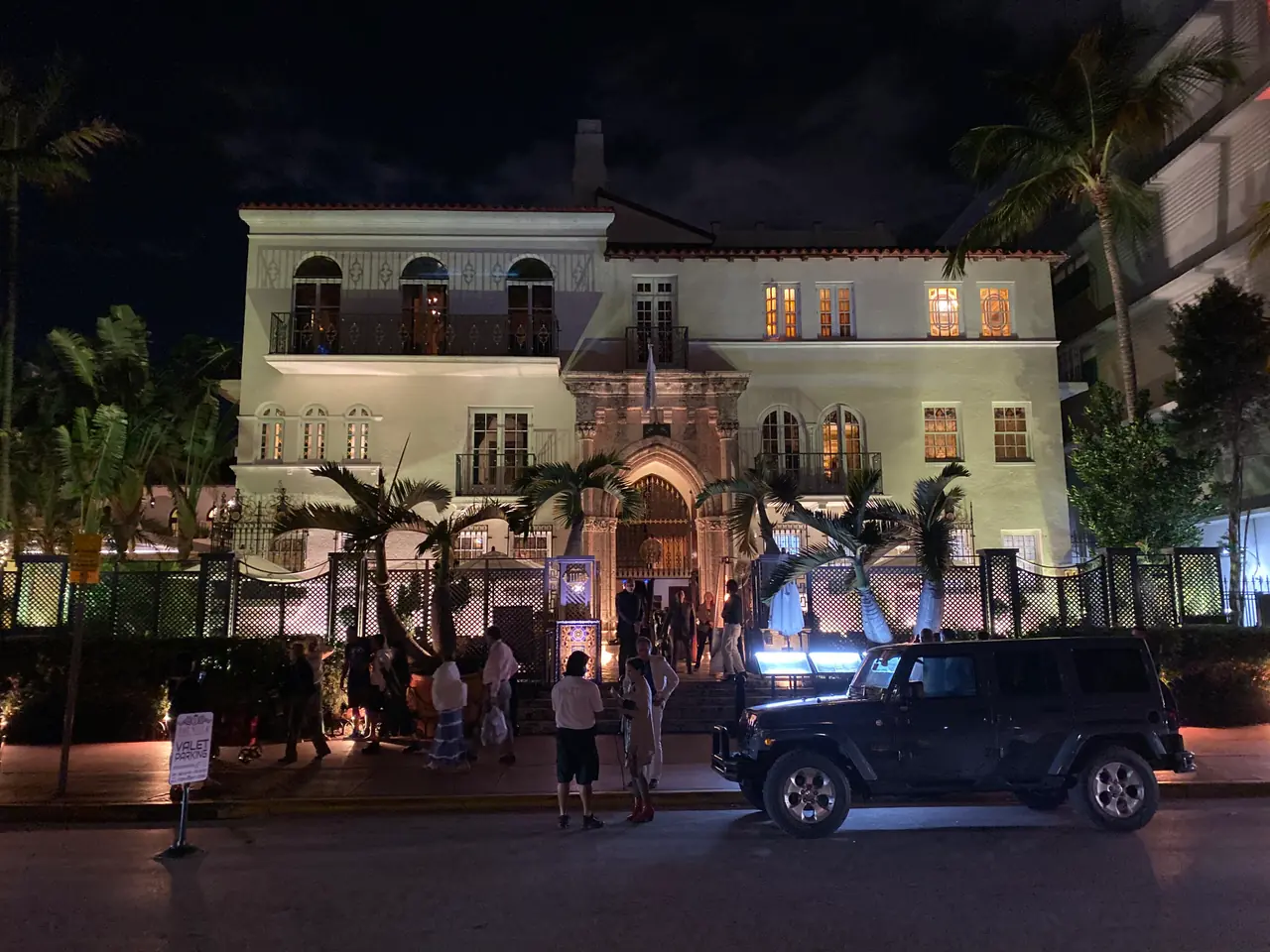

In 1992 the Italian fashion designer Gianni Versace bought the house and turned it back into a private residence, and he lived there until he was murdered on its entrance steps in 1997 S7. Since 2015 it has operated as a boutique hotel S7.
Versace’s arrival coincided with the transformation of South Beach into an international destination for fashion and nightlife. The house, already restored, became one of the most recognisable addresses on the street.
Saving Ocean Drive
By the 1970s South Beach had become a neighbourhood of elderly residents and faded hotels, and many Art Deco buildings were being demolished. In 1976 Barbara Baer Capitman founded the Miami Design Preservation League together with the designer Leonard Horowitz and other activists S1.
Capitman and Horowitz also travelled across the United States to document the Art Deco buildings of other cities, convinced that the style deserved the same attention as older architecture S1.
Their campaign succeeded on 14 May 1979, when about one square mile of South Beach was listed on the National Register of Historic Places S2. It was the first urban district of the twentieth century to receive that recognition in the United States S1.
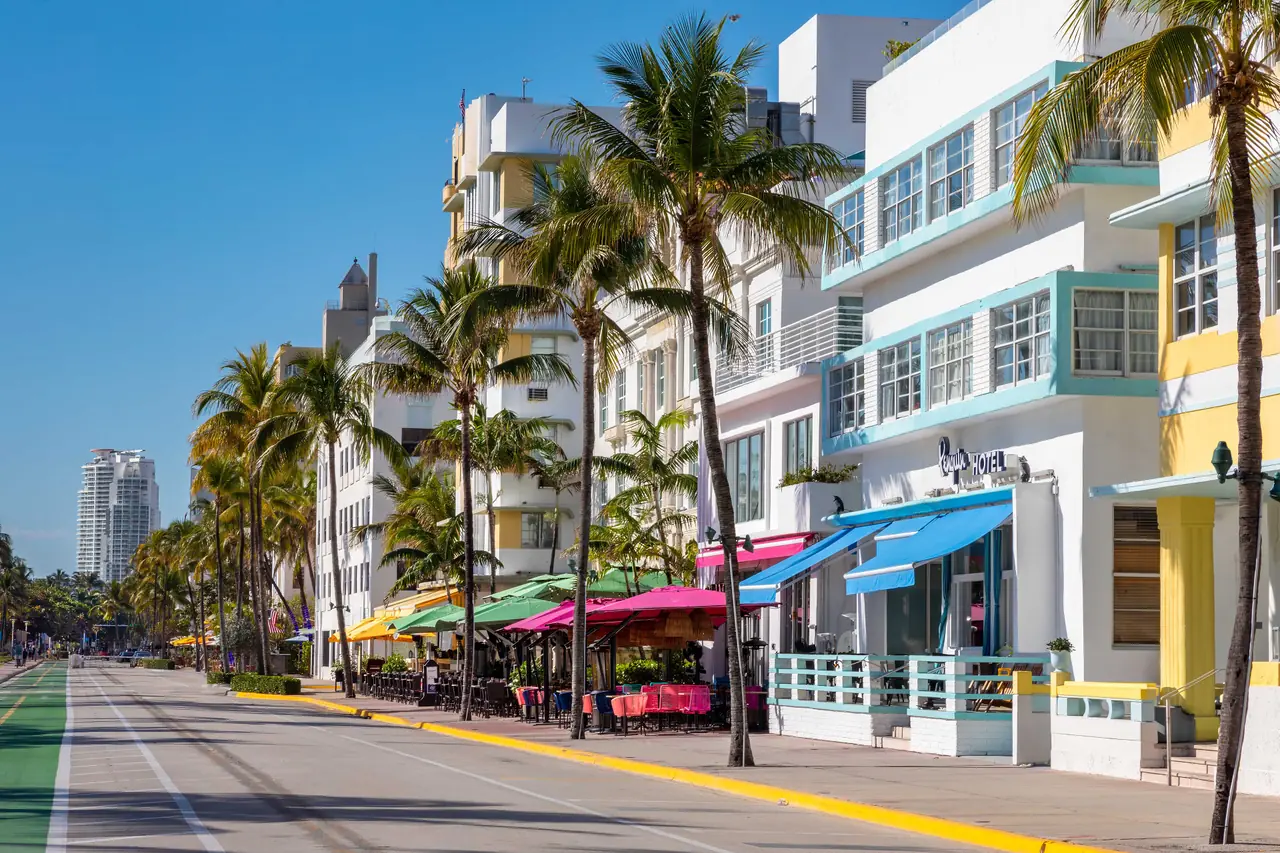

The listing made it more difficult to demolish the buildings and gave owners a federal tax credit to restore them S13. The small hotels of Ocean Drive, facing the sea across the park, were among the first to be restored between 1979 and 1985 S12.
Capitman also wanted the preservation to respect the low-income residents who lived in the district S3. In 1986 the city adopted its first local historic districts, including the Ocean Drive and Collins Avenue district, which added municipal protection to the national listing S1.
The pastel palette
The colours that define Ocean Drive today were not the original ones. Leonard Horowitz designed a palette of pastels to highlight the details of the façades, and with funding obtained through the county he began to repaint the buildings S4.
Not everyone liked the result at first, but building by building the palette won over the neighbourhood and was copied far beyond Miami Beach S4. Horowitz died of AIDS at 43, and his friends scattered his ashes in the ocean in front of the hotels he had painted S4.

Ocean Drive today
The restored street became a symbol of South Beach and a setting for film and television. The Sun Ray Apartments on Ocean Drive appear in the chainsaw scene of Scarface (1983), and the hotels have been filmed countless times since S8.
Its popularity has brought new pressures, from nightlife to rising property values, and the debate on how to preserve the district continues. Ocean Drive shows that heritage does not need to be ancient: a row of small 1930s hotels became a landmark because someone decided they were worth saving.
Frequently asked questions
Why is Ocean Drive famous?
It is the seafront of the Miami Beach Architectural District, lined with small Art Deco hotels from the 1930s facing Lummus Park and the ocean S5.
Who designed the hotels on Ocean Drive?
A small group of architects, including Henry Hohauser, L. Murray Dixon, Albert Anis and Anton Skislewicz S5.
When was the Art Deco district protected?
It was listed on the National Register of Historic Places on 14 May 1979, after a campaign led by Barbara Baer Capitman S2.
Why are the buildings painted in pastel colours?
The designer Leonard Horowitz created a pastel palette in the 1980s to highlight the details of the restored façades S4.
What is Casa Casuarina?
It is a Mediterranean Revival mansion built in 1930 at 1116 Ocean Drive, where Gianni Versace lived from 1992 until his death in 1997 S7.
Sources
- S1 Miami Design Preservation League: A brief history of MDPL.
- S2 Open Plaques: Barbara Baer Capitman historical marker.
- S3 National Trust for Historic Preservation: Barbara Baer Capitman, South Beach’s Art Deco hero.
- S4 WLRN: Meet the man behind all those South Beach pastels.
- S5 Wikipedia: Miami Beach Architectural District.
- S6 Wikipedia: Henry Hohauser.
- S7 Wikipedia: Casa Casuarina.
- S8 Wikipedia: South Beach.
- S9 Free Tours by Foot: Miami Art Deco self-guided tour.
- S10 Wikipedia: Lummus Park (Miami Beach).
- S11 Wikipedia: Barbara Baer Capitman.
- S12 The Spectator: Deco fever (1991).
- S13 WFIT: A battle over the soul of Miami Beach.
More in USA