Munich Frauenkirche: The Cathedral with Twin Domes
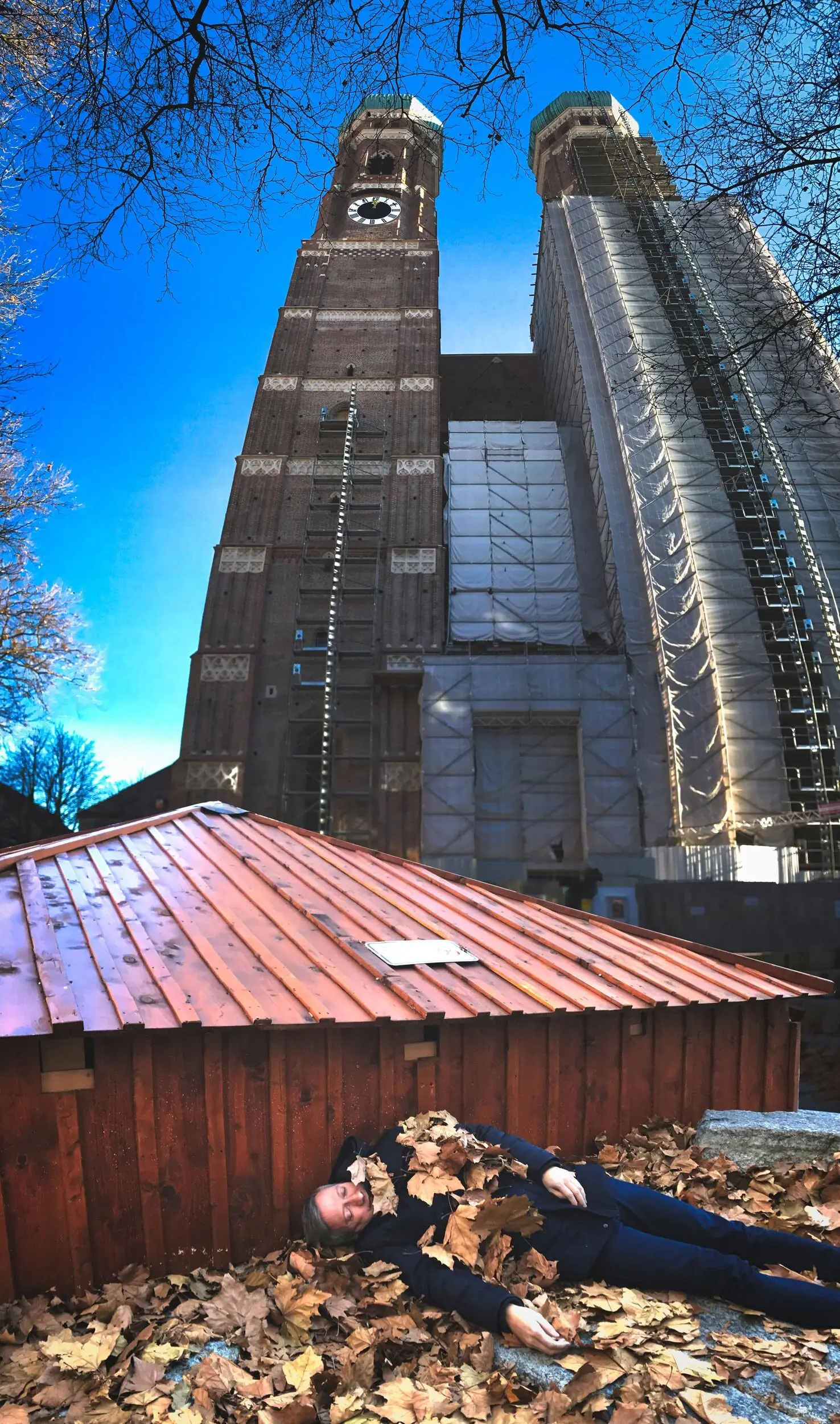
- Local name
- Dom zu Unserer Lieben Frau
- Type
- Cathedral, late Gothic hall church
- Continent
- Europe
- Country
- Germany
- State
- Bavaria
- City
- Munich
- Location
- Frauenplatz, old town
- Built
- 1468–1488; consecrated 1494
- Architect
- Jörg von Halsbach
- Domes
- 1525
- Towers
- 98.57 m (north) and 98.45 m (south)
- Dimensions
- 109 m long, 40 m wide
- Date
- December 2016
- Photographer
- Bruno Sellés
- Published
- February 28, 2021
- Reviewed
- November 21, 2026
- Coordinates
- 48.1386, 11.5736
- More
- Wikipedia
The Frauenkirche, whose full name is Dom zu Unserer Lieben Frau, or Cathedral of Our Dear Lady, is the cathedral of the Archdiocese of Munich and Freising S1. It is a landmark and is considered a symbol of the Bavarian capital S1.
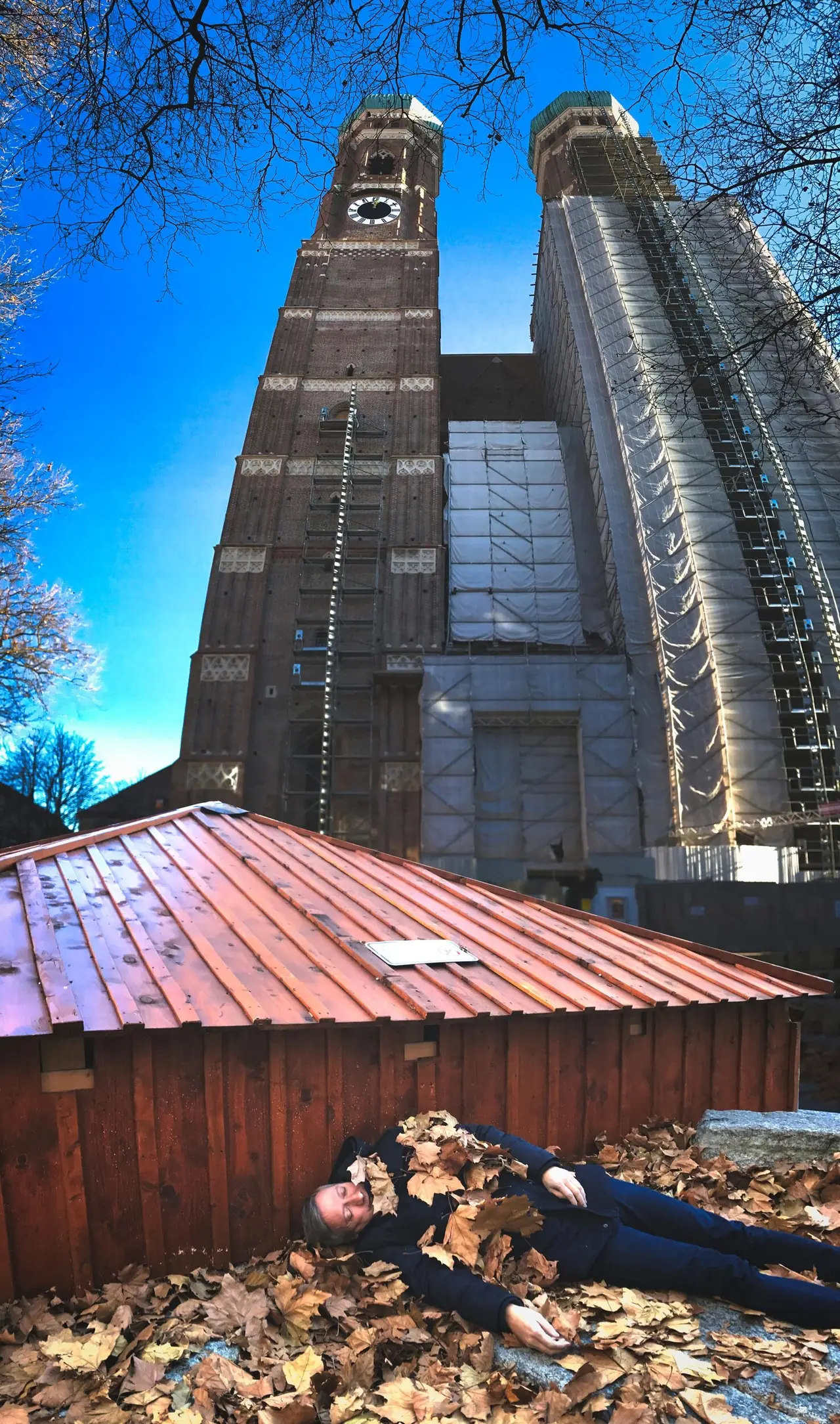
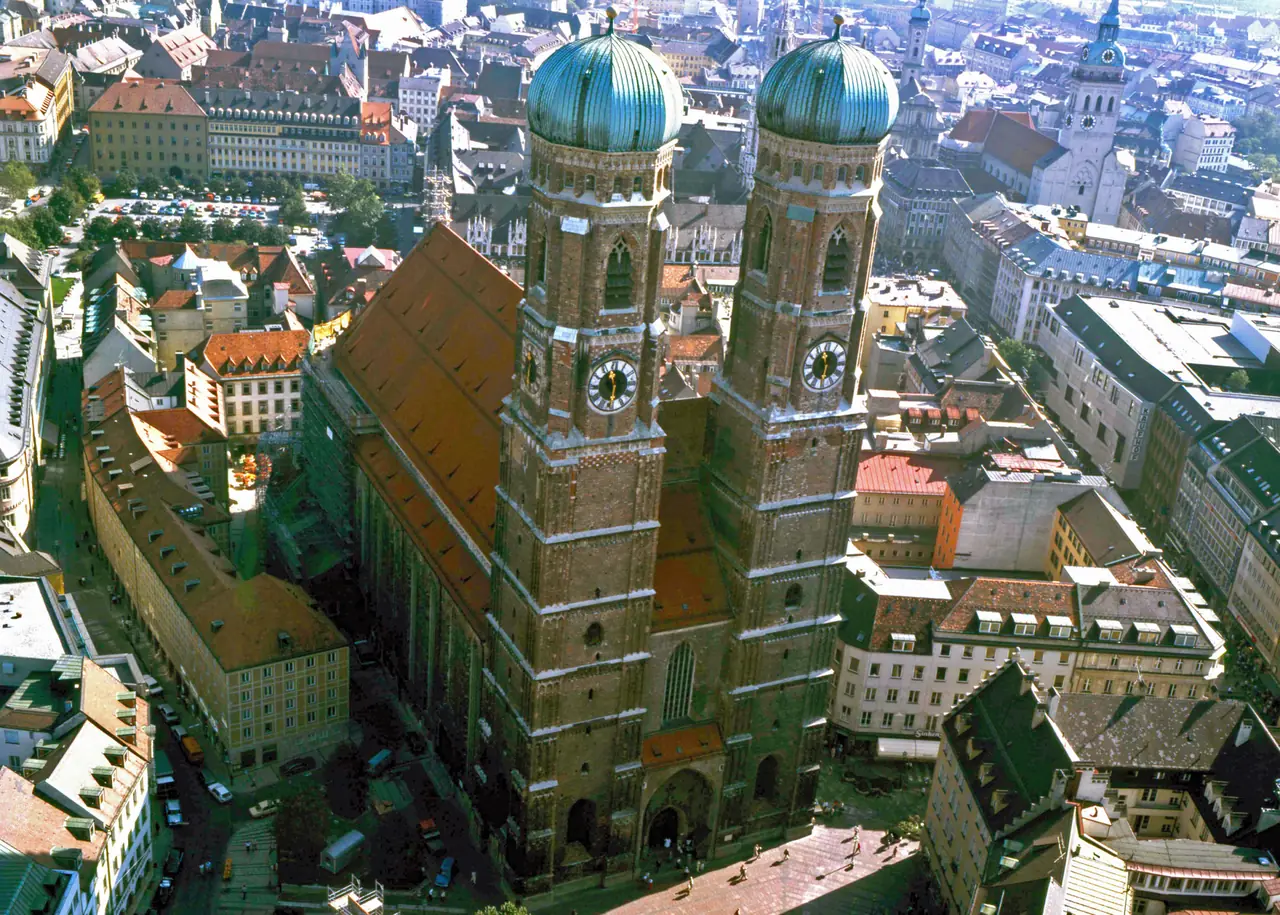
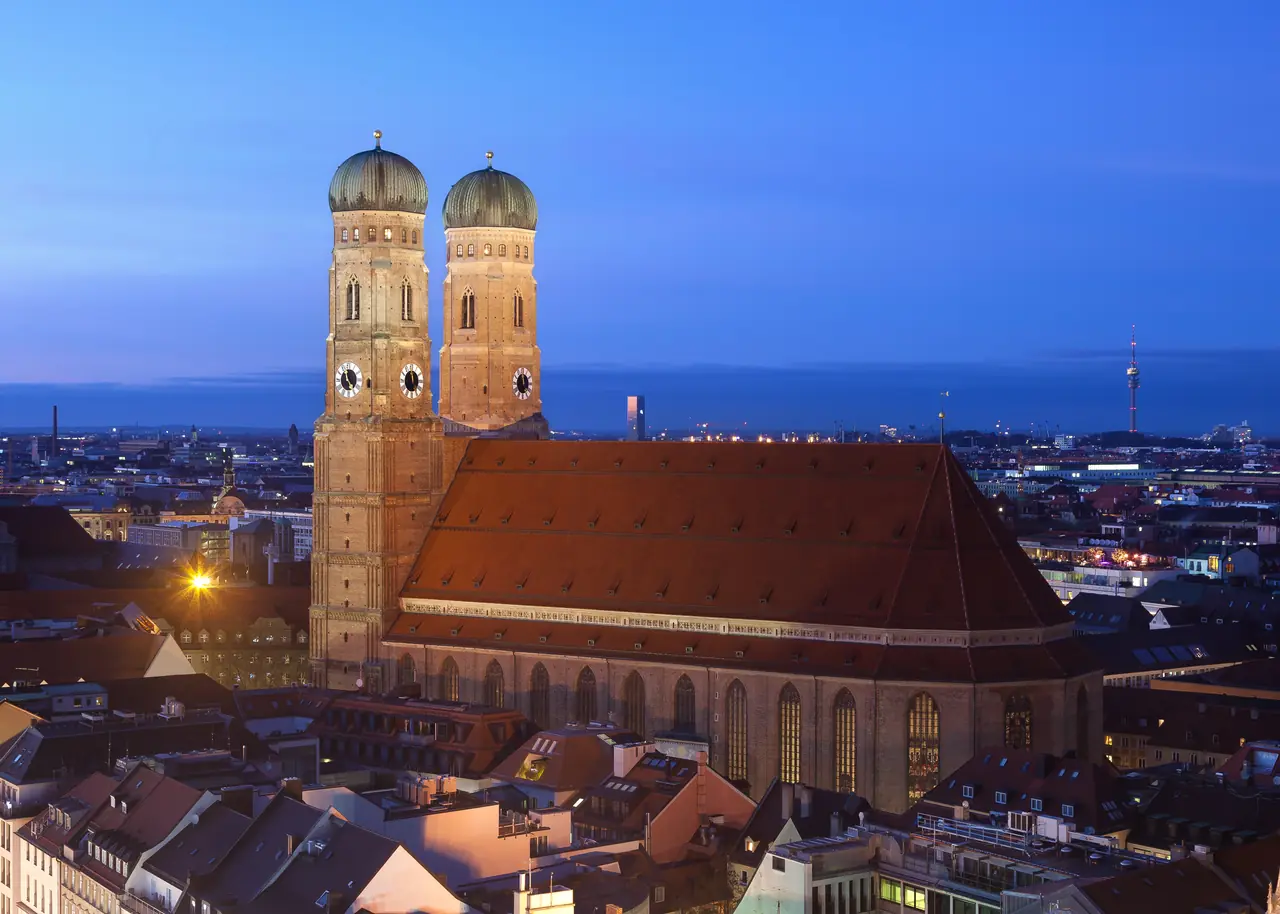
Its two towers crowned with domes are visible from far away across the city. Locals simply call the building the Frauenkirche, although its official website names it Munich Cathedral S1.
A church for a small city
In the twelfth century a late Romanesque church was built next to the town’s first ring of walls, and it became the city’s second parish after the older church of Saint Peter S1. The late Gothic building visible today replaced it S1.
It was commissioned in the fifteenth century by Duke Sigismund and the people of Munich S1. The foundation stone was laid in 1468, and the church was built in only 20 years by the master builder Jörg von Halsbach, also known as Jörg Ganghofer S2.
Because there was no stone quarry nearby, and for financial reasons, the builders chose brick S1. When the money ran out in 1479, Pope Sixtus IV granted an indulgence to help finance the work S1.
The towers were completed in 1488 and the church was consecrated in 1494 S1. At the time Munich had only about 13,000 inhabitants, yet the church could hold some 20,000 people standing S1.

Twin domes from Jerusalem
The original design called for tall, open-work Gothic spires, but there was no money to build them S1. For decades the towers remained unfinished, and the historian Hartmann Schedel printed a view of Munich with the incomplete towers in his Nuremberg Chronicle S1.
The delay was also due to the death of the master builder and to the War of the Landshut Succession S2. During that war, cannons were placed on the towers, still without their caps, for the defence of Munich S3.
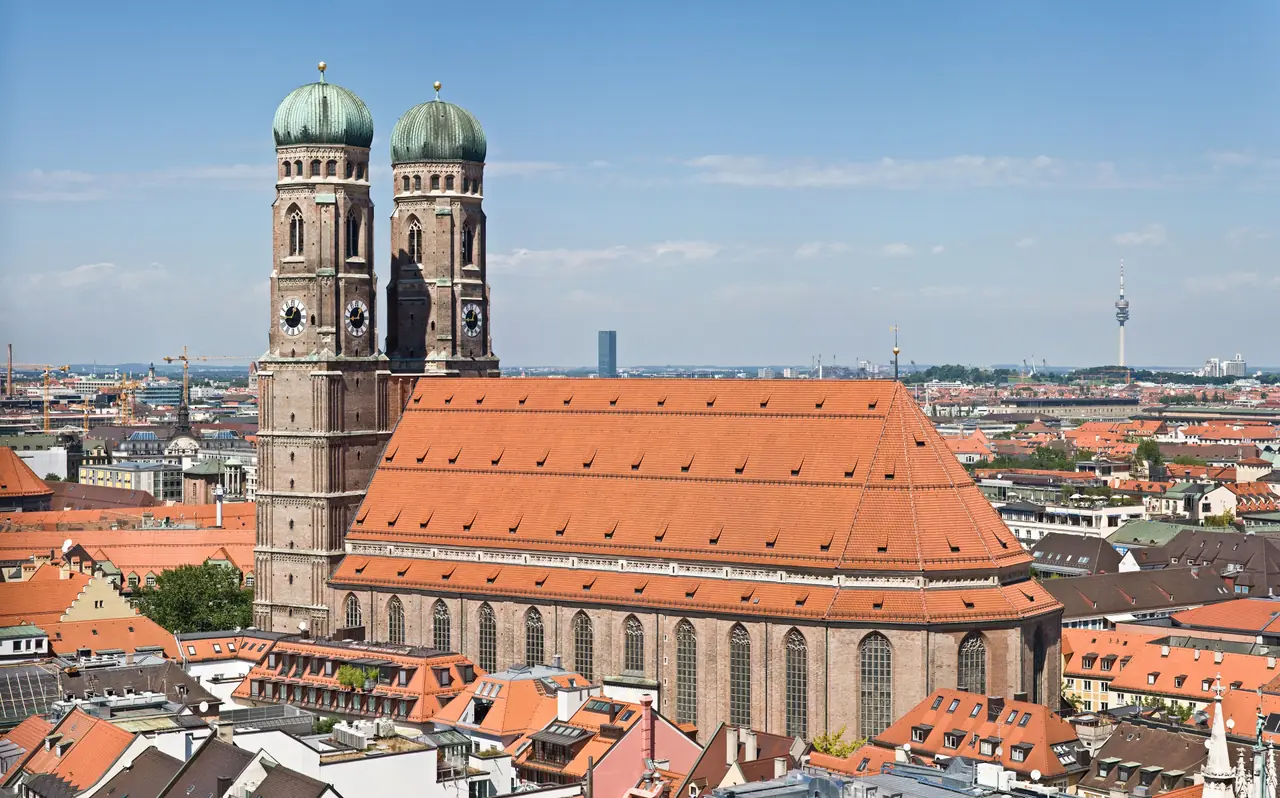
In 1525, because rainwater kept leaking through the temporary roofs, the towers were finally completed with a cheaper design S1. Their domes may have been modelled on the Dome of the Rock in Jerusalem, which was then wrongly believed to be Solomon’s Temple S1 S4.
These Renaissance domes do not match the Gothic style of the building, yet they have become the most distinctive feature of Munich’s skyline S1. A popular legend says that the towers differ in height by exactly one metre, but in fact the north tower measures 98.57 metres and the south tower 98.45 metres S1.

A hall without windows
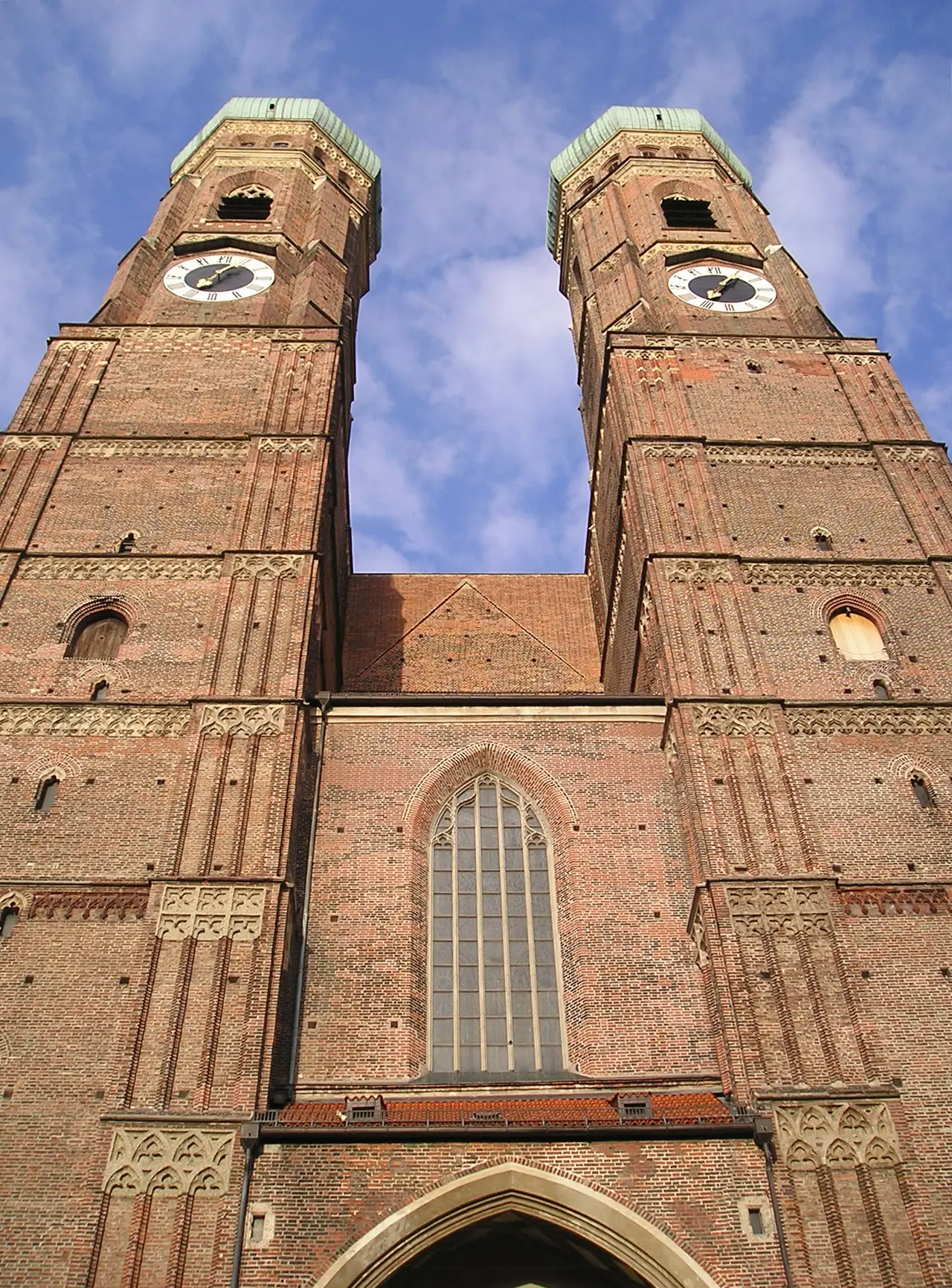
The people of Munich nicknamed the south tower Stasi and the north tower Blasi S4. The building is 109 metres long, 40 metres wide and 37 metres high S1.
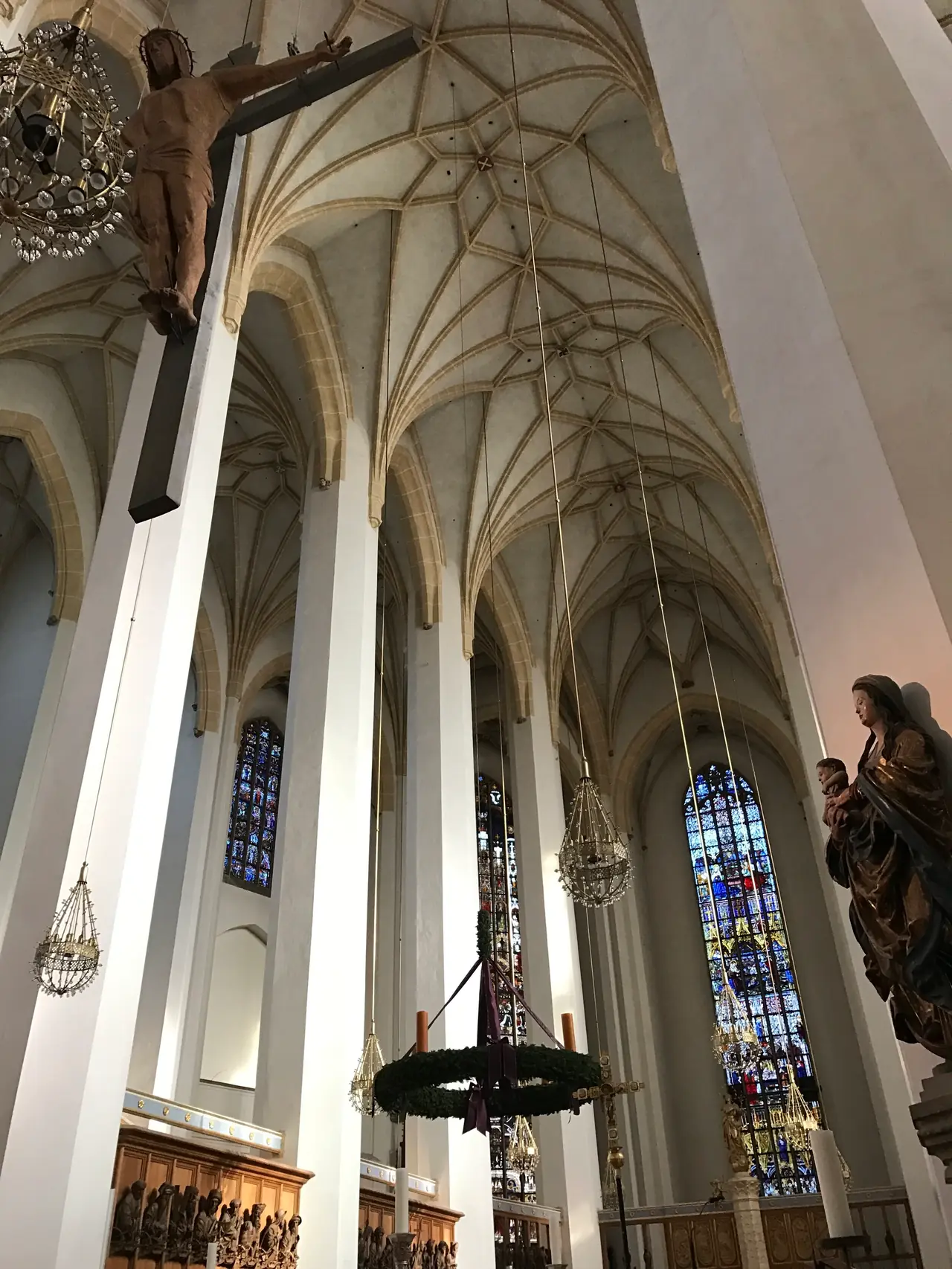
The design is very plain, without rich Gothic ornament, and the buttresses are moved inside the building S1. This simplicity makes the huge structure look even larger and almost modern S1.
Inside, the hall is divided into a nave and two aisles of equal height, about 31 metres, by two rows of 11 pillars S1. With an enclosed space of about 200,000 cubic metres, it is one of the largest hall churches and one of the largest brick churches north of the Alps S1 S6. The vaults were designed by Heinrich von Straubing S1.
From the main entrance, the visitor sees only rows of columns and seems to see no windows at all S1. This optical effect is the origin of the cathedral’s most famous legend.

The devil’s footstep
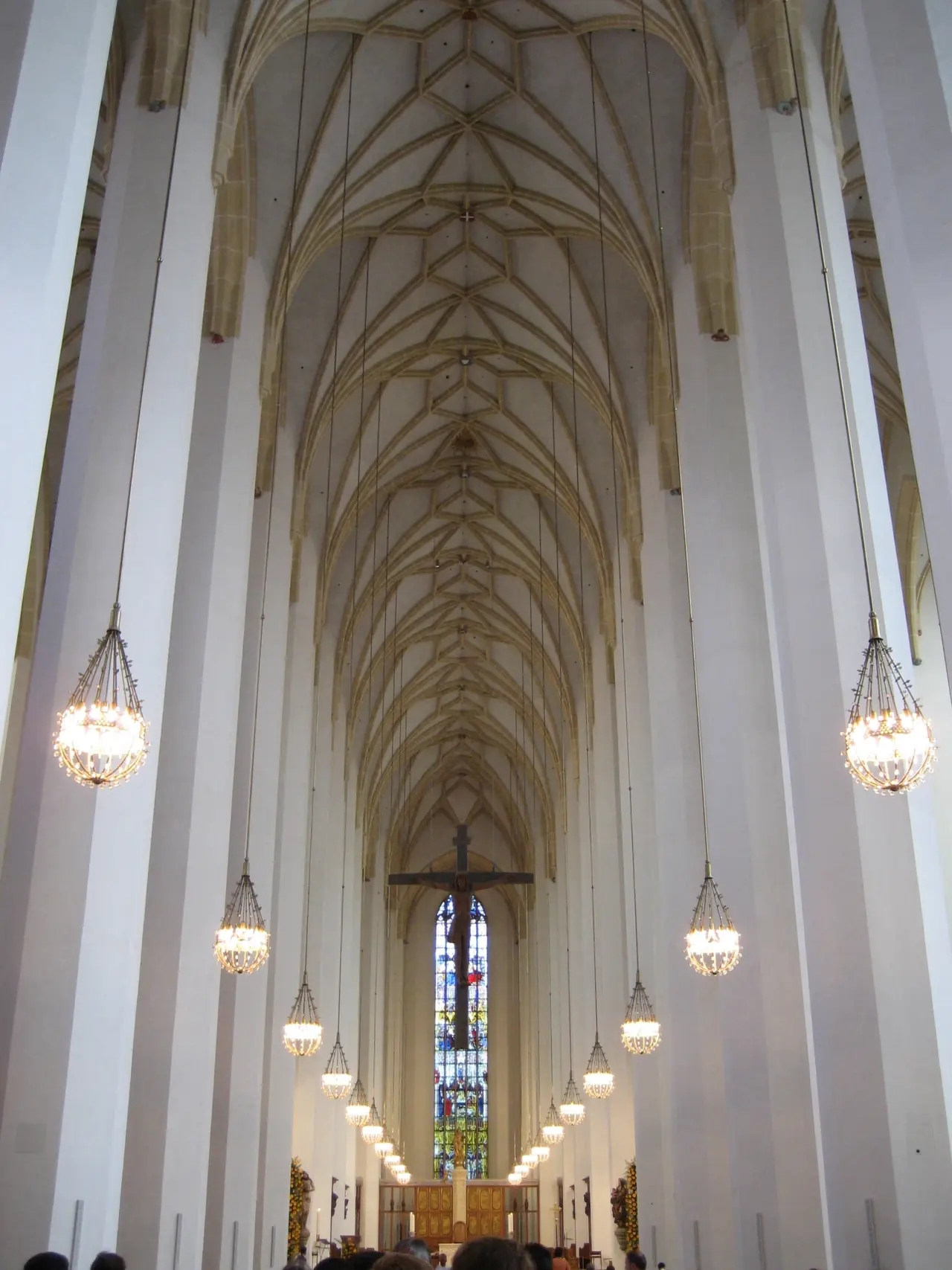
In the entrance hall, a black mark in a square tile looks like a footprint S1. It is known as the Teufelstritt, or Devil’s Footstep S1.
According to one version of the legend, the devil agreed to finance the church on condition that it had no windows S1. The builder placed the columns so that the windows could not be seen from the entrance, and when the devil realised he had been tricked, he could not enter the consecrated church S1.
In his rage he stamped his foot and left the dark footprint that can still be seen today S1. Another part of the legend says that the wind that often blows around the church is the devil’s spirit still trying to tear it down S5.
The footprint survived the destruction of the Second World War, when much of the interior was lost S6. It remains one of the most photographed spots in the church.

War and reconstruction
In 1919 Eugen Leviné, leader of the short-lived Bavarian Socialist Republic, had the Frauenkirche declared a revolutionary temple S1. During the air raids of the Second World War, the roof collapsed, one of the towers was badly damaged and most of the historic objects inside were lost S1. A restoration in several stages began soon after the war, and the final stage was completed in 1994 S1.
The interior again displays works from the fourteenth to the eighteenth centuries by artists such as Erasmus Grasser, Jan Polack, Hans Leinberger and Ignaz Günther S1. The figures of Grasser’s choir stalls survived the fire, making the church home to the largest surviving ensemble of late Gothic figures in Germany S1.
One of the main attractions is the tomb monument of Louis IV, Holy Roman Emperor S1. The crypt holds the tombs of the archbishops of Munich and Freising and of members of the Wittelsbach dynasty S1 S2.
The towers contain ten bells cast between the fourteenth and the twenty-first centuries S1. The heaviest, the Susanna or Salveglocke, weighs around eight tonnes and was cast in 1490 S1. In 2003 two new bells, Cantabona and Speciosa, were added to the south tower S1.
In 2004 the people of Munich voted in a referendum to stop any new building in the city from exceeding the height of the Frauenkirche S3. As a result, the towers still dominate the skyline S1.

Visiting the Frauenkirche
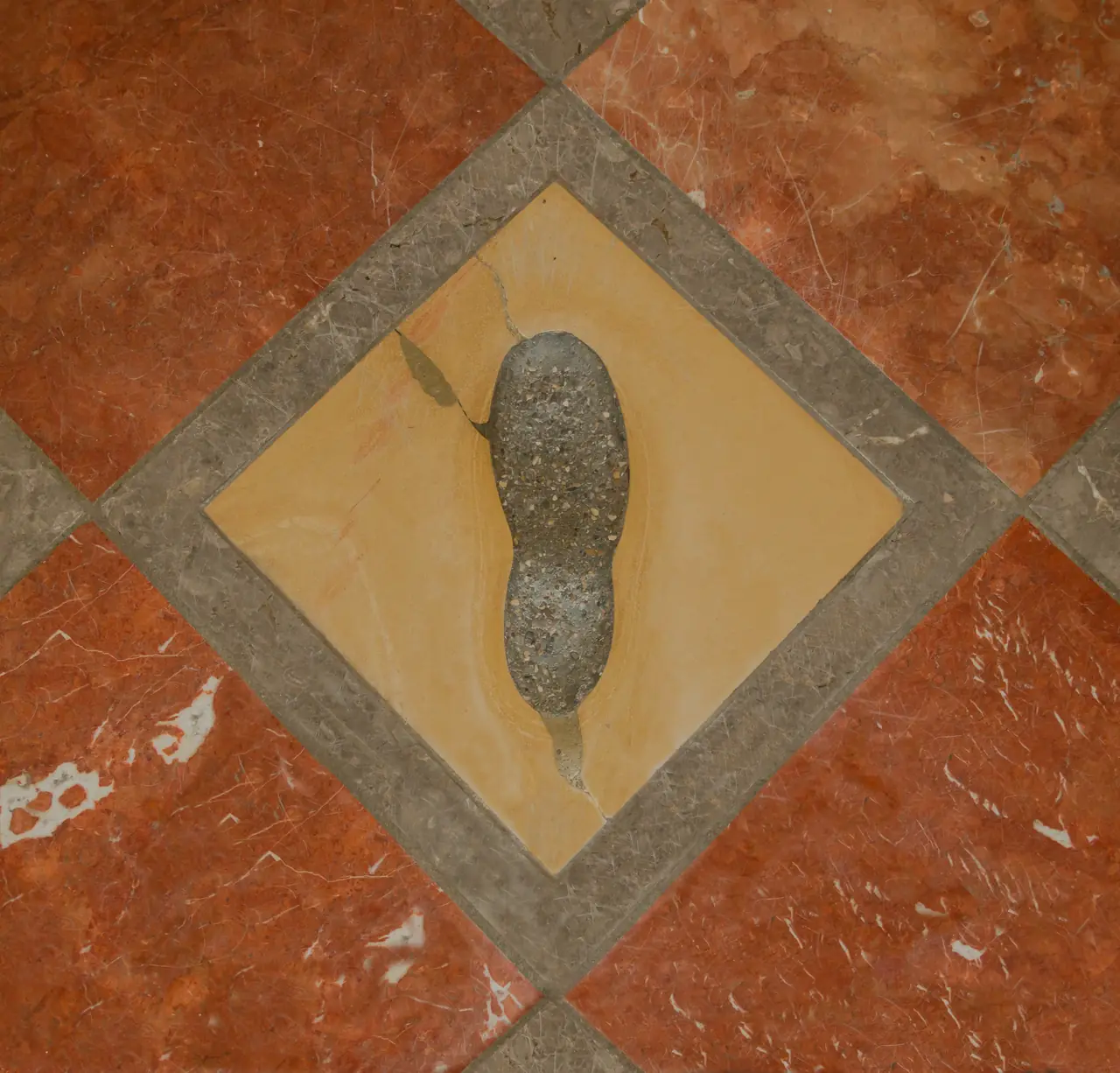
The interior is open to the public free of charge every day, except during services S2. The south tower reopened in 2022 after its renovation and offers a view over Munich and the nearby Alps S1.
The climb starts in the south chapel, to the right of the main portal, with 89 steps of a spiral staircase followed by a lift to the tower room S4. From the top, the view extends over the whole city.
Marienplatz and the New Town Hall are just a few minutes’ walk away. More than five centuries after Jörg von Halsbach tricked the devil, the Frauenkirche is still the image of Munich.

Frequently asked questions
Who designed it?
The master builder Jörg von Halsbach, also known as Jörg Ganghofer S2.
Why are the towers topped with domes?
The planned Gothic spires were never built; cheaper domes were added in 1525 S1.
What is the Devil’s Footstep?
A footprint-shaped mark at the entrance linked to a legend about a church without windows S1.
Can you climb the tower?
Yes, the south tower has been open again since 2022 S1.
Sources
More in Germany